
The Leaf, Assiniboine Park: Human–Nature Redefined

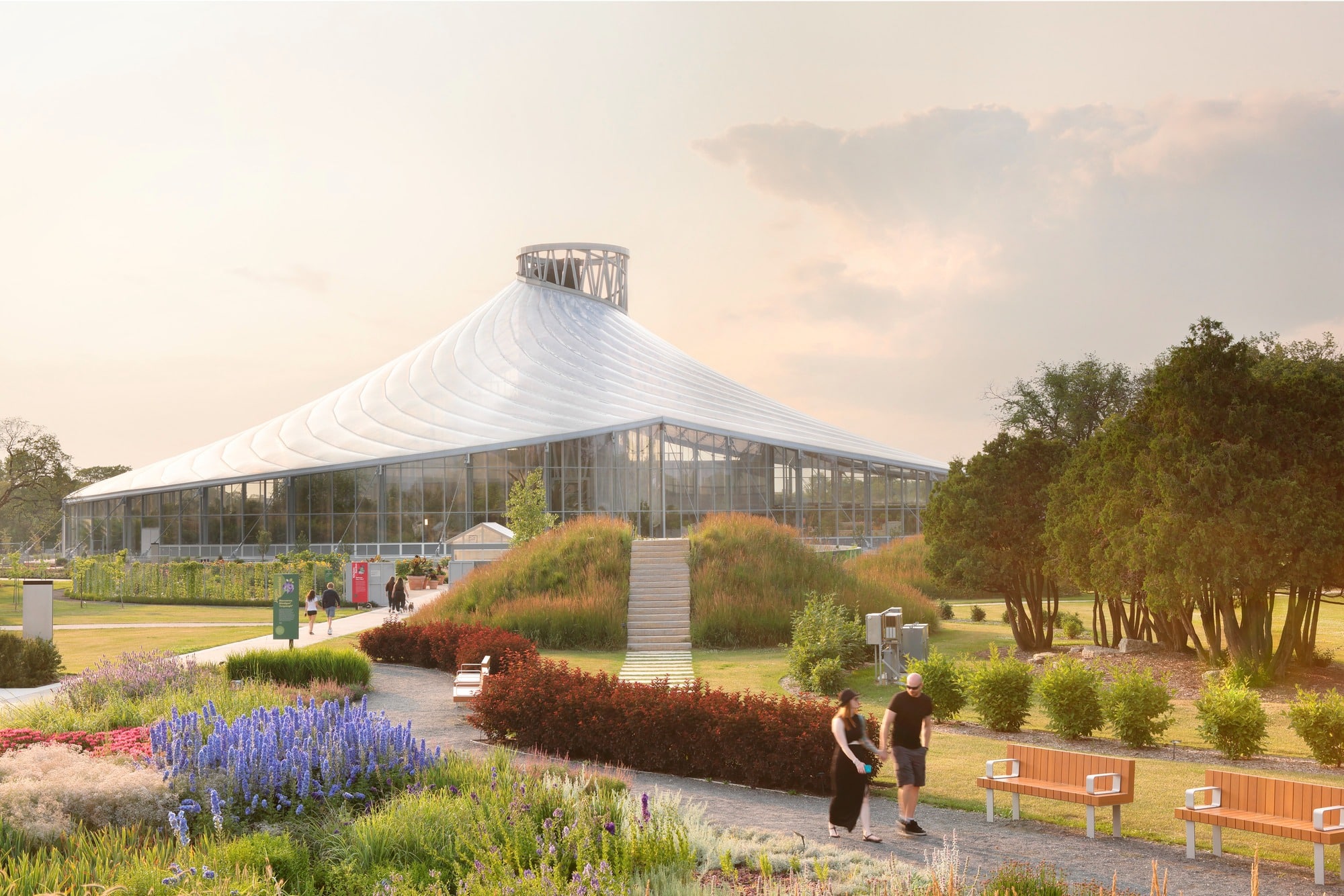
Contemporary Botanical Sanctuary
The project reflects a modern approach to redefining the relationship between humans and nature, where its role is not limited to display, but extends to become a space for interaction and learning, in line with the demands of the twenty-first century.
Cultural Diversity as a Framework for Experience
In this context, cultural diversity is used as an entry point to organize the experience, allowing plants to become a medium for understanding the connections between different environments and humans, rather than merely an aesthetic element. Through rigorous Research, the project explores how botany intersects with human history.
Sustainability and Environmental Awareness
On the other hand, the project is based on sustainability principles to enhance resource efficiency and reduce environmental impact, alongside its role in developing visitors’ awareness, especially younger generations, of the importance of nature.
Reshaping Perception
Ultimately, this model contributes to transforming the way nature is perceived, shifting it from a secondary element to an interactive experience that fosters understanding and environmental responsibility. This evolution is often highlighted in Architectural News as a benchmark for future ecological hubs.
| Field | Details |
|---|---|
| Architects | Architecture49, KPMB Architects |
| Area | 84,400 ft² |
| Year | 2022 |
| Photographers | Ema Peter Photography, Tom Arban, Richard Seck |
| Manufacturers | Mulvey & Banani Lighting Inc. |
| Category | Landscape Architecture, Cultural Architecture |
| Design Team | Mitchell Hall, Glenn MacMullin |
| Structural Engineering | Blackwell |
| Mechanical Engineering | Integral Group |
| Electrical Engineering | SMS Engineering |
| Landscape Architecture | HTFC Planning & Design |
| General Contractor | Bird Construction |
| Other Consultants | Transsolar, Vector Foiltec, Soberman Engineering, LRI Engineering, Mulvey & Banani International, Lord Cultural Resources, DEW, Altus |
| Civil Engineering | KGS Group |
| Acoustic Engineering | Aercoustics Engineering Ltd |
| City | Winnipeg |
| Country | Canada |
Inspiration from Nature and Mathematical Patterns
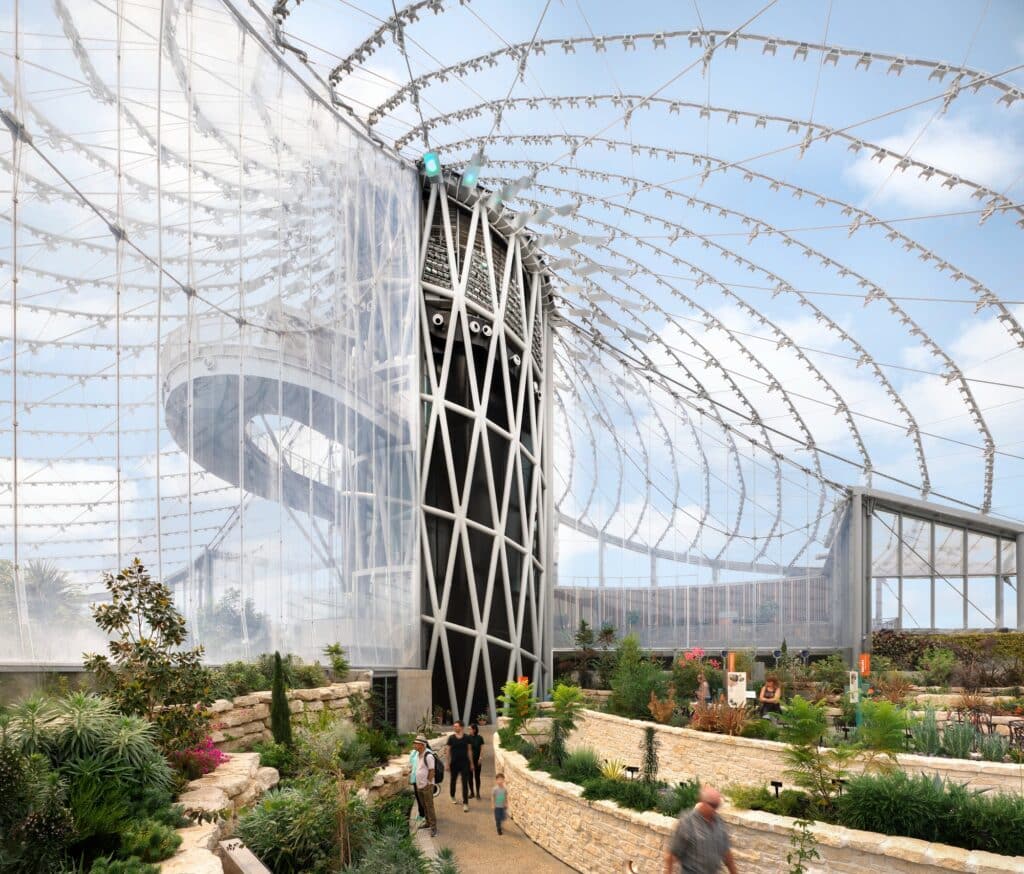
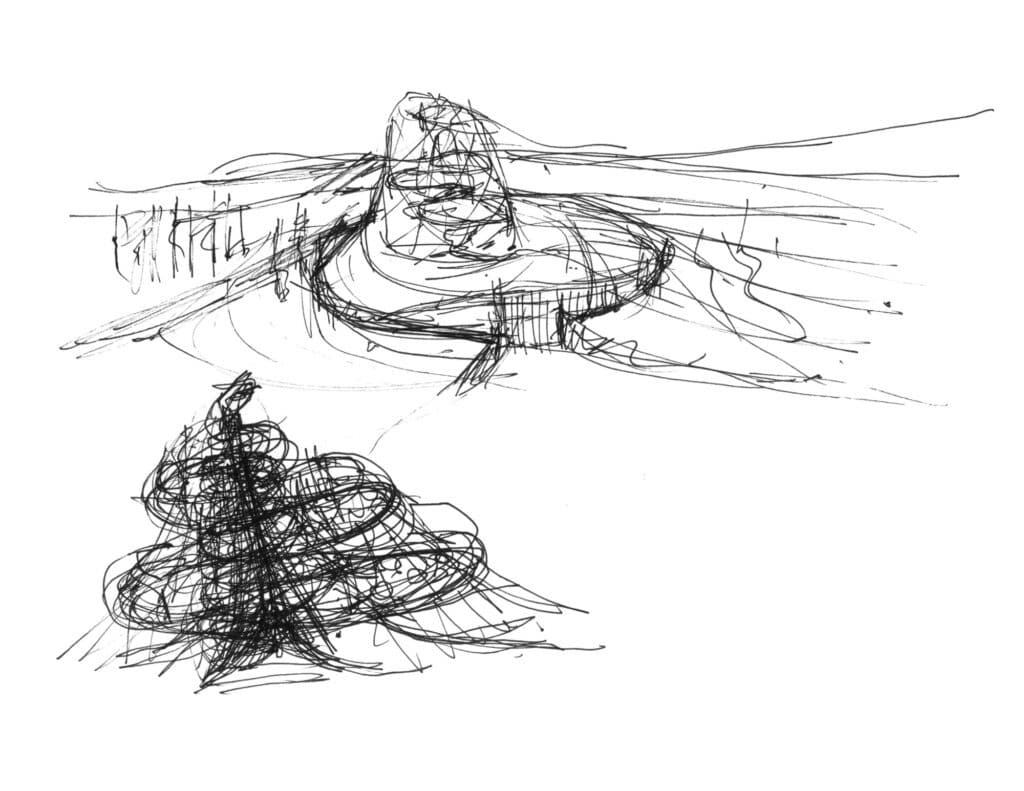
The Design is inspired by recurring patterns found in nature, such as the Fibonacci sequence, which appears in elements like nautilus shells and sunflower heads. This inspiration is translated into an architectural composition that reflects the logic of natural growth and its gradual progression.
Between Simplicity and Complexity
At the same time, the organic form combines apparent simplicity with internal complexity, clearly mirroring the diversity and structure of plant organisms, where systems interweave in a balanced way without losing overall clarity.
Ecological Diversity Reflecting Cultural Diversity
On the other hand, this diversity is not limited to its ecological dimension; it also carries a symbolic meaning, as the plurality of living organisms reflects the diversity of cultural backgrounds within society, in an interpretation that links Architecture with human identity.
Visual Transparency and Connection with the Environment
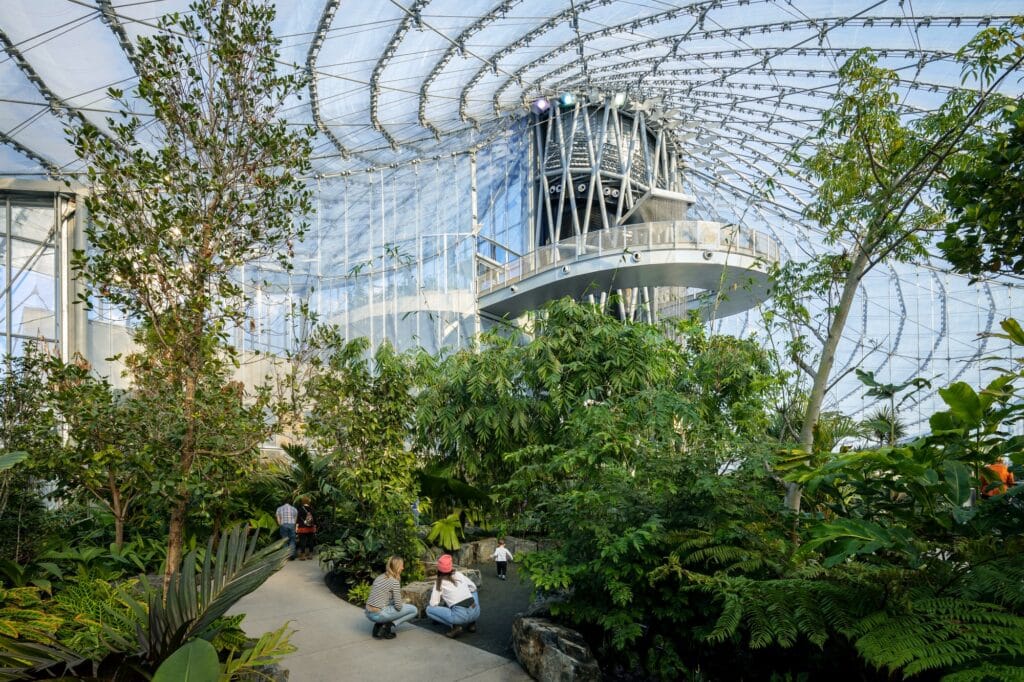
Glass façades provide expansive views that connect the interior with the exterior, creating an extended visual experience that encourages contemplation of the surrounding ecosystem and a closer, more nature-oriented understanding of it.
Organic Roof and Environmental Function
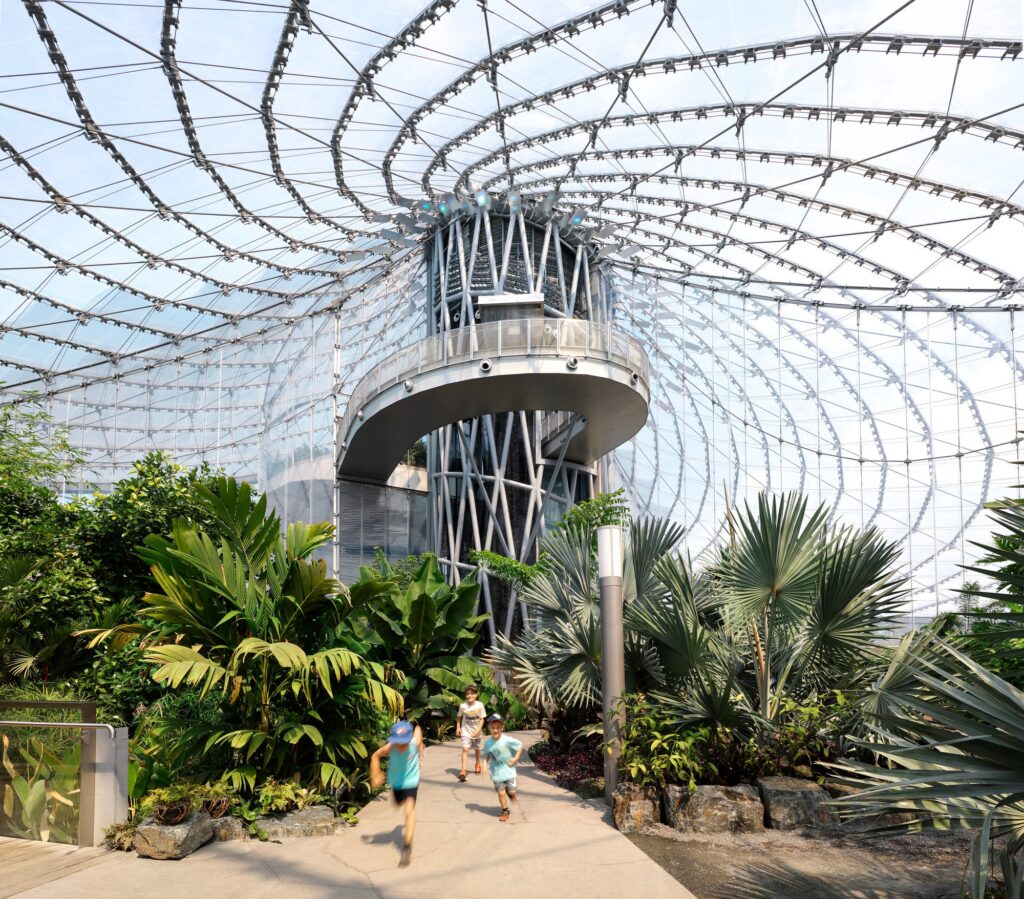
The roof features a fluid design inspired by the unfolding of a flower, reinforcing the building’s organic character. Beyond its aesthetic dimension, the roof also supports sustainability goals through the use of specialized Building Materials such as Ethylene Tetrafluoroethylene (ETFE), which is distinguished by its lightweight properties and high light transmittance.
Light Performance and Support for Plant Environments
ETFE contributes a high level of light transmittance, making it suitable for plant environments that rely on sunlight for growth. In this way, the material supports a balance between environmental and functional requirements within cultivated spaces, as detailed in various Material Datasheets.
Integration of the Interior with the External Landscape
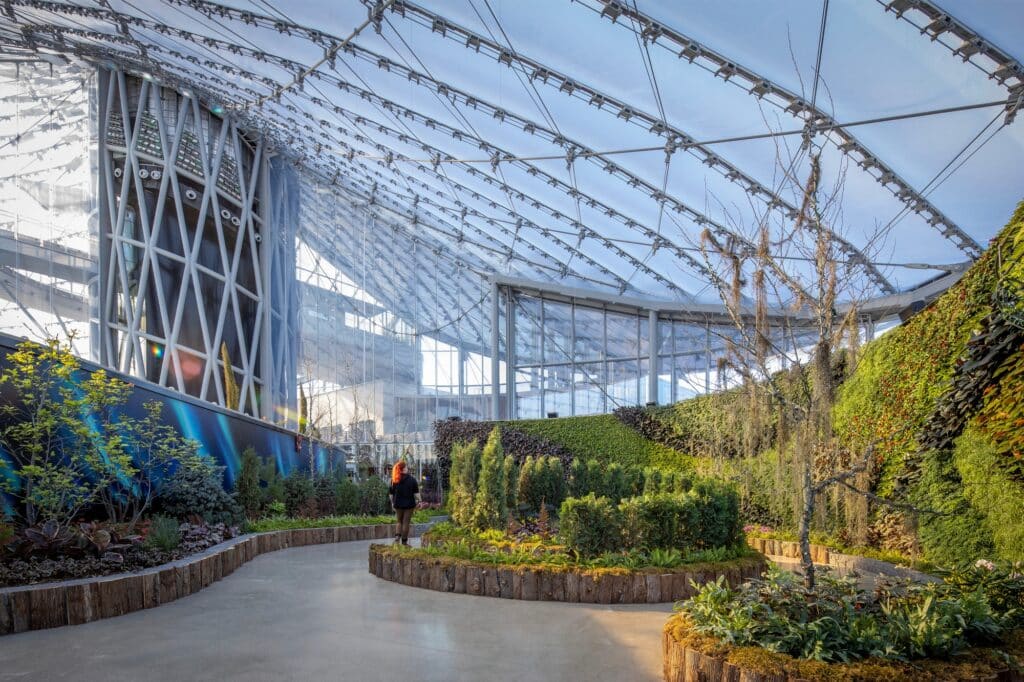
In the same context, the outdoor gardens and landscape design extend the interior experience, seamlessly connecting the building with the surrounding natural spaces. This integration not only enhances the visual experience but also enables broader social interactions within the site, making it a highlight among regional Projects.
Environmental Landmark and Human Interaction
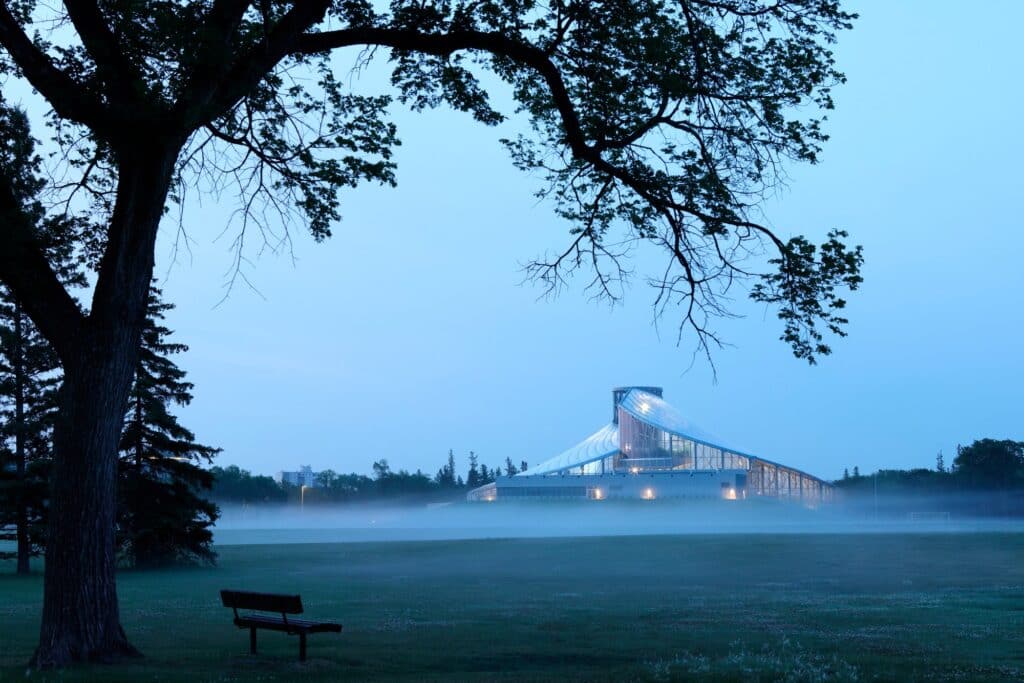
From a broader perspective, the project is presented as a prominent urban feature within Assiniboine Park, contributing to environmental awareness and strengthening the architectural presence of the site. It also emphasizes the reciprocal relationship between humans and plants through an interactive experience that encourages direct exploration of nature.
Open Space for Exploration
Ultimately, the design supports a welcoming atmosphere that encourages visitors to explore the surrounding natural environments, particularly within expansive green areas, reinforcing a direct connection between humans and the natural landscape of modern Cities.
✦ ArchUp Editorial Insight
The funding of The Leaf project in Assiniboine Park can be understood as a tool within municipal cultural infrastructure policies, linked to the diversification of the tourism economy, corporate Environmental, Social, and Governance (ESG) reporting requirements, and strategies aimed at enhancing the value of urban parks. Regulatory compliance frameworks and environmental certification standards impose constraints on the selection of structural systems, driving the adoption of lightweight Construction solutions and modular glass façades to optimize life-cycle costs and energy efficiency.
At the same time, climate control requirements for plant systems and patterns of public occupancy necessitate a reorganization of space into overlapping functional layers, including exhibition, education, and circulation. As a result, an architectural configuration emerges that operates as a mediating solution between land-use policies, environmental performance indicators, and the management of user flow within the urban structure of the park, ensuring its place in the Archive of significant botanical landmarks.
★ ArchUp Technical Analysis
Technical and Documentary Analysis of The Leaf – Assiniboine Park, Winnipeg, Canada:
This article presents an architectural analysis of The Leaf as a case study in redefining the relationship between humans and nature within an urban context. To enhance its archival value, we would like to present the following key technical and design data.
The project has a total area of 84,400 square feet (approximately 7,840 square meters) and was completed in 2022. The structural system relies on a complex steel cable net that supports the roof made of ethylene tetrafluoroethylene (ETFE), a lightweight material characterized by high light transmittance that supports plant environments dependent on sunlight for growth.
The design draws its organic form from recurring patterns in nature, such as the Fibonacci sequence, combining apparent simplicity with internal complexity in a simulation of plant organism structure. The facades consist of modular glass that provides expansive views connecting interior and exterior, with vertical green walls that enhance the environmental performance and aesthetic quality of the interior space.
The project integrates outdoor gardens and landscape design that seamlessly connects the building with the surrounding natural spaces, while employing sustainability strategies to enhance resource efficiency and reduce environmental impact, with a design focused on the reciprocal relationship between humans and plants through an interactive experience that encourages direct exploration of nature.
Related Insight: Please refer to this article to understand the context of modern architectural preservation:
Lightweight Envelope Technologies in Architecture: ETFE Between Optical Performance and Structural Efficiency.



✅ Official ArchUp Technical Review completed for this article.