

The New Ginza Hotel: Challenging Architectural Uniformity in the Heart of Tokyo

Introduction: A Prime Location in the Heart of Tokyo
The announcement of a new 273-room hotel along Showa-dori in Ginza 6-chome represents a bold step in one of the world’s most celebrated commercial districts. Rising 15 stories above ground with one basement level in Tokyo’s Chuo-ku, this project occupies a strategic site where international visitors converge with authentic local culture, positioning it as a unique tourist and commercial attraction.
The Urban Context: The Tourism Boom and the Transformation of Ginza’s Fabric
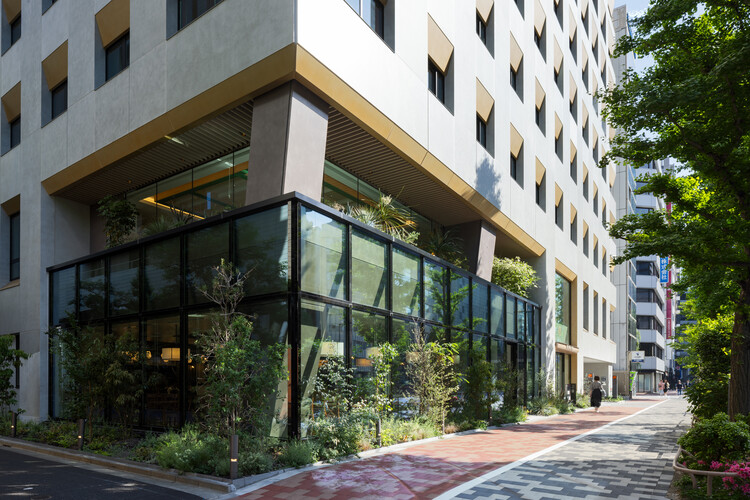
Before the COVID-19 pandemic, Tokyo experienced an unprecedented surge in inbound tourism, fueling massive demand for accommodation. In response to this rapid growth, Ginza—renowned for its luxury retail and vibrant nightlife—saw a significant influx of new hotels. Interestingly, the area’s urban fabric reveals a stark contrast; while main avenues like Chuo-dori and Namiki-dori retain the iconic façades and distinctive architectural character that reflect Ginza’s storied history, many side streets became lined with business hotels adopting a uniform and remarkably similar architectural style.
The Traditional Model: Efficiency Prevailing Over Identity
Hotels focused on the business segment have long favored standardized floor plans and repetitive elevations. This approach was driven by purely practical considerations aimed at simplifying sales, service, and operational management, resulting in an urban environment built on efficiency and economic feasibility, but one that notably lacked individual identity and architectural distinction. This model produced a functionally homogeneous yet visually uninspiring urban landscape.
A Challenging Genesis: An Innovative Idea Born During the Pandemic
Development of this ambitious project commenced in 2020, at the height of the global pandemic that shook the world’s tourism and travel industries. During this period of profound fluctuation in social norms and travel patterns, the design team decided to challenge the prevailing convention and raise fundamental questions about the very notion of “homogeneity” in hotels. The goal was ambitious and clear: to propose new value and different standards for hotel accommodation, tailored for a post-pandemic era.
Design Philosophy: Redefining the Guest Experience Through the Window
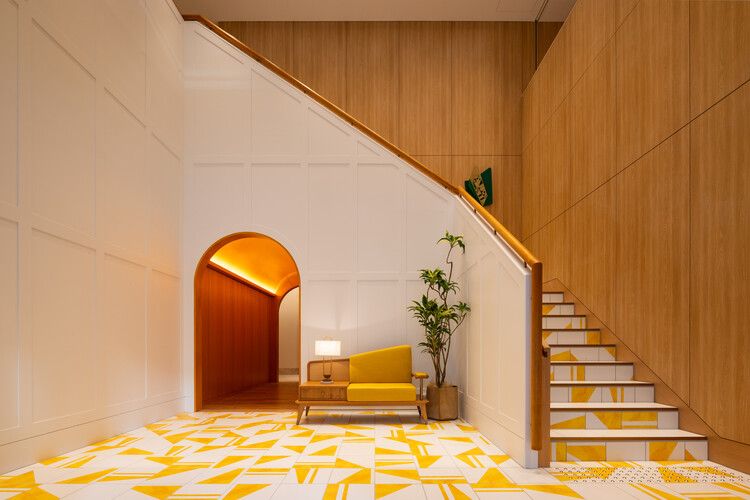
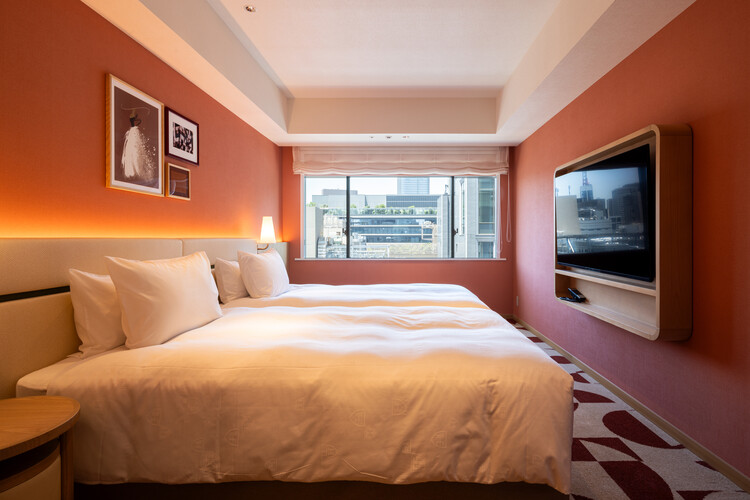
Faced with the challenge of compact guest room floor areas, the design philosophy focused on maximizing the crucial role windows play in shaping the spatial experience and sensory perception of the occupant. Large, expansive openings draw natural light deep into the rooms and frame dynamic, living views of the bustling Ginza street, offering guests a powerful visual and emotional connection to the surrounding cityscape, transforming their stay from mere lodging into an immersive experience.
An Intelligent Response: An Evolving Façade with a Graduated Glazing Ratio
The design employed an intelligent methodology responsive to the surrounding sonic environment. Recognizing that street noise diminishes significantly on the upper levels of the building, the window-to-wall ratio was gradually and deliberately increased on the higher floors. This precise, carefully calculated gradient creates nuanced variations between rooms on different levels, ensuring that the visual and acoustic experience is unique, and that no two stays feel identical.
External Identity: An Architectural Fabric Expressing Diversity
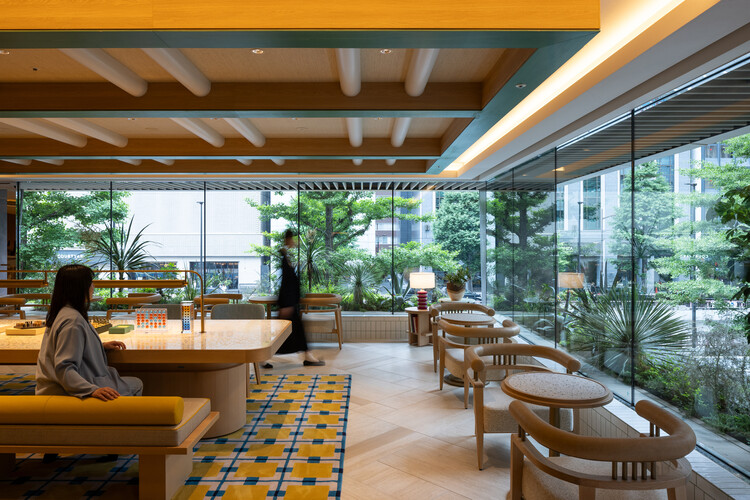
These internal variations translate into a distinctive external identity. Instead of presenting a static, monolithic façade, the differences in each floor’s design create a delicate, finely textured elevation that stands out with distinction among the area’s buildings while maintaining harmony with the general streetscape of Ginza. Thus, the building does not offer a single architectural skin, but rather expresses a rhythm of diversity and variation—a flexible architectural response that reflects the district’s constantly evolving identity.
Conclusion: Towards a New Future for Urban Hospitality
Despite early fears during the pandemic that tourism might be permanently suppressed, the demand for accommodation has demonstrated a strong recovery. This hotel provides a practical model for how architecture can move beyond the narrow standard of operational efficiency to offer deeper values such as individuality, a sensitive regard for the urban context, and delivering immersive, memorable experiences for the guest. By radically rethinking the fundamental assumptions that governed the traditional business hotel model, this project confidently points toward a more diversified, human-centric, and richer future for the urban hospitality sector.
✦ Archup Editorial insight
The project attempts to break the prevailing typology of business hotels in Ginza by adopting a graduated façade that creates visual uniqueness. The architectural solution relies almost entirely on addressing the situation through vertical expansion of glazed areas, forgoing the development of deeper architectural solutions for sound insulation or a reconceptualization of the room’s interior space beyond its relationship with the window. The room remains captive to a single perspective oriented outward, limiting the multiplicity of uses for the personal space. However, the visual shift in the building’s mass successfully transforms a monolithic block into a visually dynamic element within the dense urban fabric.
Brought to you by the ArchUp Editorial Team
Inspiration starts here. Dive deeper into Architecture, Interior Design, Research, Cities, Design, and cutting-edge Projectson ArchUp.


