The Palace of Khawarnaq: A Legendary Masterpiece in Arab History

Architecture has always been a reflection of power and cultural identity, and the Palace of Khawarnaq is one of the most striking examples of this connection. Said to have been built in ancient Iraq, this palace is regarded as one of the greatest achievements of architecture in the ancient Arab world. Its name is shrouded in both legend and history, leaving a profound mark on cultural memory.
The Palace of Khawarnaq: Between History and Legend
It is said that the Palace of Khawarnaq was constructed in Al-Hirah, Iraq, during the 4th century CE by order of King Al-Nu’man ibn Imru’ al-Qays, the last king of the Lakhmids. According to historical accounts, the palace served as a royal residence and a guesthouse, built for the king’s son, Al-Mundhir ibn Al-Nu’man. However, the exact history of this palace remains unclear, with sources conflicting on its actual existence.
The Architecture of Khawarnaq
According to various accounts, the Palace of Khawarnaq was an architectural marvel, renowned for its unique design and luxurious decorations. The palace was said to be constructed using local materials such as clay and stone, incorporating innovative building techniques to enhance its durability and aesthetics. It reportedly featured multiple floors and carefully designed windows to provide natural ventilation and lighting, showcasing an advanced understanding of the local environment and climate.
The Role of Sennimar in the Construction
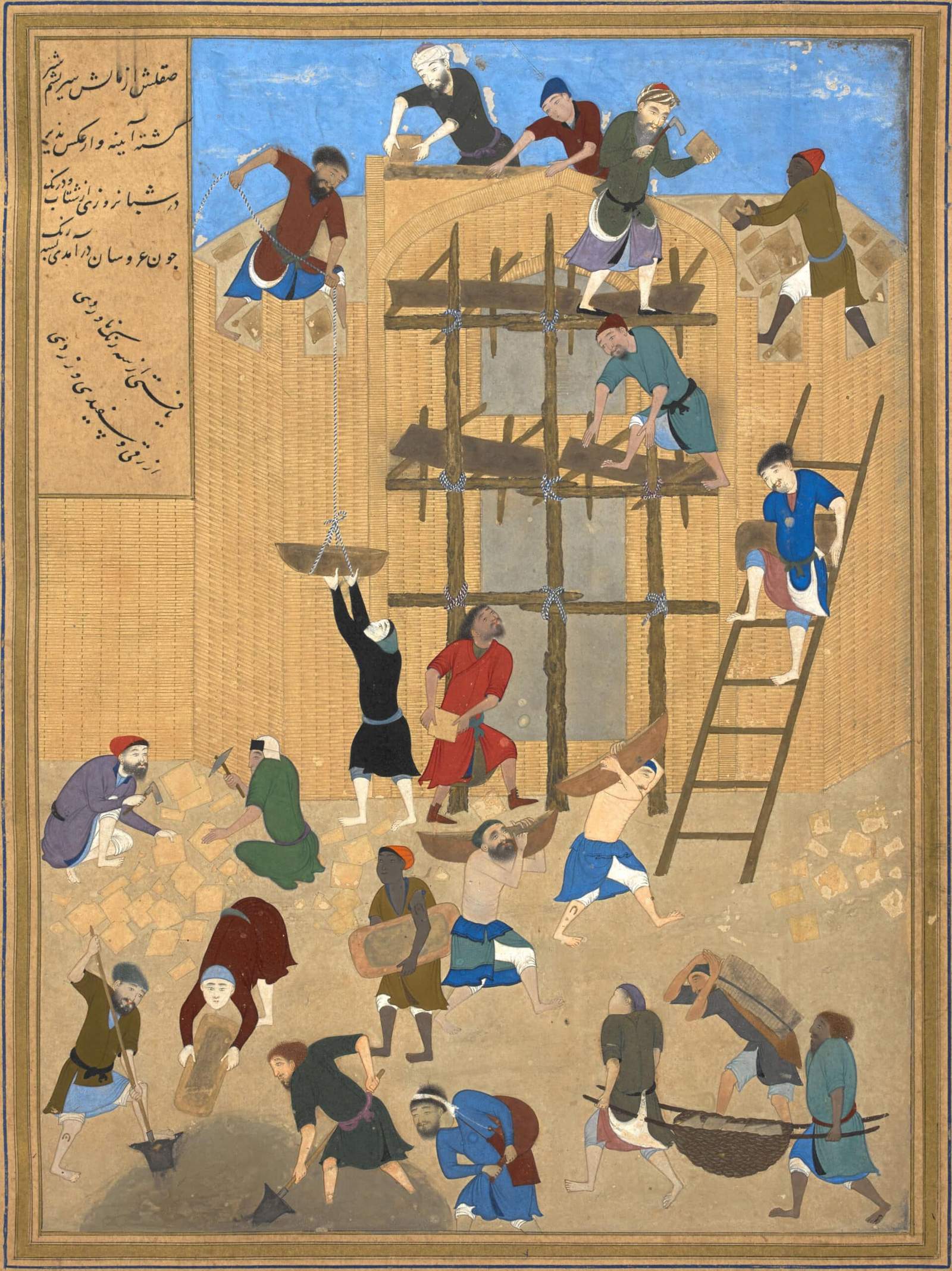
Legend has it that the Palace of Khawarnaq was built with the assistance of “Sennimar,” a Persian architect celebrated for his extraordinary engineering skills. Sennimar was allegedly summoned from Persia to oversee the construction of the palace, introducing innovative building methods that made the palace resilient over time.
However, the legend also tells of a tragic end for Sennimar. It is said that upon completing the palace, Sennimar revealed to the king that he held the secret to a specific brick that would prevent the palace from collapsing. Fearing that Sennimar might share this secret with enemies, the king ordered him to be thrown from the top of the palace, resulting in his death. This tale highlights the tension between engineering genius and mistrust in that era.
Symbolism and Cultural Impact
The Palace of Khawarnaq was more than just a physical structure; it was a symbol of authority and luxury. The palace became intertwined with poetic legends and stories, cementing its place in Arab imagination. Many poets referenced the palace in their verses, using it as a metaphor for grandeur and power.
Architecture in a Broader Context
The Palace of Khawarnaq reflects the architectural characteristics of Al-Hirah during the Lakhmid era. The architecture of this period featured a unique blend of Arab, Persian, and Roman influences, making it a model of cultural diversity. Buildings in Al-Hirah were renowned for their use of arches and wall decorations, elements that later influenced Islamic architecture.
Was the Palace Real or Mythical?
Despite its fame in Arab heritage, no physical remnants of the Palace of Khawarnaq have been discovered. This raises questions about whether the palace was real or merely a legend woven into Arab folklore. Nevertheless, Khawarnaq remains a symbol of architectural brilliance and its significance in shaping cultural identity.
Conclusion
The Palace of Khawarnaq is more than a structure; it is a story that bridges history and legend, reflecting the depth of cultural exchange and architectural innovation in the ancient Arab world. Whether real or mythical, the Palace of Khawarnaq continues to stand as a testament to the value of architecture as a means of expressing power and cultural identity.