
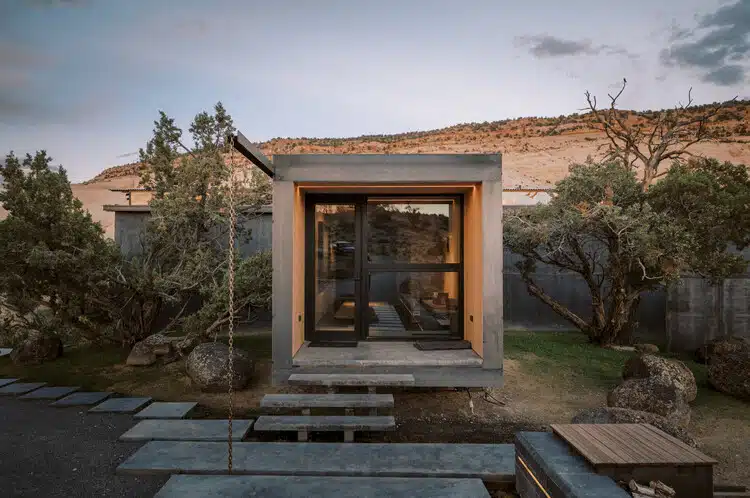
The Periphery House by Locus Studio: A Desert Sanctuary Blending Craftsmanship and Nature

Architectural Innovation Meets the Wild Landscapes of Utah
Project Name: The Periphery House
Location: Remote Utah Desert, USA (adjacent to the 1.8-million-acre Bears Ears National Monument)
Architect: Locus Studio (Led by Anson Fogel)
Photography: © Anson Fogel
Introduction: A Dialogue Between Shelter and Landscape
Nestled at 6,300 feet above sea level, The Periphery House is a two-bedroom retreat designed to harmonize with the raw beauty of Utah’s desert. Created by Locus Studio, this project transcends conventional architecture—it’s a “tool” for experiencing light, silence, and the subtle rhythms of the desert.
Key Features:
- Minimalist yet intentional design blending steel, oak, and glass.
- Passive climate strategies for year-round comfort.
- Handcrafted details reflecting artisanal precision.


Design Philosophy: Emotional Architecture
1. Site-Sensitive Integration
The house occupies a delicate threshold between exposure and refuge. Positioned between juniper and pinyon trees, it floats lightly above the slickrock terrain to minimize environmental disruption.
Sustainable Strategies:
- 75-foot thermal mass wall to regulate temperature swings.
- Natural ventilation and high-performance mechanical systems.
- Locally sourced materials (oak, steel, concrete) reducing carbon footprint.
2. Material Honesty
Locus Studio’s choice of oak, steel, and concrete reflects a commitment to durability and aesthetic purity. Custom millwork, frameless windows, and African mahogany in the steam room add tactile warmth.
Standout Elements:
- Full-height oak doors blurring indoor/outdoor boundaries.
- Outdoor living spaces including a wood-fired hot tub and natural swimming pool fed by a perennial creek.


Construction: Handmade Modernism
Unlike conventional projects, Locus Studio self-performed most of the construction, collaborating with trusted artisans. This hands-on approach ensured meticulous attention to detail from conceptual design to final finishes.
Why It Matters:
- Preserves craft traditions in an era of mass production.
- Deepens connection to the site through iterative, on-site problem-solving.


Spatial Experience: Framing the Desert
The house is choreographed around pivotal views and framed moments, offering a counterpoint to the vast desert expanse.
Interior Highlights:
- Generous glazing with operable panels for immersive desert engagement.
- Custom furnishings designed for flexibility and comfort.
- A compact footprint (optimized to reduce site disturbance).
Explore More with ArchUp
ArchUp documents the evolving profession of architects worldwide, from career insights and research to project profilesand industry news. Our editorial team publishes global salary trends, career advice, and opportunities for emerging talents. Learn more on our About page or Contact us to collaborate.


