

Tower House: When Vertical Expansion Becomes a Dialogue with Nature

In the world of architecture, constraints are often the mother of invention. The “Tower House” in Texas offers a masterclass in transforming the challenge of expanding a sensitive site into a stunning architectural statement. Instead of occupying more land, this project suggests that the solution may lie in looking upward.
The Challenge: How Do You Expand a Historic Cabin Without Disturbing Its Roots?
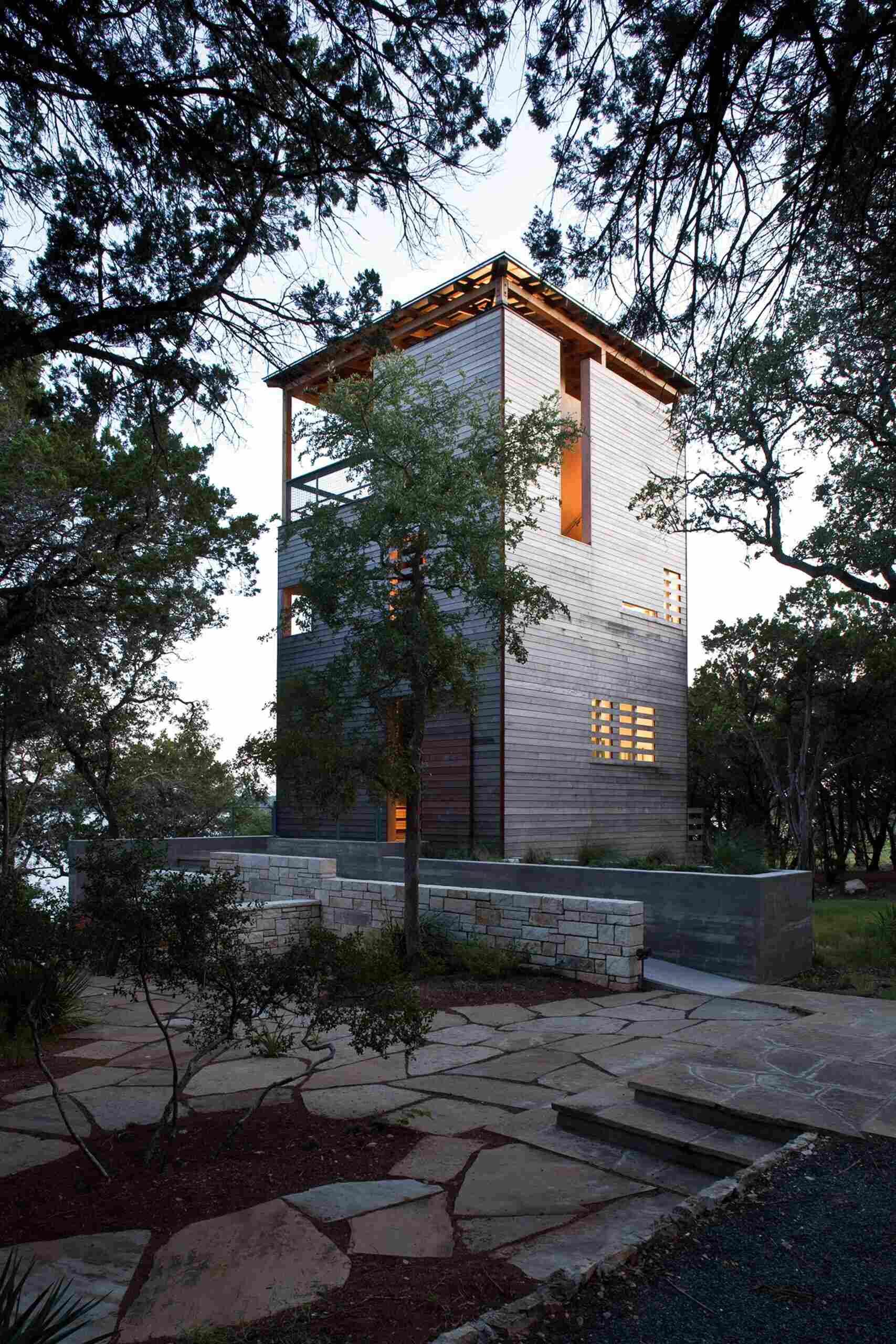
The challenge for the owners of the 1930s limestone cabin was clear: the need for additional bedroom and living space. The conventional approach would have called for horizontal expansion, adding wings that could disrupt the balance of the original structure and invade the surrounding nature. Here, Andersson-Wise Architects decided to adopt a radically different philosophy. Instead of extending the cabin, they created a new, self-contained entity: a vertical tower rising near the original cabin, transforming the space problem into an opportunity to reimagine the relationship between dwelling and forest.
The Solution: The Philosophy of Vertical Design and Organic Inspiration
The choice of a tower form was not merely a pragmatic response to limited space; it was a philosophical choice. The architects drew inspiration from its immediate surroundings, specifically from the layers of the surrounding tree trunks. This organic metaphor was not just aesthetic; it became the organizing principle for the entire project. By building the structure skyward, the new building’s footprint was minimized, preserving the soil and ecosystem of the forest floor and respecting the age of the historic cabin.
A Dialogue of Materials: The 20th Century Meets the 21st
The project excels in how it creates an intentional dialogue between materials and eras:
· The Original Cabin (The Past): Symbolizes stability and authenticity. Its low-built limestone construction expresses stability and connection to the earth, like a sturdy tree trunk.
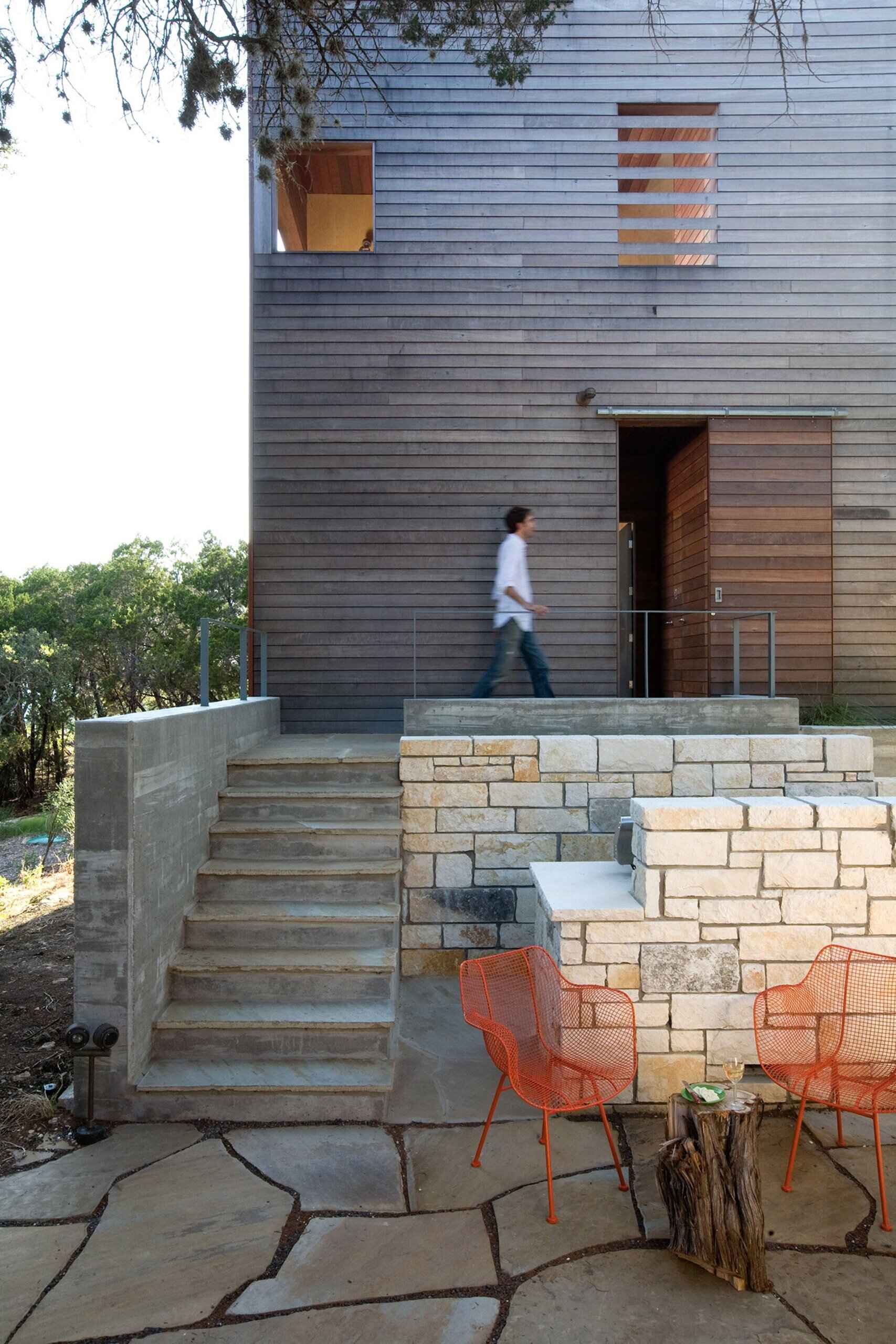
· The Tower House (The Present): Embodies lightness and movement. Its slender wooden structure of Massaranduba timber boasts a rich, natural color that ages gracefully under the Texas sun, blending perfectly with the colors and textures of the forest. This transition from stone to wood resembles the transition from a tree trunk to its branches.
A stone pathway connects these two worlds, acting as a temporal and physical bridge linking two architectural narratives.
The Ascent: User Experience and Controlled Framing
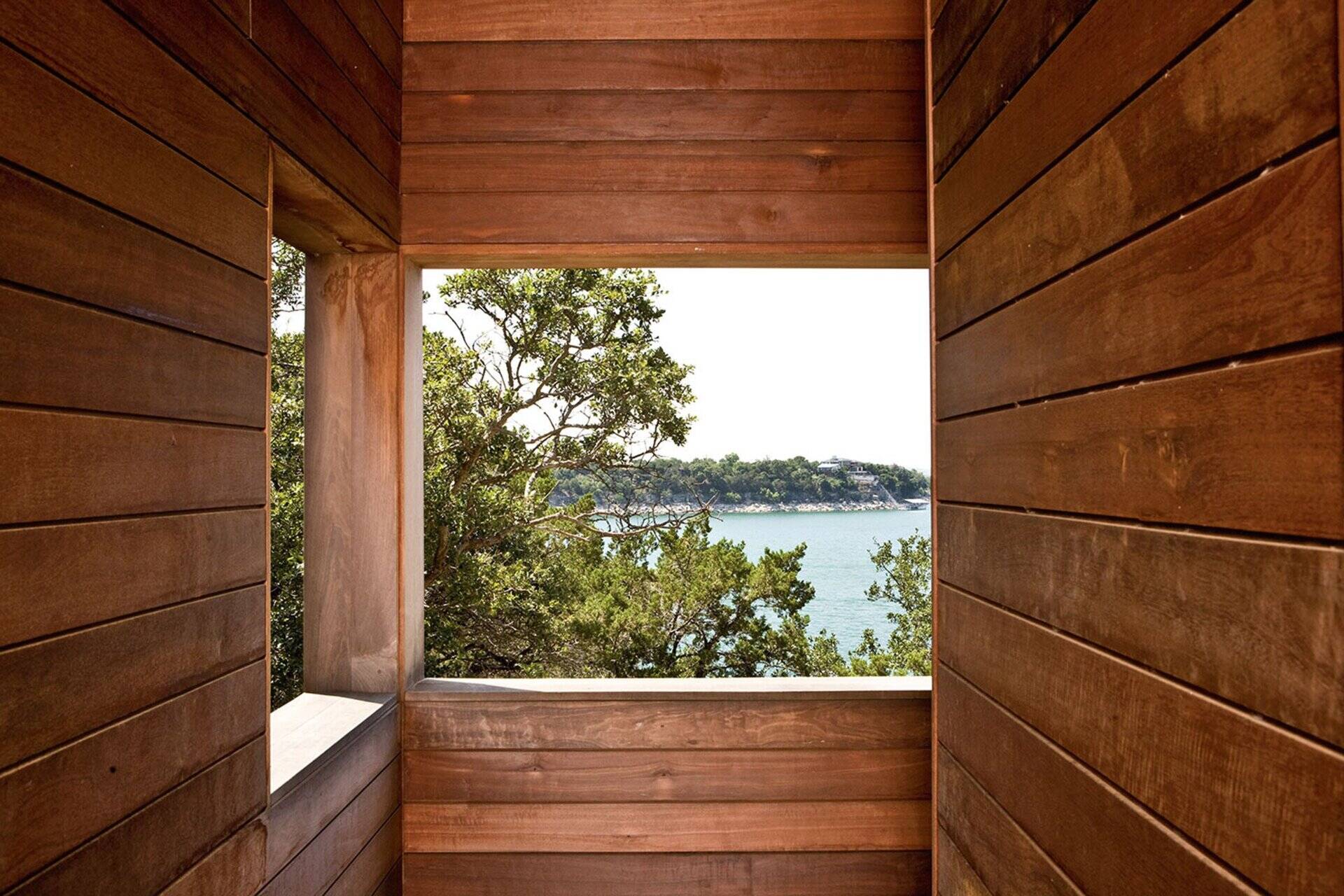
Entering the tower is not just a transition from one place to another; it is the start of a carefully orchestrated journey. The spiral staircases that wrap around the perimeter of the tower do not only serve the function of vertical transport; they are a design tool for shaping the user experience. During the ascent, the views are not revealed in a wide panorama all at once, but are gradually unveiled through deliberate, rectangular openings in the walls. These openings offer changing “frames” for the external scenes—a glimpse of the sky here, a hint of the lake there—creating a sense of anticipation and visual excitement. Even the breezes that sneak through these openings become part of the sensory experience, reinforcing the constant connection to the external environment. The presence of an elevator adds a layer of accessibility without disrupting the experiential nature of the ascent.
Floor Planning: Privacy in a Vertical Stack
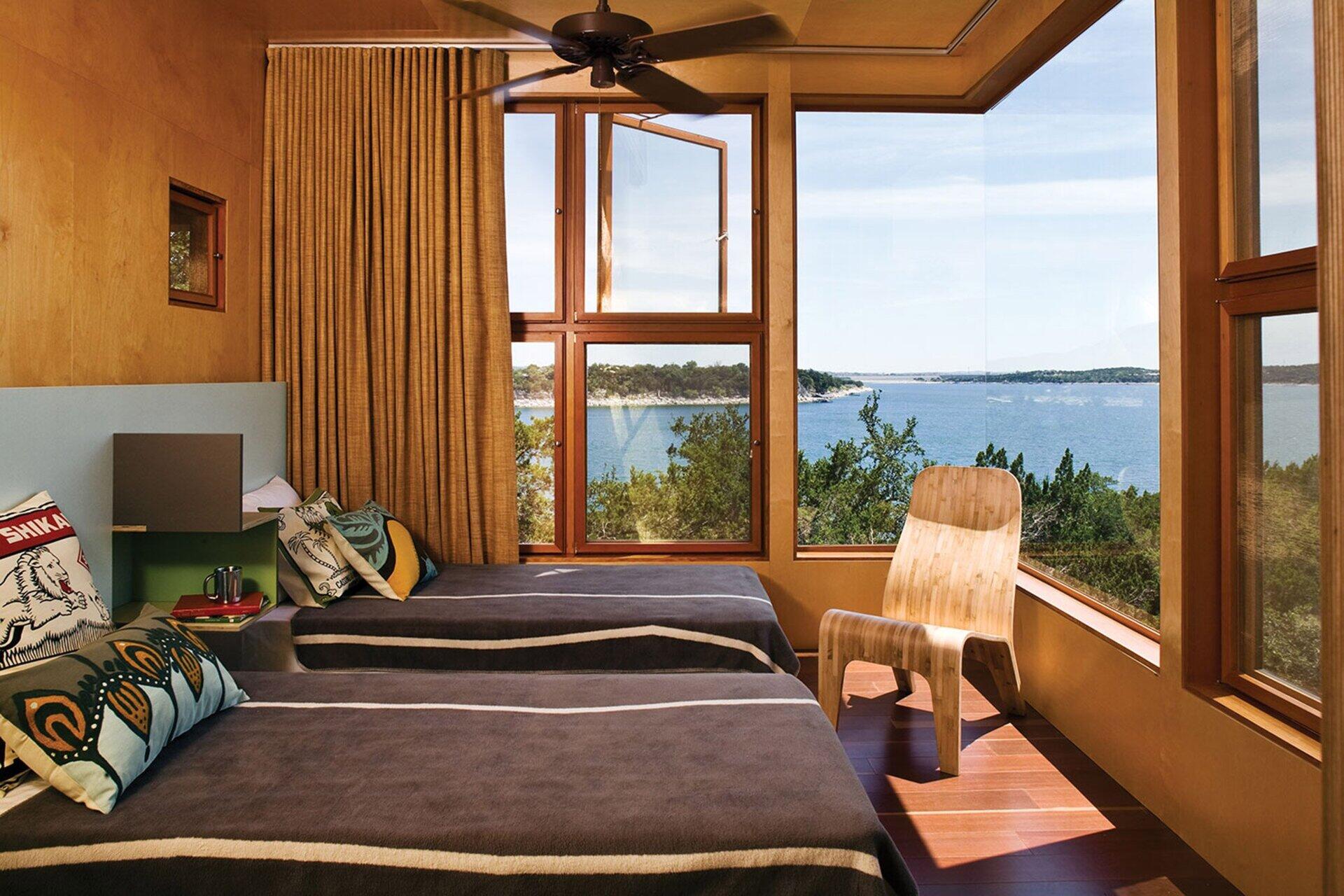
Each level of the tower occupies a specific function, creating a strong sense of privacy and tranquility. The two bedrooms occupy separate floors, ensuring acoustic and visual isolation for their occupants. The interior design of these rooms, lined with pale, smooth birch plywood, creates an intentional contrast with the dark Massaranduba exterior. This shift in tone and texture—from the rough exterior to the soft interior—deepens the tree-inspired metaphor, representing the tough outer bark and the warm heartwood inside.
The Views: Corner Framing and Integrating Nature
The corner windows in the bedrooms are not just elements for light and ventilation; they are an intelligent design tool. By removing the traditional corner of the room, these windows create an unobstructed frame for the landscape, giving the sensation that the forest and lake are part of the furnishings. This design transforms the compact interior space into a living environment that feels expansive and deeply connected to its surroundings, where the external view becomes the main piece of art in the room.
The Bathrooms: Simplicity and Light
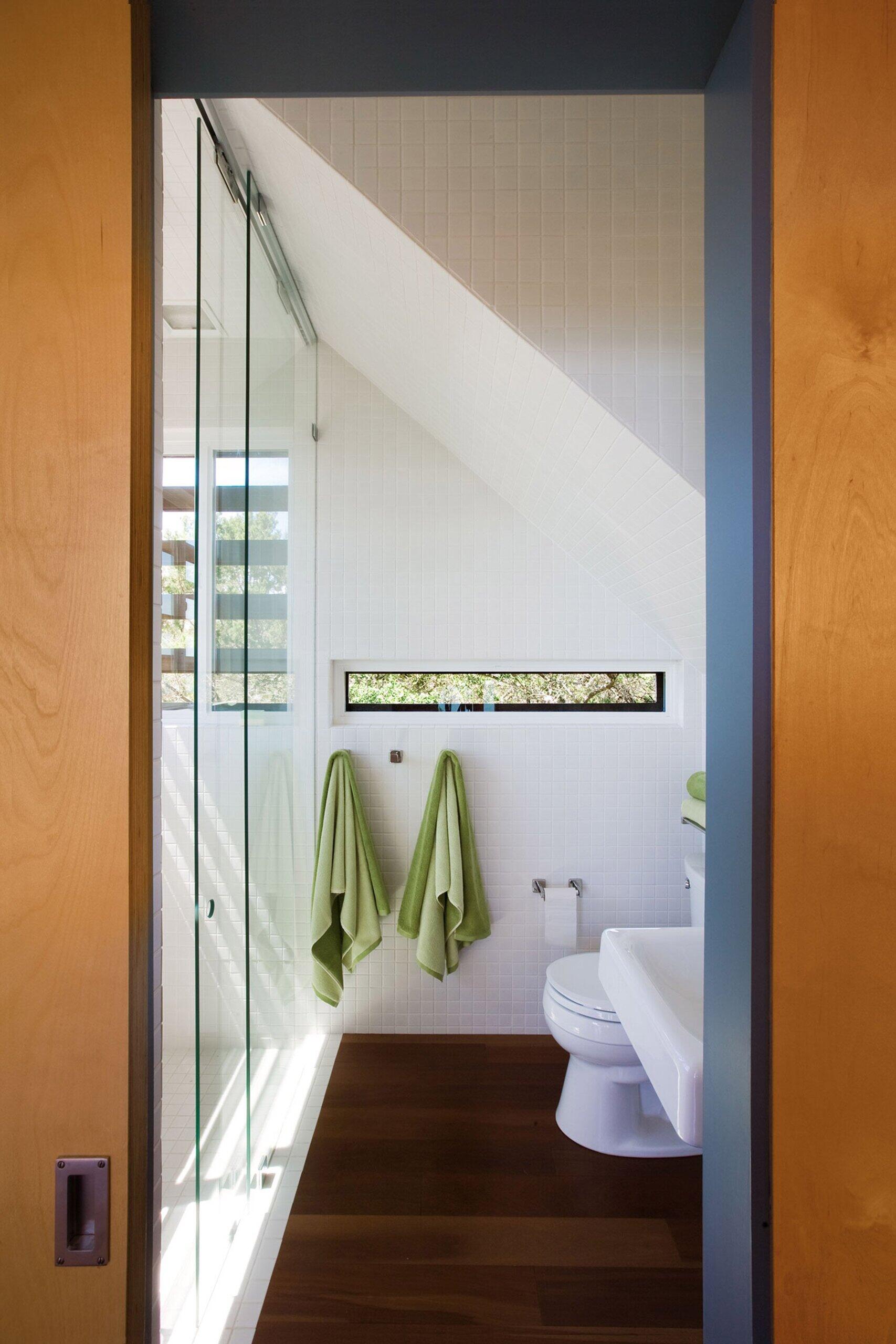
The en-suite bathrooms embody a philosophy of functional simplicity. The white tiles running from floor to ceiling are used not only for cleanliness but to reflect the maximum amount of natural light within these compact spaces. The modestly sized windows provide ventilation and light while maintaining privacy, creating bathrooms that feel open and connected to the outdoors without being exposed.
The Pinnacle: The Deck as the Final Release
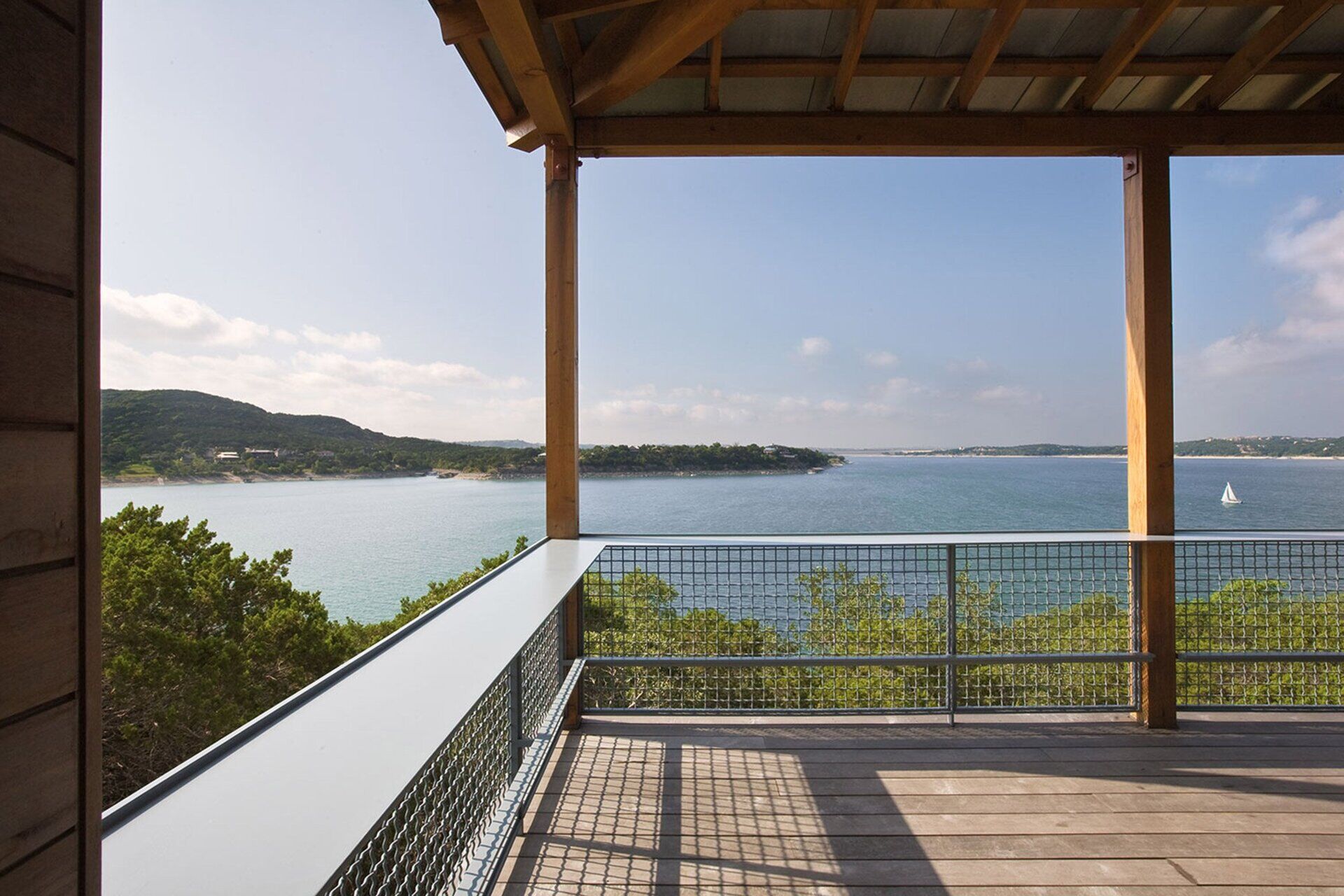
The journey through the tower culminates in reaching the upper deck, situated thirty feet above the forest floor. This space is not just a “deck”; it is a rooftop living room and the ultimate, logical conclusion of the entire project’s idea. From this vantage point, the perspective is completely different: it is no longer about living among the trees, but living above them. The green canopy transforms into an endless carpet, and the horizon of Lake Travis becomes a private possession. It is a place for contemplation, reading, or simply watching the wind move through the treetops—an experience that traditional ground-based designs cannot provide.
Conclusion: An Architectural Legacy Through Vertical Building
The Tower House is more than an addition; it is a statement. By rejecting the traditional horizontal approach, the designers not only preserved the integrity of the historical and natural site but also provided a model for intelligent architectural adaptation. It proves that vertical construction can be a sustainable and elegant solution in sensitive areas, creating a rich, multi-level relationship between humans and nature. The tower doesn’t just add space; it adds a new perspective.
✦ Archup Editorial insight
The Tower House project addresses the dilemma of expanding a sensitive natural site by shifting from horizontal to vertical growth, replacing land occupation with elevation within the tree canopy. A reading of the plan reveals that the tower form imposes a rigid vertical distribution of the program, where the dominant spiral staircases—consuming much of the circulation space—prioritize transition over comfortable horizontal living areas, resulting in a spatial experience characterized by obligation and a fixed sequence. The density of pivotal openings in the facade—despite their role in framing views—fragments the structural wall and reduces solid surface areas that could serve as backdrops for furniture or built-in storage, thereby limiting internal arrangement flexibility. However, the project succeeds in one key aspect to compensate for these constraints: the effectiveness of the corner openings in the bedrooms in resolving the limitations of the traditional window frame. These open corners create a complete visual continuity between inside and outside, transforming the wall from a barrier into a transparent medium that dissolves the boundaries between the dwelling and the surrounding natural landscape.
Brought to you by the ArchUp Editorial Team
Inspiration starts here. Dive deeper into Architecture, Interior Design, Research, Cities, Design, and cutting-edge Projectson ArchUp.


