Transforming a Victorian Terrace into a Contemporary Masterpiece: An Architectural Narrative of the Forest Gate House Renovation

ntroduction: Where Modernity Meets Heritage
In London’s Forest Gate neighborhood, where Victorian architecture prevails, a renovation project emerges to redefine modern architectural intervention. The architects at LSD have transformed a traditional Victorian terrace into an innovative family home. Their intervention was not merely an addition of space but the crafting of a integrated dialogue between the building’s history and a contemporary spirit, leveraging natural light and materials to create an exceptional living experience.
Design Philosophy – Dissolving the Boundaries Between Inside and Out
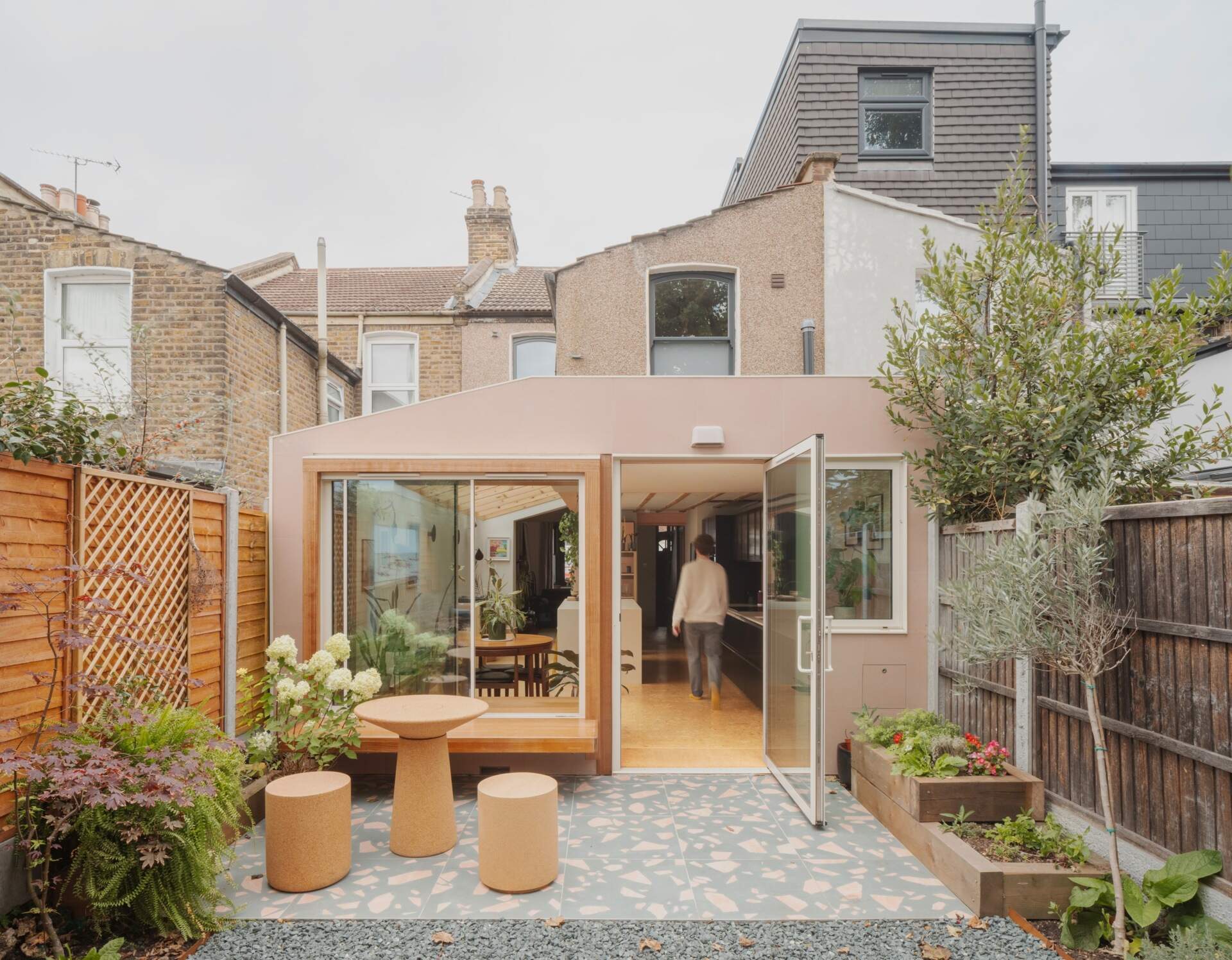
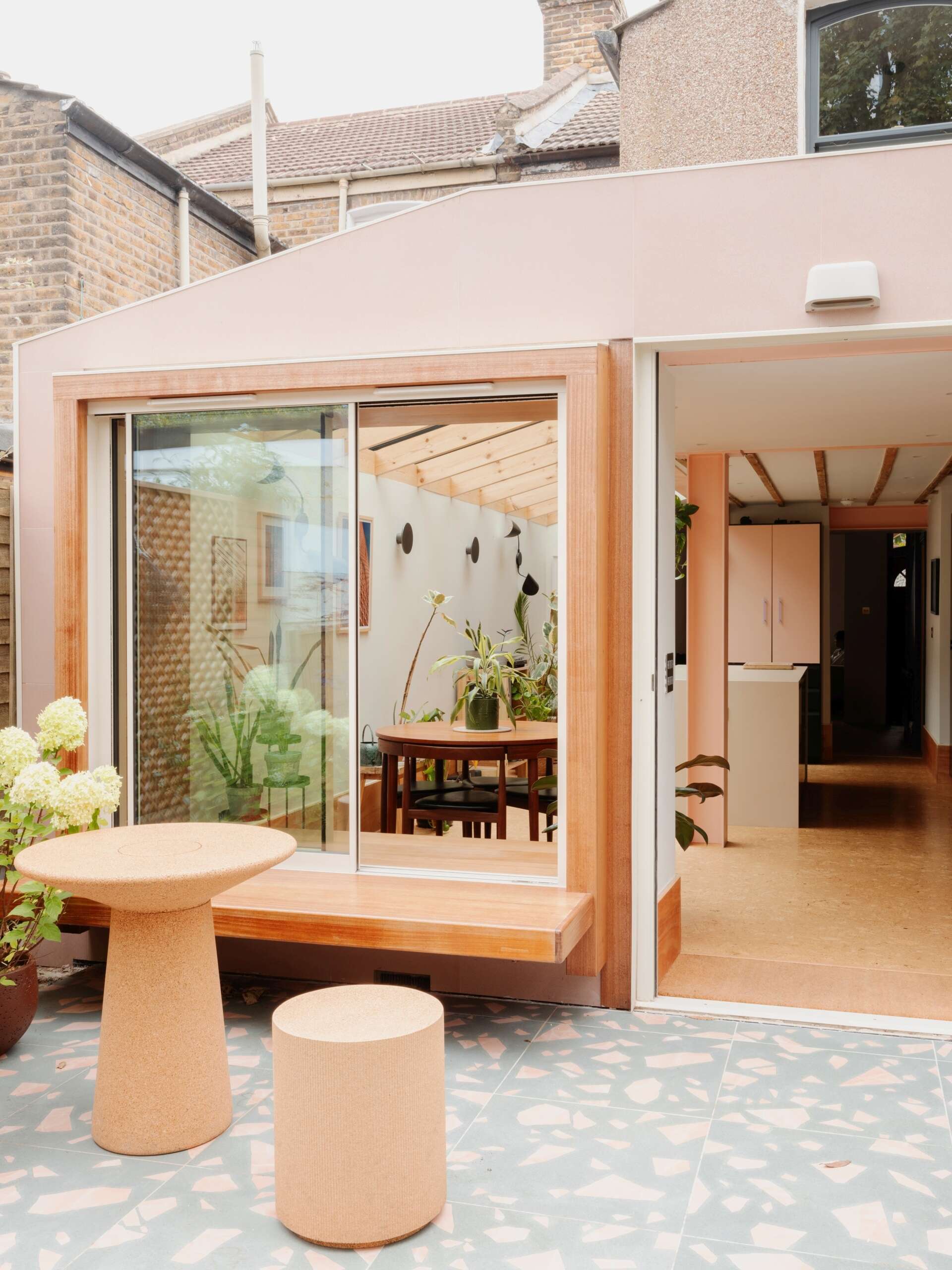
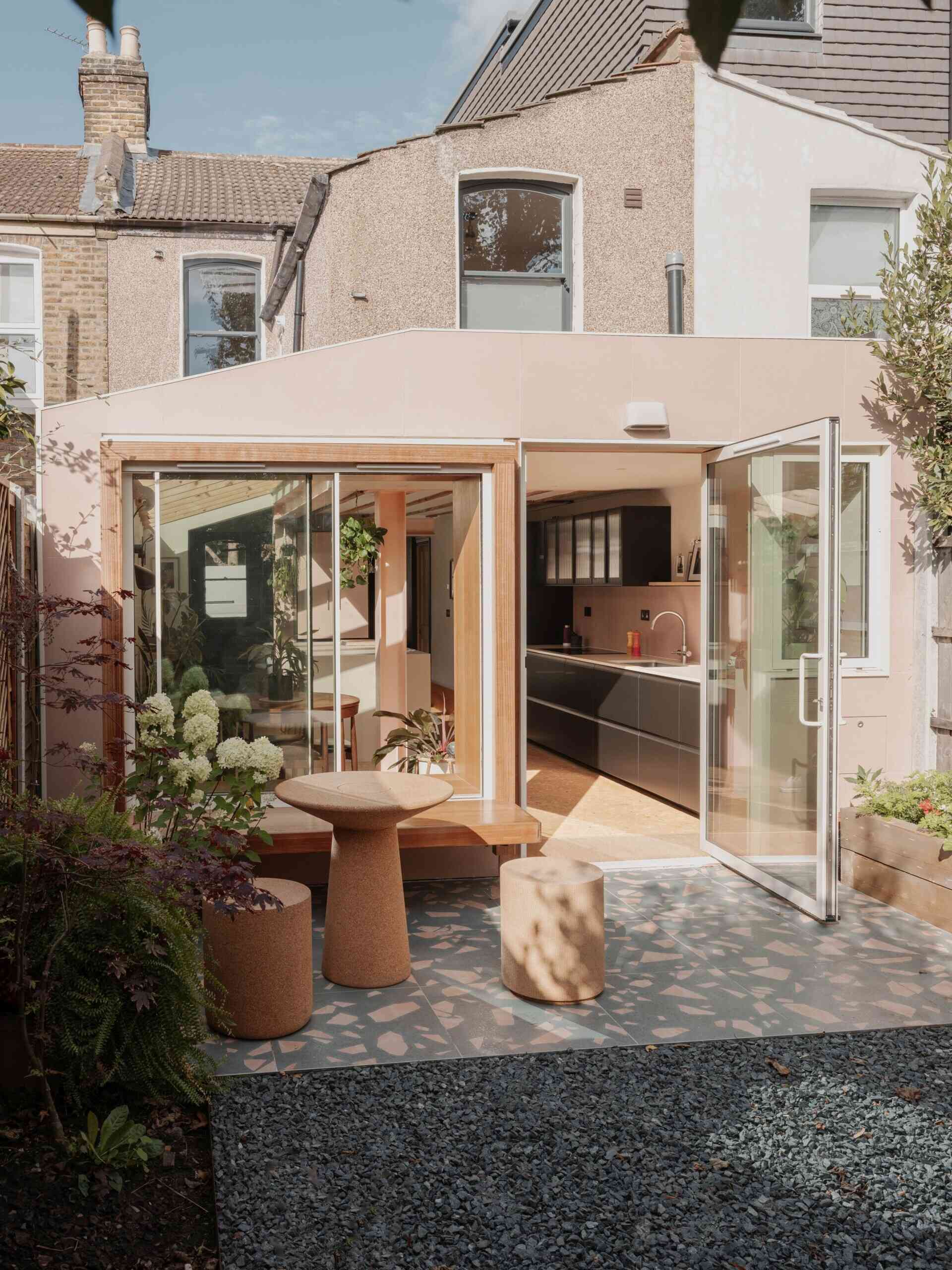
The goal was not simply to expand the square footage but to reimagine the relationship between the dwelling and its environment. The design is founded on the principle of “fluidity.” The internal walls that once enclosed the ground floor were removed and replaced with vast glazed openings and a monumental pivot door. When open, this door transforms the separating wall into a dynamic element, merging the interior with the rear courtyard into a single, connected spatial unit. This visual and physical flow not only expands the perception of space but makes the garden a natural extension of daily life within the home.
A Material Palette – A Dialogue Between Strength and Warmth
The material selection in this project is a design language in itself, narrating a story of the marriage between past and present.
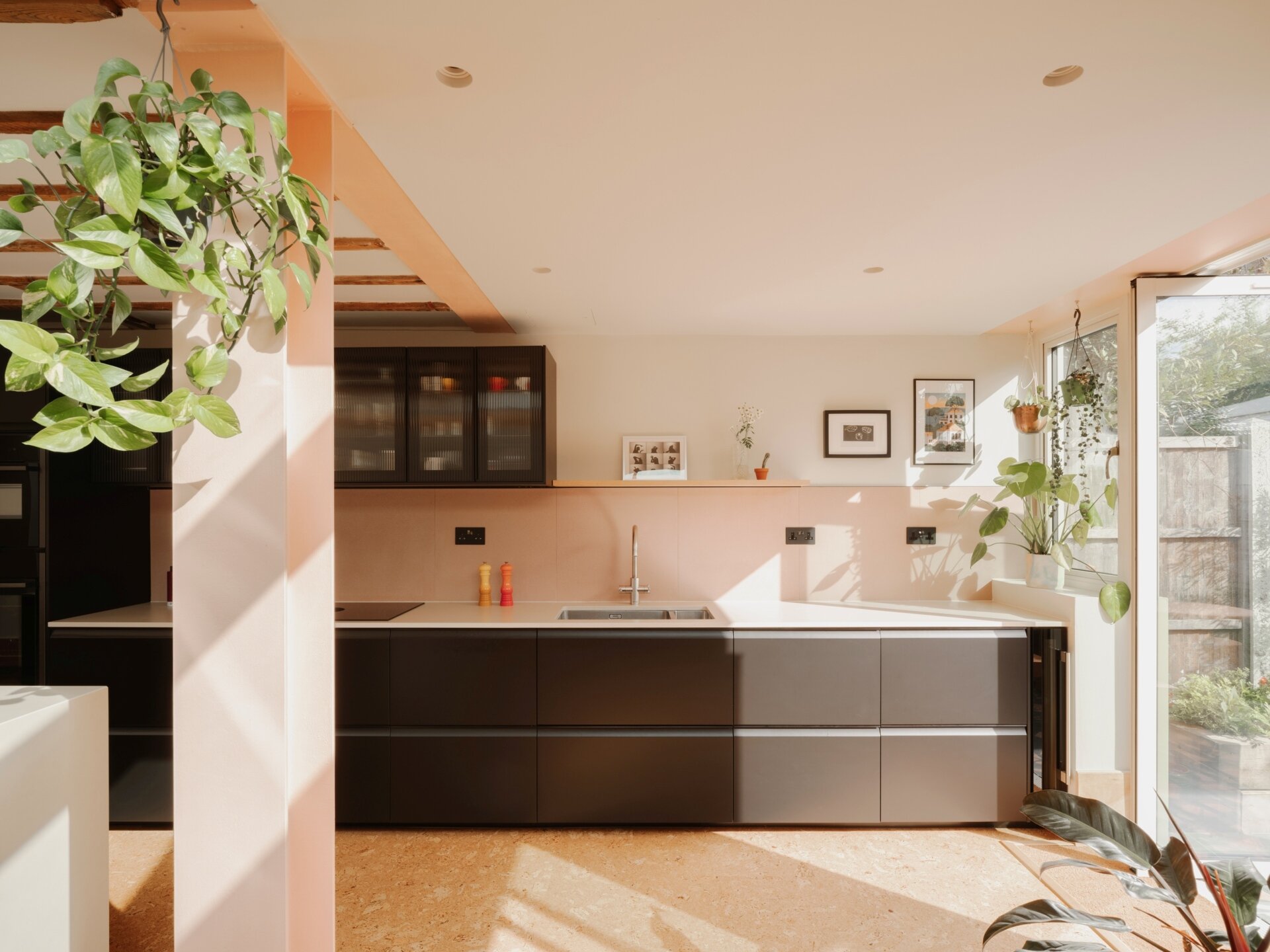
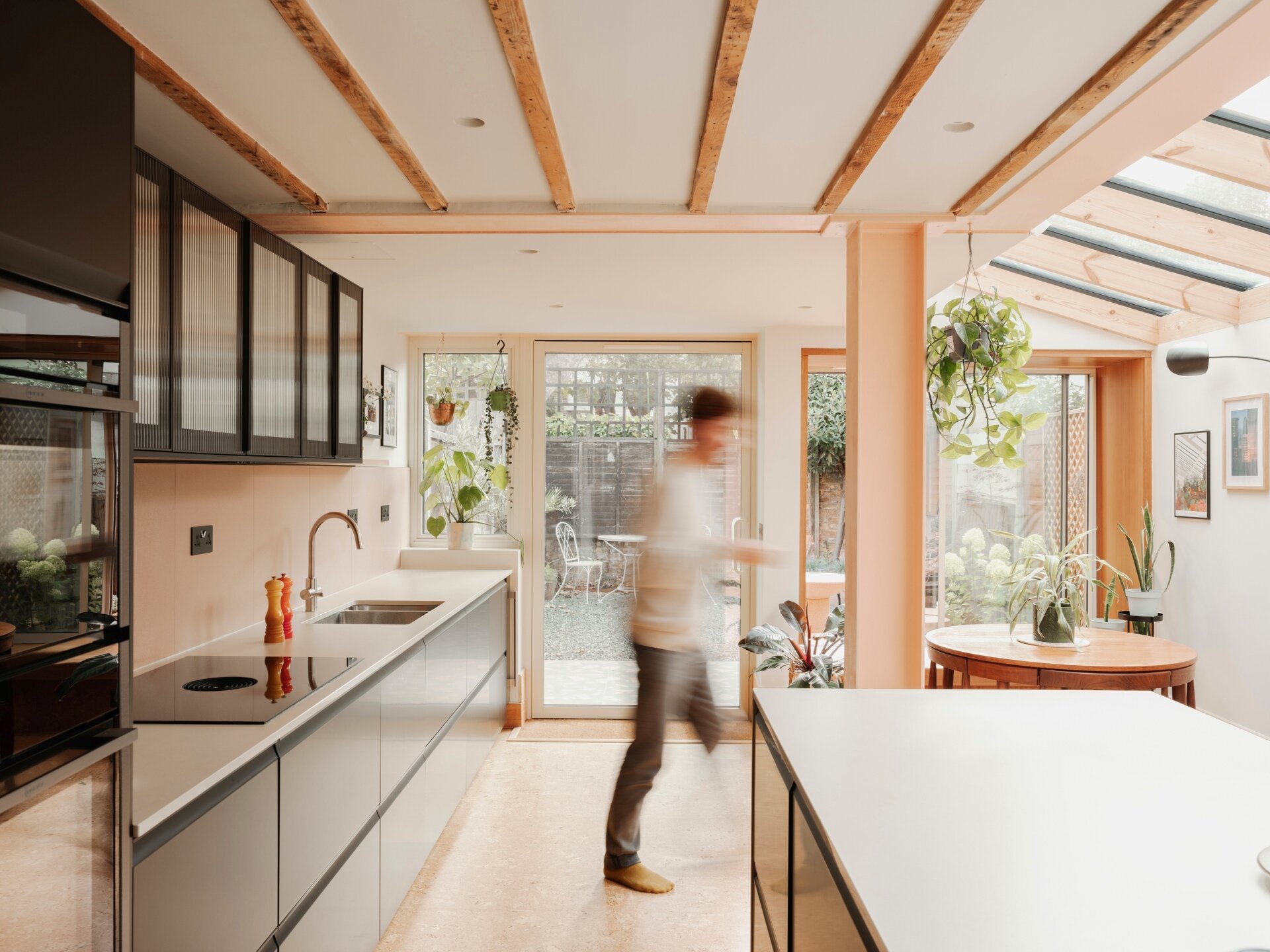
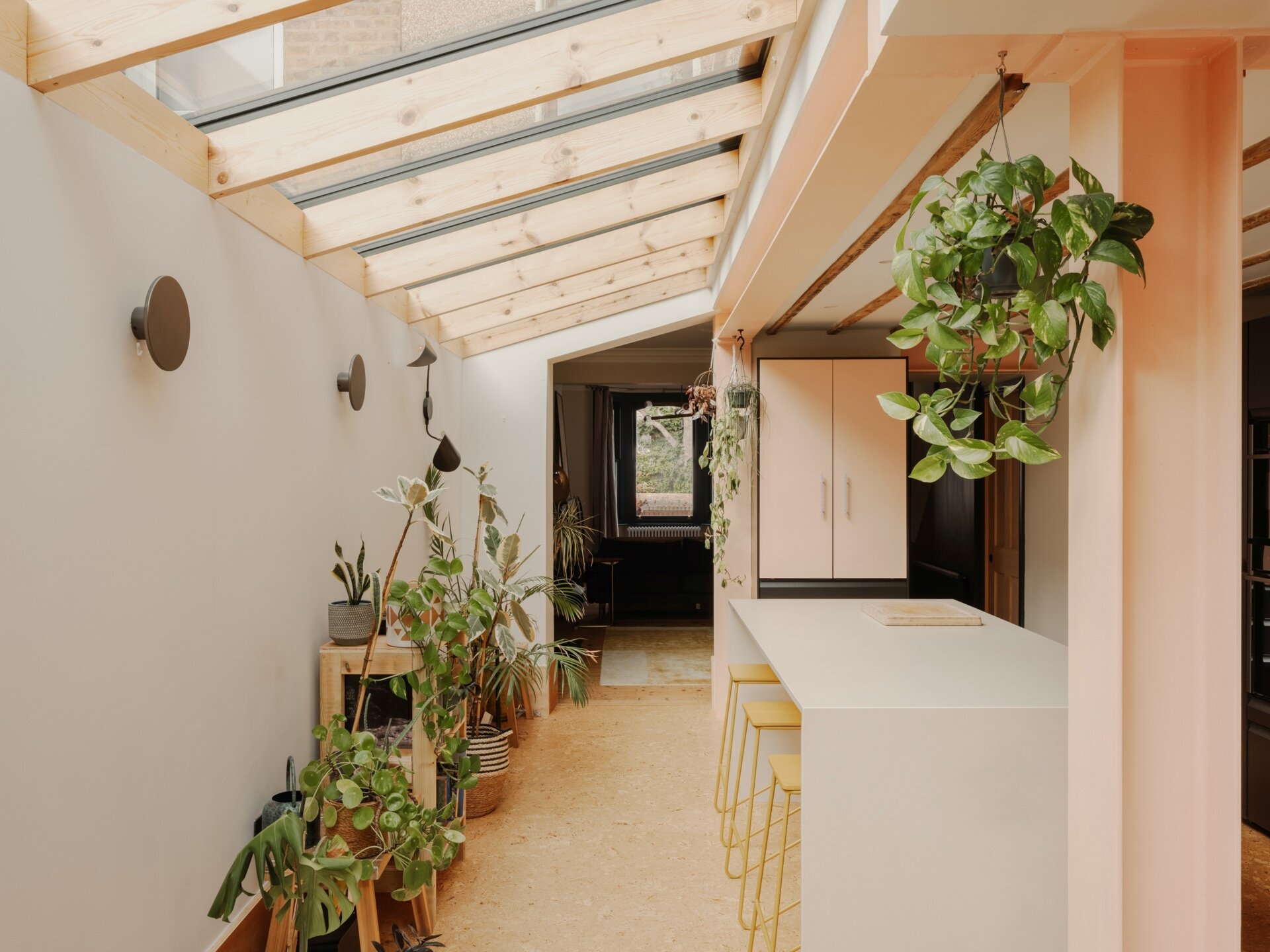
· Pink Steel: Boldness and Structure: The pink steel appears not just as an aesthetic touch but as an exposed structural element. This bold choice stands in deliberate and stark contrast to the original Victorian timber beams, carefully preserved above the kitchen. This dialogue between “industrial strength” and “artisanal heritage” transforms the structural element into a centerpiece expressing the project’s dual identity.
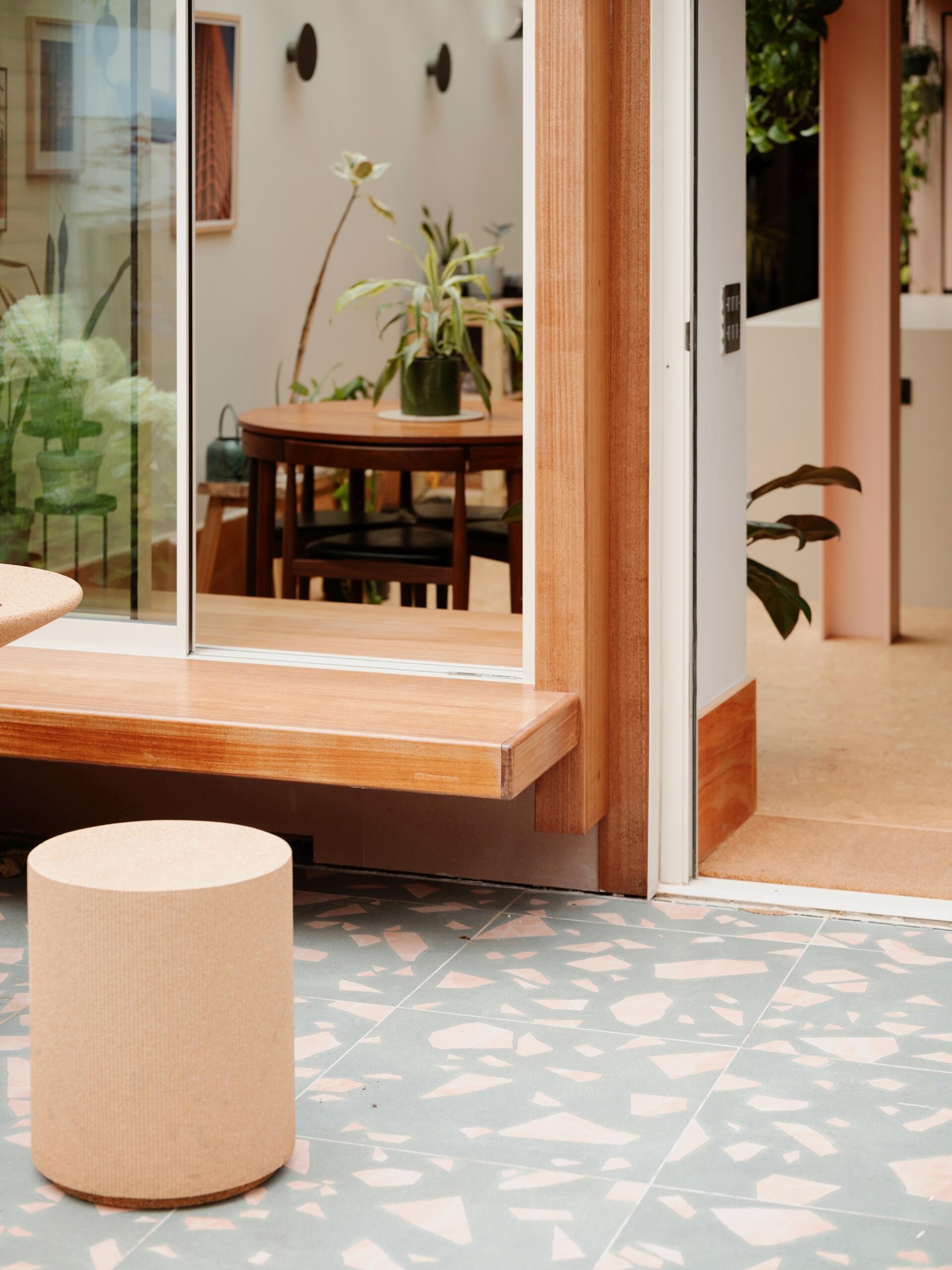
· Cork: Sustainability and Organic Sensation: Soft cork flooring extends throughout the space, creating a natural, warm-textured carpet. This renewable material is not limited to the floors; it transitions onto wall panels, enhancing acoustic and thermal insulation while creating an organic sensibility that envelops the entire area. The cork forms an intimate counterpoint to the coolness of the steel, a vital balance that adds a layer of comfort and tactility to the design.
· Craftsmanship and Detail: The custom joinery by Pip Furniture adds another layer of meticulous care, with bespoke pieces reflecting the design’s continuity. The wooden window seat at the garden’s threshold creates a contemplative moment—a transitional zone that encourages sitting and enjoying the view, providing space for poetic pauses between inside and outside.
Light as a Primary Design Element
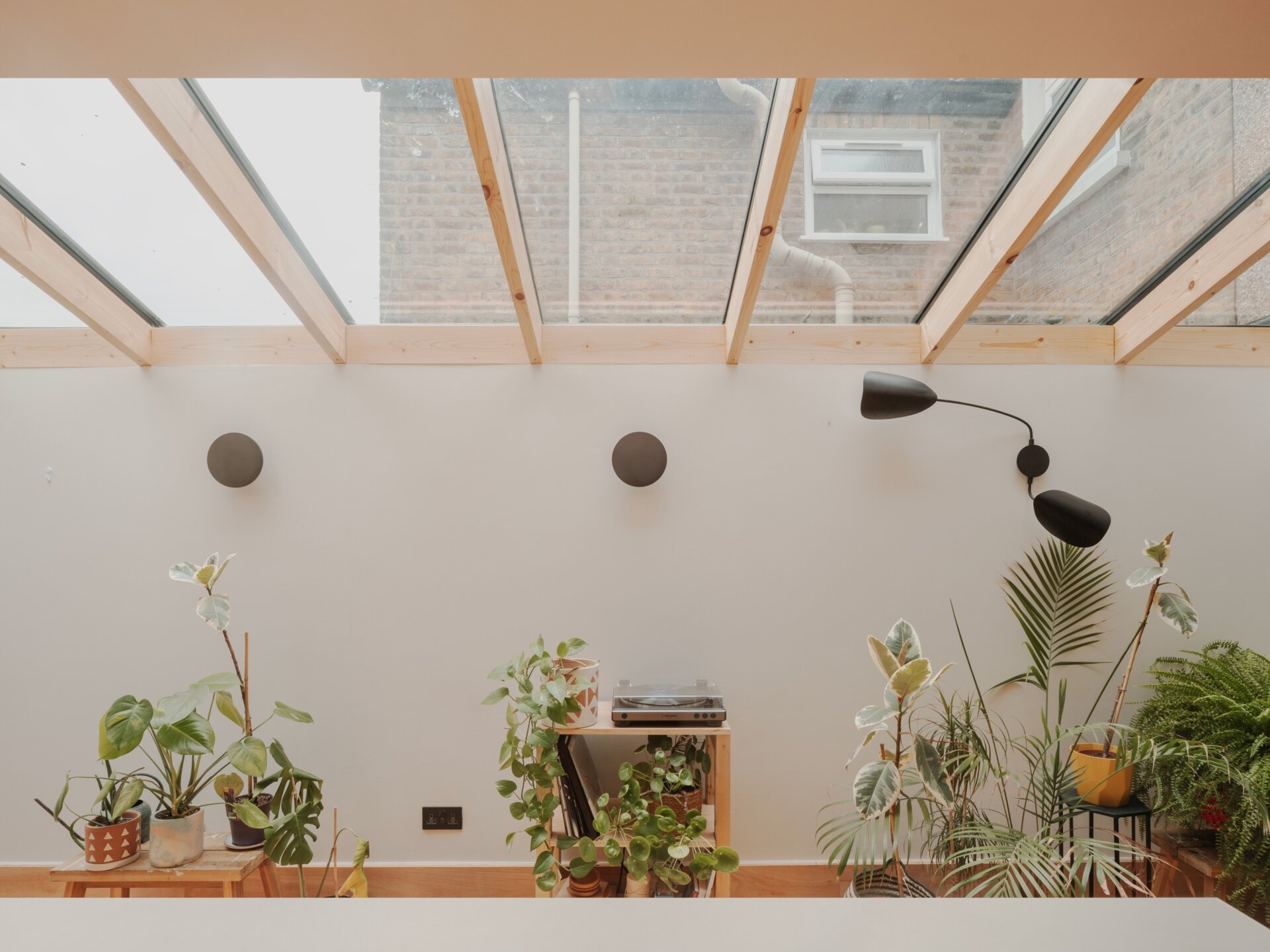
Light in this project is not merely for illumination; it is an intangible building material that shapes the core experience. The full-length roof lights do not just light the space; they “wash” the walls and work surfaces with natural light, mimicking the effect of the sun. This solution extends the hours of daylight within the home, especially during the short winter months, and creates dynamic, changing light patterns with the sun’s movement and the weather, making the space feel alive and continually evolving.
Flexibility and Function at the Heart of the Design
The interior spaces are planned to serve family life in all its details. The kitchen and dining area are no longer isolated but part of a unified daily landscape. This open, unpartitioned design supports both quiet individual activities and lively social gatherings, allowing for free movement and visibility that enables family members to interact even while engaged in different tasks. The space is designed to “adapt” to the inhabitants’ needs, not the other way around.
Conclusion: More Than Just an Extension
The Forest Gate House renovation represents a successful model of how to respect architectural heritage without sacrificing the demands of contemporary living. It is not merely an added space but a redefinition of how we live and connect with our homes. Through light, materials, and craftsmanship, the project successfully creates a sensorially rich domestic environment that restores poetry to everyday life.
✦ Archup Editorial Insight
This project transforms an enclosed Victorian terrace into an open garden extension that enhances visual and spatial connectivity with the outdoors. The design’s reliance on large glazed openings presents a challenge regarding privacy and internal climate control; the extensive transparent areas may lead to significant heat loss in winter and an increased thermal load in summer, placing additional demands on HVAC systems. The use of exposed pink steel raises questions about its long-term durability and susceptibility to corrosion in London’s damp climate, while the repetition of the same color and material on both the facade and interior may diminish the spatial experience and the transition from public to private. On a positive note, the project successfully integrates the original Victorian structure with the modern extension by preserving and incorporating the old beams into the new design, thereby maintaining the architectural memory of the place and creating a visible timeline.
Brought to you by the ArchUp Editorial Team
Inspiration starts here. Dive deeper into Architecture, Interior Design, Research, Cities, Design, and cutting-edge Projectson ArchUp.