Transforming Quarries from Environmental Scars to Creative Hubs: Towards a Regenerative Architecture

From Scars to Canvases
Quarries have long been perceived as deep scars on the planet’s skin, silent witnesses to a long history of resource extraction that fed consumerist hunger and rapid urban growth. For decades, these abandoned industrial voids have served as a stark physical reminder of the environmental cost of development, having directly shaped the urban landscape while leaving the Earth to deal with the consequences of this large-scale extraction. However, the global architectural scene is now witnessing a radical shift in perspective towards these spaces. They are no longer seen as barren “voids” but are being transformed into fertile grounds for innovation, multidisciplinary collaboration, and redefinition of purpose.
The Philosophy of Transformation: From Extractive to Extracted Architecture
This new approach represents a qualitative leap in architectural thinking. It moves beyond the concept of architecture as an entity added to nature, towards what can be termed “Extracted Architecture”—a philosophy that seeks a harmonious and reconciled relationship with the natural world. It is a shift from a logic of domination and exploitation to one of restoration and communication. This process is about transforming raw material not just into building matter, but into a creative idea; weaving new narratives from the remnants of a consumerist past. This architecture is a bold exploration of the coexistence between human creativity and the natural world, turning these sites into places for encounter and dialogue.
The Key to Success: Multidisciplinary Collaboration as the Cornerstone
Reimagining quarries is not a task for an architect alone; it is necessarily a collaborative and multidisciplinary process. Breathing new life into these vast voids requires a creative fusion of diverse fields such as:
· Architecture and Design: To establish the overall vision and shape the spaces.
· Geology and Structural Engineering: To understand the site’s nature and ensure its stability.
· Ecology: To rehabilitate the local ecosystem where possible.
· Arts and Humanities: To instill a sense of place and enrich the cultural dimension.
Inspiring Models: Narratives of Transformation on the Ground
- Cava Arcari / David Chipperfield Architects (Italy)
This project transforms a space that was once a site of intensive industrial activity into a quiet place for contemplation and art. The design does not attempt to conceal the original nature of the place but works to highlight the inherent beauty in the very process of extraction, where nature and architecture appear to harmonize into a unique entity. - Ca’n Terra House / Ensamble Studio (Spain)
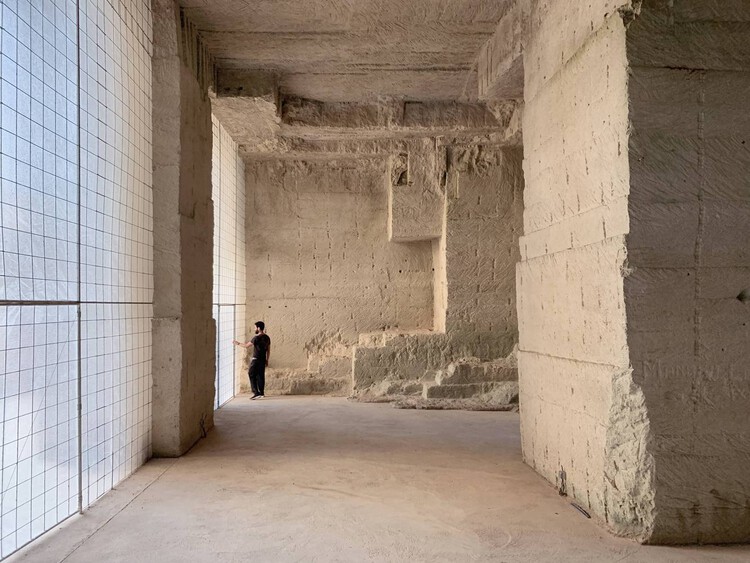
This project showcases a unique partnership between architecture and geology. The team did not build a new structure but rather “inhabited” the existing rock formation, carving the interior spaces with deep respect for the quarry’s geological history. The result is a space where the boundaries between the natural and the man-made are almost completely blurred. - Jinyun Quarries Project / DNA (China)
This ambitious project represents a comprehensive transformation of a series of quarries into a cultural incubator:
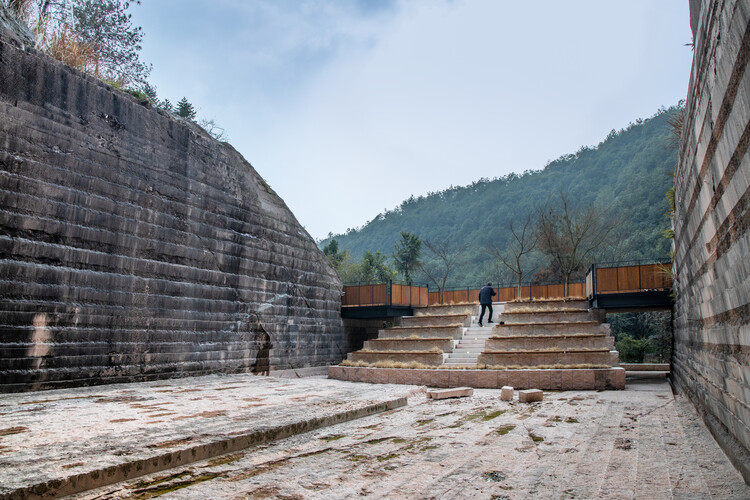
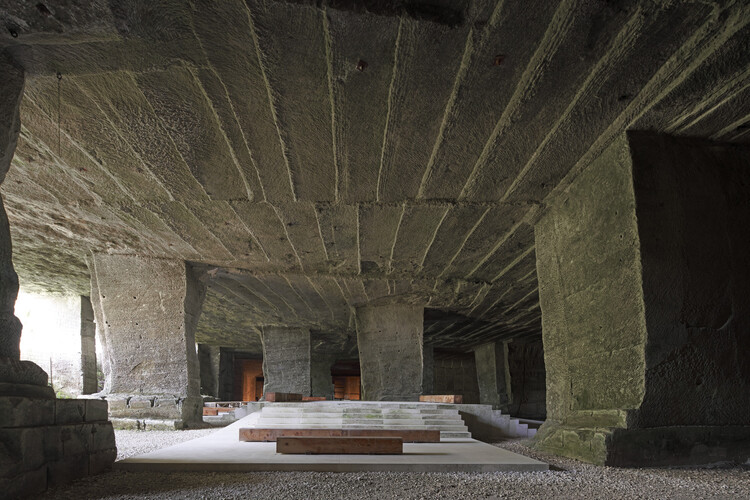
· Quarry No. 8: Mountain Book: A hand-carved quarry is transformed into a deep library and study space, creating a “mountain of knowledge” where books are lined up on stone terraces.
· Quarry No. 9 & 10: Performance Theater: Leveraging the natural cathedral-like form and excellent acoustics, this quarry was adapted to become a natural theater for lectures, live performances, and traditional Wuju opera, integrating architecture with living cultural heritage.
- Huangyan Quarry Visitor Center / DNA (China)
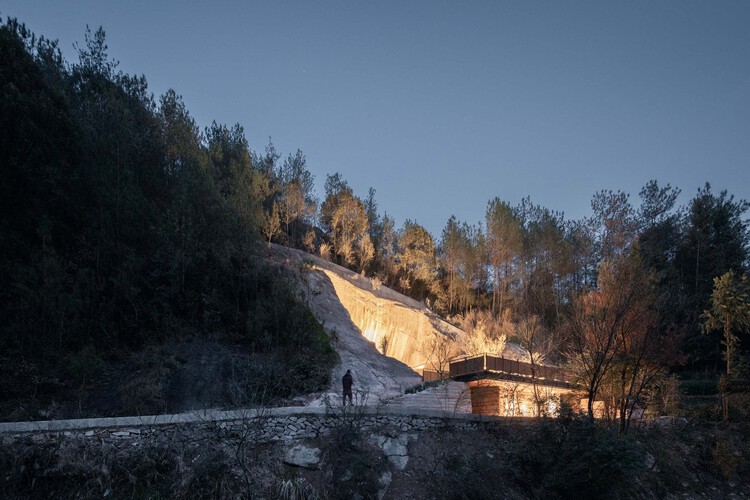
This project extends to encompass architecture, landscape architecture, lighting design, and the arts. The design approach emphasizes “minimal intervention,” preserving the site’s unique geological features while gently adapting it to serve as an “urban living room” for the community, allowing visitors to interact with local culture and the natural environment simultaneously.
Challenges and Future Vision: Towards a Dialogue with Nature
Despite their positive aspects, these projects challenge engineers and architects to address significant complexities, such as the high cost of rehabilitation, structural risks, and investigating the balance between human intervention and nature conservation. They also remind us of the profound environmental impacts of quarries, which have radically altered landscapes and threatened biodiversity. Yet, this new wave of architectural interventions proves that through an empathetic and holistic approach, we can begin to mend these fractures and redefine our relationship with the Earth. It presents a compelling case for the necessity of adopting an environmental conscience in the built environment sector.
In conclusion, these pioneering architectural responses propose a future where our built environments do not dominate nature but engage in a continuous dialogue with it. Through intelligent adaptive reuse, the remnants of industrial extraction are transformed from symbols of exclusion into vibrant sites of culture, community, and creation, heralding a new, more sustainable chapter in humanity’s relationship with the Earth.
✦ Archup Editorial Insight
The article delves into the philosophical and practical shift in dealing with industrial landscapes, like quarries, from being mere witnesses to exploitation to becoming spaces for multidisciplinary collaboration and architectural re-invention. By analyzing global case studies, it highlights the potential of adaptive reuse. From a design standpoint, these projects raise questions about the economic viability of converting remote sites with unconventional structural challenges, the energy efficiency of spaces difficult to insulate thermally, and their potential to become elitist projects serving a limited sector rather than a comprehensive community solution. Nevertheless, their core value lies in presenting a living record of the evolution of architectural thought towards a circular economy, where the reuse of industrial heritage and material sustainability become part of the place’s narrative and essence.
Brought to you by the ArchUp Editorial Team
Inspiration starts here. Dive deeper into Architecture, Interior Design, Research, Cities, Design, and cutting-edge Projectson ArchUp.