Trego: A Revolution in Fitness and Mobility.. A Smart Vehicle that Transforms from a Runner’s Companion to a Mini Scooter

In a continuous pursuit to integrate technology with healthy lifestyles and urban mobility, design companies YUPD and Wooks present their flagship project: the Trego vehicle. This innovation represents a qualitative leap in the concept of personal vehicles, as its role extends beyond mere transportation to become an intelligent companion for runners, enhancing the running experience from start to finish.
What is the Trego Vehicle? An Integrated Concept that Exceeds Expectations
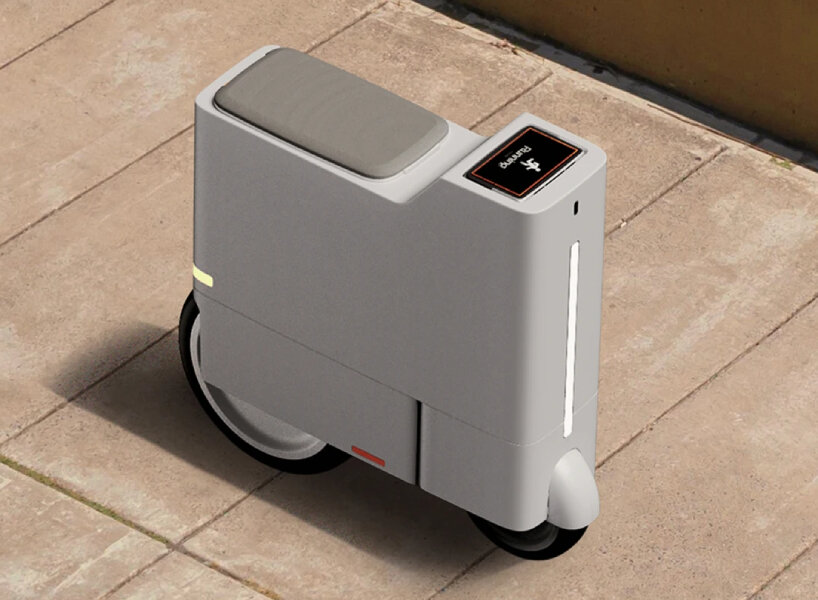
Trego is not just an ordinary bike or scooter; it is a versatile, smart personal mobility platform. The core idea revolves around meeting a runner’s needs in one integrated journey: from commuting to the running spot, through the exercise itself, and ending with the return home. Trego operates largely autonomously, powered by Artificial Intelligence (AI) and sensor technologies that allow it to interact seamlessly with the user and their environment.
How Does Trego Work? A Look at the Two Main Modes
Trego is designed to operate in two distinct modes, each serving a different stage of the user’s journey:
- AI Companion Mode (During the Run)
During exercise, Trego transforms into a personal training companion. It accompanies the runner, positioning itself slightly ahead, while its onboard sensors and technologies measure the user’s speed and movement. Based on this data, the vehicle automatically adjusts its speed to adapt to the runner’s varying pace, whether they are running at a steady speed or performing high-intensity interval training. The goal is to help maintain the desired running rhythm, making the workout more effective. - Navigation Mode (After the Run)
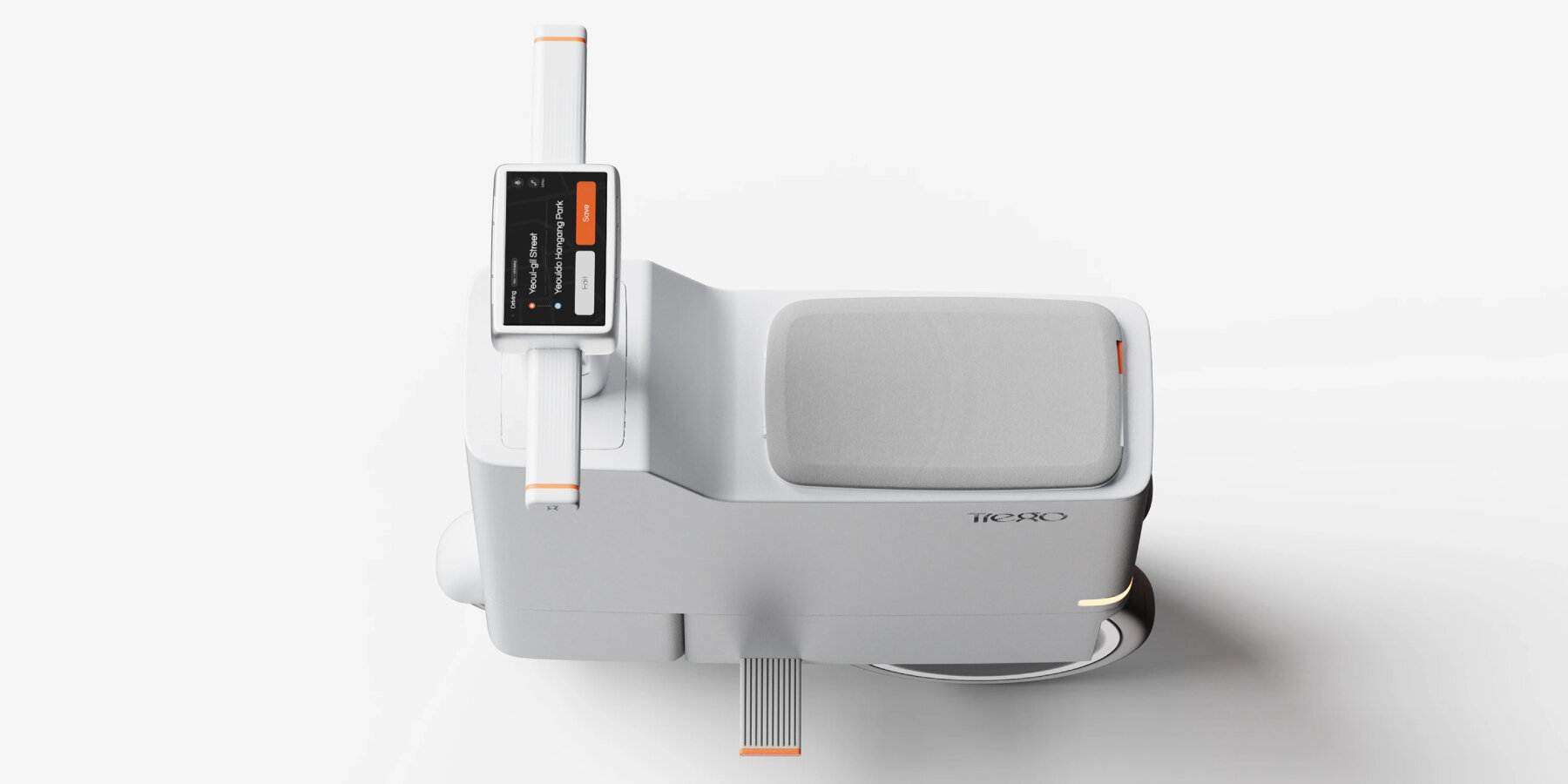
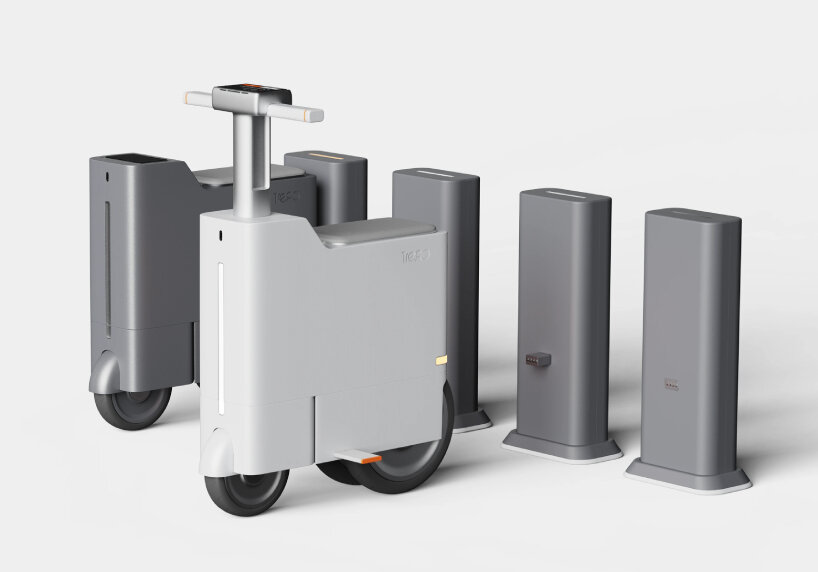
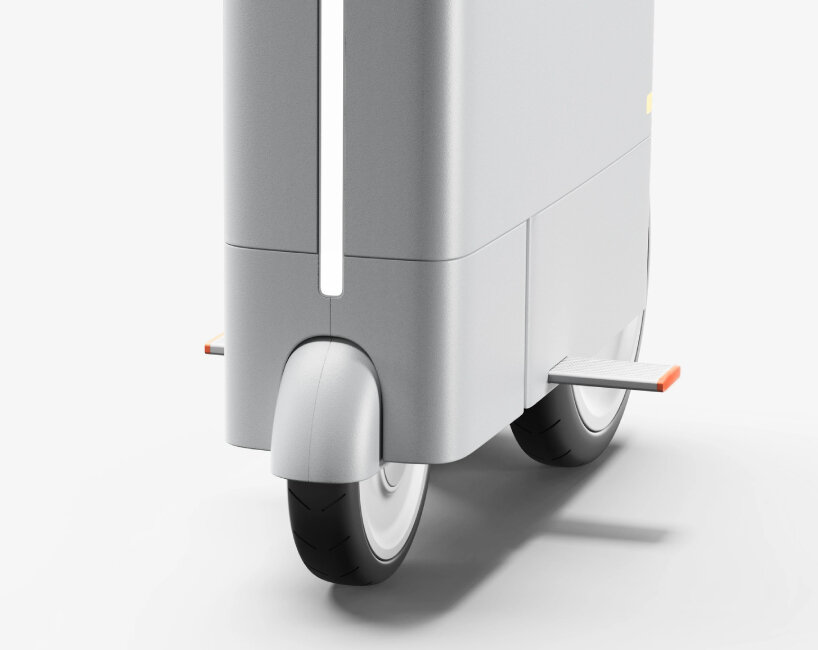
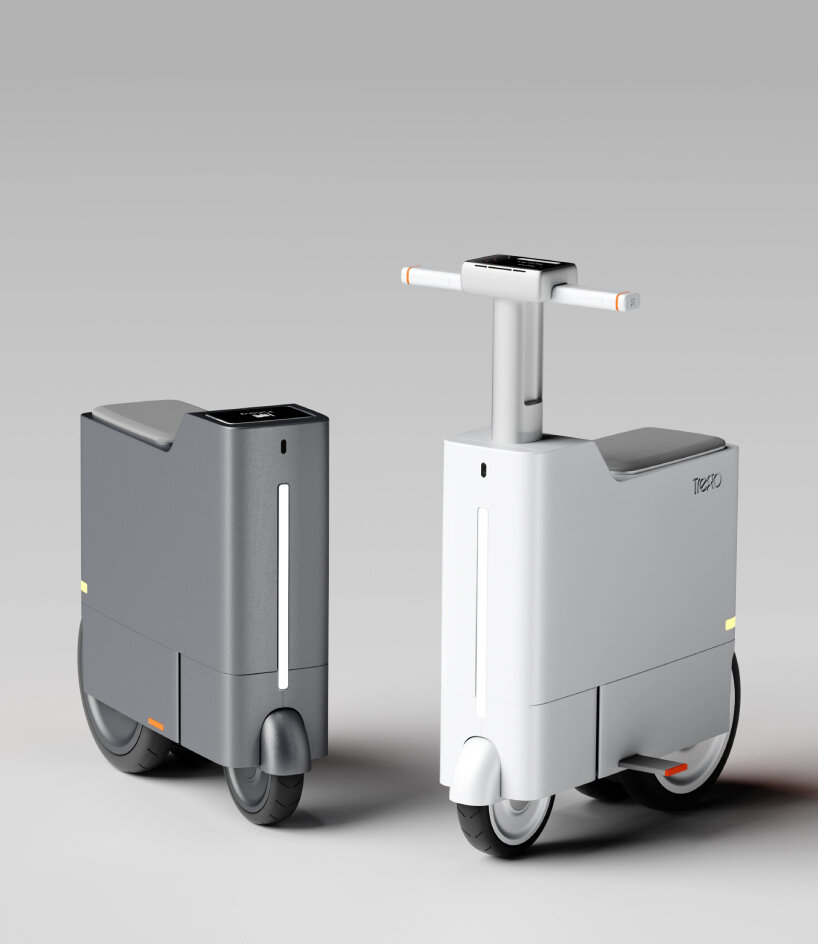
A challenge many runners face is the difficulty of returning to their starting point after exhausting their energy. This is where the second mode comes in, as Trego transforms within seconds into a practical mini scooter. By unfolding the foldable handles and extending the footrest, the user can ride comfortably and navigate easily without exerting additional effort.
Features and Technologies Pushing the Boundaries of Design
To deliver this integrated experience, Trego is equipped with a range of advanced technologies and features:
· Integrated Display Screen: It features a screen built into the handlebar that not only displays basic data during the run, such as distance covered, speed, and calories burned, but also allows the direct input of destinations without needing a smartphone.
· Advanced Obstacle Avoidance Safety System: For the first time in a vehicle of this type, front and rear cameras have been integrated along with a set of sensors. This system’s task is to detect any obstacles, pedestrians, or other vehicles from all directions. Upon detecting a potential hazard, the system automatically adjusts Trego’s path or speed to avoid a collision, functioning in both modes to ensure the safety of the user and others.
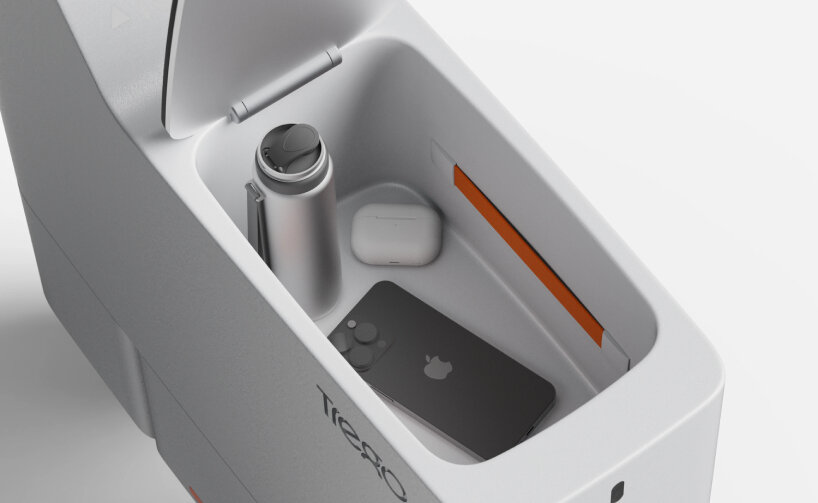
· Flexible, Practical Design: The Trego frame features three wheels for better stability. It also includes an internal storage compartment that serves a dual purpose: it is a safe place for personal items like a water bottle or phone, and it also functions as a comfortable seat when used as a scooter. Items inside are secured with an elastic strap to prevent movement.
· Smart Docking Station for Charging: The innovation isn’t limited to the vehicle itself; it extends to the charging system. Trego comes with a dedicated docking station. Upon the user’s return, the station automatically recognizes the vehicle and extends charging contact pins to recharge the battery without the need for manual cables.
Conclusion: A Promising Future for Trego
The Trego project represents a bold step towards the future of industrial design and personal mobility. It provides an answer to a real need in the lives of those interested in fitness and practical transportation. It is worth noting that the design team has already completed a functional prototype of Trego, laying the groundwork for a future vision that could change how we commute and exercise in smart cities.
✦ ArchUp Editorial Insight
The article addresses the idea of merging personal transportation with a sports aid into a single product, aiming to create an integrated solution for runners’ journeys within the urban fabric. From a functional perspective, the design raises questions about the actual efficiency of a three-wheeled vehicle in maintaining stable balance while accompanying a runner moving dynamically on potentially uneven pavements. The concept of automatic speed adaptation relies entirely on a set of sensors and cameras, presenting a challenge in dealing with complex, unpredictable urban conditions that often require immediate human interaction. The frame, equipped with foldable handles, footrests, and a seat, occupies a visual and physical volume that may conflict with the principle of lightness and freedom of movement sought by runners during training. On a manufacturing level, integrating propulsion, steering, sensing, and power systems within a compact frame leads to engineering complexity that increases the potential for malfunctions and complicates routine maintenance. Conversely, the dedicated docking station solution provides an organized management system for charging and storage processes, ensuring the vehicle’s readiness for use and maintaining the general order of the user’s personal space.
Brought to you by the ArchUp Editorial Team
Inspiration starts here. Dive deeper into Architecture, Interior Design, Research, Cities, Design, and cutting-edge Projectson ArchUp.