Triennale Milano Renovation: Luca Cipelletti Crafts Interactive Cultural Spaces

The Triennale Milano, a historic cultural center in Milan, Italy, has been carefully renovated by architect Luca Cipelletti. Completed in 2025, this renovation transforms the visitor experience for exhibitions, educational programs, and performances. Cipelletti’s design emphasizes flexibility, transparency, and sensory engagement, creating spaces that invite exploration while respecting the building’s cultural heritage.
The project introduces interactive areas for children, immersive sound installations, and a research center. Materials were selected for durability, sustainability, and visual appeal. By blending modern architectural techniques with historical preservation, the design creates harmony between old and new. Circulation is intuitive, lighting is dynamic, and spaces are adaptable, ensuring that visitors of all ages enjoy meaningful cultural engagement.

Design Concept
Cipelletti’s design philosophy prioritizes human interaction, engagement, and adaptability. The renovated spaces accommodate exhibitions, learning activities, and multisensory performances. Transparency, modularity, and environmental consciousness define the approach. This ensures that the historic character of Triennale Milano is maintained while providing functional and stimulating spaces.

Materials and Finishes
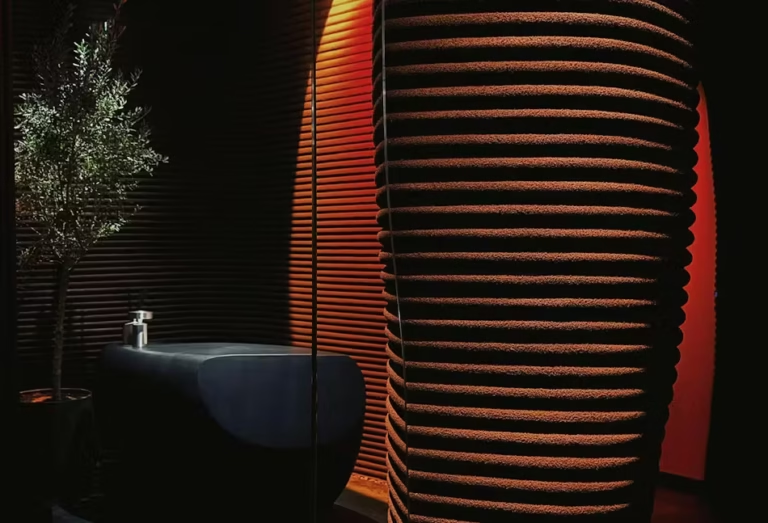
Sustainable and durable materials were central to the renovation. Recycled wood, reclaimed cork, and eco-friendly composites provide warmth and texture, while neutral finishes highlight exhibitions. Sound-absorbing panels, flexible partitions, and modular furniture allow spatial reconfiguration to suit changing programs. These choices enhance tactile and visual experiences and align with contemporary architectural practices.

Program and Spatial Organization
| Space | Function |
|---|---|
| Children’s Area (Gioco) | Interactive learning through play with sustainable cork surfaces |
| Immersive Sound Space (Voce) | Audio and lighting experiences supported by modular wall systems |
| Research Center (Cuore) | Access to historical documents via research-focused display units |
| Exhibition and Circulation Areas | Open-plan layout that facilitates visitor flow and accessibility |
Architectural Analysis
Cipelletti demonstrates mastery in combining functional clarity with sensory engagement. Circulation is intuitive, materials are honest and durable, and spaces accommodate multiple activities. Historic elements are preserved while modern architectural interventions enhance the visitor experience.
Flexible partitions, acoustic design, and modular systems enable multifunctional use for exhibitions, research, and educational activities. Locally sourced and sustainable materials reduce environmental impact and demonstrate social responsibility. The design integrates transparency, adaptability, and material integrity, reflecting contemporary architectural priorities.

Project Importance
The renovation illustrates the potential of adaptive reuse in cultural institutions. Architects learn to enhance visitor engagement while respecting historical identity. The project advances cultural architecture by integrating interactive, educational, and sustainable design strategies.
In an era demanding ecological and social responsibility, this project demonstrates the significance of user-centered, flexible, and environmentally conscious architecture. It serves as a model for future renovations of historic institutions, proving that innovation and preservation can coexist.

✦ ArchUp Editorial Insight
The Triennale Milano renovation, completed in 2025 under Luca Cipelletti, reimagines the historic cultural center as an interactive, flexible, and sustainable environment. The design emphasizes transparency, adaptability, and connection to Milan’s urban context, integrating specialized spaces for children, immersive sound experiences, and a research center. Materials, including reclaimed wood and recycled cork, are chosen for durability and environmental responsibility, while circulation and lighting strategies encourage education and engagement across diverse audiences.
Critically, the project balances modern intervention with historical preservation. Adaptive layouts, modular systems, and acoustic considerations enhance functionality without compromising the integrity of the original structure. While the renovation demonstrates exemplary sustainability practices, challenges remain in maintaining coherence between contemporary interventions and the existing heritage fabric. Nevertheless, Cipelletti’s approach highlights how sensitive design can enhance both visitor experience and institutional identity.
Overall, the Triennale Milano renovation serves as a model for cultural architecture, illustrating how adaptive reuse, sustainability, and interactive design can harmoniously coexist in historic contexts.

Conclusion
Luca Cipelletti’s renovation transforms Triennale Milano into a dynamic, interactive, and sustainable cultural environment. Carefully selected materials, flexible spaces, and immersive experiences enhance visitor engagement for all ages.
The project sets a benchmark for how architecture can honor heritage while delivering modern functionality. Balancing historic preservation, sustainability, and user experience, it serves as a global model for cultural institutions. Cipelletti shows that thoughtful design enhances learning, interaction, and environmental responsibility, making cultural architecture more engaging, adaptable, and sustainable.

The photography is courtesy of Triennale Milano
Explore the Latest Architecture Exhibitions & Conferences
ArchUp offers daily updates on top global architectural exhibitions, design conferences, and professional art and design forums.
Follow key architecture competitions, check official results, and stay informed through the latest architectural news worldwide.
ArchUp is your encyclopedic hub for discovering events and design-driven opportunities across the globe.
Brought to you by the ArchUp Editorial Team
Inspiration starts here. Dive deeper into Architecture, Interior Design, Research, Cities, Design, and cutting-edge Projects on ArchUp.