

UDRB: Daniyar Uderbekov’s Modular Sneaker Fuses 3D Printing with Central Asian Heritage

Almaty-based designer Daniyar Uderbekov presents UDRB, a groundbreaking modular sneaker concept that masterfully blends cutting-edge 3D printing technology with the rich footwear traditions of Central Asia. This innovative project is a profound exploration of modern sustainability—achieved through material reduction, a fully disassemblable construction, and a deep respect for cultural continuity, offering a compelling vision for the future of conscious product design.
Deconstructing the Norm: A Fully Modular, Glueless System
In stark contrast to conventional, monolithic sneakers, the UDRB is conceived from the ground up as a fully modular and disassemblable system. This intelligent design allows for each individual component to be easily repaired, replaced, or recycled independently, dramatically extending the product’s lifespan and simplifying end-of-life management. This approach not only reduces waste but also empowers the consumer, transforming them from a passive buyer into an active caretaker of their product.
The sneaker’s aesthetic and structural DNA pay homage to traditional Central Asian and Caucasian leather boots, specifically the Makhsi or Ichigi. Uderbekov doesn’t merely imitate; he thoughtfully adapts their functional construction and elegant form for contemporary use, creating a dialogue between past and present.
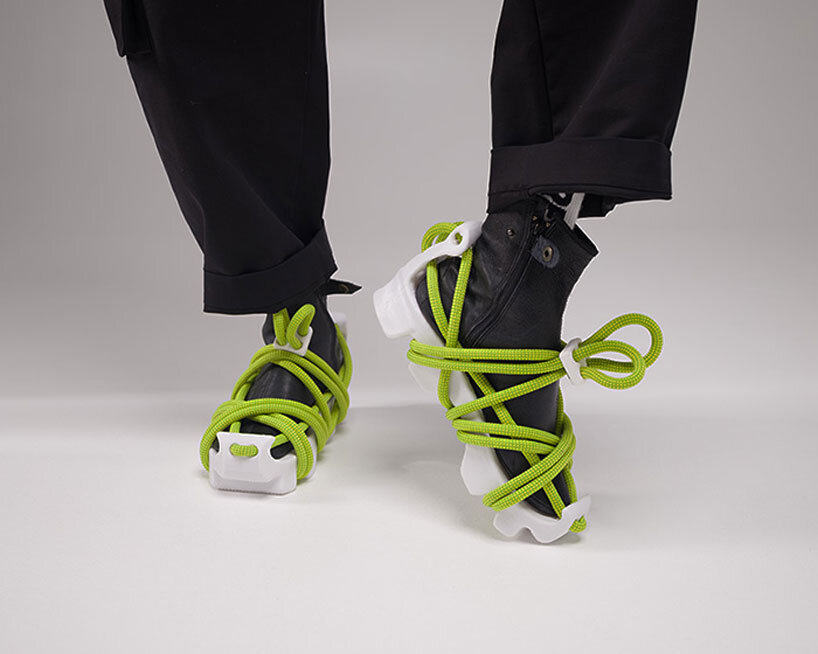
The Three Pillars of Design: Sole, Bootie, and Lace
The UDRB sneaker is elegantly composed of just three key elements, each serving a distinct purpose:
- The 3D-Printed TPU Sole: This lightweight, flexible, and durable sole is a marvel of modern manufacturing. It can be customized to adapt to the user’s unique footprint, offering unparalleled comfort and support. Critically, as it is produced from a single type of thermoplastic polyurethane (TPU) material, it is fully and easily recyclable, supporting a circular economy model.
- The Leather Inner Bootie: This component directly draws from the form and function of the Makhsi. Crafted from natural leather, it provides natural ventilation, moisture-wicking comfort, and a glove-like fit. Its design is so complete that it can be worn independently as a stylish indoor shoe, adding to the product’s versatility. The use of durable, high-quality leather ensures longevity and a patina that develops with age.
- The Climbing Rope Lacing System: Replacing rigid, hard-to-recycle plastic eyelets and buckles, this system is both a functional and narrative element. It is an allusion to the majestic mountainous landscapes surrounding Almaty. The climbing rope allows for a highly adaptable, secure, and lightweight fastening method, enabling the wearer to customize the fit for different activities.
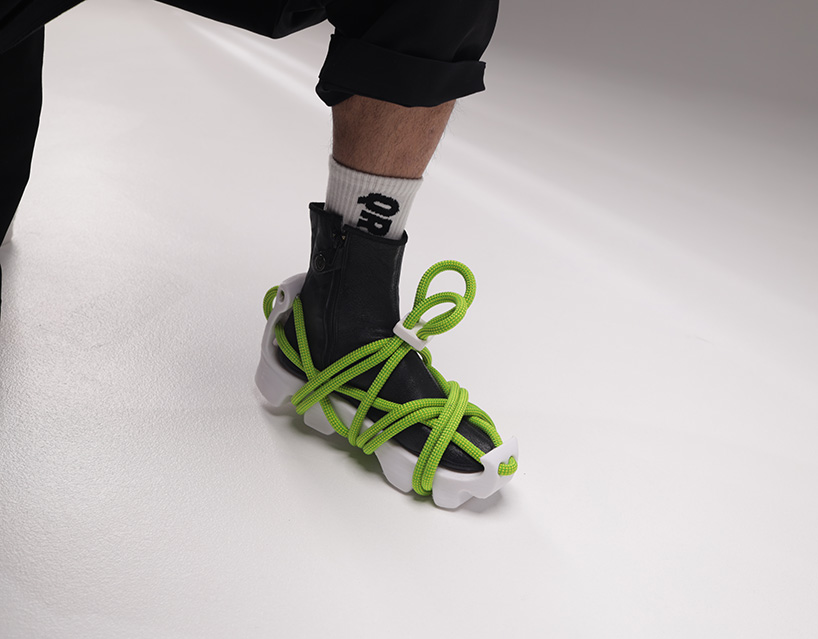
Assembly, Sustainability, and Cultural Narrative
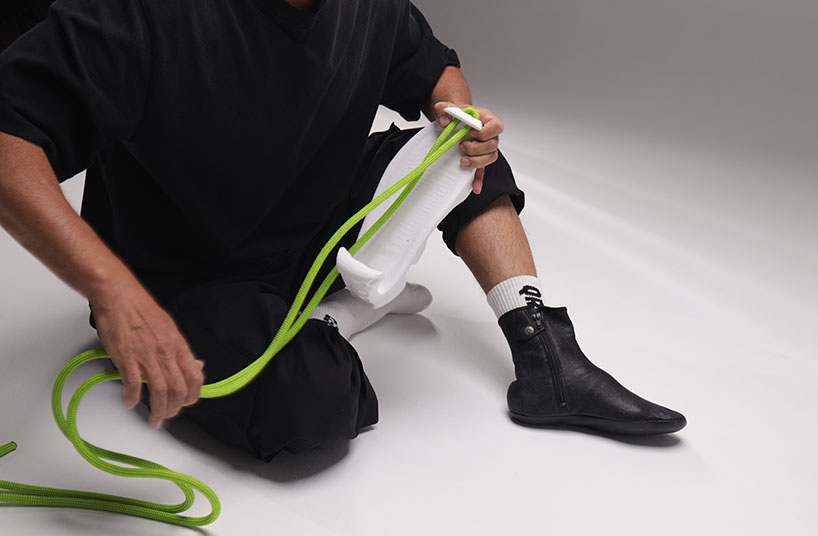
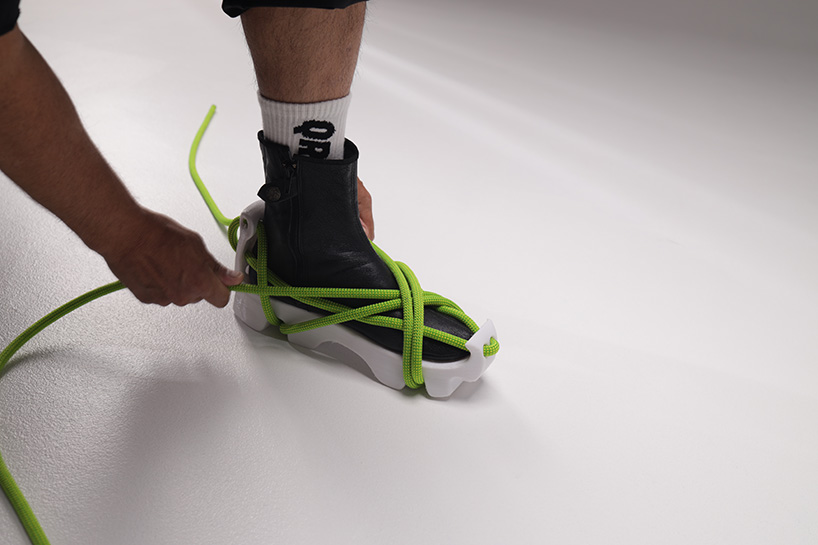
Assembly is intuitive and tool-free: the leather bootie is placed into the TPU sole and secured by wrapping and tying the rope, which creates a stable yet dynamically flexible fit. The emphasis on a glueless construction significantly reduces the product’s environmental impact while championing repairability and ultimate recyclability.
The project’s strength lies in its holistic vision. The durable natural leather contributes to long-term use, while the easily replaceable rope lacing system further enhances its circular credentials. By reinterpreting ancestral footwear through a modern technological lens, Daniyar Uderbekov successfully bridges contemporary manufacturing with intangible cultural heritage, creating an object that is both forward-looking and deeply rooted.
Target Audience and Future Evolution
The UDRB is designed for a discerning generation of consumers who value sustainable and repairable products, adaptable and lightweight travel equipment, and design that reflects cultural identity alongside modern innovation. Its hybrid nature—merging low-tech leather craftsmanship with high-tech additive manufacturing—perfectly aligns with the principles of the slow fashion movement, presenting a powerful alternative to disposable consumer culture.
The modular platform also demonstrates significant potential for future development. Variations could include interchangeable soles designed for specific terrains (urban, trail, etc.), seasonal adaptations like insulated versions for winter, and broader customizations in materials, colors, and patterns. Collaborations with local artisans could further embed traditional craft techniques into the system. Through its modular architecture, low material palette, and cultural grounding, the UDRB concept proposes a robust framework for design where sustainability, heritage, and technology synergize into a single, cohesive product.
(✦ ArchUp Editorial Insight)
Uderbekov’s UDRB project presents a compelling vision where modularity, 3D printing, and cultural heritage converge to create a sustainable sneaker paradigm. Its genius lies in a glueless, three-component design that promises repairability and full recyclability, championing a circular economy. However, the concept’s scalability and commercial viability face challenges, particularly regarding the cost of on-demand 3D printing and the consumer’s willingness to engage in self-assembly and repair. Despite these market hurdles, its true value is undeniable as a provocative prototype that successfully bridges traditional craftsmanship with radical innovation, offering a tangible blueprint for the future of ethical design.
Brought to you by the ArchUp Editorial Team
Inspiration starts here. Dive deeper into Architecture, Interior Design, Research, Cities, Design, and cutting-edge Projectson ArchUp.


