

White Plaster Volumes Form Kapsimalis Architects’ Home in Oia

An Architectural Dialogue with Santorini’s Nature
Perched on the outskirts of the traditional village of Oia in Santorini, Greece, this residence by Kapsimalis Architects offers its inhabitants panoramic views of sprawling vineyards and the Aegean Sea. The site is accessed via a narrow footpath, connecting the village’s main street at the caldera ridge to the planted hillside below. The design represents an intelligent architectural response to the steep terrain and surrounding rural landscape, merging seamlessly with the island’s unique volcanic scenery.
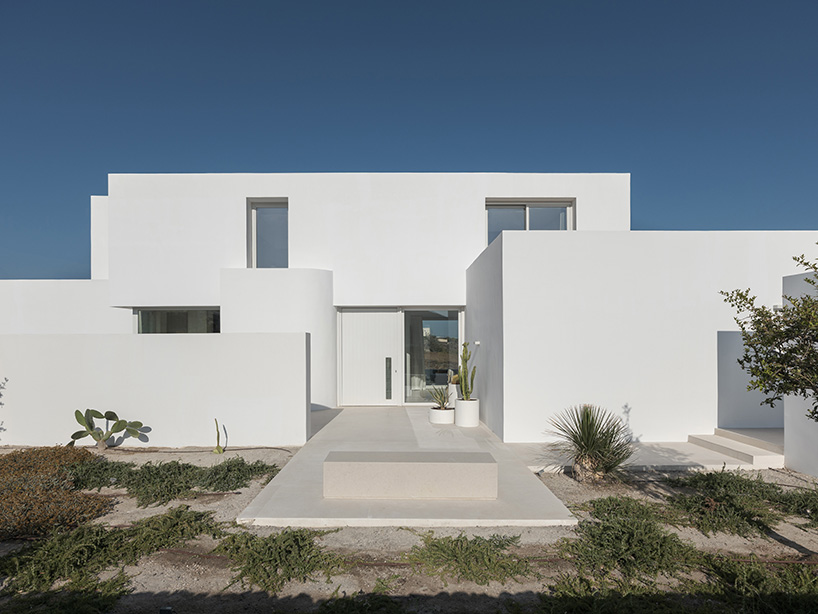
Hierarchical Composition: An Intelligent Response to Challenging Terrain
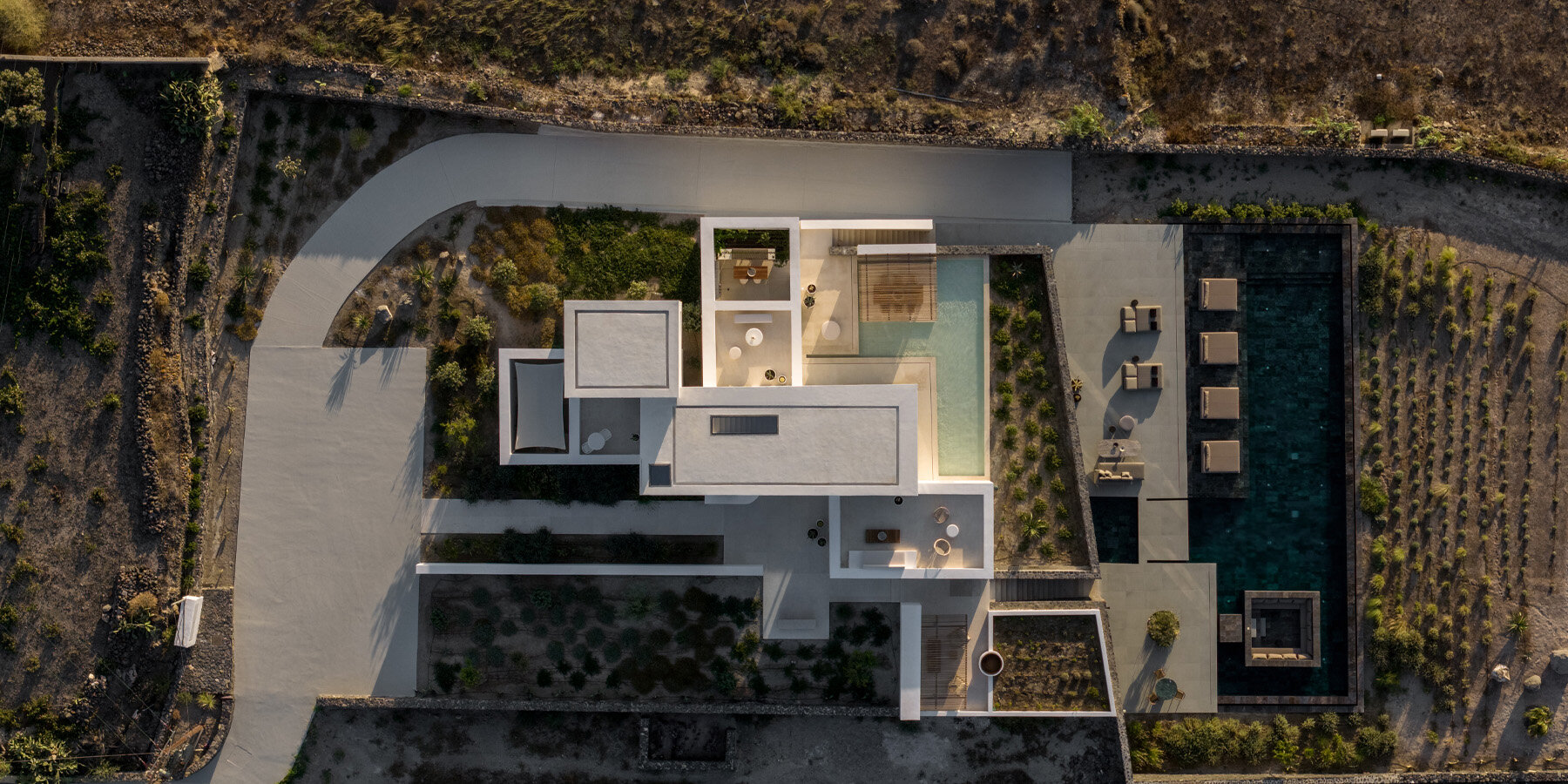
The building is shaped on a narrow, rectangular plot using a cascading, pyramidal composition that combines excavated (cave-like) spaces and independent prismatic volumes. These white plaster volumes of varying dimensions are distributed across multiple horizontal and vertical levels, offering a contemporary revival of Santorini’s architectural traditions. This architectural distribution responds cleverly to the land’s sharp incline, with the geometric forms engaging organically with the natural topography.
These prismatic structures form an integrated system of spaces: the main volumes house the home’s private and semi-private areas, while the voids between them create shared zones that open onto outdoor courtyards. Light wells and patios enhance natural illumination and create a sense of continuity between inside and outside, ensuring a fluid visual and kinetic flow throughout the home.

Reviving the Tradition of Santorini’s Cave Dwellings: The Lower Level
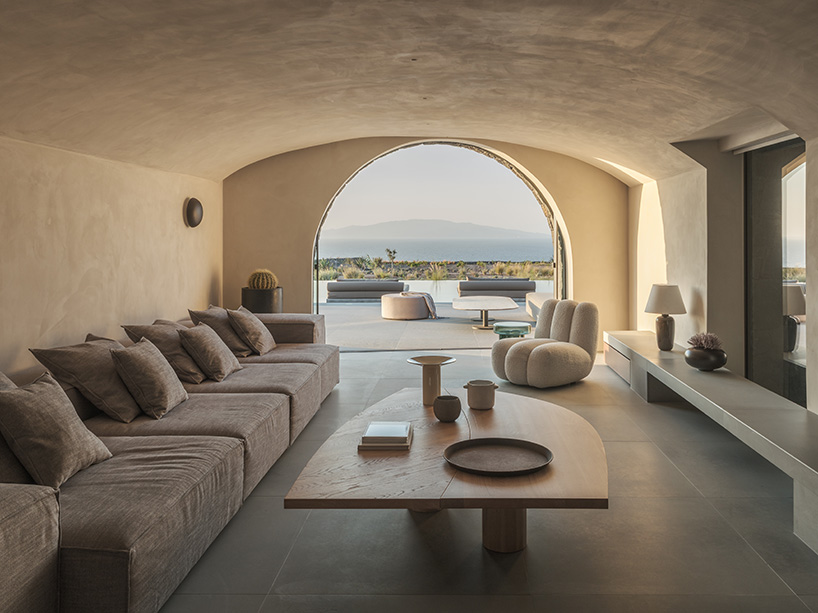
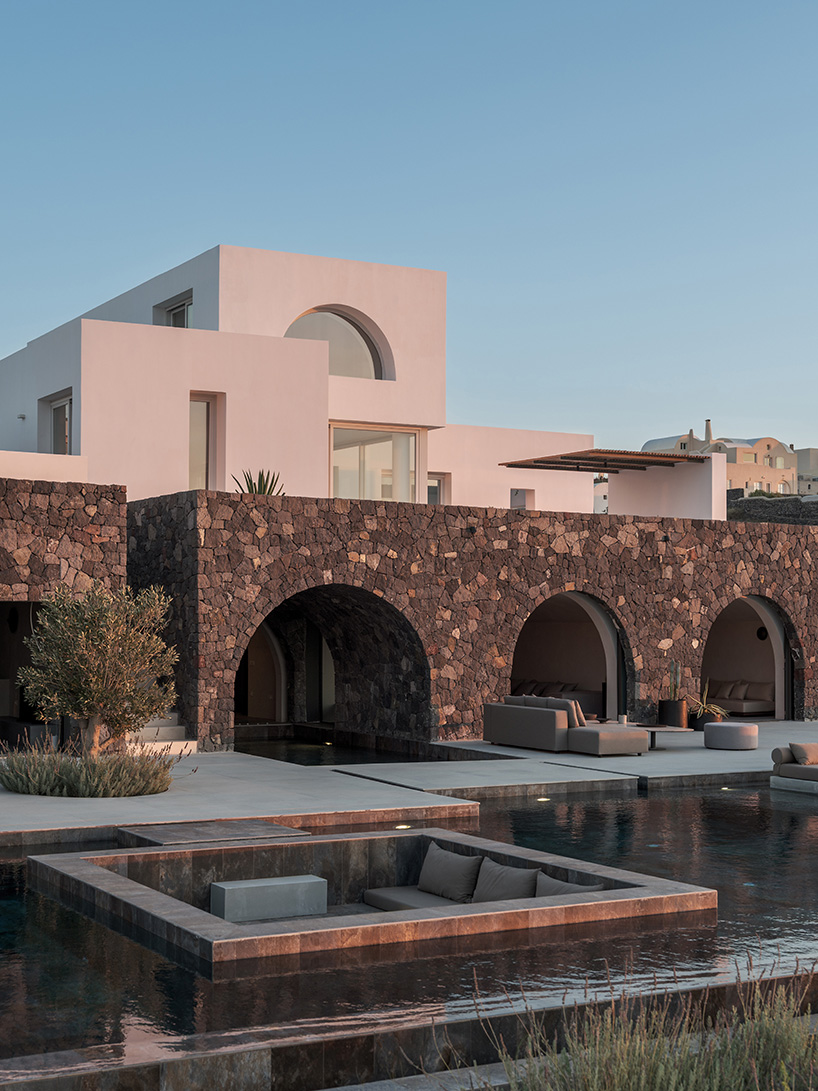
On the home’s lowest level, the design team at Kapsimalis Architects reinterprets the concept of Santorini’s traditional cave dwellings. A series of cavernous rooms are excavated side-by-side, extending deep into the hillside and opening only through the stone wall facing the view. This level exemplifies sustainable earth architecture, leveraging the thermal properties of the rocky soil.
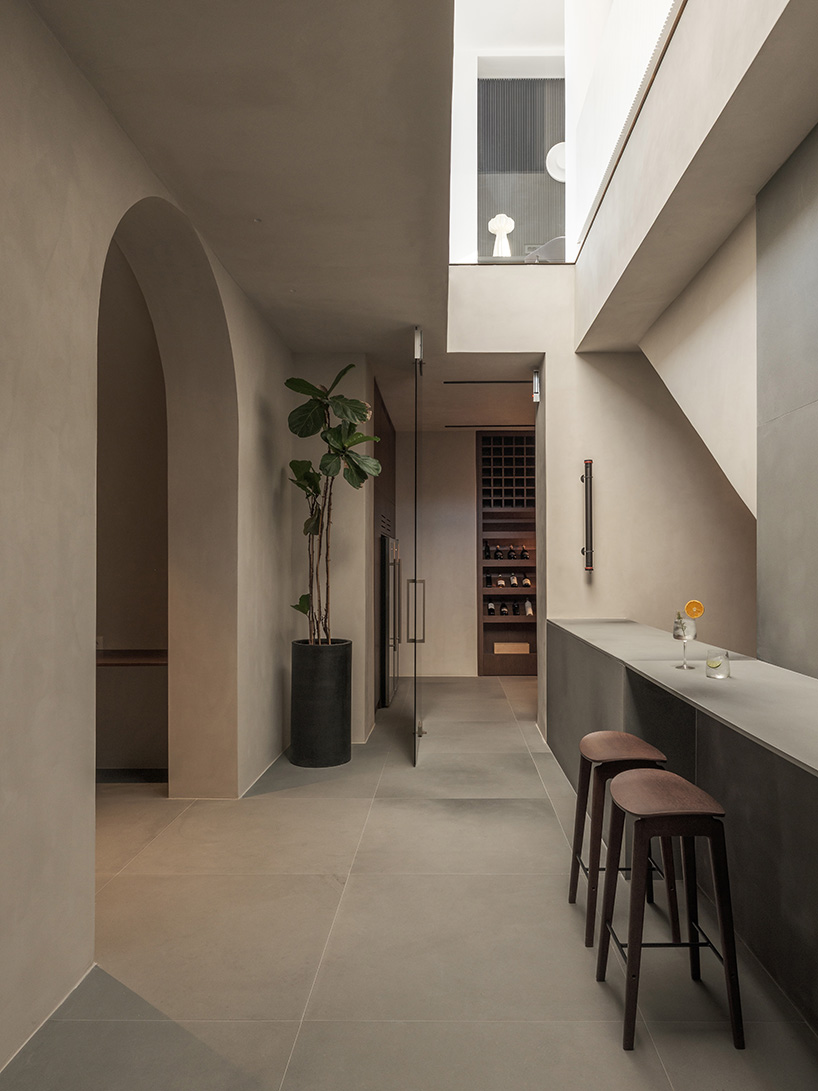
It accommodates a comfortable seating area, a private study, an integrated wine cellar with a stylish bar, a gym equipped with a sauna and modern bathroom, and an independent guest suite. This functional layout reflects a deep understanding of modern living needs while preserving the traditional spirit of excavated spaces.
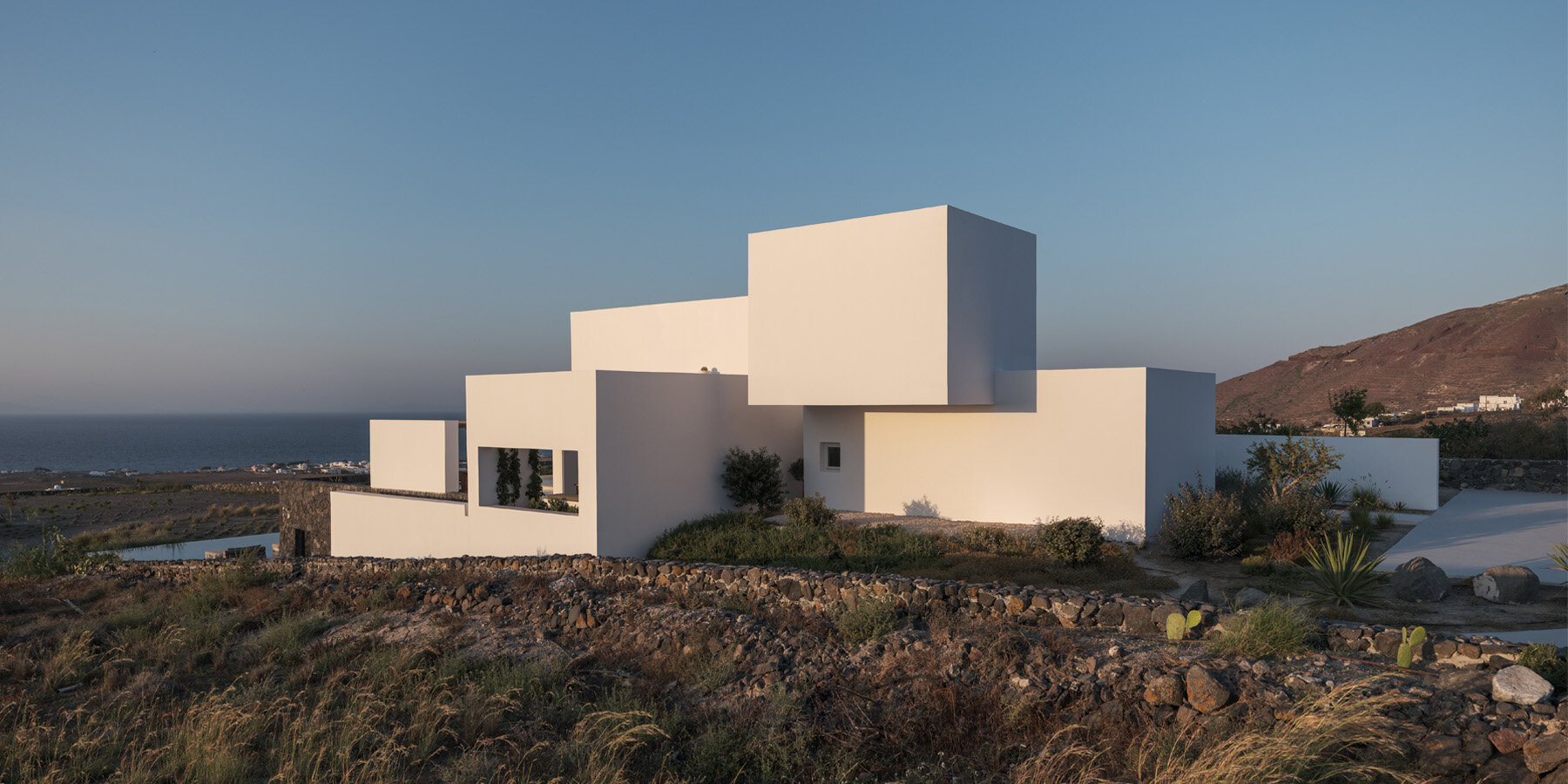
The Ground Floor: The Heart of Social Life
The ground floor forms the core of daily life in the home, containing a spacious entrance hall, dedicated living and dining areas, a modern fully-equipped kitchen, a master bedroom with an en-suite bathroom, a guest WC, and a library nook. This level features an organic connection to the outdoors, linking to several exterior spaces:
· A northern courtyard with a water feature and dining table
· A sheltered western courtyard dedicated to barbecuing
· A smaller eastern sitting area with a traditional fireplace
· A private courtyard with a plunge pool to the north
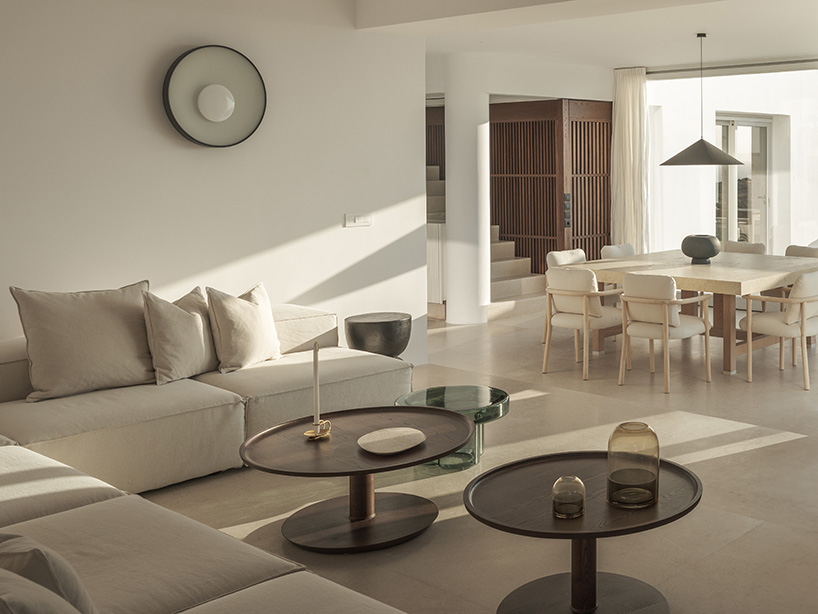
The Upper Floor: Quiet Private Sanctuaries
The upper floor houses two additional bedrooms, each with an en-suite bathroom and a private terrace, offering complete privacy and panoramic views of the landscape. These spaces are designed to provide the highest levels of comfort and seclusion, with a direct connection to nature through balconies overlooking the vineyards and the Aegean Sea.
Local Materials: Respecting Architectural Identity
The material palette emphasizes continuity with local building traditions; volcanic stone from the site itself was repurposed for the facade and perimeter walls, complemented by white-washed plaster surfaces, bleached timber window frames, Iroko wood pergolas, and beige-and-grey-toned marble paving. This selection reflects a design philosophy rooted in respect for the place’s architectural identity and sustainability.
Bioclimatic Strategies: A Response to the Local Environment
Bioclimatic strategies were carefully implemented throughout the design, including:
· Planted roofs for thermal insulation
· Water features for natural air cooling
· Thick stone walls for thermal mass
· High-performance insulation materials
· Strategically placed openings based on solar orientation and prevailing winds
Interior Design: Aesthetic and Functional Cohesion
The interior design reflects the external architectural language. Light tones, clean lines, and built-in furniture define the open upper-level spaces, while the cavernous areas adopt curved geometries and dark, earthy colors. Natural materials like stone, wood, glass, and metal are used consistently across all levels, creating visual cohesion while allowing for subtle contrasts between the characters of different spaces.
Integration with the Surrounding Environment
The external areas throughout the site are landscaped with Mediterranean plants, herbs, and vines, naturally framing the residential complex and creating perfect harmony with the surrounding environment. The project stands as a model of environmental architecture that respects the nature of the place and coexists with it in complete synergy.
✦ ArchUp Editorial Insight
The article presents the Oia House as a collection of white plaster volumes cascading down a volcanic slope, responding to the terrain and drawing inspiration from the traditional village fabric and local cave dwellings. The analysis observes that the repetitive horizontal distribution of the volumes, while responsive to the site, may limit the efficiency of vertical circulation and complicate the flow of movement between different levels. Furthermore, the reliance on limited openings for light and ventilation in the excavated spaces may not provide optimal cross-ventilation, potentially increasing dependence on mechanical systems in the Mediterranean climate. However, the reuse of volcanic stone excavated directly from the site for the construction of retaining walls represents a direct material integration with the unique geological context.
Brought to you by the ArchUp Editorial Team
Inspiration starts here. Dive deeper into Architecture, Interior Design, Research, Cities, Design, and cutting-edge Projectson ArchUp.


