

Wollongong Sports Precinct 2026: Urban and Infrastructure Development

The Wollongong Sports Precinct is entering a comprehensive development phase. The New South Wales Government has announced a new plan for the project, allocating an initial budget of $17 million. The plan aims to restructure the existing buildings and transform the area into an integrated hub for major events.

Functional Reprogramming
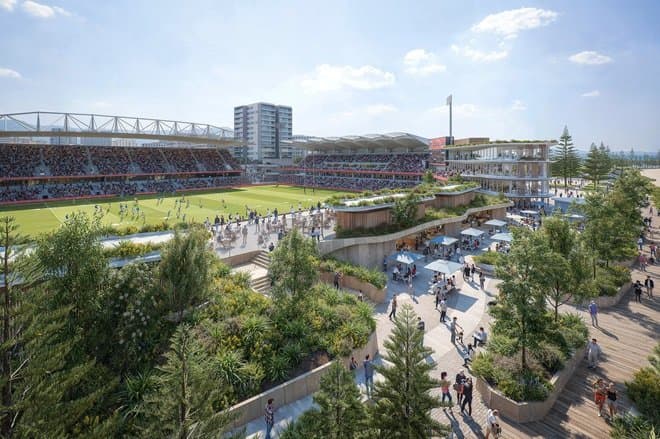
The architectural design presents a new vision for sports facilities. The central element is the creation of WIN Arena as a multi purpose venue. It will accommodate 9,500 people, and its flexible design ensures the space can be activated year-round.

Structural Intervention and Building Updates
Construction work at the Wollongong Sports Precinct includes substantial upgrades to the existing WIN Stadium. The plan adds a new northern grandstand and reconfigures the southern one. The new interior design aims to fully improve the functionality of service areas.
Integration with the Urban Context
The design connects the project to its immediate surroundings. It links to the city’s beaches and its commercial center. This is achieved by creating a beachside complex with various services. This approach reflects a modern vision in cities and urban planning, promoting social sustainability.
Building Systems and User Experience
The government will upgrade the technical systems throughout the Wollongong Sports Precinct. These upgrades include lighting, sound, and digital displays. The plan also improves access paths to ensure the project is accessible to all users. These developments are among the most significant architectural news for the region.
Architectural Snapshot
The project redefines specialized infrastructure as a versatile urban fabric.

✦ ArchUp Editorial Insight
Public funding for large scale urban projects often triggers a specific risk mitigation framework. The primary goal shifts from purely programmatic use to ensuring year round economic activation and justifying high capital expenditure. This pressure typically results in a hybrid typology: the renovation of existing assets combined with the construction of a highly flexible, multi purpose arena. The architectural form becomes a direct symptom of this economic model. It prioritizes operational versatility over specialized design, leading to large, generic volumes optimized for diverse event logistics rather than a singular civic or sporting identity. This outcome is the logical result of prioritizing economic de risking and event-hosting capacity above all other factors.

★ ArchUp Technical Analysis
Technical Analysis of the Wollongong Sports Complex:
This article provides a technical analysis of the Wollongong Sports Complex development in New South Wales, serving as a case study in modernizing and integrating sports infrastructure with the surrounding urban fabric.
The project is funded with an initial budget of 17 million Australian dollars, with its plan centered on creating a multi-use hub. The core element is the new WIN Arena, a multi-purpose indoor arena with a capacity of 9,500 people, designed for flexible, year-round events.
The development includes a comprehensive upgrade of the existing WIN Stadium, involving a new northern grandstand and reshaping of the southern stand. Technical systems throughout the complex will also be updated.
In terms of urban integration, the project aims to connect the complex with the city of Wollongong through the creation of a Beach Precinct with diverse amenities, transforming it into an active, year-round urban hub.
Related Insight: Please review this article to compare another project that redefines the role of specialized infrastructure and integrates it into the urban fabric:
Jiuzhou Bay Port 2026: A Transport Hub and Urban Complex in Zhuhai




✅ Official ArchUp Technical Review completed for this article.