Wood Sawdust in Composites: Rethinking Waste Use

Wood Sawdust: An Underutilized Resource
Wood sawdust is produced in massive quantities by sawmills, furniture factories, and construction sites, reaching hundreds of millions of tons globally each year. Despite its widespread availability, it is often viewed as waste to be discarded rather than a resource that can be utilized.
Burning is a common method for disposal or energy generation, but it releases the carbon stored in trees back into the atmosphere. Here lies the problem: a widely available material that is not being efficiently exploited.
Properties That Make It a Promising Material
In fact, the fibrous structure of wood sawdust gives it flexibility suitable for multiple applications. It has been used in simple products such as fire starter cubes, and has also been incorporated into experimental composite materials, indicating the potential for further development beyond merely burning it.
Research Trends for Its Development
Some research aims to enhance the properties of wood sawdust by integrating it with mineral compounds within its structure. This approach relies on controlling crystal growth inside the fibers using biological methods, resulting in more cohesive composite materials.
The outcome is panels with higher load-bearing capacity and improved flame resistance compared to untreated wood, with the additional advantage of being fully recyclable.
Towards More Efficient Use
These efforts reflect a shift in perspective regarding wood sawdust, from waste to a raw material with development potential. This trend aligns with the need to reduce waste and maximize the use of available resources.
The Crystallization Challenge in Composite Materials
Although the flame-retardant properties of struvite have been known for some time, the main obstacle has been its crystallization method. Traditional approaches result in small, irregular crystals that do not bond well with wood particles, weakening the mechanical structure of the material.
The Role of Biological Control in Formation
To address this issue, a natural enzyme was employed to control the nucleation stage, which is the first step in crystal formation. This control allows the development of larger, more interconnected crystals capable of effectively filling the gaps between wood sawdust particles.
Manufacturing Process and Outcome
The binding material constitutes about 40% of the total weight, enhancing structural cohesion. The panels are produced through cold pressing for two days, followed by drying at room temperature, without the need for high temperatures.
This process demonstrates the potential to produce more stable composite materials using relatively simple techniques, while improving the physical properties of the resulting material.
Fire-Resistance Mechanism
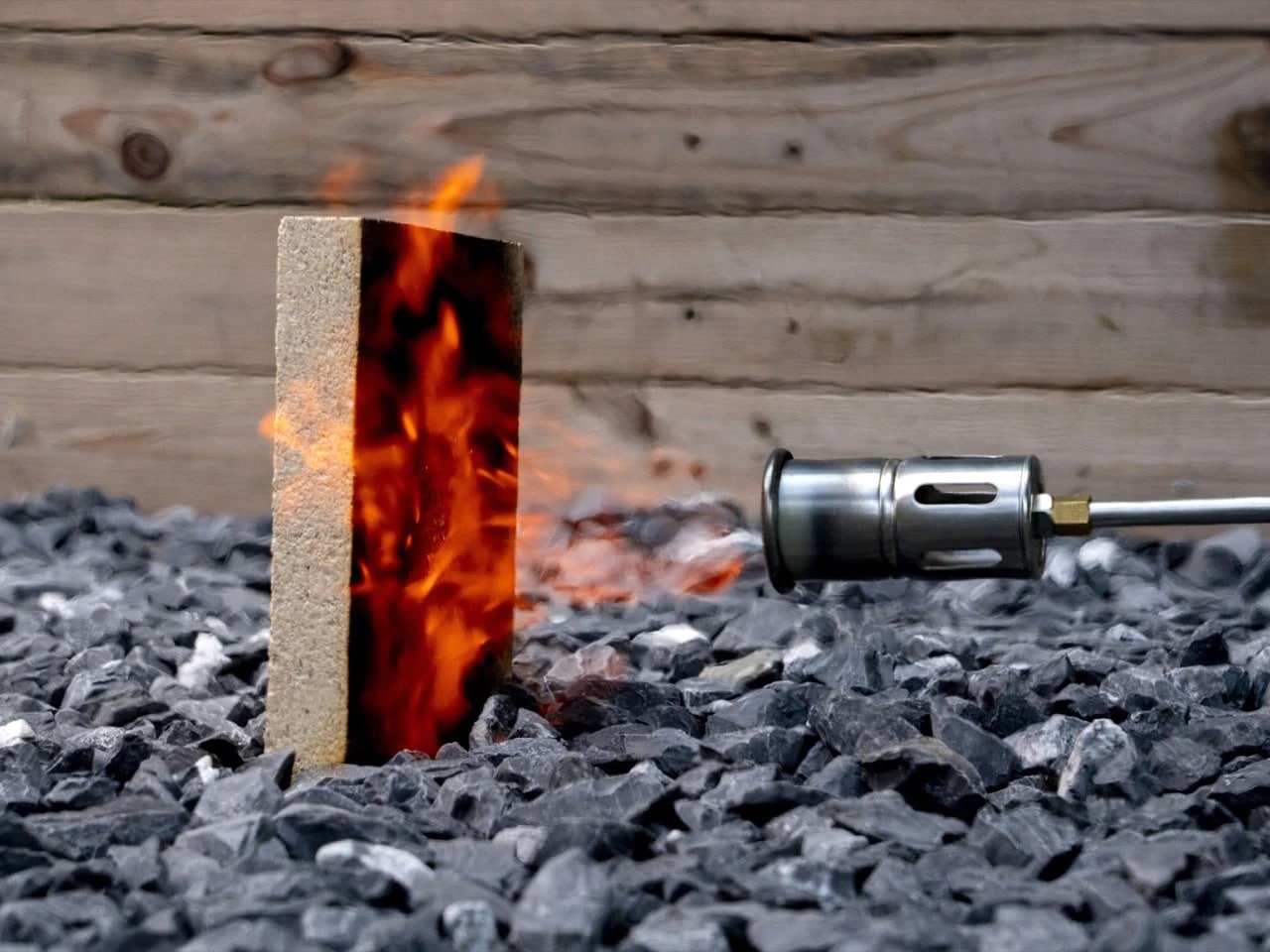
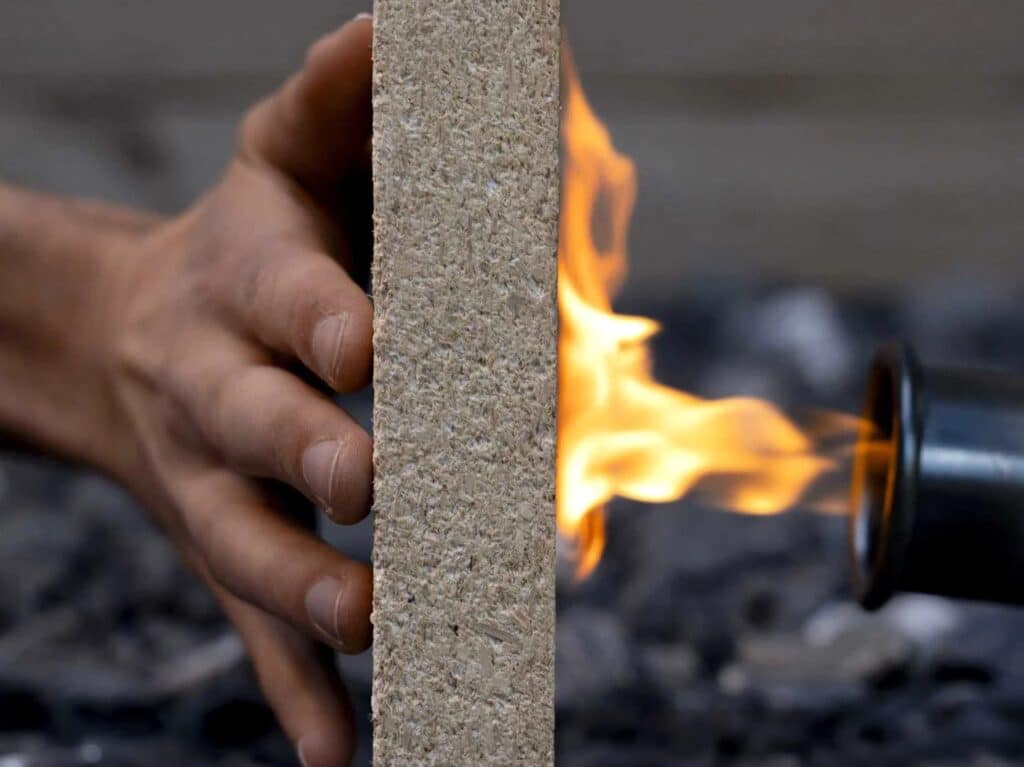
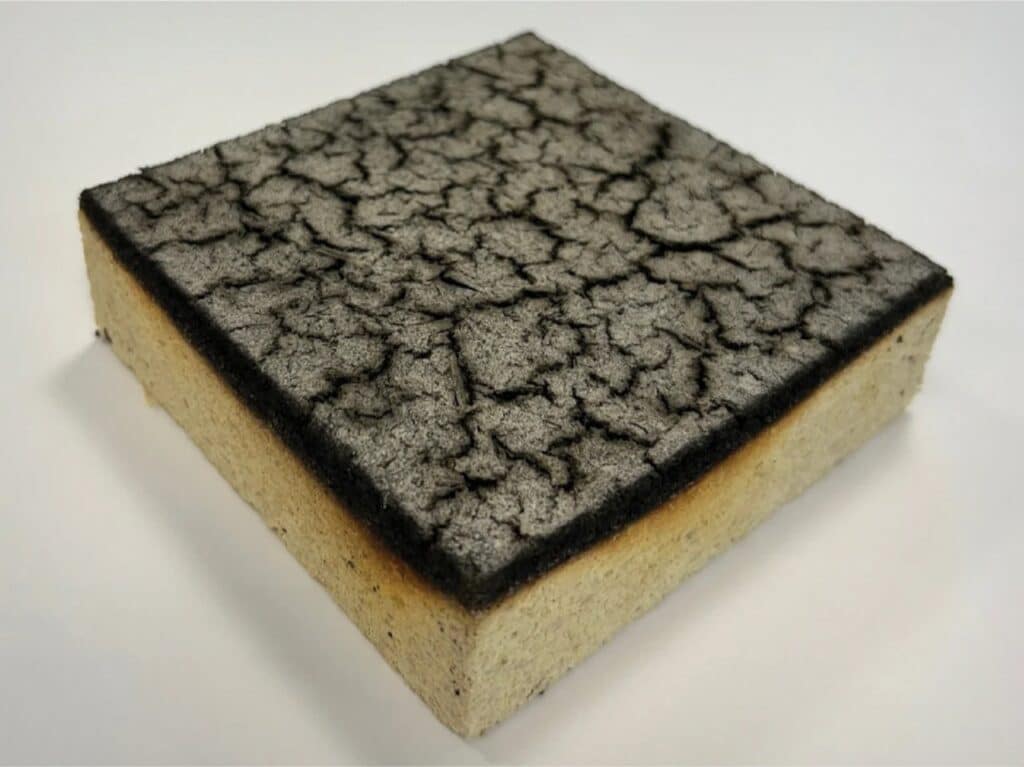
When struvite is exposed to heat, it decomposes and releases water vapor and ammonia, a process that absorbs part of the energy from the surrounding environment. At the same time, these non-combustible gases displace oxygen, limiting the spread of flames.
Simultaneously, a char layer forms on the surface, slowing the transfer of heat to the inner layers, thereby enhancing fire resistance.
Test Results
Tests showed that untreated wood can ignite in approximately 15 seconds, whereas the composite material delays ignition to between 45 and 51 seconds. These results indicate a significant improvement in fire resistance, approaching the performance of materials traditionally used for fire protection, although large-scale evaluations are still ongoing.
End-of-Life and Reuse
At the end of its lifecycle, the material can be dismantled relatively simply through grinding and heating to moderate temperatures above 100°C. This process releases ammonia and separates the components, allowing for reuse or repurposing in other applications, such as agricultural uses.
This approach demonstrates the potential to design materials that not only perform well during use but also retain value beyond their operational lifespan.
✦ ArchUp Editorial Insight
The accumulation of wood sawdust as underutilized waste is a direct result of commodity-driven supply chains and policies within the global carpentry and construction sectors. Regulatory constraints, such as emissions monitoring, waste disposal standards, and limits on energy conversion, define the boundary between incineration and material recovery, and determine processing speed, workforce distribution, and facility design.
The spatial outcome is seen in composite panels that balance structural cohesion, fire resistance, and recyclability, providing a pragmatic solution between capital extraction and environmental compliance. End-user units benefit from the dimensions of standardized panels and the expected performance characteristics, while the legal framework imposes logistical constraints on distribution and reuse.
This configuration illustrates how resource flows, material gradients, and risk management procedures drive the material lifecycle, revealing the social and bureaucratic mechanisms that make the production of engineered wood panels widespread and inevitable.