1975 Men’s Hair Salon by FATHOM: A Transparent Acrylic Design in Hiroshima

Minimalist Transparency: The Design Concept:-
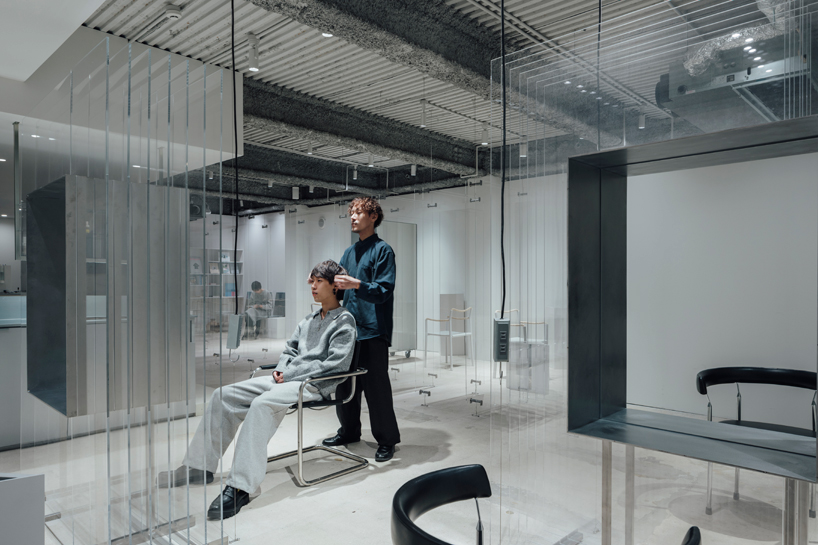
Tokyo-based FATHOM design studio reimagines a third-floor arcade space in Hiroshima’s Naka Ward as 1975 Men’s Hair Salon, a sleek fusion of barbershop and gallery. The design embraces transparency, flexibility, and exclusivity, using 34 freestanding acrylic panels to create an L-shaped layout that amplifies the narrow space’s depth.
Key Features:-
- Hybrid Functionality: Doubles as a hair salon (4 cutting stations) and a gallery for pop-up events.
- Vinyl Record Inspiration: Acrylic panels mimic record sleeves, offering a minimalist yet tactile experience.
- Modular Flexibility: Movable mirrors and reconfigurable side tables adapt the space for cutting or exhibitions.
Spatial Innovation: Reflective Acrylic & Movable Mirrors:-
The salon’s transparent acrylic panels are arranged in an L-shape:
- Short Side: Cutting area with embedded mirrors that multiply reflections.
- Long Side: Gallery space with suspended acrylic sheets, creating a boundary-free transition.
- Hidden Mirrors: Pull-out mirrors convert the gallery into a functional salon.
- Modular Side Tables: Lightweight triangular columns with removable weighted tops for stability.
- Integrated Display System: Acrylic walls feature hanging rails for artwork, layering visuals without clutter.
Why This Design Stands Out?
FATHOM’s approach merges aesthetic minimalism with practical adaptability:
- Illusion of Space: Reflective surfaces counteract the compact floor plan.
- Multi-Functional: Seamlessly shifts between salon operations and cultural events.
- Sustainable Flexibility: Modular components reduce the need for future renovations.