3D Printed Concrete Structure by Desert Ark, Inner Mongolia


Amid the vast desert expanse of Inner Mongolia, Desert Ark stands as a landmark in contemporary architectural thought an exploration of how built form can transcend function to become a philosophical reflection on humanity’s relationship with nature. This project transforms architecture from mere shelter into a spatial dialogue a material interpretation of coexistence within an extreme landscape.
Architectural Essence and Design Philosophy
The project is founded on the principle of harmony rather than confrontation with nature. The structure draws inspiration from the fluid geometry of sand dunes, transforming the harshness of the desert into an architectural language of movement and adaptation. Rather than imposing a form on the land, the design allows the building to emerge as an extension of its environment, a living organism shaped by light, air, and sand.
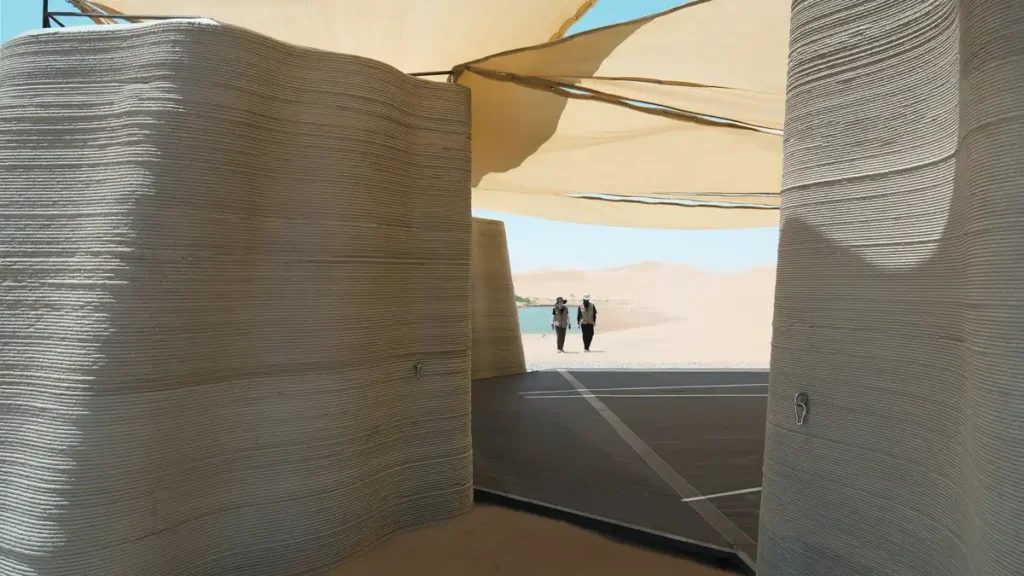
The curved surfaces and organic cavities channel wind currents, soften temperature contrasts, and filter natural light throughout the interior. Every contour carries environmental intent, making the building a living system that adjusts to its surroundings instead of resisting them.

Concrete Structure and Advanced Technique
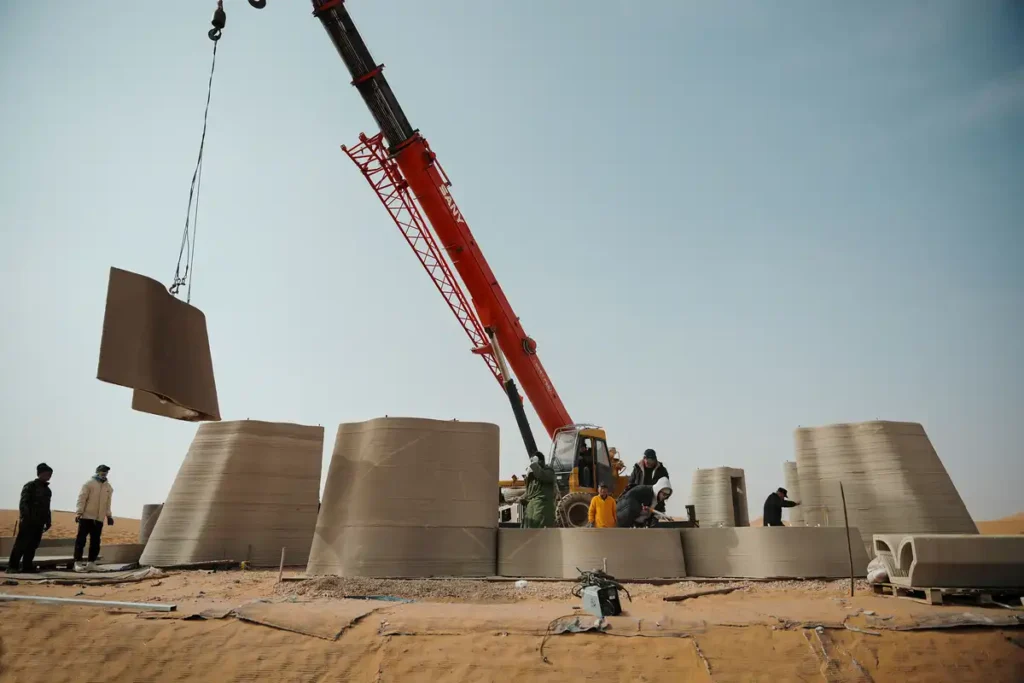
The project employs 3D-printing technology to form the concrete shell using locally sourced materials, linking the structure physically and symbolically to the land beneath it.
This method allows for precise construction of natural, free flowing forms while reducing waste and environmental impact. The successive printed layers read like geological strata, visually narrating the passage of time and the interaction between matter and climate. The wall itself becomes a geological archive in architectural form, recording the desert’s essence through concrete.

Environmental Integration and Architectural Thought
The design explores how architecture can serve as a medium of coexistence between human life and the natural environment.
Strategically oriented openings direct sunlight into interior spaces, creating a rhythm of light and shadow that shifts throughout the day. Curved forms capture and circulate cool air, minimizing the need for artificial systems.
Here, sustainability is not a technical add on but a conceptual stance a belief that balance with nature must begin at the level of design thinking. The result is an architecture that functions both as a physical structure and a sensory experience, transforming the desert from an inhospitable void into a living architectural laboratory.
Philosophical Meaning of the Design
At its core, the project reflects on a fundamental question: How can humanity exist in harmony without dominating its environment?
The structure does not attempt to conquer the landscape but rather to merge with it, as though the concrete itself steps back to let nature take the lead.
The desert becomes not a backdrop but a collaborator, and the building a silent mediator between human and earth a reminder that true beauty arises from the equilibrium of thought and material.
Project Summary
| Element | Details |
|---|---|
| Project Name | Desert Ark |
| Location | Inner Mongolia |
| Primary Material | 3D-printed concrete |
| Design Concept | Harmonizing architecture with desert topography through organic, nature-inspired forms |
| Architectural Idea | Architecture as an instrument of coexistence between human and environment |
| Environmental Approach | Natural ventilation and daylight integration with minimal resource consumption |
| Overall Character | A contemplative architecture that documents the desert as a source of meaning rather than isolation |

✦ ArchUp Editorial Insight
The Desert Ark project in Inner Mongolia presents an architectural experiment that transcends technology to explore humanity’s bond with nature. The 3D printed concrete structure resembles an organic entity sculpted from the desert’s own sand, its flowing lines shifting with wind and light. This design approach redefines the notion of shelter in extreme environments, turning material into a medium of reflection on sustainability rather than mere construction. Despite its experimental nature, the project carries profound human value through its ability to craft an architectural language where technology, environmental awareness, and aesthetics coexist in balanced harmony.
Architecture professionals can follow ArchUp’s events section for verified updates on exhibitions, conferences, competitions, and results.