

A Coastal House in Chile: An Architectural Dialogue Between Wood, Concrete, and an Ocean View

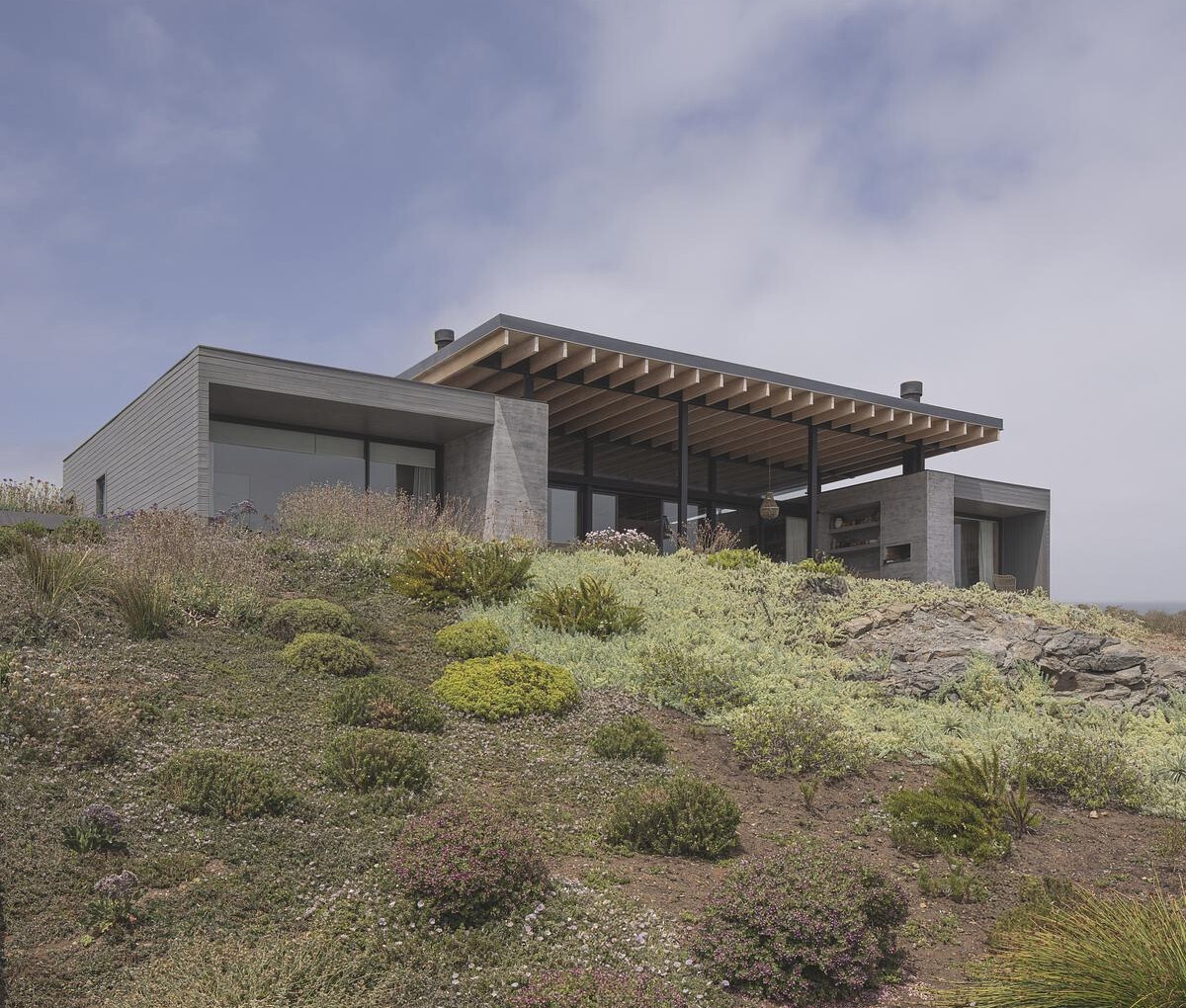
On the rugged coast of Canela in northern Chile, where nature imposes its harsh conditions, this house stands as an exceptional design that defies the usual compromises. Through his unique architectural vision, architect Benjamín Goñi transformed challenges into opportunities, leveraging the site’s rare northern view of the Pacific Ocean to grant every corner of the house a stunning sea vista.
Volumetric Composition: The Architecture of Void and Mass
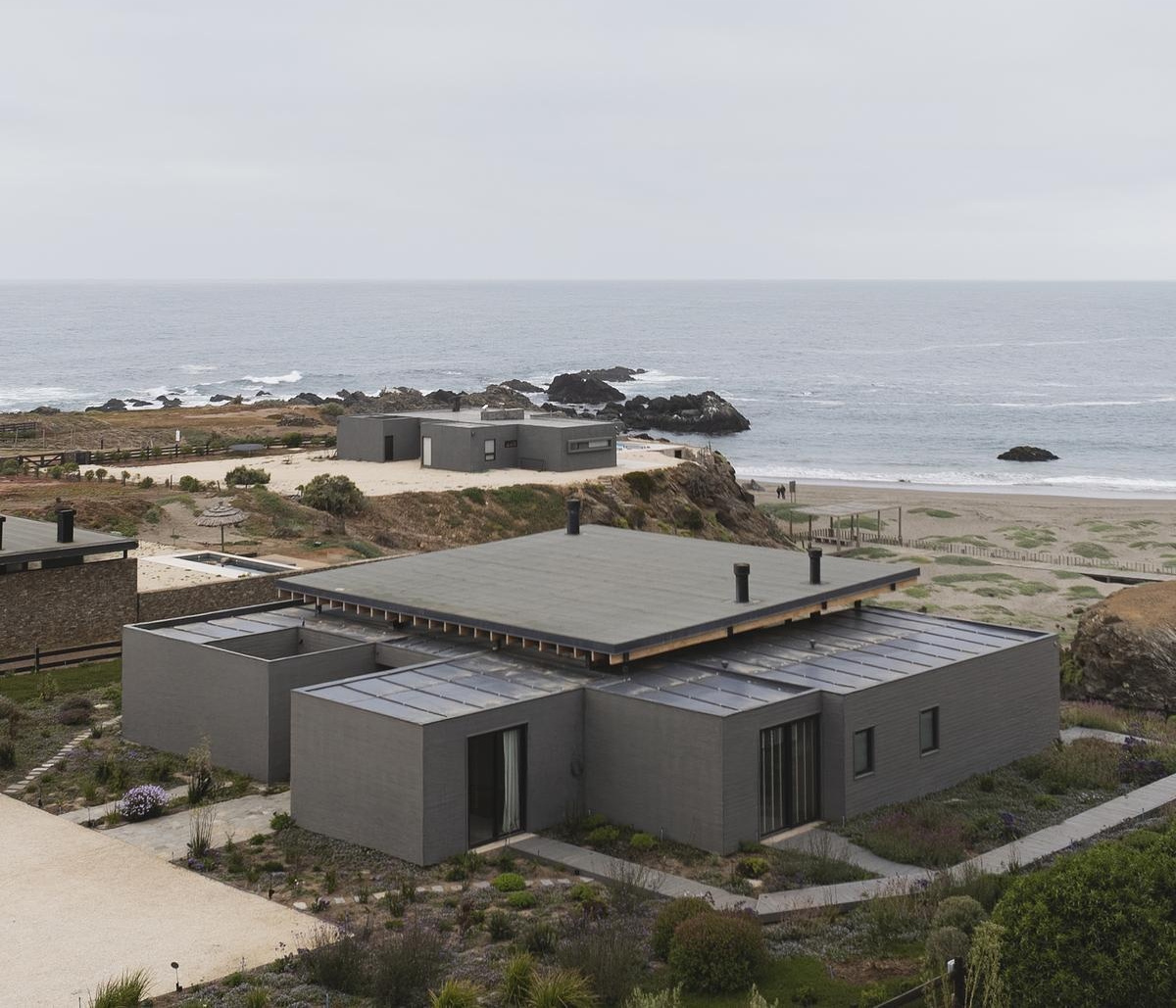
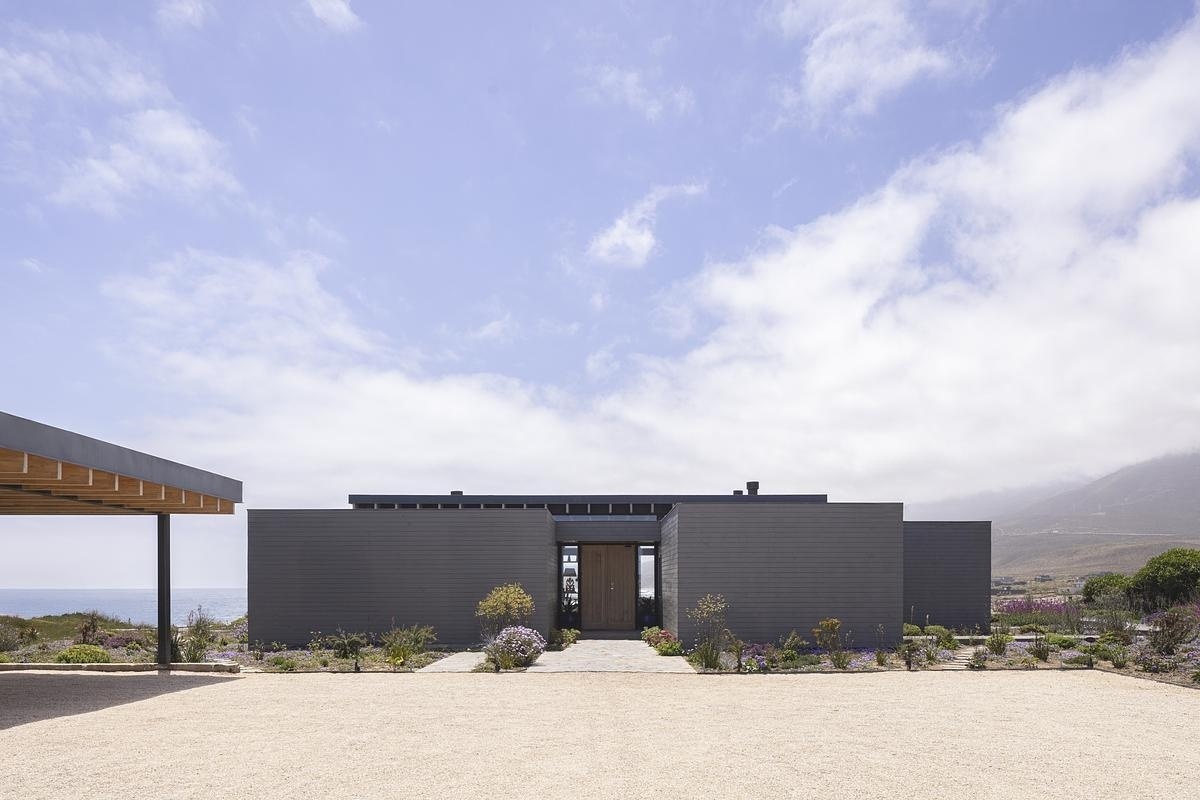
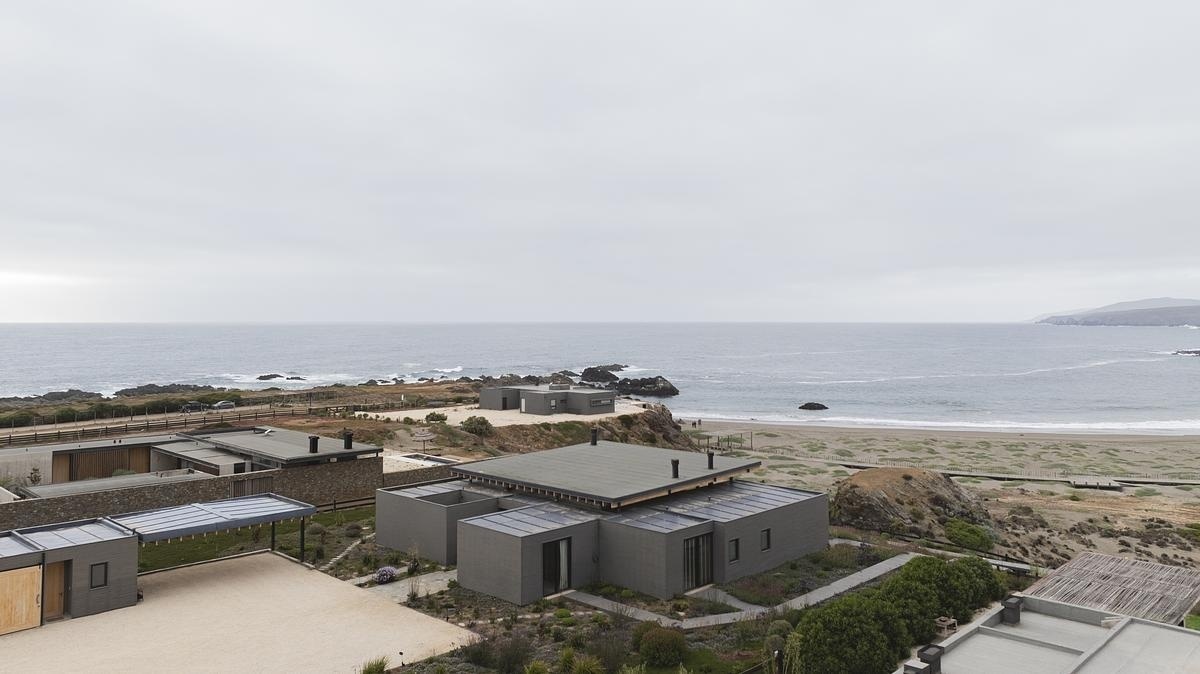
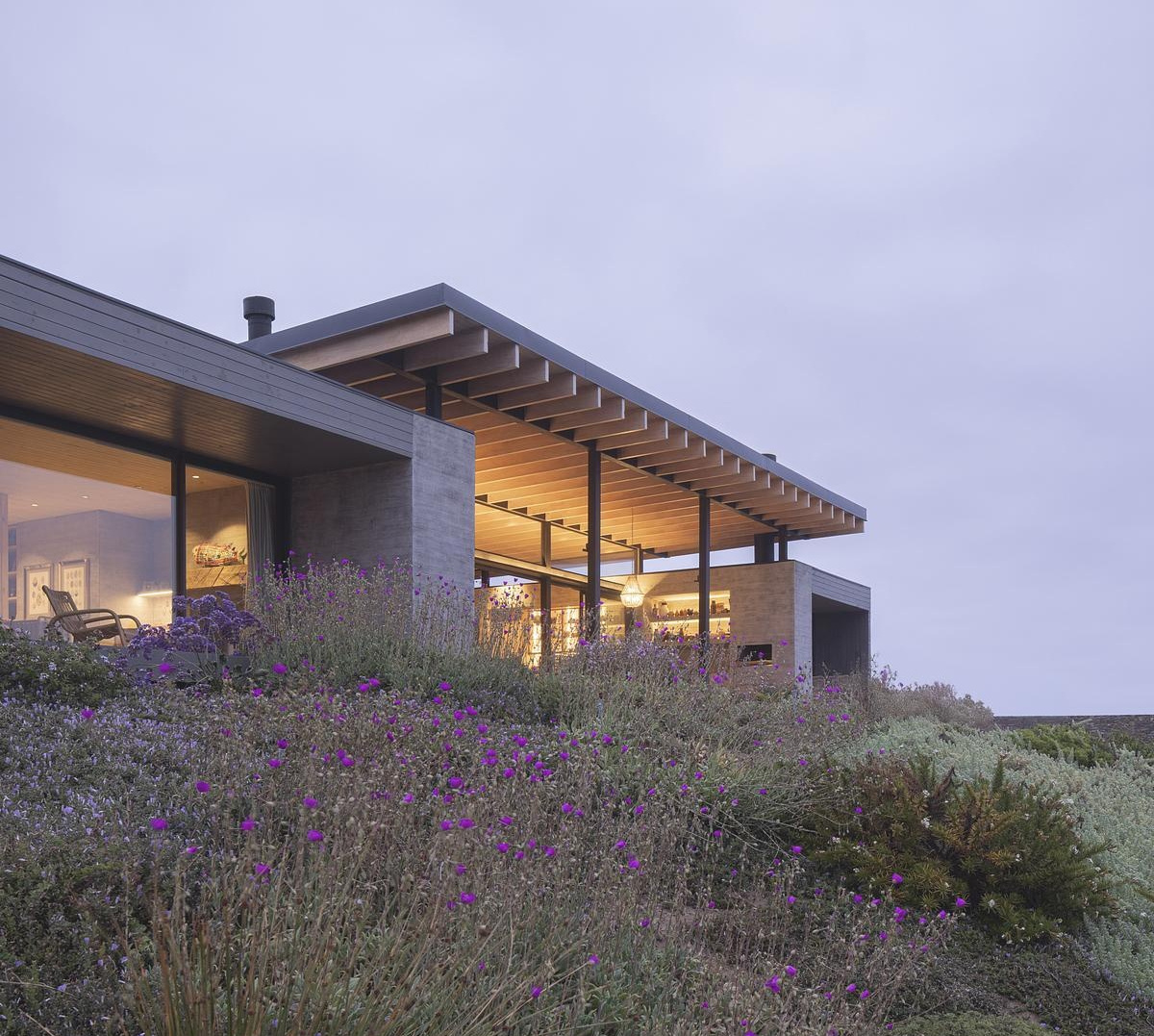
The architectural concept of the project relies on a clear and coherent composition, where four separate wooden volumes are arranged around a central void that opens entirely onto the horizon. These low-lying volumes, clad in durable “Cavity Wood,” contain private functions like bedrooms and quiet spaces, while the central void remains the home’s beating heart.
The design highlights an architectural philosophy that prioritizes void over mass, where the flow between spaces becomes the fundamental element defining the building’s character. The two massive concrete walls form a supportive structure for the main space, while the wooden volumes create intimate areas that balance openness and privacy.
Building Materials: Durability and Warmth in Perfect Harmony
The project presents a distinguished architectural dialogue between different building materials. On the exterior, the grey-toned wooden facades resist weather and sea conditions with vigor, while inside, the palette shifts to lighter tones that enhance the space’s feeling of warmth and tranquility.
The black-painted, galvanized steel structure plays both a functional and aesthetic role, resisting the salty climate while adding a touch of modern elegance. Together, these materials create multiple layers of sensory experience, varying depending on the user’s location within the space.
Integration with Nature: A Design that Respects its Surroundings
The design does not stop at the building’s boundaries but extends to interact with the natural surroundings. Wooden pathways and terraces extend fluidly through native plants, carefully selected to connect the house to the coastal terrain. This botanical integration creates a natural transition between the built structure and nature.
At the heart of this integration, the swimming pool, carved into one of the lower terraces, stands out, surrounded by sun loungers facing directly toward the horizon. The fire pit area provides a space for evening gatherings, completing the circle of social life designed by the project.
Structural Elements: The Aesthetics of Function
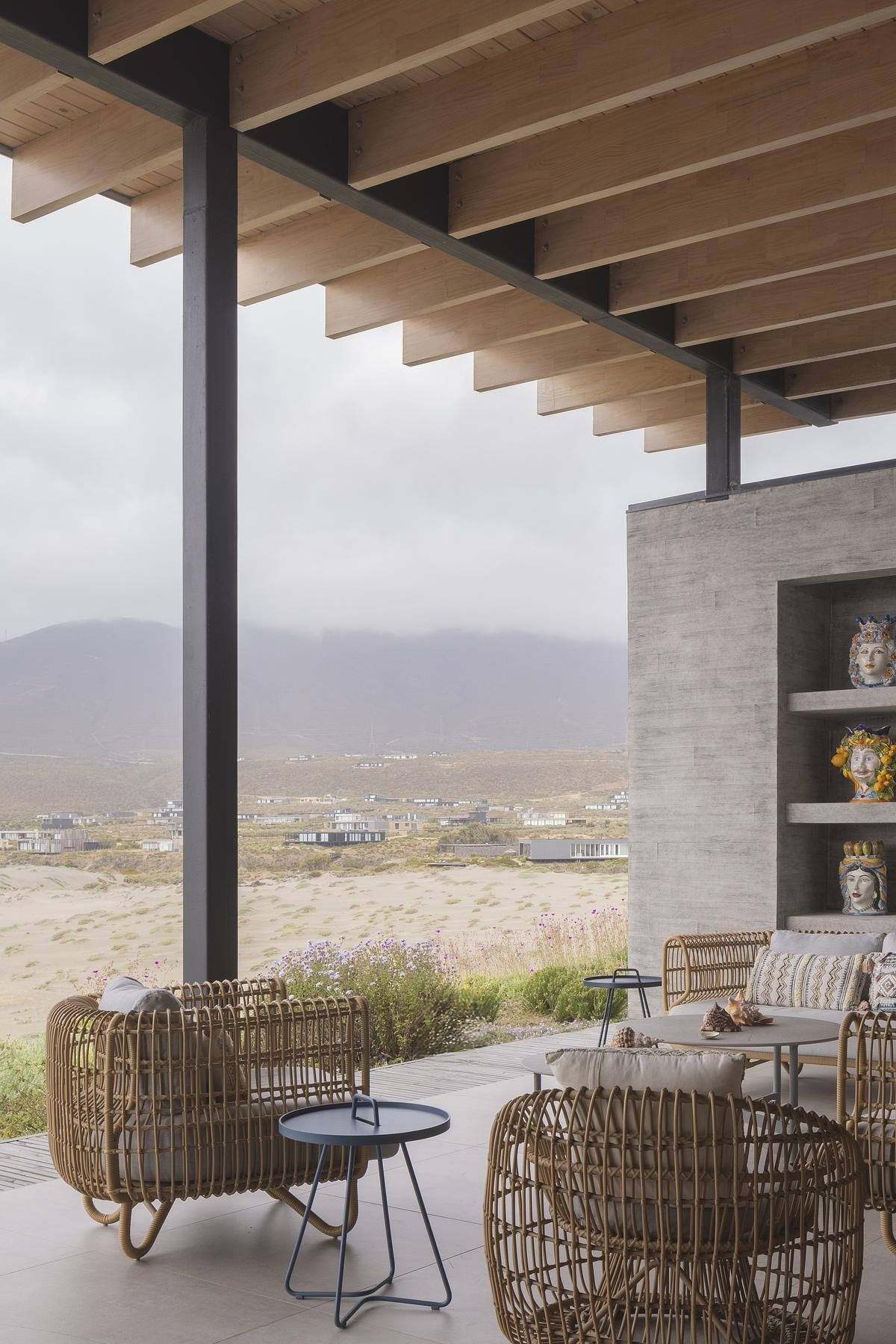
In the central space, the exposed wooden beams stretch as both a structural and aesthetic element. These beams are not limited to supporting the roof but also create a visual rhythm that softens the sharp geometric lines of the concrete and steel. The movement of light through these beams during the day creates a changing dynamic that links the interior space to the external view.
Internal Planning: A Spectrum of Privacy and Openness
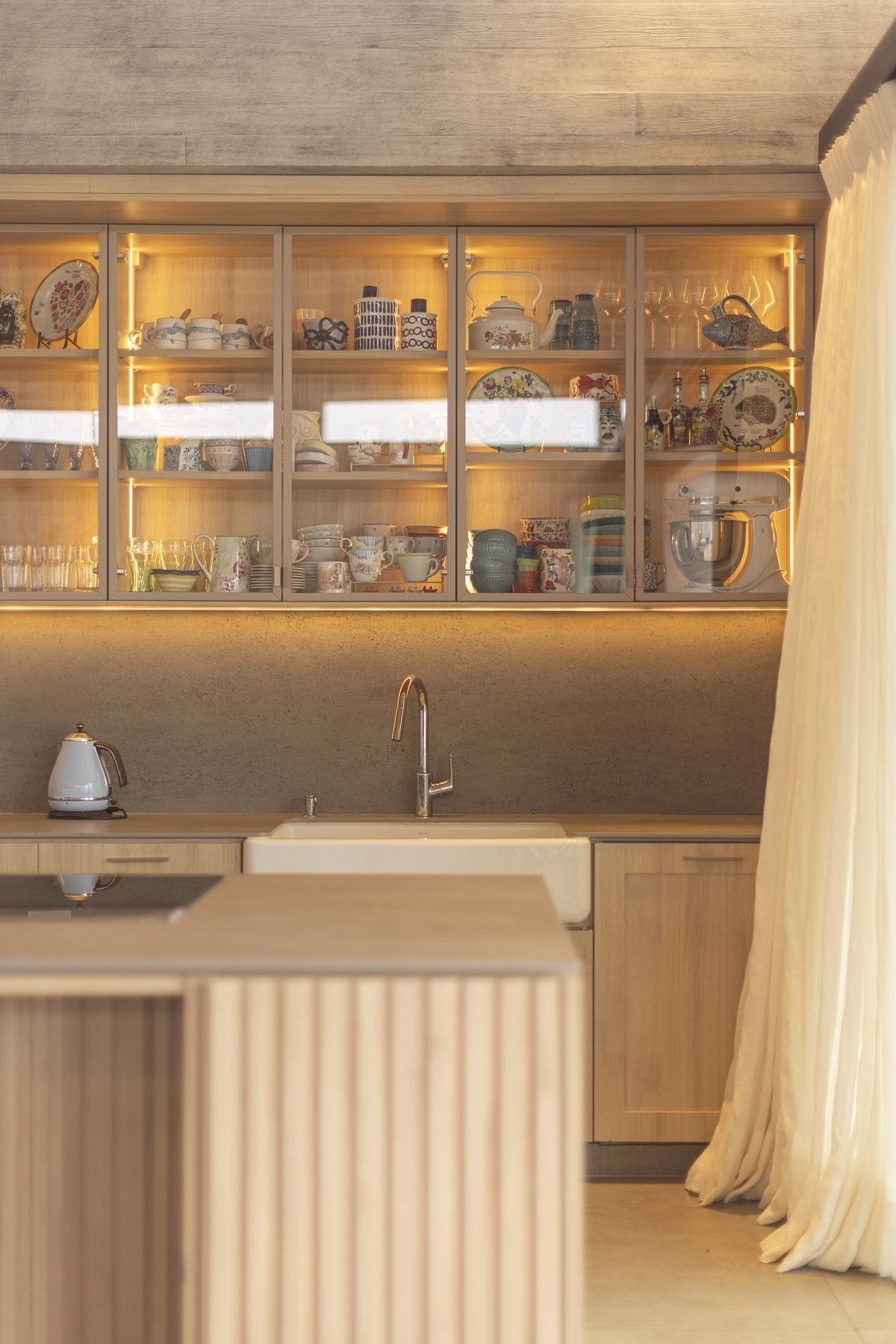
The main internal space flows with rare fluidity, where the living, dining, and kitchen areas merge into one cohesive zone. Each area is implicitly defined by architectural elements; the fireplace anchors the seating area, while the large dining table demarcates the space before seamlessly transitioning to the kitchen.
The bedrooms retreat into the wooden volumes, providing ideal privacy away from the hustle and bustle of the common area. This intelligent distribution of functions creates a delicate balance between social life and personal spaces.
Sustainability and Environmental Efficiency
The design employs smart strategies to deal with the coastal climate, with the selected materials providing high durability against humidity and salt. The thoughtful orientation of the building takes advantage of the northern view while reducing direct solar heat gain, and natural ventilation allows for passive cooling of the spaces.
An Integrated Architectural Vision
The project is distinguished by a comprehensive architectural vision that turns structural elements into part of the aesthetics, where load-bearing beams become decorative features, and concrete walls turn into artistic canvases. This integration of function and beauty creates a unique living experience that enriches the senses and fosters a sense of belonging to the place.
Through this integrated design, Benjamín Goñi successfully transformed the blessing of the northern view into a lasting living experience, where daily life is woven with threads of privacy and openness against the vastness of the sea, presenting an inspiring model for contemporary coastal architecture.
Photography: Pablo Casals-Ag | Source: Benjamin Goñi Architects
✦ ArchUp Editorial Vision
The project addresses the challenge of designing a coastal house through a composition based on four wooden volumes surrounding an open central void, aiming to direct all main spaces toward a rare ocean view. From a functional perspective, the volumetric separation between the blocks raises the issue of internal layout efficiency; the distances between the isolated bedrooms in the separate volumes and the main facilities may complicate the movement of residents in the long term. Furthermore, the reliance on large glazed openings facing the sea, without evidence of effective movable shading solutions in the illustrations, raises questions about the building’s thermal performance in a directly sunny climate and the potential energy consumption implications. Structurally, the significant overhang of the wooden roof facing strong coastal winds appears to require precise calculation for loads and impacts. However, the project’s strength lies in achieving a distinct visual integration with the site, where the design frames the natural landscape and transforms it into an organic part of the daily living experience.
Brought to you by the ArchUp Editorial Team
Inspiration starts here. Dive deeper into Architecture, Interior Design, Research, Cities, Design, and cutting-edge Projectson ArchUp.


