
A guide to the best types of home elevators and their features

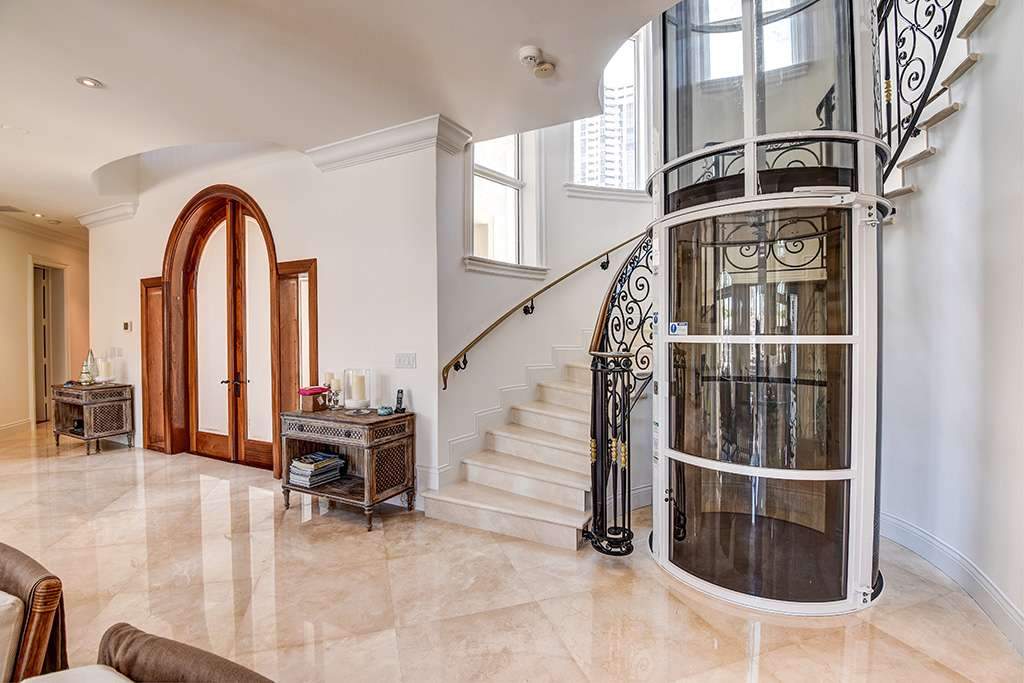
A guide to the best types of home elevators and their features,
Home lifts are available in many different types and styles, and the best start is to learn about the different designs.
The following guide contains useful information about the most common types of lifts, including hydraulic lifts, machine room-less lifts, winding drum, columnless and vacuum lifts.
In this guide we will provide an overview of:
- Residential Elevator Systems
- The best type to use in certain applications
- Typical installation requirements
- The best brands and manufacturers of home elevators
But first of all, when planning the installation, you should first check with your local code authority and elevator contractor
As elevator codes can vary in different locations, and while most are standard, some jurisdictions may have special requirements.
First: hydraulic lifts
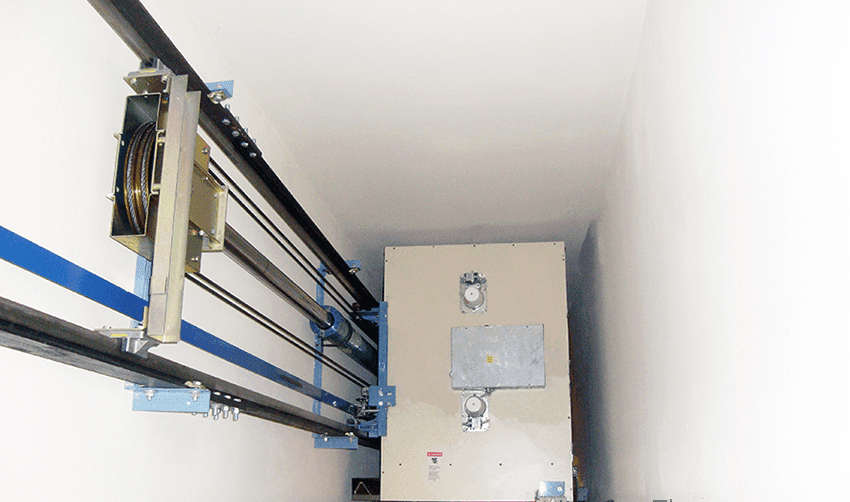
These are heavy-duty home lifts, as they have a standard weight capacity of 750 lbs, and can carry up to 1,000 lbs.
This type of lift requires a complete hoistway enclosure on each floor, a pit in the lowest landing and a separate machine room.
As the hydraulic piston lifts to raise and lower the cab, this type of lift provides a very smooth and quiet ride quality.
If you need a heavy-duty lift with a higher weight capacity, a hydraulic is a great choice.
With a design that has been in use for more than 50 years,
the hydraulic lift has proven its use and reliability in the residential elevator market

Second: elevators with a smaller machine room (MRL)
They are elevators that contain the motor and control unit inside the elevator, eliminating the need for a separate machine room.
This can be ideal if you don’t have room for a machine room but still want a larger cabin that can serve up to 5 landings.
MRL’S is available in counterweights for electric chain drive systems and cable drive systems.

Third: the coiled cylindrical elevator
Coiled drum elevators are powered by an electric motor to wind the cable on a drum that raises
and lowers the elevator, this type of elevator requires a hoist, pit and machine room.
Rolling drum lifts typically bear 500-750 lbs, depending on ride quality considered to be the standard.
A guide to the best types of home elevators and their features
This type of lift is available in a variety of configurations with the drive set position,
here the drive is located in a separate machine room.
Machine room is also always recommended for easy service and maintenance if space is available.

Fourth: Shaftless elevators
They are elevators that do not have a shaft. It is a floor-to-ceiling elevator, designed to serve two floors.
This type of elevator can be easily modified in existing homes and requires the least amount of space compared to traditional elevators.
Construction is also kept to a minimum without the need for a full enclosure for the lifting method and a separate pit and machine room.
Columnless lifts are also available from several different manufacturers with variations in cabin styles,
mechanical designs and installation requirements.
And some models can be placed almost anywhere in the house which makes the elevator installation process much easier.
Designed for convenience, limited space, and simplicity, this lift is a lifestyle lift designed to aid mobility and a great alternative to a traditional full-style staircase or elevator.
Fifth: Vacuum elevators
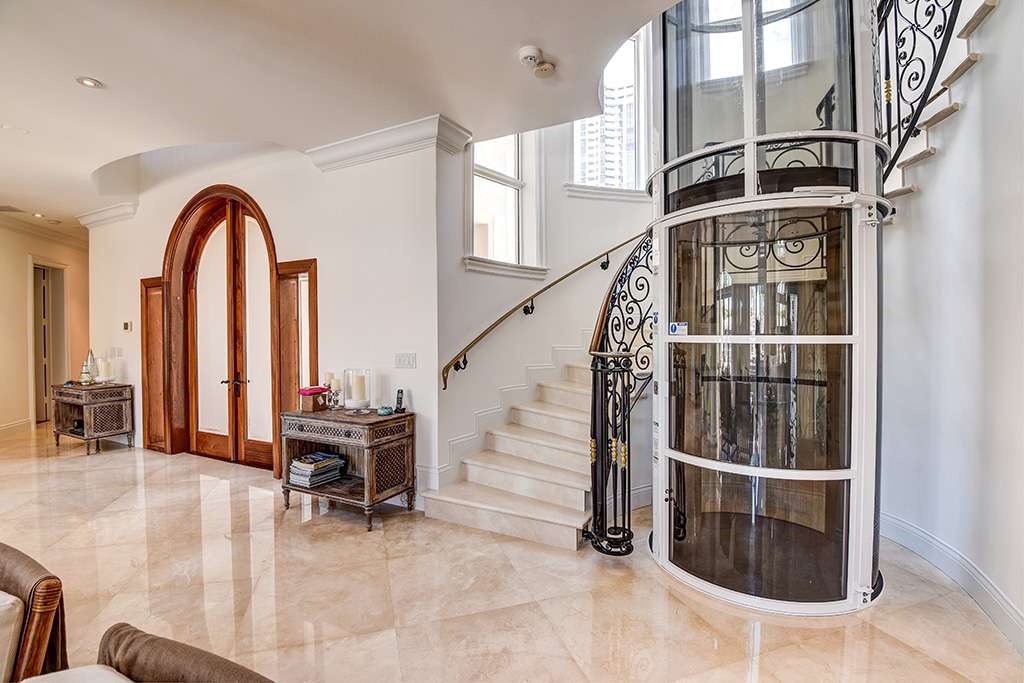
Pneumatic elevators that use air pressure to raise and lower the cab, are available in three models: PVE30, PVE37 and PVE52.
Where the number on the model represents the outer volume of the cylinder,
for example the PVE30 has a cylinder of 30 and can accommodate one person.
This model has the smallest footprint of any home elevator on the market,
the PVE37 is the original vacuum elevator model and can carry two passengers with a capacity of 450 pounds.
The largest, the PVE52, measures 52-11/16 inches in diameter, can carry three passengers,
has a capacity of 525 pounds and is wheelchair-accessible.
The vacuum lift is also great for space-constrained applications,
where construction is kept to a minimum and the lifts also don’t require a pit or machine room.
Vacuum lifts can serve up to 5 landings with a maximum of 50 travels.

Best home elevators
Some of the best residential elevators are currently built
by the companies Custom Elevator Manufacturing, Inc., SAVARIA, Symmetry, and Pneumatic Vacuum Elevators, LLC
The most suitable elevator for your home will be the one that best suits your needs, budget, site conditions, and floor plan.
When considering these factors, there are two main categories to choose from, elevator type and manufacturer.
And of course, there is a cost which we have tried to provide, to give you a general idea of the budget and related expenses.
Since we are in the elevator business and have real working knowledge of elevator systems,
we have provided this list of the best elevator companies for every type of installation,
manufacturer and brand or model information.
| Elevator Type | Best Application | Model | Top Brands |
| Hydraulic Elevator | Heavy use, high weight capacity, up to 5 floors | IR-1 Signature series | Custom Elevator Manufacturing, Inc. |
| Machine room-less (MRL) Elevator | Waterfront installations and limited space over 2 floors | Inline Gear Drive | Symmetry |
| Glass Elevator | High-end luxury style, free standing structure, 360 views | Vuelift Octagonal & Round | Vuelift |
| Shaftless Elevator Lift | Retro-fit, affordable, medical conditions, retirement living & aging in place, 2 -floors | Telecab | SAVARIA |
| Vacuum Elevator | Space saving, stand-alone unit with modern look | PVE-30 | Pneumatic Vacuum Elevators, LLC |







I think that home elevators can be a valuable addition to any residence, providing convenience and accessibility for residents with mobility challenges. While the cost of a home elevator can be substantial, the benefits of improved accessibility and increased home value can be worth the investment.
Homeowners can choose the ideal elevator based on their unique requirements and preferences from a variety of different varieties, including hydraulic, traction, and pneumatic elevators. The safety features mentioned in the article make sure that homeowners can benefit from a house elevator’s convenience without sacrificing safety.
“I really enjoyed reading this blog post! The information provided was Elevator services. The writer’s writing style is engaging and kept me hooked until the end. I appreciate the insights shared and look forward to more content like this in the future. Keep up the great work!”