The Wattle Building expands paediatric healthcare capacity in Westmead

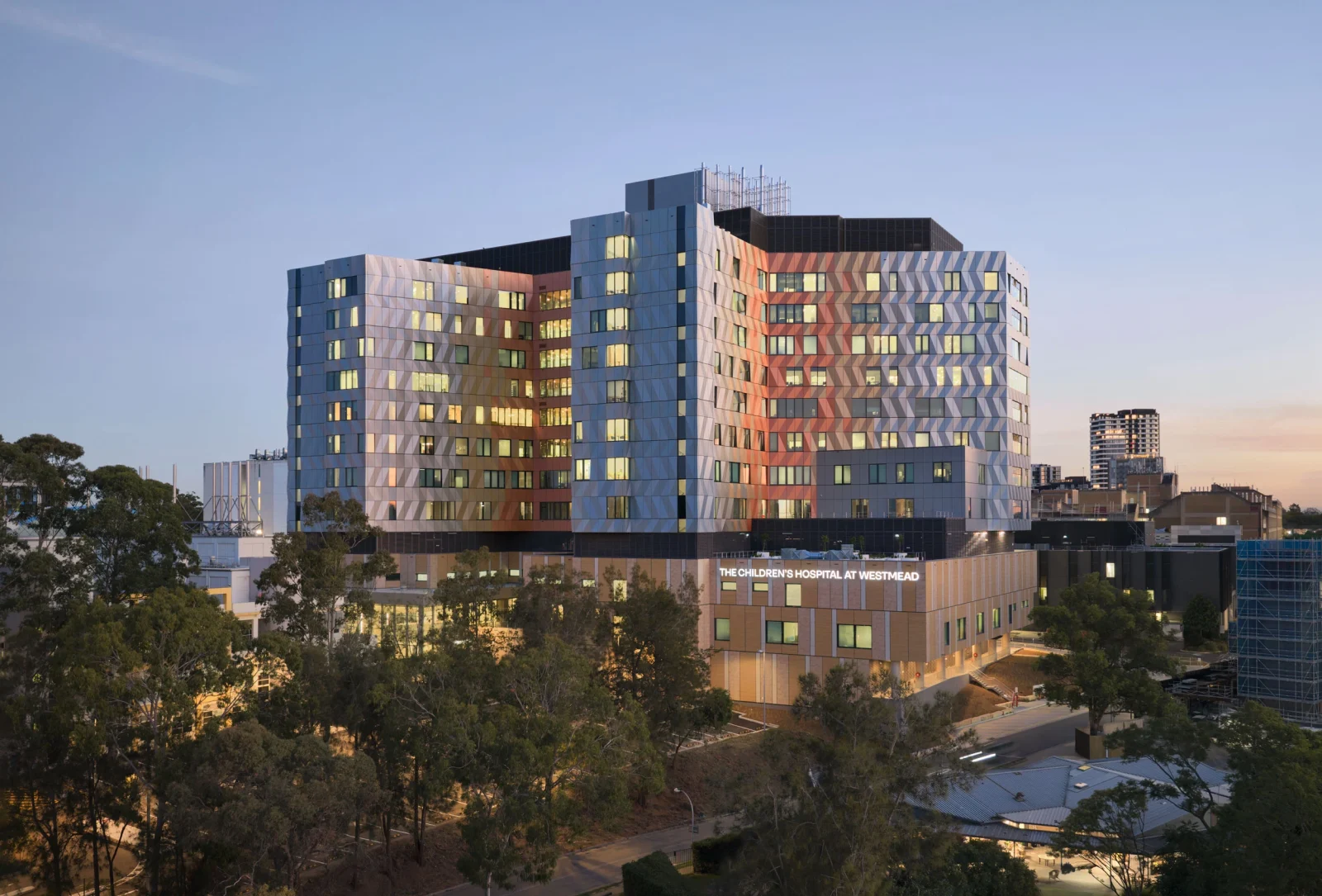
Billard Leece Partnership (BLP) recently completed the Wattle Building at The Children’s Hospital at Westmead, marking a major expansion of the Westmead Health and Education Precinct in New South Wales. The project delivers 57,000 square metres of new clinical space alongside a 1,004-space multi-storey car park. This redevelopment forms a central part of a statewide architecture strategy to modernize paediatric services across the Sydney Children’s Hospitals Network.
The design team prioritized place-making by referencing the convergence of the Parramatta River, Toongabbie Creek, and Darling Mills Creek. These ecological narratives dictate the building materials, color palette, and wayfinding systems. The building geometry reflects the fluidity of water, creating a visual link between the medical facility and its natural surroundings.
Landscape integration redefines the arrival sequence
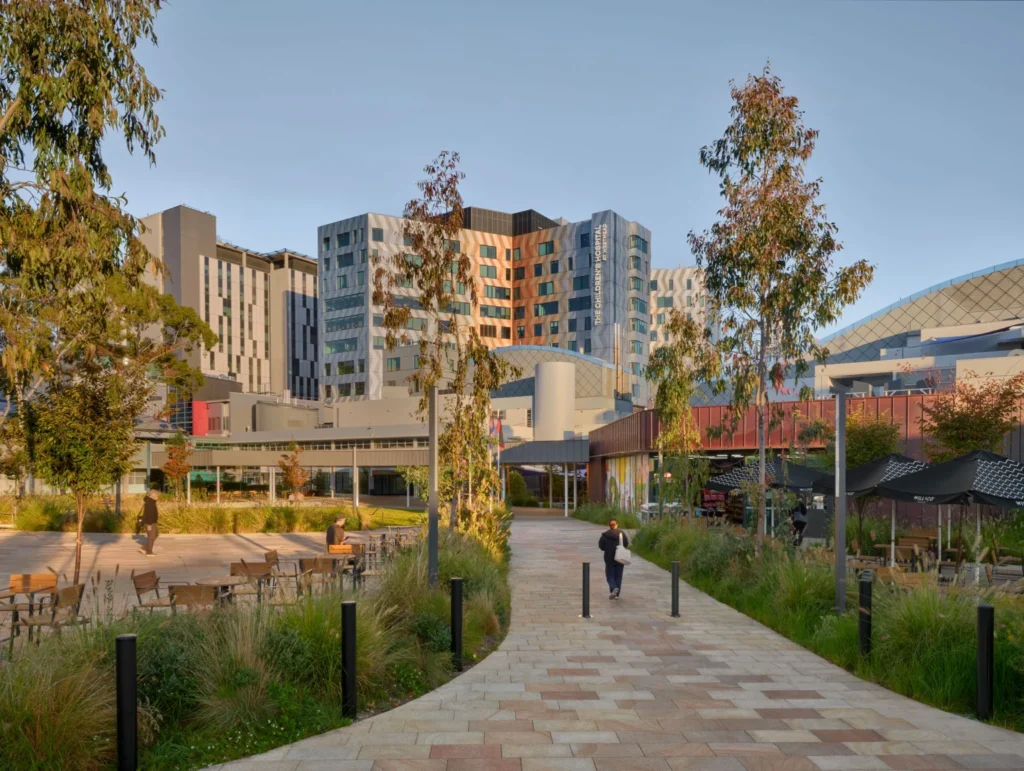
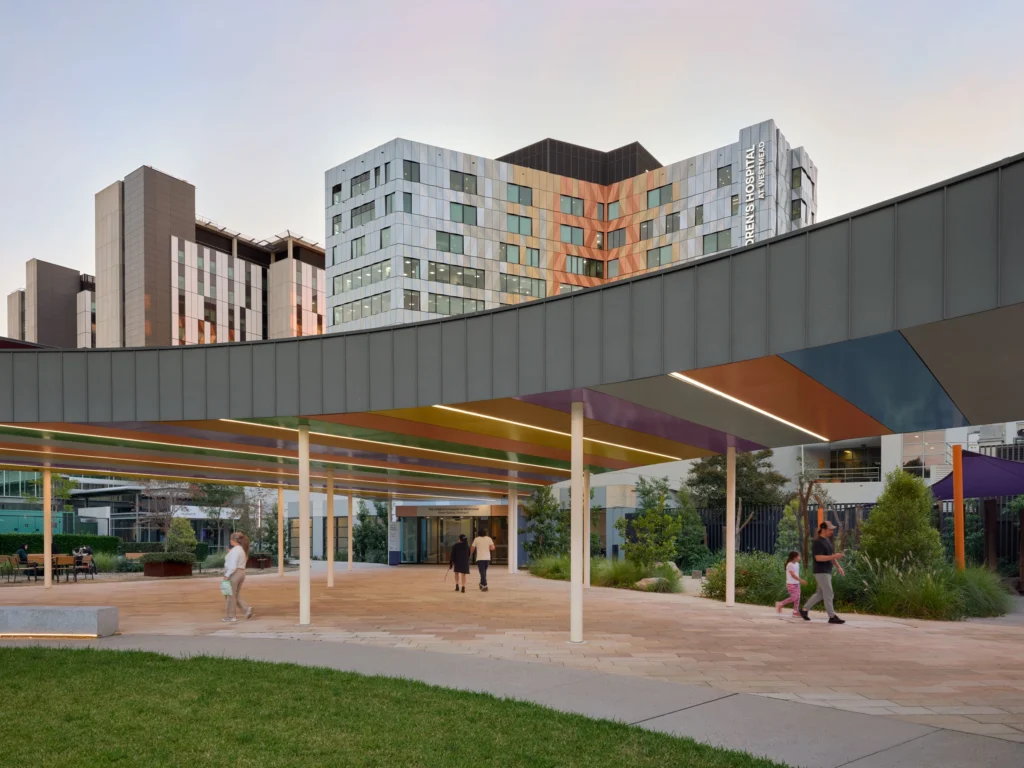
A new landscaped forecourt called KidsPark establishes a civic threshold for the hospital. This public realm encourages families to enter the facility through a series of discovery moments rather than traditional clinical entrances. The strategy uses soft landscaping and gathering areas to reduce the stress often associated with hospital visits.
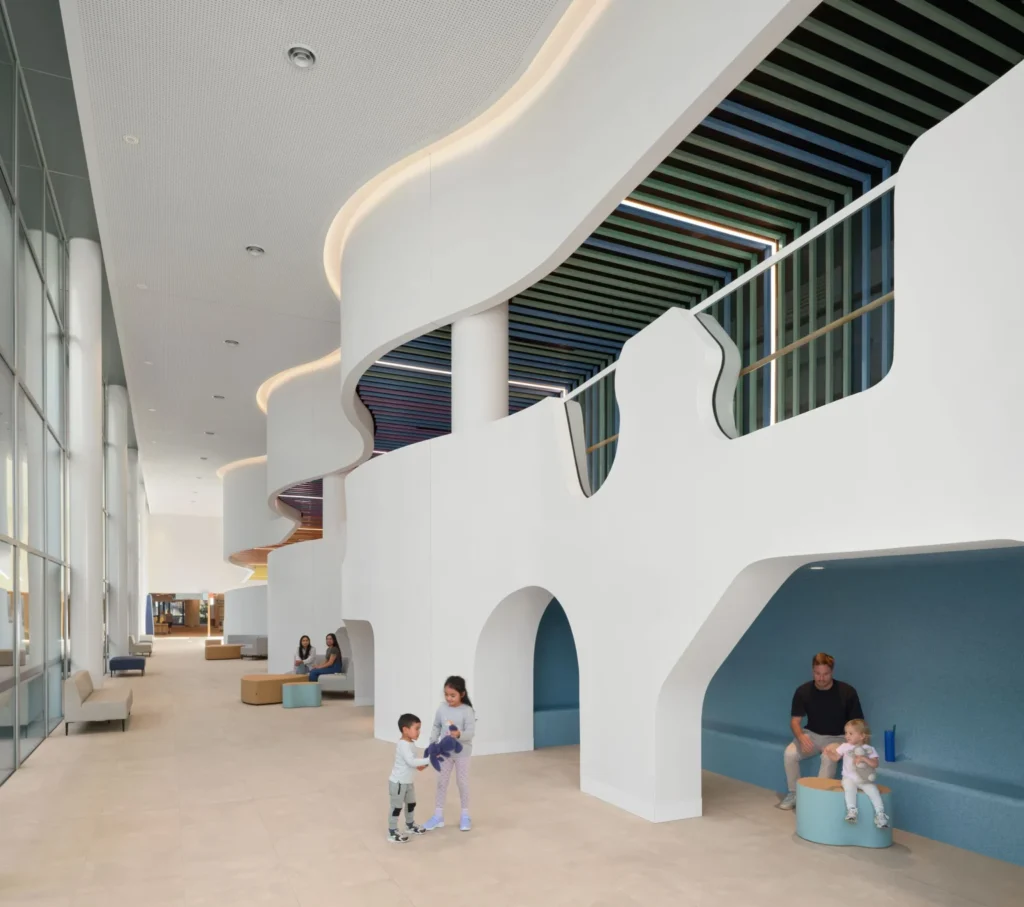
The experiential spine of the project, an elevated pedestrian pathway named KidsWay, connects different hospital zones. This construction avoids anonymous corridors by incorporating curvilinear forms, natural light, and integrated play zones. The pathway supports intuitive navigation while providing positive distractions for children moving between clinical appointments.
Inpatient neighbourhoods prioritize family-centered care
Internal layouts reorganize traditional ward structures into smaller neighbourhoods of twelve rooms. Each patient room functions as a single-occupancy private space featuring a desk, lounge, and direct views of the landscape. This configuration supports family involvement and enhances privacy during long-term stays.
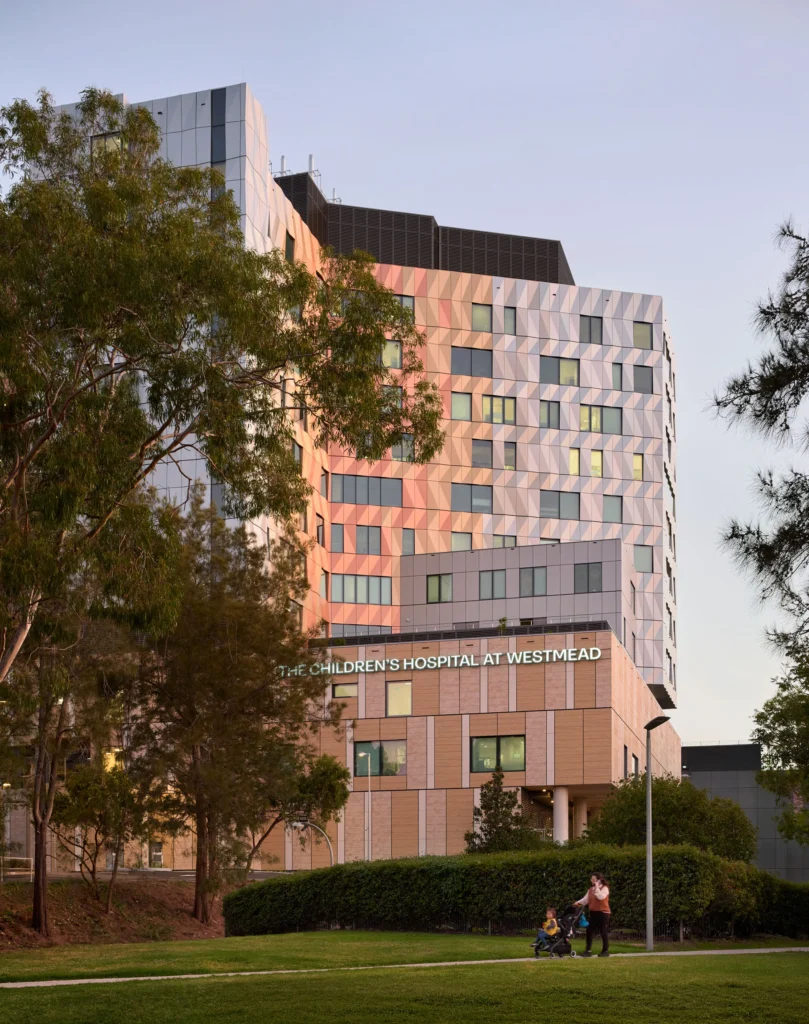
The facility also integrates 24-hour family respite areas, retail amenities, and outdoor zones. Indigenous design practice Yerrabingin collaborated with the architects to embed cultural narratives into the interior design. These elements include a Yarning Circle and specific artworks that connect the healthcare environment to First Nations perspectives on Country and water.
✦ ArchUp Editorial Insight
The redevelopment of The Children’s Hospital at Westmead demonstrates a shift in healthcare architecture from sterile institutionalism toward high-performance civic infrastructure. By utilizing a landscape-led arrival sequence, the project successfully mitigates the psychological impact of clinical environments on young patients. The transition from large wards to 12-room neighbourhoods reflects an operational evolution that prioritizes privacy and family-centered recovery. This strategy integrates ecological narratives and indigenous consultation to root the 57,000-square-metre facility in its specific geographic context. Consequently, the building functions as both a sophisticated medical machine and a restorative public space, setting a technical benchmark for future paediatric hospital planning.
Project Team: Billard Leece Partnership (Lead Architect), McGregor Coxall (Landscape), Yerrabingin (Indigenous Design), RobertsCo (Builder), Arup (Structural/Civil), Stantec (Services), WSP (Traffic), Architectus (Planning), Frost*Collective (Wayfinding). Location: Westmead, New South Wales, Australia.
Project Notes: Completed June 2026. The Wattle Building adds 57,000 square metres of clinical space and 1,004 car park spaces to the Westmead Health and Education Precinct.