Abogoga Cafe in Gimpo Blends Ancient Ruin Aesthetics with Modern Concrete Forms

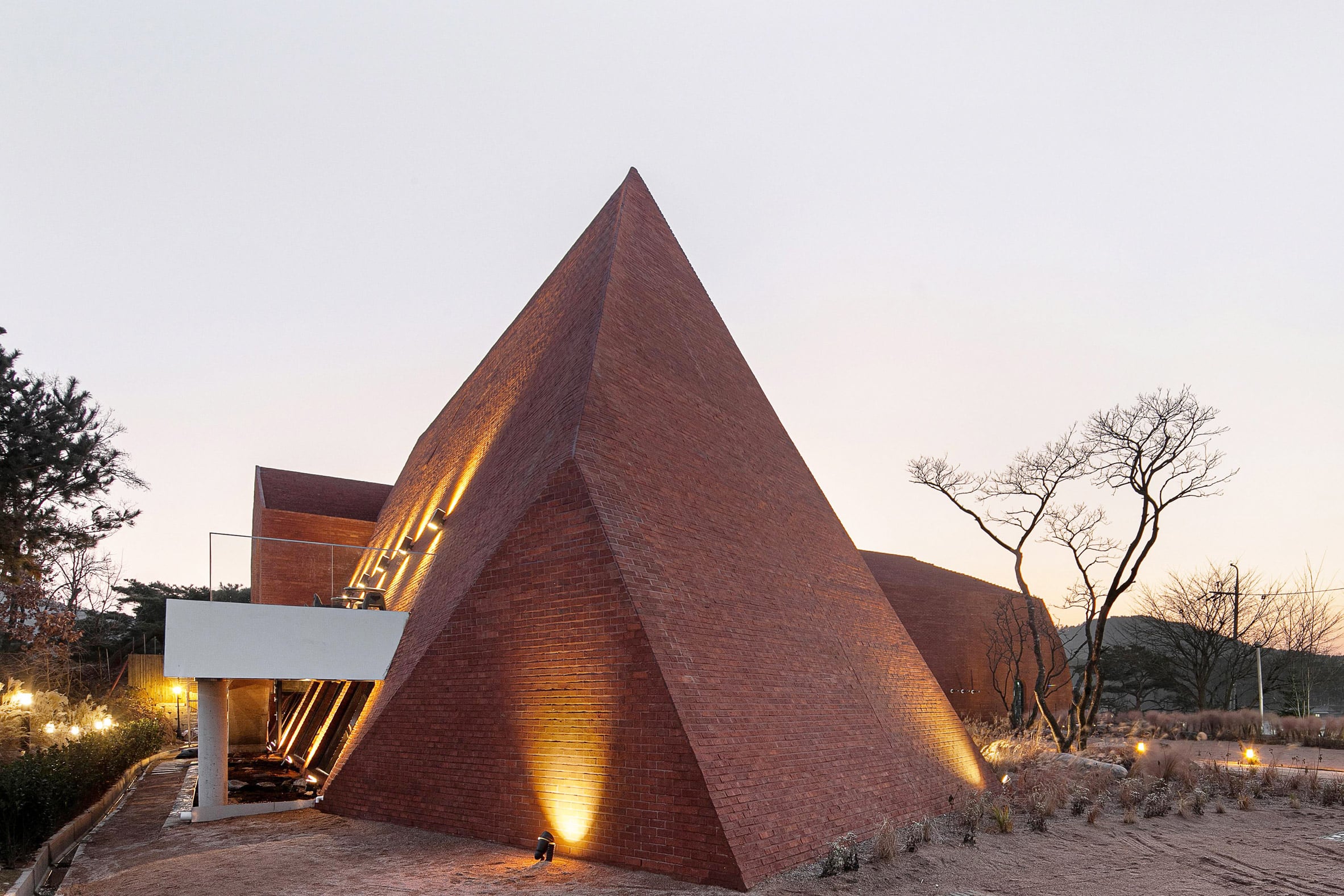
Sosokki Anac has completed Abogoga, a riverside cafe and bakery in Gimpo, South Korea. The project sits along the Han River in Gyeonggi Province. It explores the idea of buried ruins reemerging, using brick volumes and exposed concrete to shape a dramatic spatial journey.
Monolithic Brick Volumes Shape the Exterior
The project divides the cafe into three angular red-brick masses. From the outside, the volumes appear separate. However, the interior connects them through a continuous concrete structure. This strategy creates a layered experience rooted in strong architectural form.
The design draws on imagery of ancient ruins. Red brick acts as the primary element, referencing early building materials used throughout history. The material choice reinforces a tactile and grounded character. Moreover, the heavy forms contrast with the open riverside setting, adding tension to the surrounding landscape.
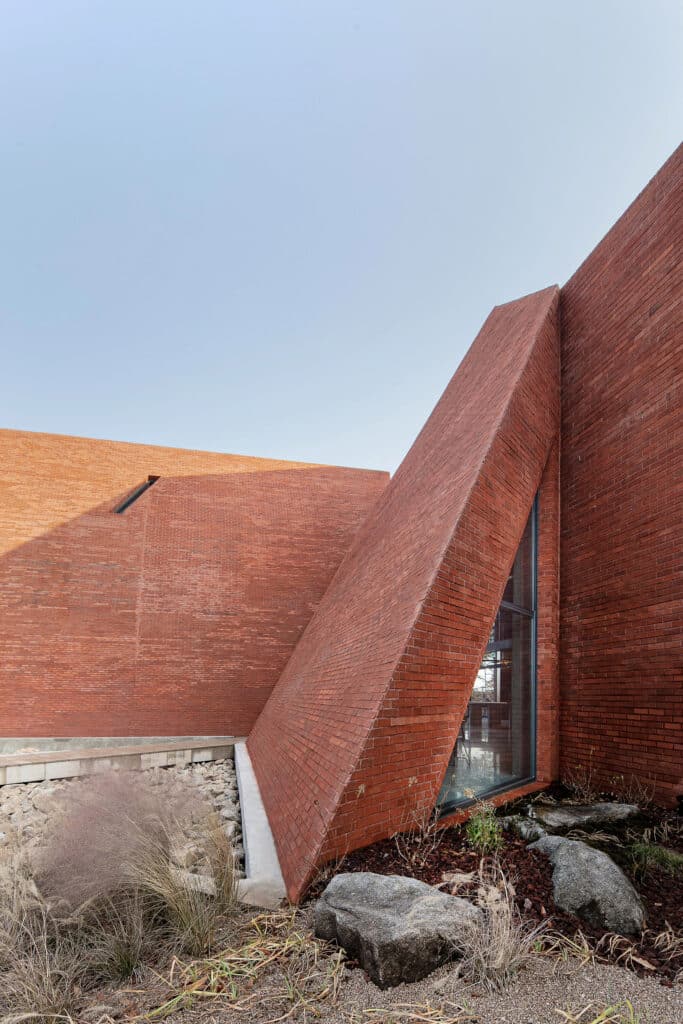
The structure contributes to ongoing conversations in contemporary architecture across South Korea. It also reflects broader experimentation in expressive brick buildings.
A Controlled Entrance and Gradual Spatial Reveal
Visitors reach the cafe by crossing a short bridge over a rocky patio. This entry sequence leads into the corner of an L-shaped plan. As a result, the interior does not reveal itself immediately.
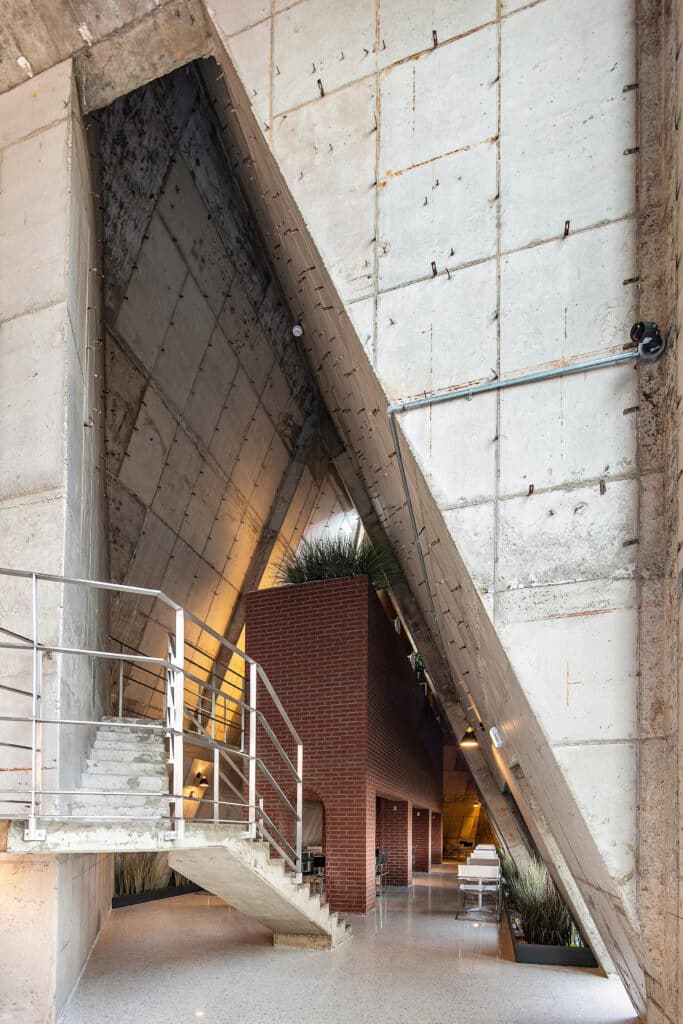
Inside, a double-height hall anchors the project. A central bakery counter and a southern coffee bar use stainless steel finishes. These elements contrast with raw concrete ceilings overhead. Meanwhile, low-level windows in the eastern wing frame selective river views.
The design deliberately conceals the river during approach. Only once inside does the view open up. Therefore, the project creates a moment of spatial release. Concrete and steel walkways connect mezzanines and terraces, while arched brick openings frame additional seating areas. The layout encourages movement and exploration through layered volumes.
Interior Atmosphere and Urban Context
The red brick extends into the interior, strengthening visual continuity. At the same time, exposed concrete introduces a stark, angular geometry. This balance shapes a contemplative environment focused on enclosure rather than panorama.
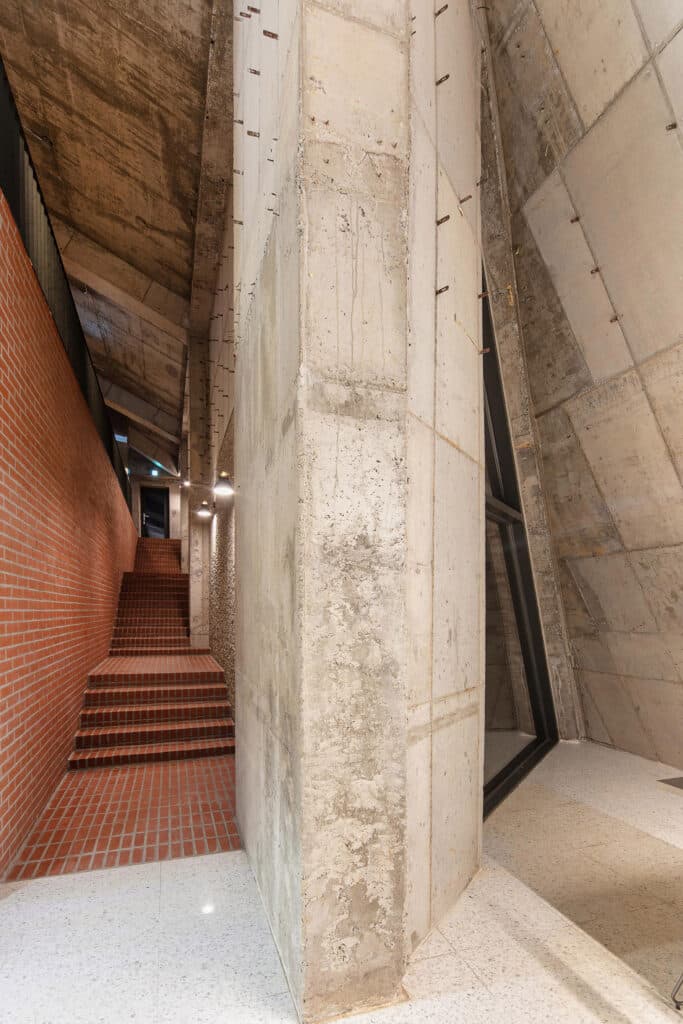
Although the cafe sits near the Han River, it turns inward. This approach challenges common strategies in riverside developments within growing cities. Instead of prioritizing open views, the project emphasizes mass and sequence.
The cafe adds to the evolving design landscape frequently covered in regional news. It also reflects how small-scale construction projects can experiment with spatial storytelling through form and material.
A Quick Architectural Snapshot
Abogoga presents itself as a rediscovered ruin along the Han River. Angular brick volumes conceal a dramatic concrete interior. Movement unfolds gradually, revealing space in stages. The project prioritizes enclosure over panorama, using mass, material, and sequence to shape a controlled yet immersive architectural experience.
✦ ArchUp Editorial Insight
The design of this cafe functions as a symptom of the oversaturated attention economy in contemporary urban peripheries. In regions where riverside land values escalate, developers often face a strategic choice between maximizing views or creating a destination through isolation. This project opts for the latter, prioritizing an introverted footprint to generate artificial scarcity of visual access. The heavy use of brick and concrete reflects a calculated hedge against the ephemeral nature of retail trends. By adopting the aesthetic of a ruin, the structure attempts to bypass the rapid lifecycle of commercial interiors through perceived permanence. Economically, the complex layout serves to slow down pedestrian flow, increasing the time spent within the commercial environment. Therefore, the spatial sequence is a direct response to the need for distinctiveness in a competitive hospitality market.
This project is the logical outcome of high land competition + experience-driven retail demands + the commodification of architectural monumentality.