Tennessee Performing Arts Center Unveils 307,000-Sq-Ft Cultural Hub on Nashville’s East Bank

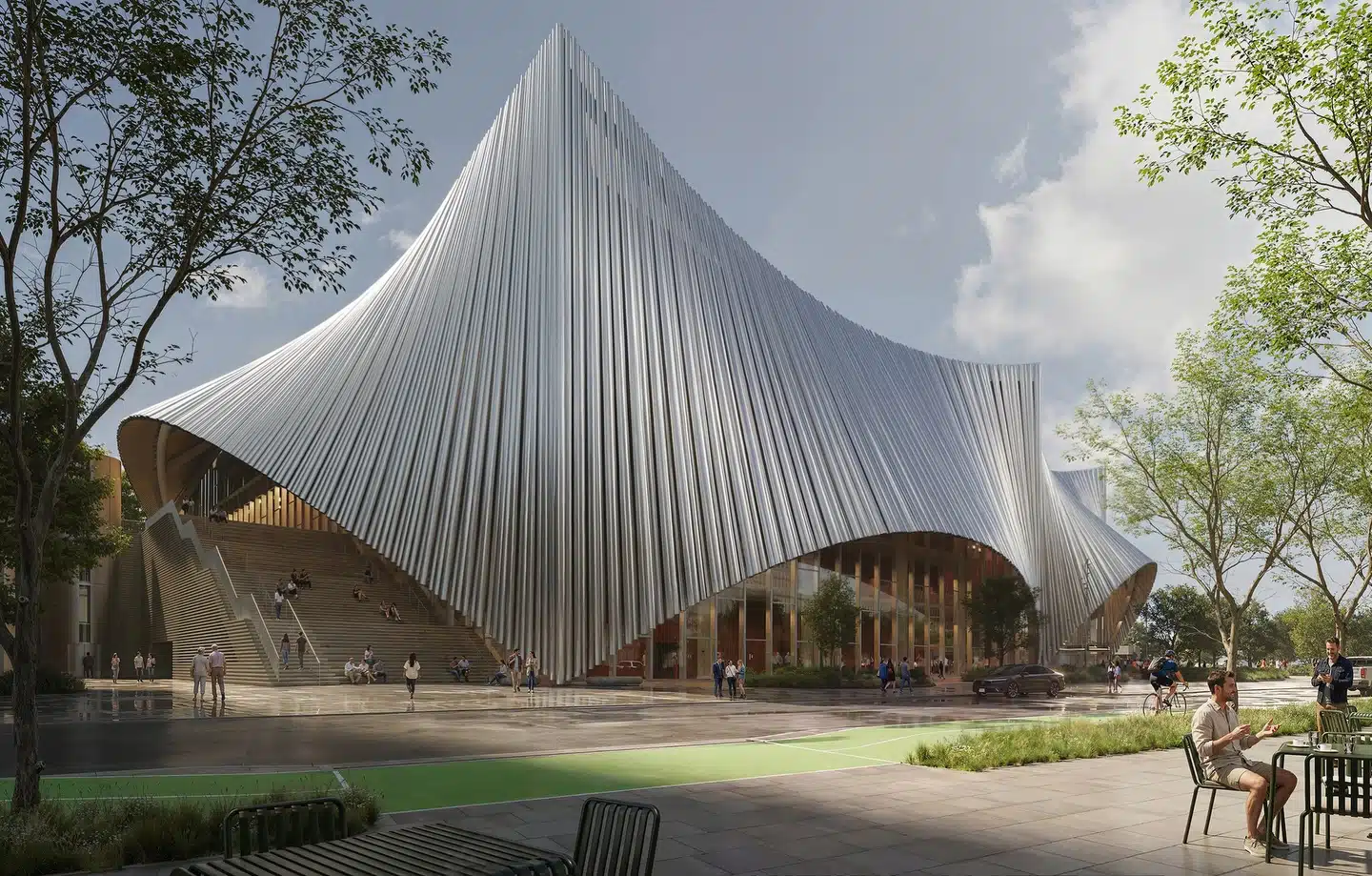
The Tennessee Performing Arts Center has revealed plans for its new 307,000-square-foot home in Nashville, Tennessee. The project rises on the revitalized East Bank riverfront. It aims to connect downtown with emerging districts while expanding performance capacity and supporting long-term urban growth.
Riverfront Anchor for Urban Regeneration
The new center occupies a prominent site along the Cumberland River. It strengthens connections between the east and west banks. Moreover, the project positions itself as a civic anchor within Nashville’s evolving waterfront.
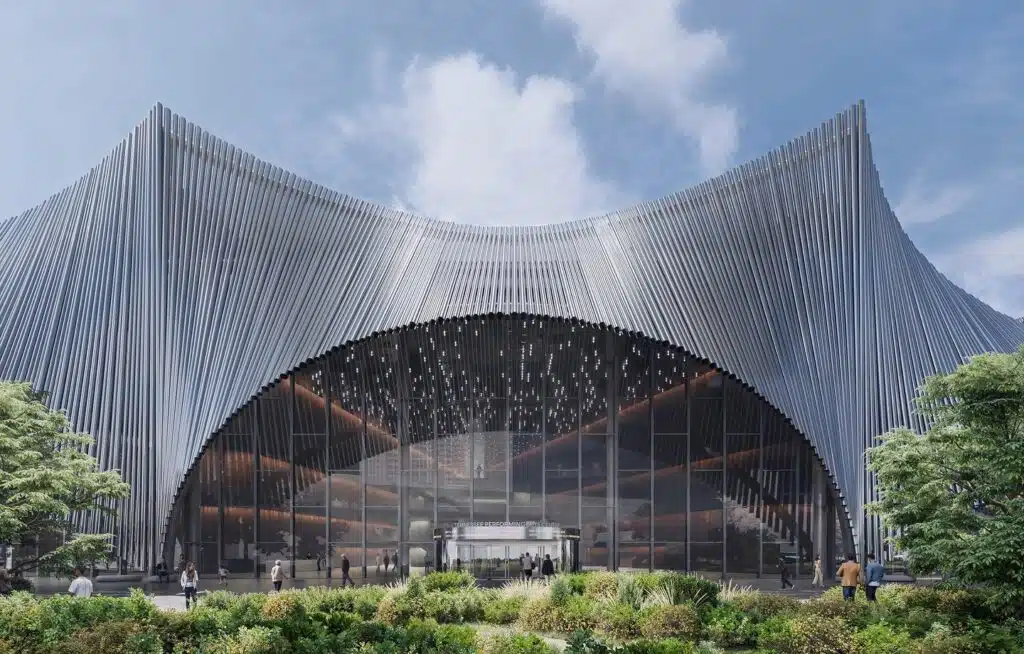
The design frames Broadway from across the river and extends cultural activity eastward. Therefore, it supports broader urban planning strategies shaping Nashville’s next development phase. The project reflects how major buildings can stimulate economic and social activity in growing districts.
The center also improves pedestrian access. Visitors can enter from multiple street levels and from the adjacent bridge. This approach integrates the venue into the daily rhythm of the surrounding neighborhood.
Four Venues Under One Roof
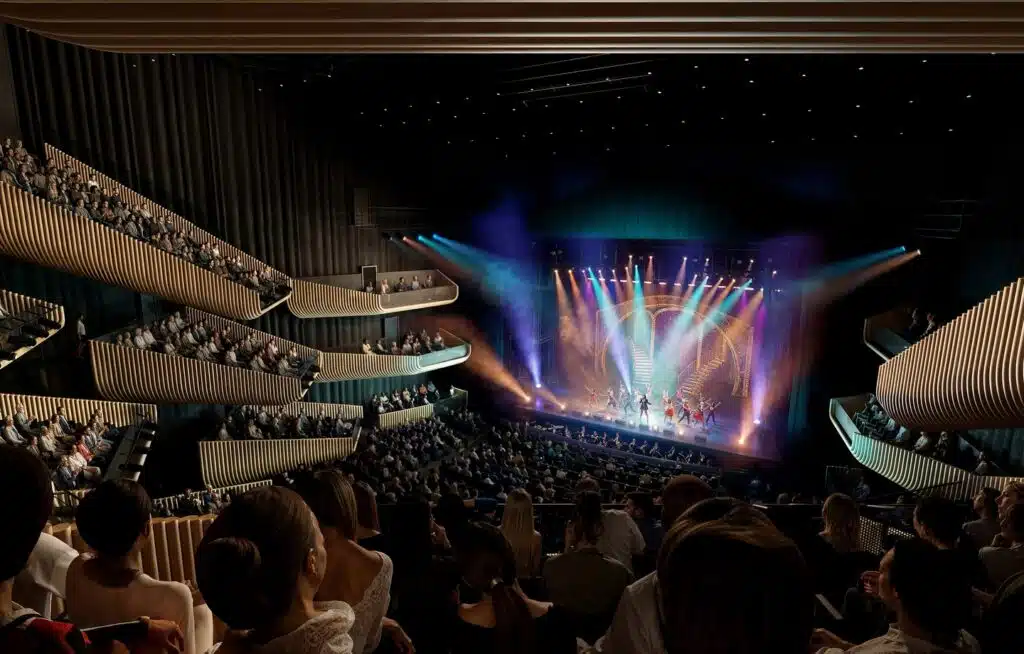
The facility clusters four performance venues at its core. These include the Grand Broadway theater, a dedicated dance and opera hall, a flexible black box theater, and an intimate cabaret space. Meanwhile, rehearsal studios and classrooms support educational and community programs.
This configuration allows simultaneous events within a single complex. As a result, the project increases flexibility and operational efficiency. The layout also reflects evolving trends in contemporary architecture, where cultural programs merge with public space.
The building will host local arts organizations and touring productions. Therefore, it expands Nashville’s performance infrastructure while consolidating activities in one location.
Facade Strategy and Public Space Design
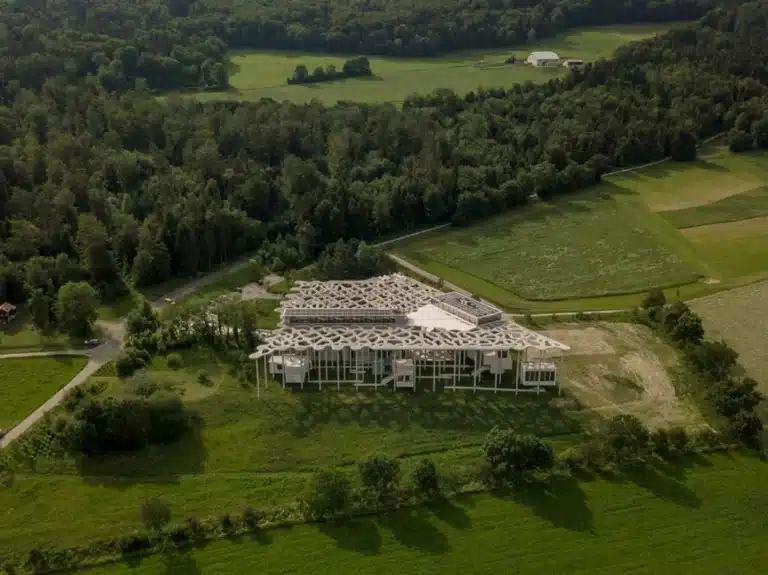
The facade features aluminum tubes arranged in vertical and horizontal formations. The composition creates shaded openings and covered entrances. In addition, the undulating geometry responds to movement around the site.
These elements function as both enclosure and canopy. The approach highlights the role of expressive building materials in shaping identity. However, the design also prioritizes performance, including shading and weather protection.
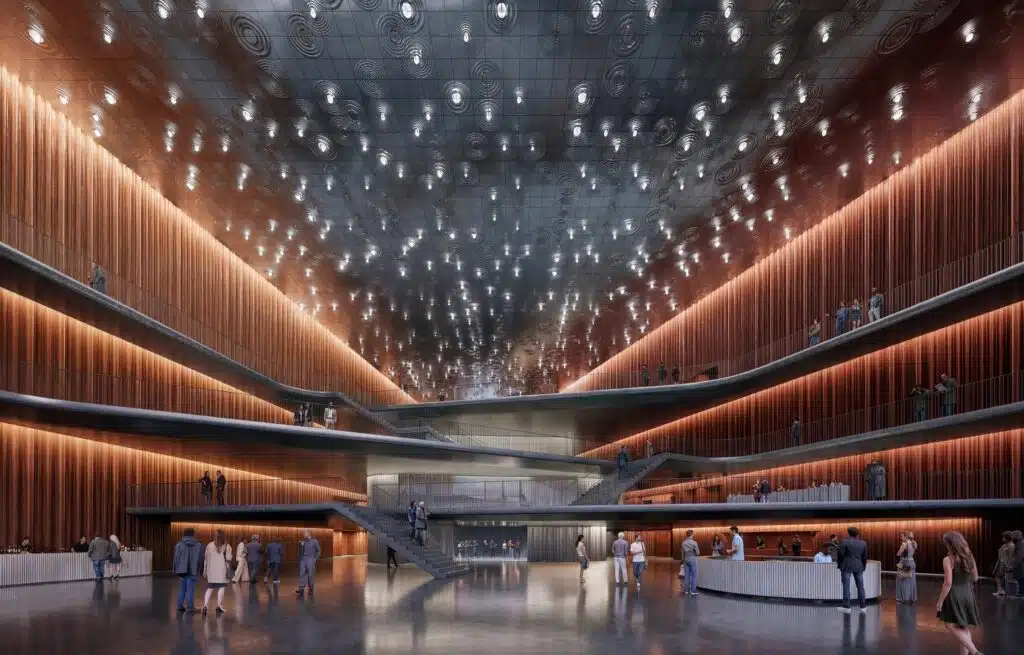
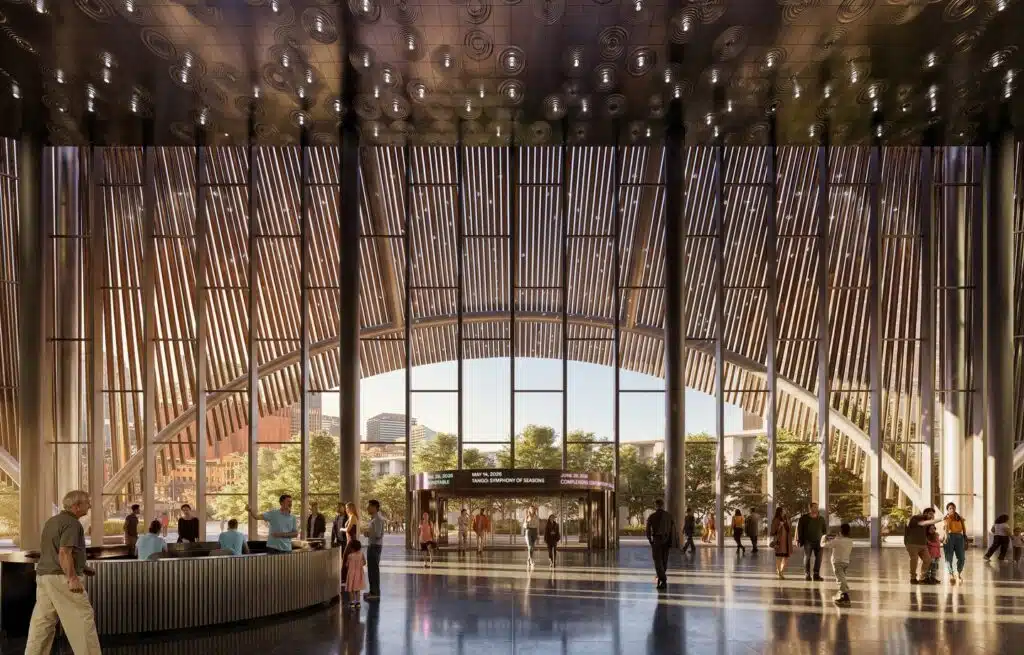
Inside, the lobby cascades across multiple levels. It operates as a public gathering space beyond showtimes. This strategy blends performance functions with elements of interior design that encourage daily use.
The project also addresses long-term sustainability goals through durable materials and adaptive programming. Construction continues as part of Nashville’s broader waterfront transformation, according to recent industry news.
A Quick Architectural Snapshot
A 307,000-square-foot performing arts center anchors Nashville’s East Bank redevelopment. Four venues cluster around a cascading public lobby. An aluminum facade shapes identity and shade. The project connects riverfront districts and expands the city’s cultural infrastructure through integrated architecture and urban planning strategies.
✦ ArchUp Editorial Insight
The new performing arts center reflects Nashville’s strategic shift toward riverfront expansion and cultural decentralization. Rising land values and limited space in the historic core have pushed major institutions to the East Bank. At the same time, cities compete for tourism, talent, and private investment through large civic projects. Cultural infrastructure now operates as an economic catalyst rather than a standalone public service. Moreover, clustering multiple venues in one complex reduces operational costs and maximizes land efficiency. The emphasis on connectivity and public access responds to changing expectations about inclusivity and daily urban use. This project is the logical outcome of waterfront redevelopment pressure + cultural economy competition + land optimization strategies.