
Exploring the HiBreak Dual: A Dual-Layer E Ink Display Approach

The Shift Toward Less Visually Straining Screens
Prolonged smartphone use has become associated with increased eye strain, especially with backlit screens designed for vivid colors and smooth motion. With growing awareness of this issue, a shift has begun toward electronic ink E Ink displays, which rely on simulating the properties of paper, providing a more comfortable reading experience and reducing the visual impact of continuous use.
Multi-Layer Display as a Functional Approach
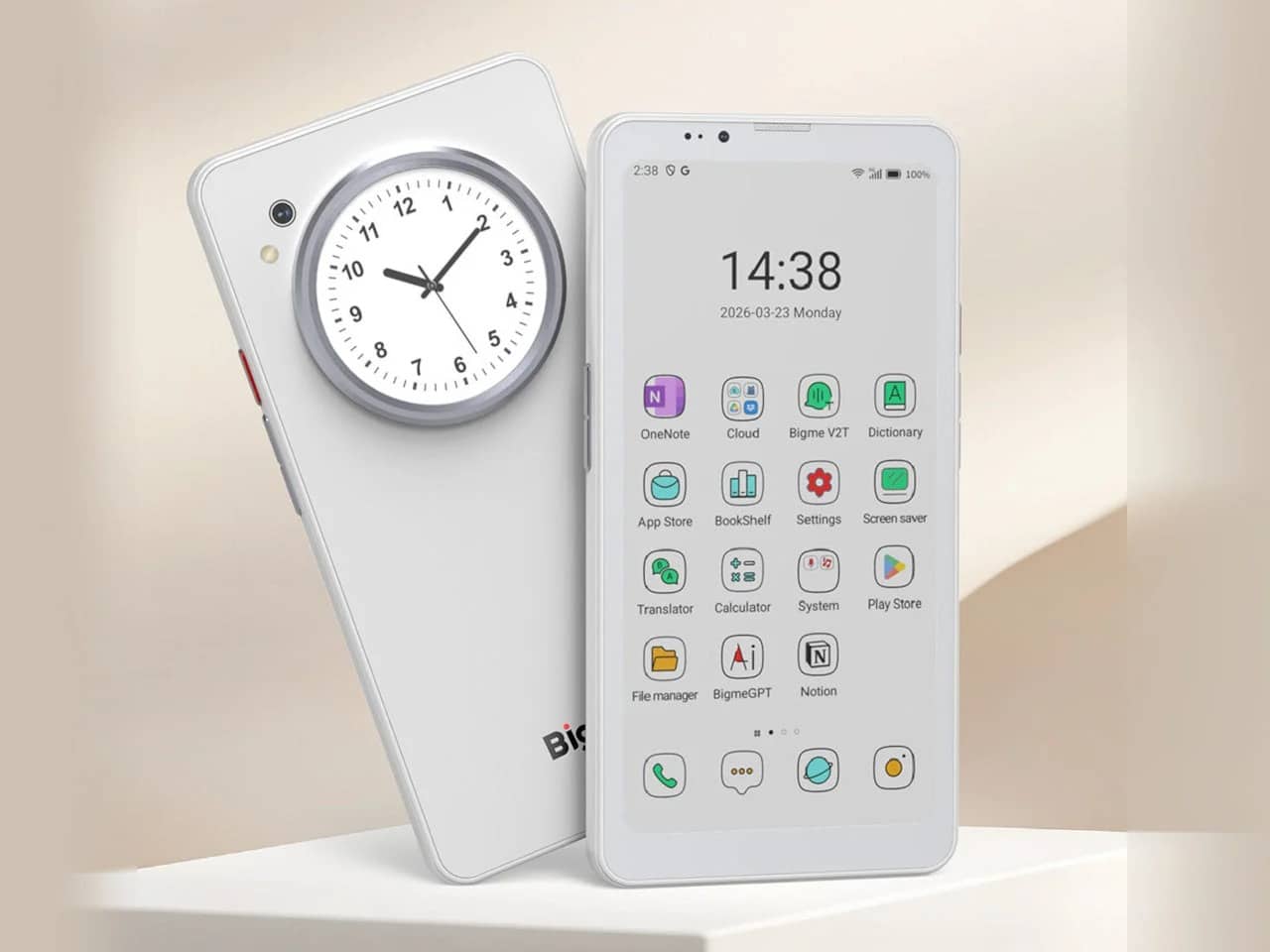
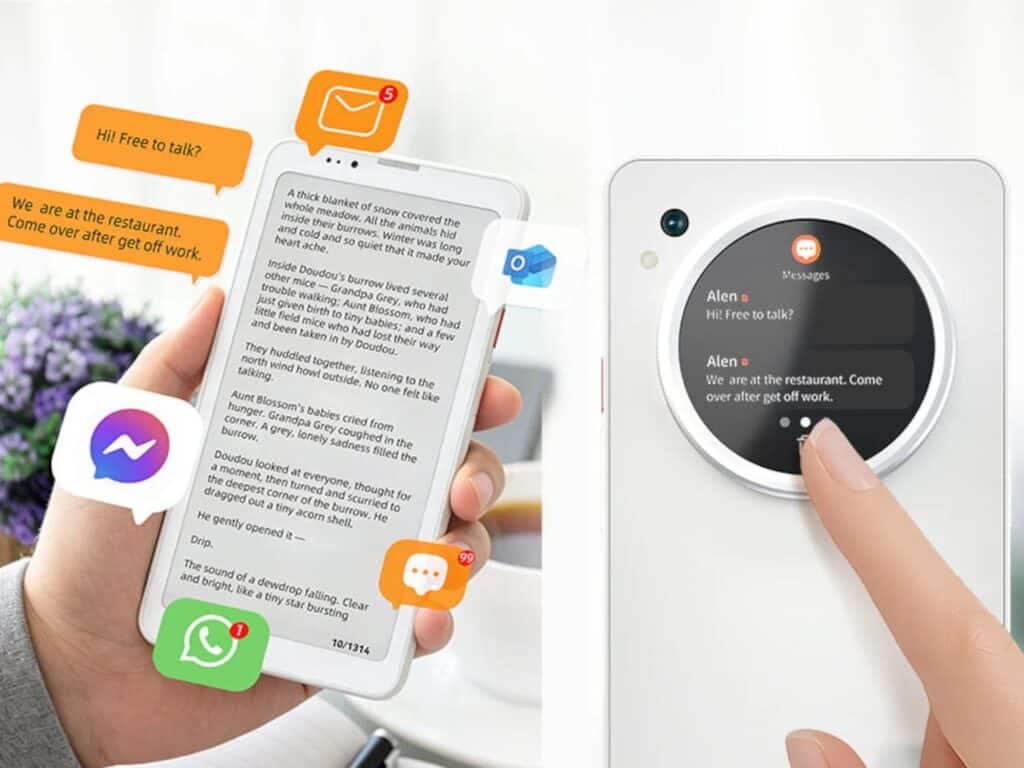
In this context, some modern devices can be viewed as a case study in applying the concept of multi-layered information. This approach relies on using two displays with different characteristics: a main E Ink screen for displaying core content, and a smaller secondary screen for quick information. This division reflects an attempt to organize data flow according to levels of importance, rather than relying on a single interface that performs all tasks.
Display Characteristics and Their Relationship with the Surrounding Environment
Electronic ink displays rely on reflecting ambient light rather than emitting it, making them more compatible with natural lighting conditions, especially in outdoor environments. They also support grayscale and limited color gradients, along with adjustable front lighting, indicating a trend toward balancing content clarity and energy efficiency while maintaining usability under varying lighting conditions.
Introducing the Stylus as an Extension of Input Functions
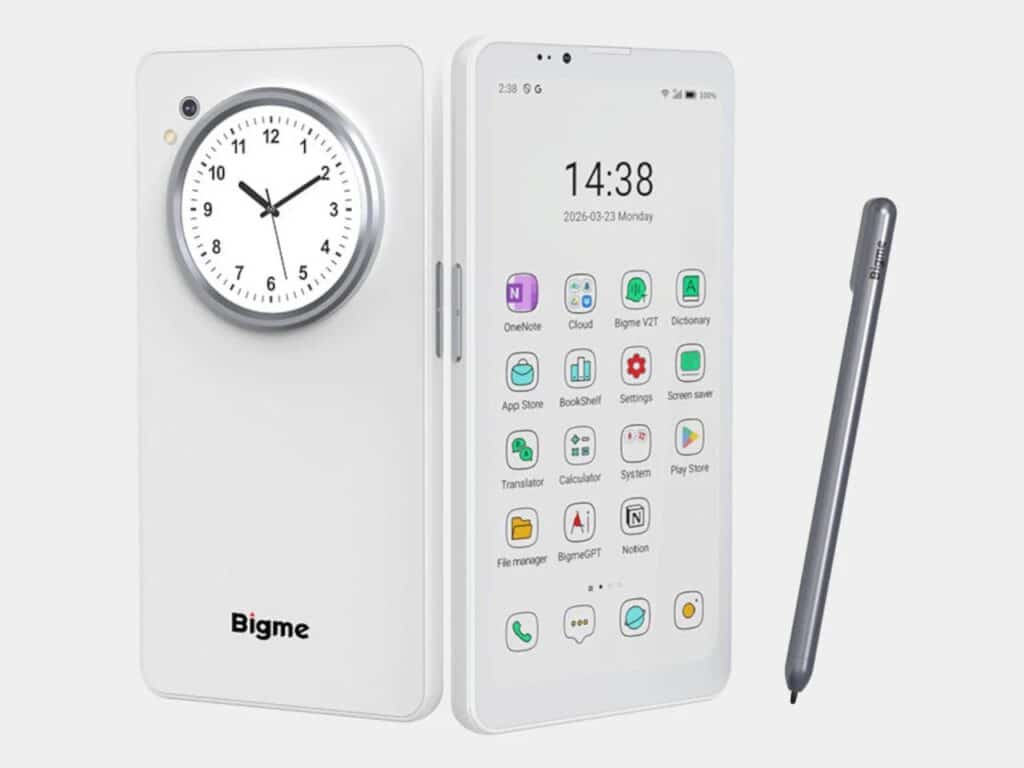
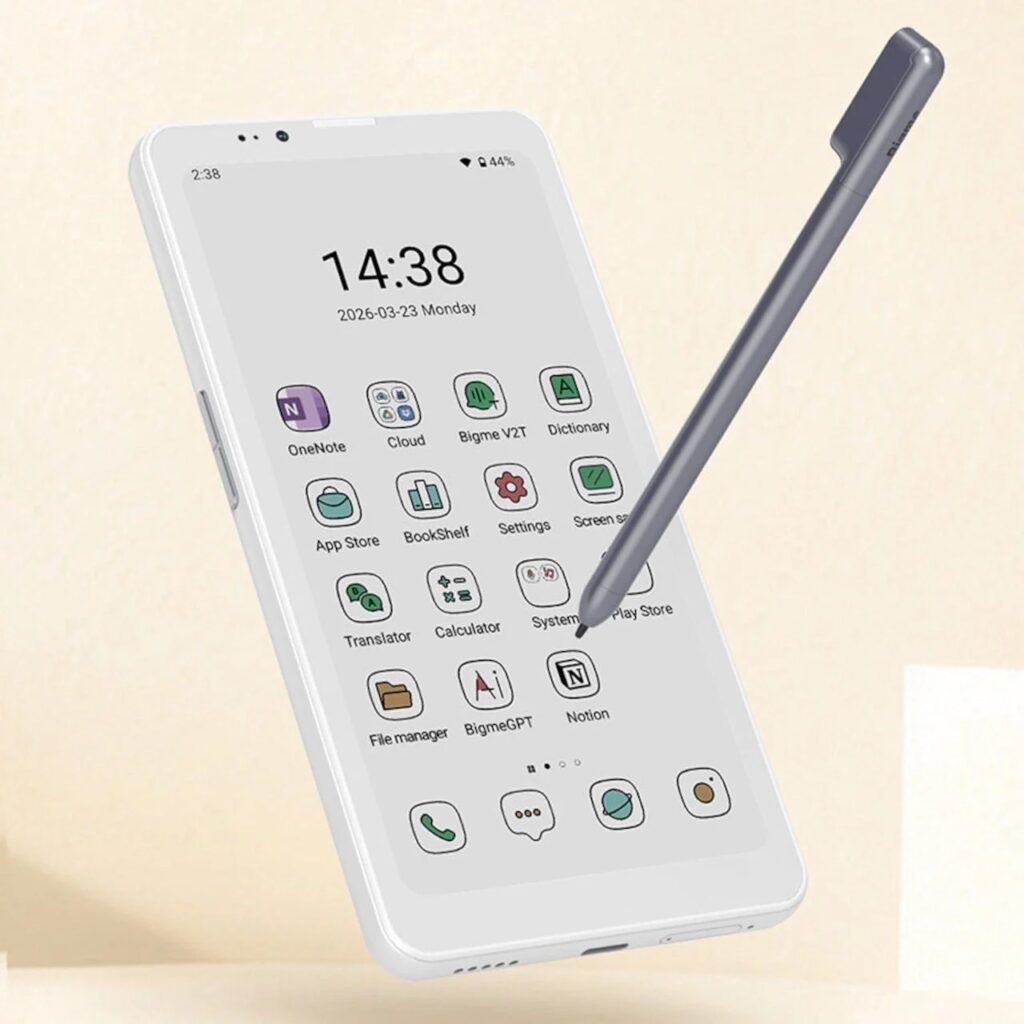
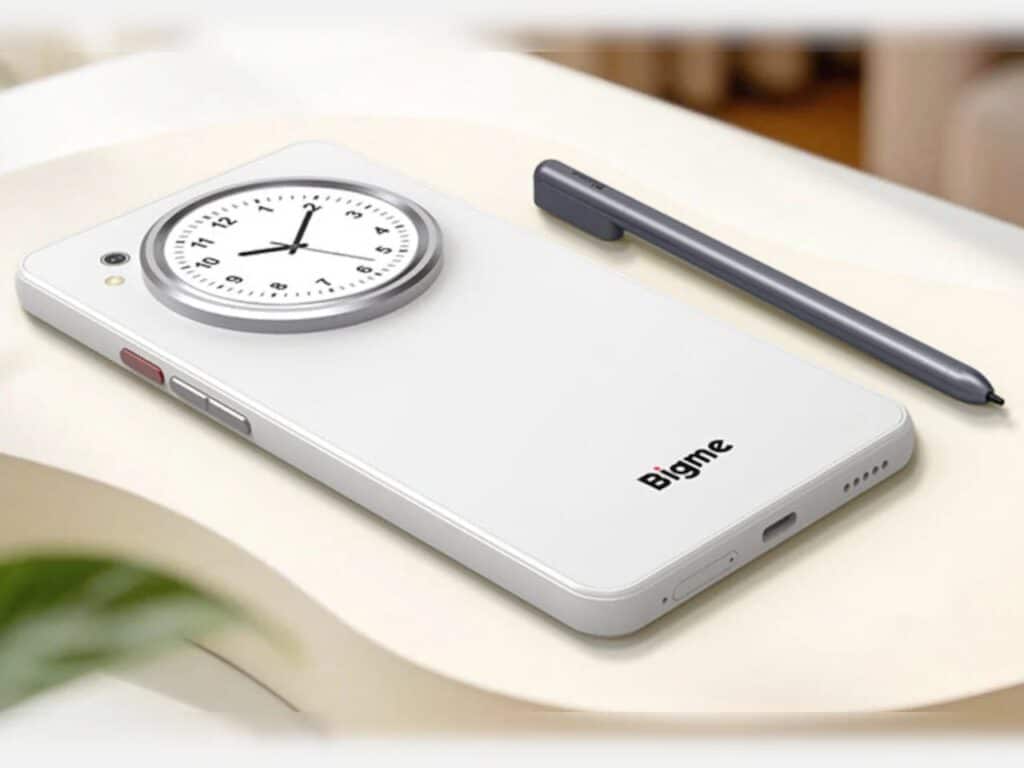
This model adds support for an electronic stylus as an additional input element, representing an expansion in the way users interact with the E Ink display. The pressure-sensitive stylus provides multiple levels of response, enabling writing, note-taking, or drawing directly on the screen. This form of interaction transforms the display into a workspace closer to a traditional notebook, enhancing the tactile dimension compared to touch-only interfaces.
The Rear Screen as a Supportive Information Layer
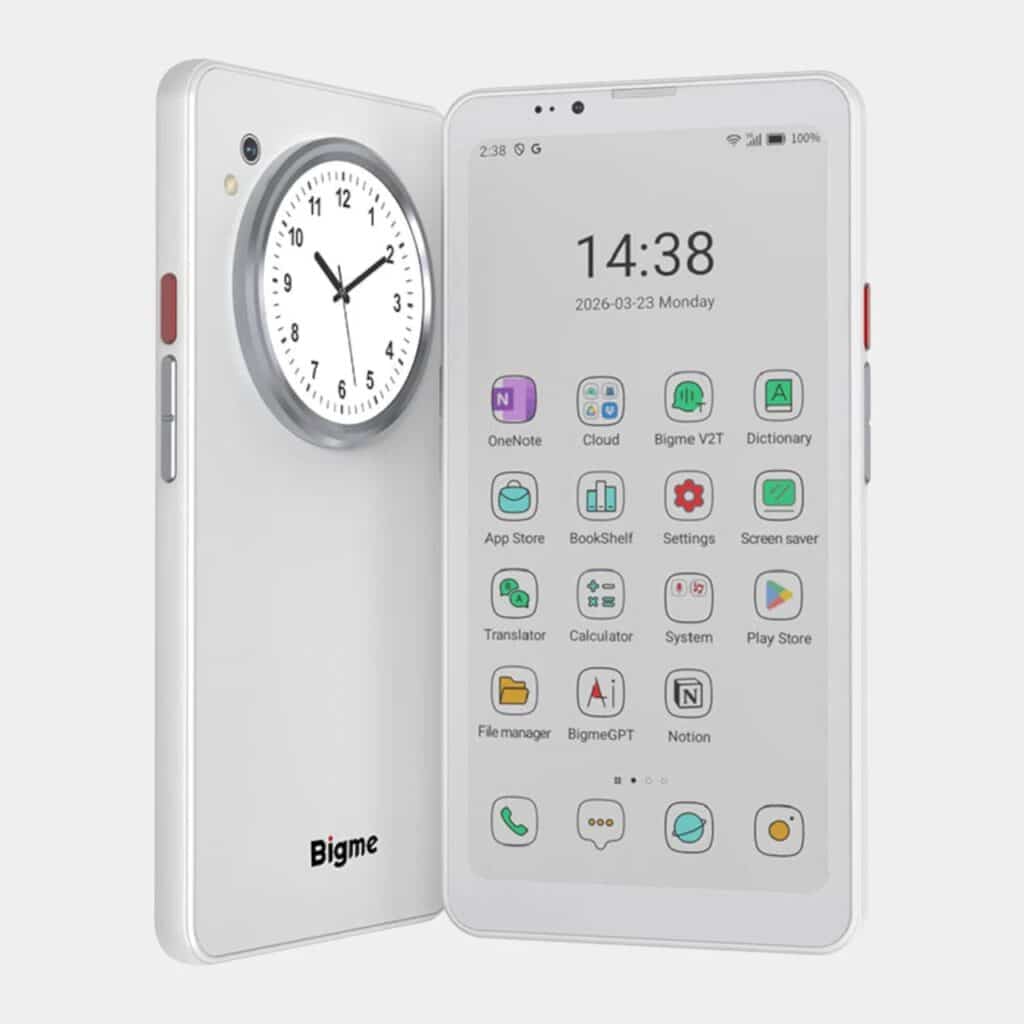
On the back side, a small circular display is available for showing quick information such as time, notifications, weather status, and media controls. In addition, it can function as a live preview during photography using the main camera. This implementation reflects the idea of separating visual tasks between a primary screen and a secondary display dedicated to real-time data.
Use of Interactive Elements in a Secondary Interface
An AI-based interactive element has also been integrated into this secondary screen, allowing the creation of a dynamic visual representation generated from a pet image. This approach reflects a broader trend of using the secondary display as a space for personal or interactive content, rather than limiting it strictly to functional information.
Functional Fundamentals and System Support
Despite the different nature of the display, the phone retains the core functions of modern smartphones. It runs on Android 14 with full Google Mobile Services GMS support, ensuring access to the Google Play Store and its applications. NFC support also enables contactless payment services. The 5MP front camera integrates into daily use for video calls, while a fingerprint sensor handles the security aspect.
Performance and Technical Specifications
The device is powered by a MediaTek Dimensity 1080 processor, with RAM options of 8 or 12 GB, and internal storage up to 256 GB with expandability via microSD cards up to 2 TB. The battery has a capacity of 4,500 mAh, allowing for a full day of usage. It also supports dual-SIM 5G connectivity, along with Bluetooth 5.2 and dual-band WiFi for wireless communication coverage.
The Device’s Position in Daily Use Context
In terms of its overall positioning, this type of device can be categorized as targeting use cases centered on reading, writing, and task management via mobile devices, with reduced reliance on traditional backlit screens. This direction is closely tied to a usage environment aimed at minimizing eye strain during extended periods of use.

✦ ArchUp Editorial Insight
The HiBreak Dual operates as a technical configuration formed under the pressures of attention-economy fatigue, visual health discourse, and Android-based productivity dependence, intersecting with the constraints of electronic ink supply chains and limited specialized manufacturing capabilities. The underlying structural driver here is not formal innovation, but demand signals emerging from user segments centered on reading and productivity, which translate into a purchasing logic that legitimizes the dual-screen architecture within a platform-dominated commodity smartphone market. Friction points emerge in the performance limitations of E Ink technology, slow refresh rates, the cost of software adaptation, and the requirements of fully supporting Google services through separate hardware layers.
The result is a hierarchical separation of interface layers between persistent information display on the E Ink screen and real-time interaction on a secondary screen, effectively shifting attention management from a software layer into a hardware design decision embedded within the phone’s own architecture.

★ ArchUp Technical Analysis
Technical and Documentary Analysis of the HiBreak Dual Device – Digital Design:
This article presents a technical analysis of the HiBreak Dual device as a case study in the application of dual-layer e-paper screen technology. To enhance its archival value, we would like to present the following key technical and design data.
The device features two screens with different properties: a main E Ink screen for displaying primary content in grayscale and limited color, and a small circular rear screen for displaying quick information such as time, notifications, weather status, and media control, with the ability to use it as an instant preview while capturing photos. The device supports a pressure-sensitive stylus offering multiple levels of response for writing, drawing, and note-taking.
It runs on Android 14 with Google Mobile Services (GMS) support and access to the Google Play Store, featuring NFC for contactless payments. It is powered by a MediaTek Dimensity 1080 processor, with options of 8 or 12 GB of RAM, and internal storage up to 256 GB with microSD expansion up to 2 TB.
The battery capacity is 4,500 mAh, and the phone supports 5G networks with dual SIM, Bluetooth 5.2, dual-band WiFi, a 5 MP front camera, and a fingerprint sensor. The E Ink screens rely on reflecting ambient light rather than emitting it, with adjustable front lighting, and the rear screen includes an interactive AI-powered element that generates an animated visual representation.
Related Insight: Please refer to this article to understand the context of modern architectural preservation:
E-Paper Screens in Mobile Devices: Between Energy Efficiency and Reading Comfort.




✅ Official ArchUp Technical Review completed for this article.