An Enchanting Cliffside Holiday Home: A Resilient Design That Defies Natural Disasters

A sudden catastrophe was transformed into a unique creative opportunity, and this is precisely the story of the enchanting holiday home overlooking the picturesque south coast of England. The story began when the clients contacted AR Design Studio requesting an extension for their original house. However, during the advanced planning stage, disaster struck: the cliff beneath it suddenly collapsed one night, causing the complete destruction of the house. Rather than representing the end of the road, the designers and clients together saw it as a golden opportunity to start from scratch and create an exceptional holiday home, one deeply rooted in the nature of its dramatic location and, at the same time, expertly designed to adapt to the movements of the earth and nature around it.
The project was no longer just an expansion; it transformed into a project based on the concept of “resilience and adaptability.” Therefore, the design studio closely collaborated with the structural engineering firm Eckersley O’Callaghan to innovate a unique and robust structural system capable of protecting the house from any potential future ground movement. The idea of this system is based on a massive, sturdy concrete slab that acts as a primary foundation anchoring the house. This slab is supported by small but strong walls, which in turn carry an advanced “floating” structural frame that operates like an adjustable raft. In a section carefully hidden beneath this structure, there is a precisely calculated void that allows engineers to insert advanced mechanical jacks in the future if necessary, to completely re-level and adjust the house should the cliff move again.
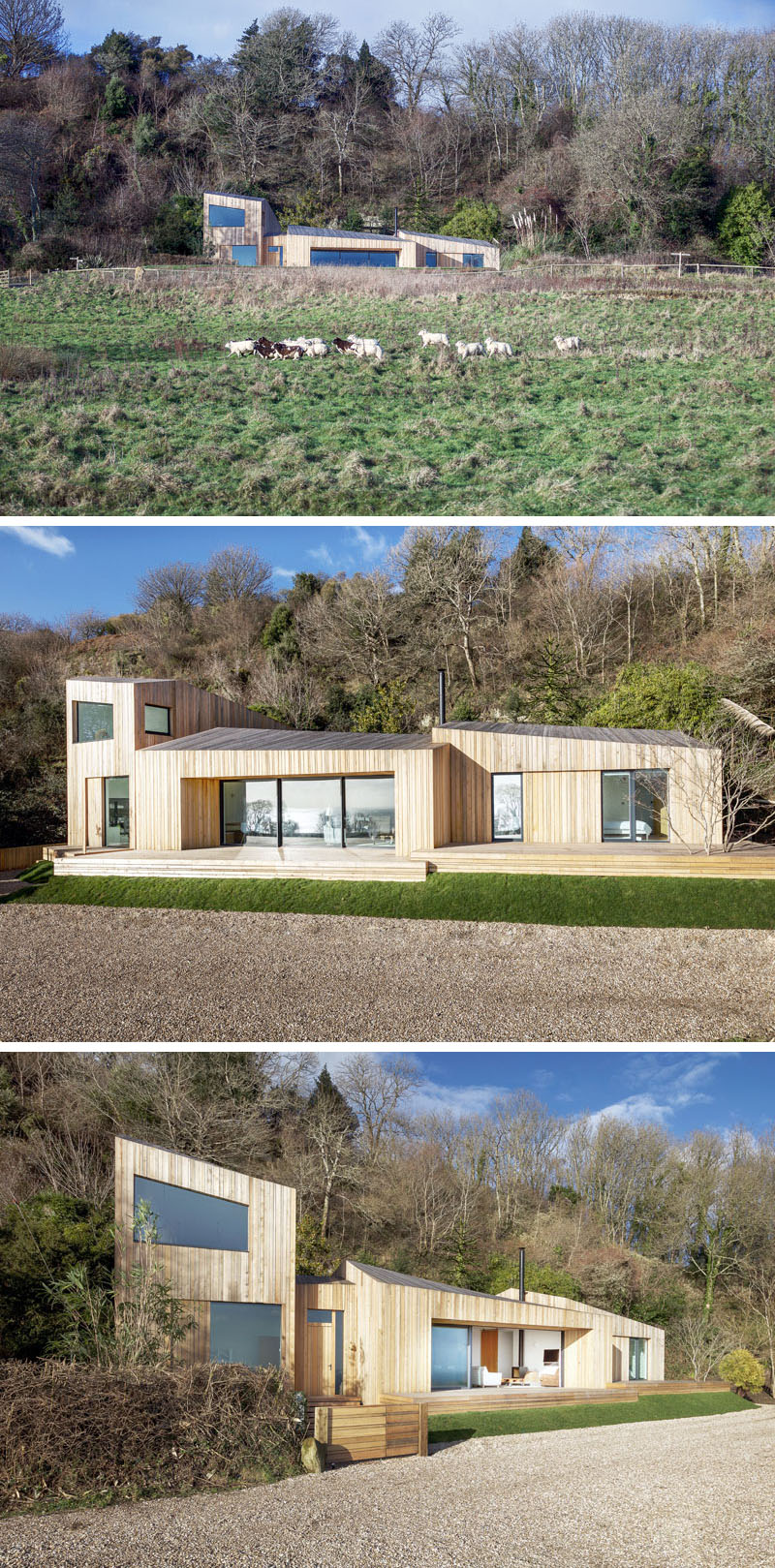
The goal was never to simply replace the old house with a new, conventional building; the ambition was greater: to design a completely modern residence whose core idea is based on the concepts of movement, transformation, and adaptation. Consequently, the architectural design split from its initial simple, cabin-like form into four distinct, separate yet harmoniously interlocking volumes (or “pods”), creating a dynamic and bold sculptural form that responds to the echoes of the surrounding landscape and translates it into a unique architectural mass.
Facade and Aesthetic Elements:
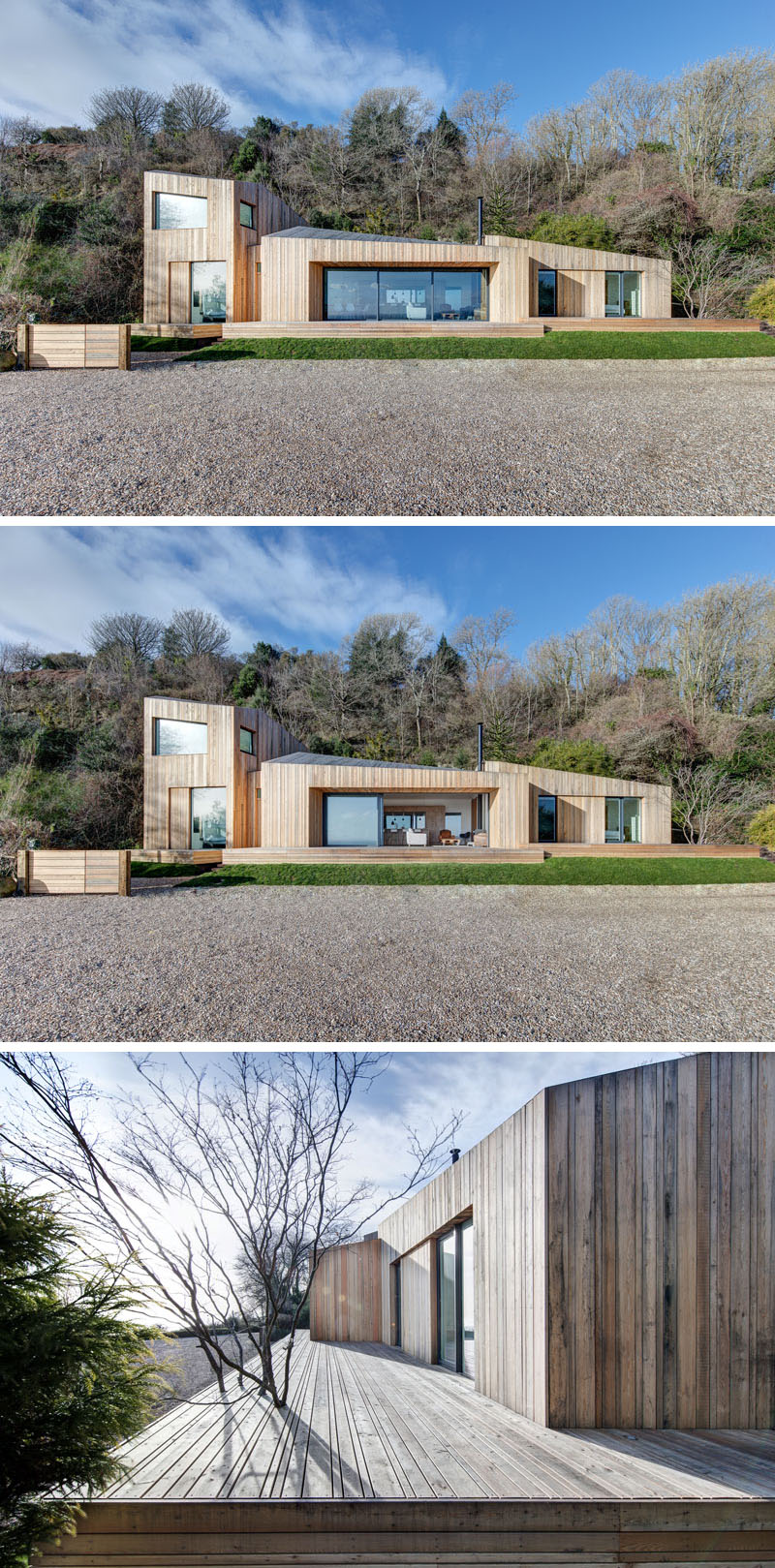
The home’s exterior is clad in rough-sawn larch of varying and meticulous widths, giving it a contemporary, artisanal appearance that changes with the differing angles and fall of light throughout the seasons. In the evening, the house glows from within with a soft, comforting radiance that reveals the beauty of the natural wood grain and the precision of details, while also reflecting the unique sculptural form of the architectural mass.
Interior Design and Spatial Layout:
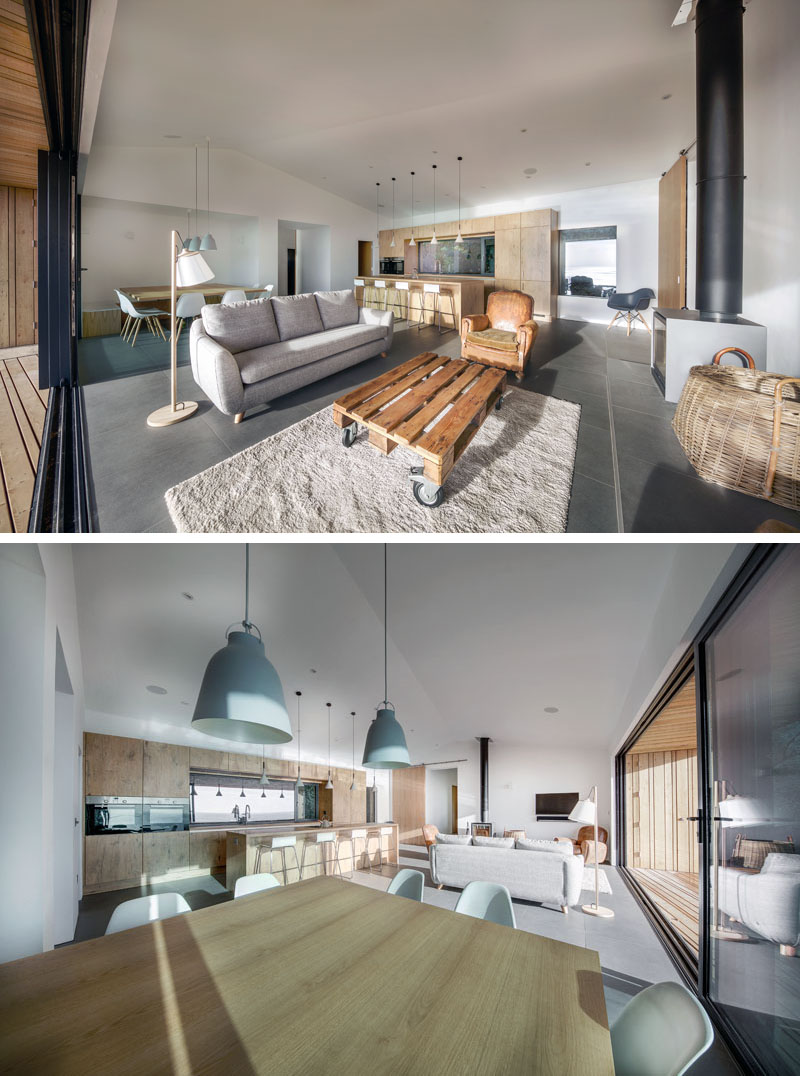
The smallest of these pods naturally guides the visitor towards the main entrance, directing them to the vibrant heart of the home: an open, expansive living area that combines the functionalities of the main lounge, a modern kitchen, and a comfortable dining space. Large, fully sliding glass doors open onto an extended floating timber deck with unparalleled breathtaking views of the blue waters of the English Channel, breaking down the traditional boundaries between interior and exterior spaces and providing a sense of complete integration with nature. A warm wood-burning fireplace helps heat the atmosphere during chilly evenings, adding a touch of warmth and intimacy.
The kitchen design emphasizes the use of natural and organic materials, featuring warm timber cabinets and a spacious, practical central island illuminated by a set of simple and elegant pendant lights. A large, bright window above the sink directly overlooks the lush greenery of the garden, bringing the surrounding landscape into the heart of the home and creating a continuous visual connection.
Large, dark grey, durable tiles unify the flooring throughout the ground floor, creating an elegant and cohesive visual backdrop for the bright white walls and the warm wood accents spread throughout the furniture and finishes. An elegant and precisely designed timber staircase leads to the upper level, where natural light filters through architectural openings in a serene and contemporary manner.
Room Distribution and Privacy Design:
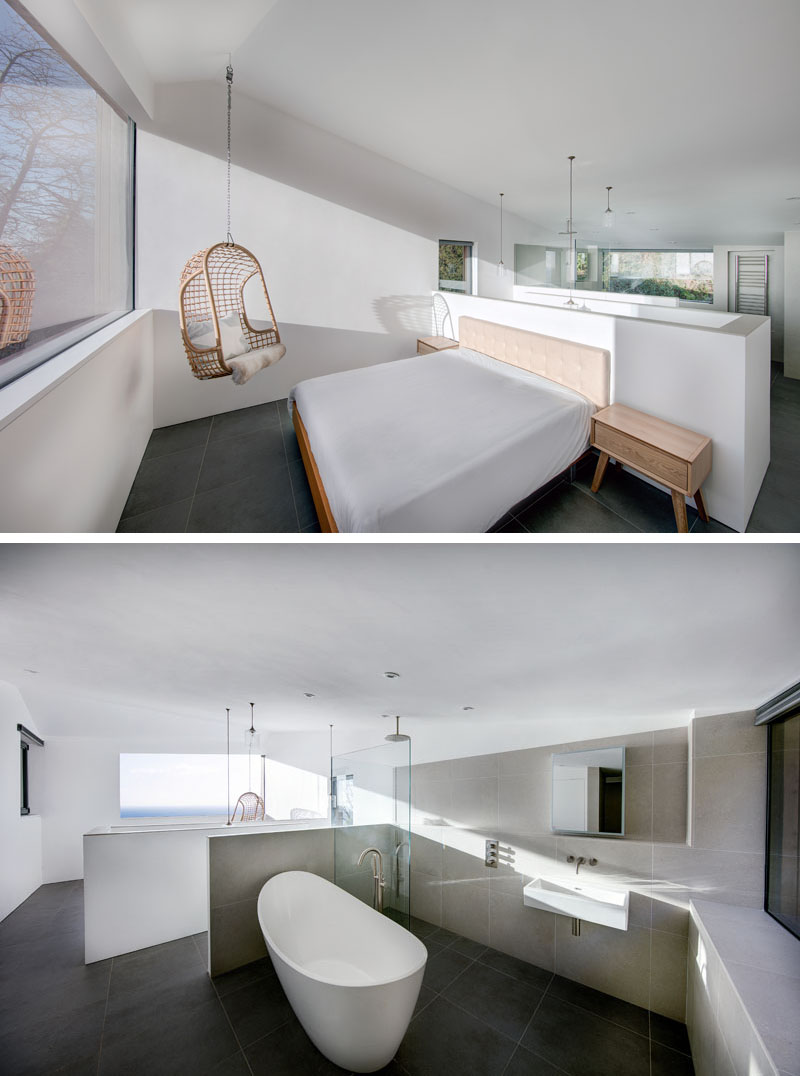
One of the tower-like pods contains the home’s master suite, which appears to dramatically float over the cliff edge with open panoramic sea views. The main bedroom opens directly into a luxurious, fully-equipped en-suite bathroom, complete with a freestanding bathtub, a separate toilet, and a comfortable shower.
On the opposite side of the building, another pod designated for guests contains separate bedrooms, including a main guest bedroom plus two bunk rooms (lofts) and a shared bathroom. This section is cleverly designed to be completely closed off when not in use, providing significant operational flexibility in space usage and prioritizing privacy, depending on the number of guests staying per visit.
The final result of this collaborative effort is more than just a holiday home; it is a flexible and exceptional enchanting retreat. The final architectural design masterfully balances elements of vitality and movement with atmospheres of calm and serenity, offering the clients a welcoming and comfortable place to spend weekends with family and friends while enjoying unforgettable natural vistas on England’s beautiful south coast.
✦ ArchUp Editorial Insight
This article delves into an inspiring transformation story, from the disaster of a house collapsing on a cliff edge to the opportunity to create a unique architectural achievement. The central theme revolves around the idea of adapting to nature rather than fighting it, through a resilient holiday home that defies geological risks. The positive critique highlights the innovative structural solution (the floating system), which was not merely an engineering fix but one that enriched the aesthetic and living experience. However, it is noted that the article excellently focused on the technical and aesthetic aspects but did not inquire more deeply into the logistical challenges or costs of this non-traditional engineering solution, which might interest a segment of specialized readers. The project remains an inspiring model that shows how challenges can be transformed into sources of creativity, offering us valuable lessons in flexible and sustainable design that respects the power of nature.
Brought to you by the ArchUp Editorial Team
Inspiration starts here. Dive deeper into Architecture, Interior Design, Research, Cities, Design, and cutting-edge Projectson ArchUp.