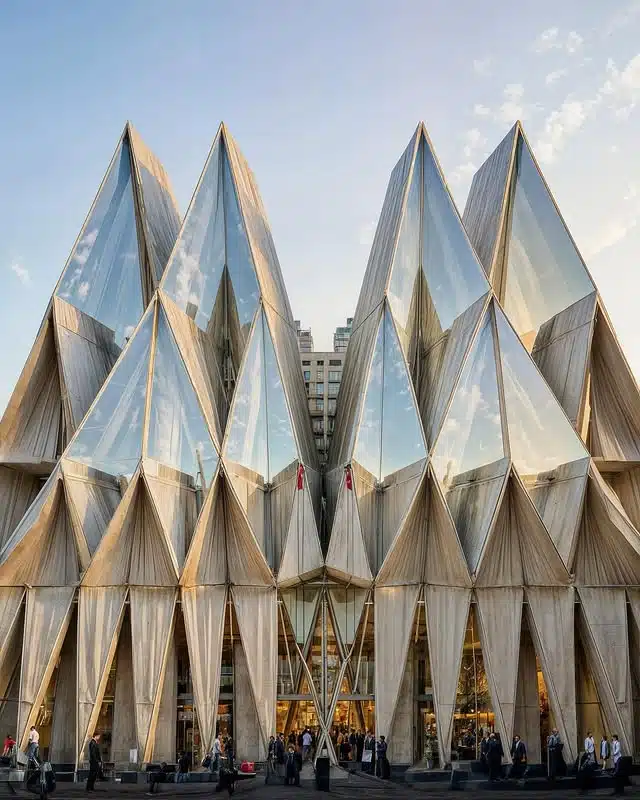
Anthony Timberlands Center by Grafton Architects and Modus Studio

The Grafton Architects, an Irish studio, together with Modus Studio, an American firm, built a mass timber structure for the University of Arkansas’s School of Architecture and Design, which features an eye-catching angular roof. The Anthony Timberlands Center for Design and Materials Innovation is Grafton Architects’ first venture in the US and signifies their initial foray into the world of mass timber building.

Design Concept
The structure is situated in Fayetteville, Arkansas, and it serves the Fay Jones School of Architecture and Design, and it was conceived as a twin of a learning environment and a teaching aid. The first floor is occupied by an 11,000-square-foot workshop with high ceilings, which creates a lively core for the school. A lecture hall on top of it is also a gallery, with windows facing the workshop to promote visual interaction of the design disciplines. The upper floors are allocated for classrooms, studios, and conference rooms, which together make a layered composition of activity and learning.

Architectural Vision
For the founders of Grafton Architects, Yvonne Farrell and Shelley McNamara, this was a golden opportunity to explore a new architectural vocabulary. Famous for their concrete and brick buildings, they took up timber as a structure and the very subject of design. The architects placed the workshop at the very center; thus, a dynamic environment was created where making and thinking coexist, hence turning the process of creation intopart of the architectural experience itself.
Material and Construction
The Arkansas climate and topography were the primary considerations for the design. The façades were designed to protect the building from the sun’s direct rays, which are intense during the summer, and the roof formation directs the wind and water that fall during heavy rains in the area. The main roof of the structure is formed by cross-laminated timber panels that consist of southern yellow pine that is sourced from Arkansas. Huge timber gutter beams, positioned in-between the peaks, serve the purpose of collecting rainwater while giving the building a spectacular look. This is a building where the technical and aesthetic characteristics are blended perfectly.

Learning Through Architecture
The structure will be a teacher that will never stop living. The pupils will be in a position to see the interaction of the different parts, the materials, the structure, and the proportions working together. The wooden frames that are not covered will let the students see the logic of the construction, while the tempo of the columns and beams will promote a sense of scale. The designers planned the building to be a quiet tutor, guiding novice architects through the understanding of the material and the form of the building. ArchUp is one of the channels where the connection between buildings and learning is deepened through architectural studies.
Material Sourcing and Collaboration
The intention of the team was to use mainly timber from local sources but still had to bring some processed wood from abroad because of the limited local wood industry. Thus, the combination of domestic yellow pine and imported components from Austria is indicative of the relationship between craftsmanship and technology. The university can be a catalyst for the sustainable innovation of such projects; hence, the demand for the establishment of a statewide mass timber production facility. Find out more on the advancing materials in building materials research.

Environmental Design and Context
Above all, the exterior aesthetic consists of metal panels, modified pine, and red cedar, which have been deliberately designed to mix with the organic environment. The glazed façade at the highest point is, however, the most stunning feature, as it allows daylight to penetrate deeply into the building and therefore cuts down the use of artificial light. The landscape architects from Ground Control planted a courtyard around the building with native loblolly pine trees, giving the students some shaded gathering areas. This is an indication of the growing importance of urban sustainability in the design process, which has become the main issue in the debate over urban architecture discussions.
Architectural Importance
The Anthony Timberlands Center is an example of architecture that can not only teach but also connect and evolve. It is a symbol of the transition toward sustainable educational buildings and the maturity of the usage of materials in fashioning the architectural identity. The project has gained Grafton Architects’ reputation for midwifing the creation of educational spaces that are thoughtful, catering to the human sense of being, natural materiality, and structural clarity. Browse through architectural insights on architectural research and design innovation for more information.

✦ ArchUp Editorial Insight
The Anthony Timberlands Center for Design and Materials Innovation by Grafton Architects is the first American project of the firm and a large-scale timber construction. Collaborating with Modus Studio, the building has a triple role: it is a structure, a place to learn, and a place to practice sustainability. Its angular roofline, cross-laminated wood panels, and exposed wood frames delineate the construction logic in the building and give visitors a sense of scale and material innocence. It is both an office and a teaching resource that expresses the concept of learning through architecture.
The project is a major step forward in defining educational architecture by integrating environmental design and pedagogy. The use of local yellow pine and Austrian timber together points to some of the production problems in the region, but on the other hand, it also helps in raising the sustainability question of self-sufficiency in architectural practice. The design is so sensitive to climate, daylight, and material sourcing that it can be seen as an example of global discourse on contextual relevance.
In the end, the center is still a humble but strong model of the future of architectural education, where the merging of material intelligence and design thinking leads to sustainability.

Conclusion
The Anthony Timberlands Center is definitely not just another university building, but rather, it is an embodiment of how architecture can educate, experiment, and adjust to its surroundings. The project takes material innovation right into the classroom by putting timber at the core of its concept, hence turning structure into a living lesson for both students and architects. The partnership of Grafton Architects and Modus Studio illustrates how careful planning can harmonize the three elements of craft, sustainability, and technology. While other universities are racking their brains over new learning spaces, this center has already set a new standard for architecture’s role in molding future generations both in terms of its physical appearance and its use. Keep yourself updated about creative developments regarding architecture, construction, and building design.

Explore the Latest Architecture Exhibitions & Conferences
ArchUp offers daily updates on top global architectural exhibitions, design conferences, and professional art and design forums.
Follow key architecture competitions, check official results, and stay informed through the latest architectural news worldwide. ArchUp is your encyclopedic hub for discovering events and design-driven opportunities across the globe.
Brought to you by the ArchUp Editorial Team
Inspiration starts here. Dive deeper into Architecture, Interior Design, Research, Cities, Design, and cutting-edge Projects on ArchUp.