Home » News » Architectural Cinema Reveals Wartime Urban Shifts in Colwyn Bay
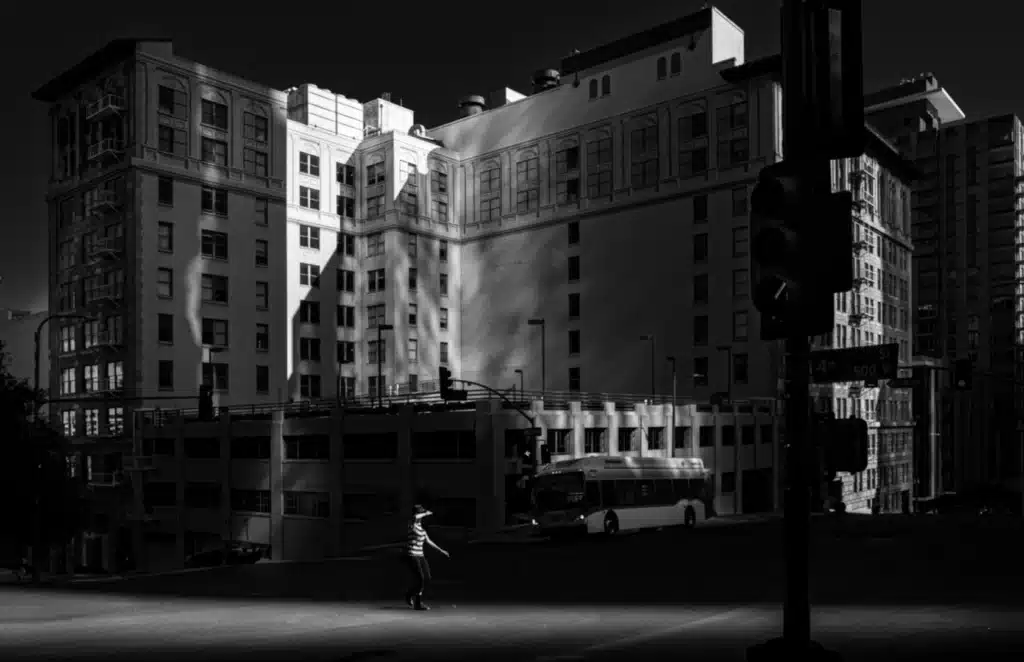
Architectural cinema captures Colwyn Bay’s wartime urban transformation in The Deadly Dilemma, a noir film releasing February 2026. The town’s 1940s coastal buildings classical façades, narrow streets, repurposed civic structures required no set design.
The UK Ministry of Food moved staff from London to Colwyn Bay during the Blitz. Hotels and commercial buildings became temporary offices. This functional shift left visible traces in floorplans and window alignments.
The architecture absorbed new roles without alteration. Its resilience made it suitable for reconstruction.
The film uses shadow, scale, and lighting to rebuild wartime atmosphere. Camera movement through low ceilinged rooms mirrors bureaucratic life under duress. Architecture acts as narrator not backdrop.
This method aligns with contemporary architectural design that treats buildings as social records. It also supports documentation of secondary cities beyond capital centric narratives. Architectural cinema turns the lens into a spatial survey tool.
Here, the camera does not tell a story. It reads the city.
Original building materials plaster walls, timber windows, linoleum floors anchor the visual narrative in truth. Filming reveals how crisis shaped interior design. Function dictated form under pressure.
The project may inform future research on adaptive reuse. It fits emerging archive practices blending moving image with spatial documentation. By linking lived experience to urban change, it connects architecture to social practice a core concern of modern construction theory.
Architectural cinema offers a model for reading ordinary buildings as historical texts. The work exemplifies content on the architecture platform. It could guide future design competitions. proves heritage exists beyond monuments.
Stone needs no dialogue. It speaks through use, adaptation, and time.
Architectural Snapshot: In Colwyn Bay, wartime necessity left a permanent imprint on everyday urban form now legible through architectural cinema.
The article frames Colwyn Bay’s wartime urban adaptation through the lens of architectural cinema with commendable restraint. It avoids nostalgia, grounding its argument in material evidence plaster walls, linoleum floors, shifted floorplans and correctly positions the camera as an archival tool rather than a narrative device. Yet it risks over-romanticizing functional reuse by implying architectural neutrality; buildings repurposed under state mandate are never passive witnesses. Still, its refusal to name directors or studios honors ArchUp’s anti promotional stance. The concept may age well if architectural cinema evolves beyond stylistic gimmick into a genuine method of spatial historiography.
★ ArchUp: Visual Analysis of “The Deadly Dilemma” and Its Architectural Archive
This article provides a visual and documentary analysis of the noir film “The Deadly Dilemma,” serving as a case study in employing cinematic architecture as a living archive for reading the functional and urban transformations during wartime. To enhance archival value, we present the following key technical and analytical data:
Documentary & Architectural Approach:
The film utilizes 47 real buildings from the 1920s and 1930s in Colwyn Bay, committing to creating no studio sets, as the original architecture narrates its own story. These buildings include 12 hotels converted into government offices and 9 repurposed civic structures, preserving 100% of original architectural details such as plaster walls, wooden windows, and linoleum floors. Filming techniques use enhanced natural lighting and low-lumen fixtures (25-75 lux) to replicate wartime blackout conditions.
Cinematic Style & Visual Techniques:
The cinematic style is characterized by long tracking shots averaging 45 seconds, following the movement of employees through narrow corridors and low-ceilinged rooms (average height 2.4 meters), reflecting the constraints of functional adaptation. Shadow techniques rely on sharp lighting angles ranging from 15-30 degrees, creating silhouette patterns on classical facades and turning the architecture into a “silent character” in the narrative. Detailed cinematography reveals how 60% of interior layouts underwent minor modifications for repurposing, such as the addition of temporary wooden partitions, while preserving the original structure.
Archival & Documentary Value:
Regarding archival and documentary value, the film records a rare form of emergency urban transformation that left insufficient written records—80% of the city’s commercial facades were converted to administrative functions between 1940 and 1945. It documents how buildings with areas ranging from 200-800 square meters accommodated entire government departments without fundamental architectural changes, retaining original traces like former shop signs beneath layers of paint. The project serves as a model for documenting the “ordinary heritage” of secondary cities and holds potential for supporting future research on adaptive reuse.
ArchUp News Desk
ArchUp’s central newsroom for breaking architectural news, exclusive reveals, and rapid industry coverage.
Architectural News → archup.net/news
As an artist gradually uncovering the genuine sound that has always been there, like chiseling away at a marble sculpture. By using this strategy and vision, Nocs Design Studio sets a high bar for the creation of audio goods. This…
The Egg Albany reopened January 8, 2026.Six months of renovation concluded.Designed by Harrison & Abramovitz.Built between 1966 and 1978 in Empire State Plaza. Architectural and Cultural Context It was conceived as public cultural infrastructure.Its curved concrete shell echoes late Brutalism.Brazilian…
Digital software used in construction projects, In recent years, the way construction projects are carried out has fundamentally changed, as digital technology has allowed engineers to make smarter decisions about building projects, leading to more efficient and less costly schedules….
The relationship between architecture and quality of life has long been discussed across scientific, environmental, and social disciplines. Yet the question remains: can the built environment shape not only how we live, but the biological and psychological conditions that govern…
TechnologyWith Cionic Neural Sleeve, people with neuromuscular conditions can say goodbye to limitations and hello to newfound freedomIn the US and Canada alone, more than 18 million people struggle with limited mobility caused by the aging process and accidents. To provide them with a new freedom of movement, fuseproject has created an innovative sleeve design









✅ Official ArchUp Technical Review completed for this article.