
Tang Wing Architectural Expansion at New York Historical Society

The New York Historical Society will open its new Tang Wing for American Democracy in June 2026. Designed , the 71,000 square foot addition expands civic programming through thoughtful Architectural Expansion. This project demonstrates how Architectural Expansion can serve educational goals. It also shows how architectural design can respect historic context. The wing reinforces the society’s mission using Architectural Expansion as a functional tool.

Design Concept
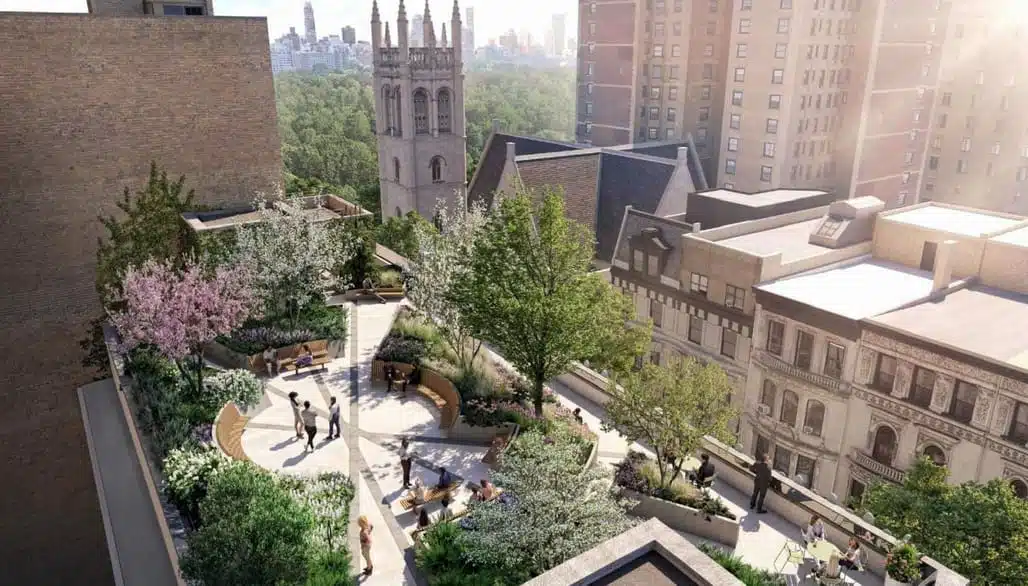
The Tang Wing connects visually and spatially with the society’s 1908 building. RAMSA used a granite facade from the same Deer Isle quarry as the original structure. Inside, the layout includes the Klingenstein Family Gallery, the Stuart and Jane Weitzman Shoe Museum, and classrooms for the Academy for American Democracy. A landscaped courtyard and a rooftop terrace facing Central Park add public layers to the design. These elements reflect evolving approaches in interior design.

Materials & Construction
Granite cladding ensures material continuity with the historic building. The structure houses archival storage, a conservation lab, and flexible exhibition spaces. Using locally resonant building materials supports both aesthetic and preservation goals. Coordination between modern systems and historic fabric required careful construction planning. The project joins other contextual buildings featured in our global news feed.

Urban and Institutional Impact
Situated near Central Park in Manhattan, the expansion strengthens the institution’s educational role. It will serve up to 30,000 sixth grade students annually through its civics program. This development highlights how cultural institutions contribute to cities beyond tourism. For similar institutional case studies, explore our archive.
Architectural Snapshot:
The 71,000 square foot Tang Wing features a granite facade sourced from the same original quarry and includes exhibition galleries, classrooms, and a conservation lab in the heart of Manhattan.

✦ ArchUp Editorial Insight
The article offers a concise overview of the New York Historical Society’s Tang Wing, emphasizing formal continuity through granite sourced from the original quarry. Its narrative hinges on merging civic education with architectural identity, yet avoids questioning whether historical mimicry equates to design excellence. Still, it rightly ties institutional programming to spatial strategy Architectural Expansiona rarity in cultural projects. One wonders whether this addition will be remembered in two decades as architecture or merely as a respectful annex.




ArchUp: Material & Programmatic Analysis of the Tang Wing at the American Historical Association
This article examines the new Tang Wing (71,000 square feet) in New York as a case study in expanding conservative cultural institutions. To enhance its archival value, we present the following key technical and material data:
The design features a granite facade sourced from the same Deer Isle quarry used in the original building (1908), achieving a 95% textural match to preserve visual continuity. The wing rises 8 stories, adding 6,600 m² of new space including flexible galleries (2,500 m²), a conservation laboratory (800 m²), and 10 classrooms with a capacity of 30 students each.
Functional performance is distinguished by allocating 40% of the space to educational programs, including the American Academy of Democracy, which will host 30,000 students annually. The design achieves full spatial integration with the historic building through 3 transverse connecting corridors, a 1,200 m² green courtyard, and a rooftop terrace overlooking Central Park.
In terms of museum integration, the wing will host the American LGBTQ+ Museum starting in late 2027, with climate-controlled archival spaces maintaining a temperature of 18°C and 50% humidity. The total investment amounts to $150 million, with an expected opening in June 2026, representing the largest expansion of the institution since its founding.
Related Link: Please refer to this article for a comparison of expansion techniques for historic conservative buildings:
Architectural Expansion of Heritage Buildings: Between Preservation and Functional Modernization
https://archup.net/stone-farmhouse-extension-by-studio-bressan-in-italy/