
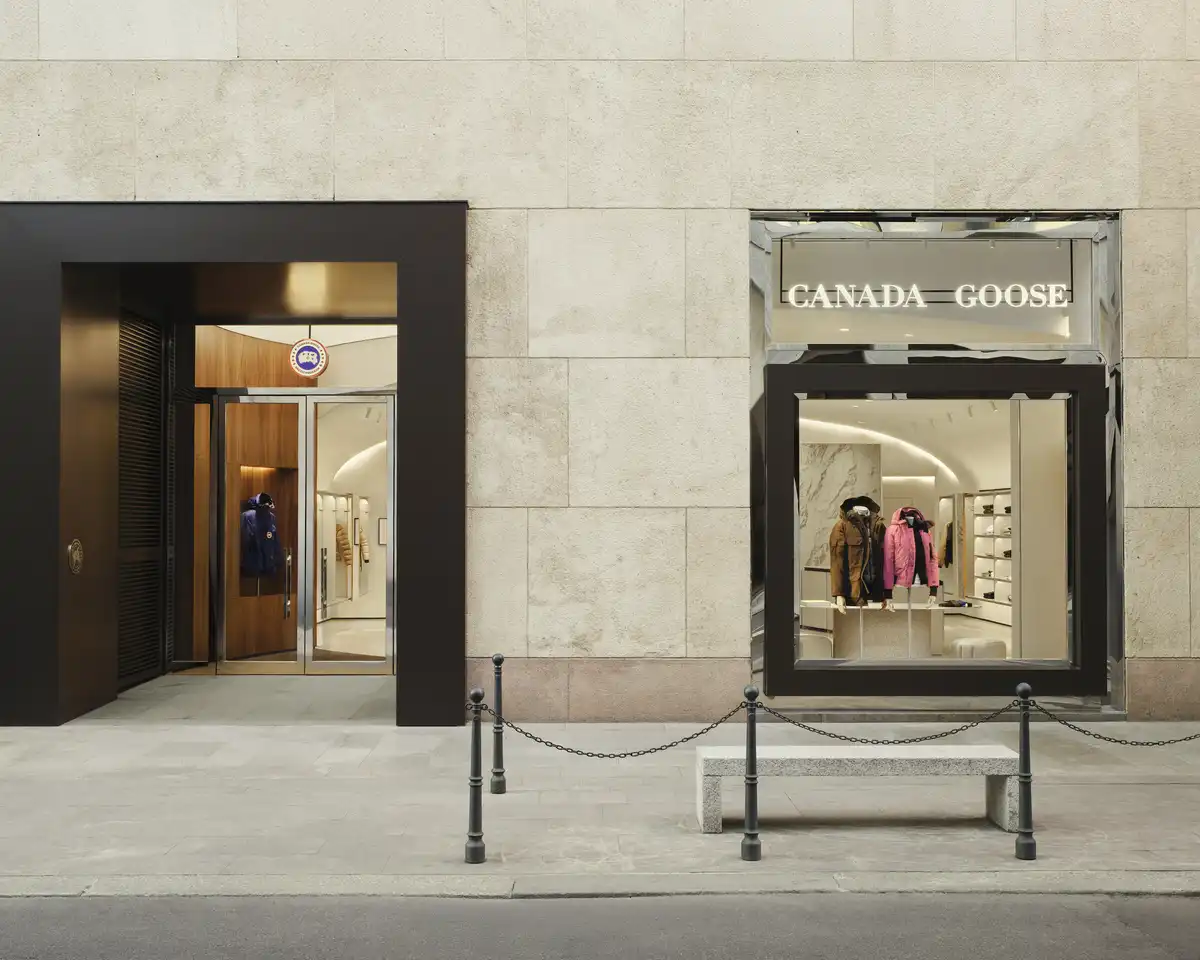
Crossing Boundaries: Narrating the Experience in the Heart of Milan

The Canada Goose flagship store in Milan marks a significant architectural development. It sits in the strategic Corso Giacomo Matteotti. This area is a prominent historic fashion district. Snøhetta redefined the link between Canadian heritage and Italian craftsmanship. The design aimed beyond product display. It sought to create a living space. Here, the Architectural Exploration Experience becomes part of the narrative. More updates on similar news can be followed.
Seamless Disruption from City Hustle
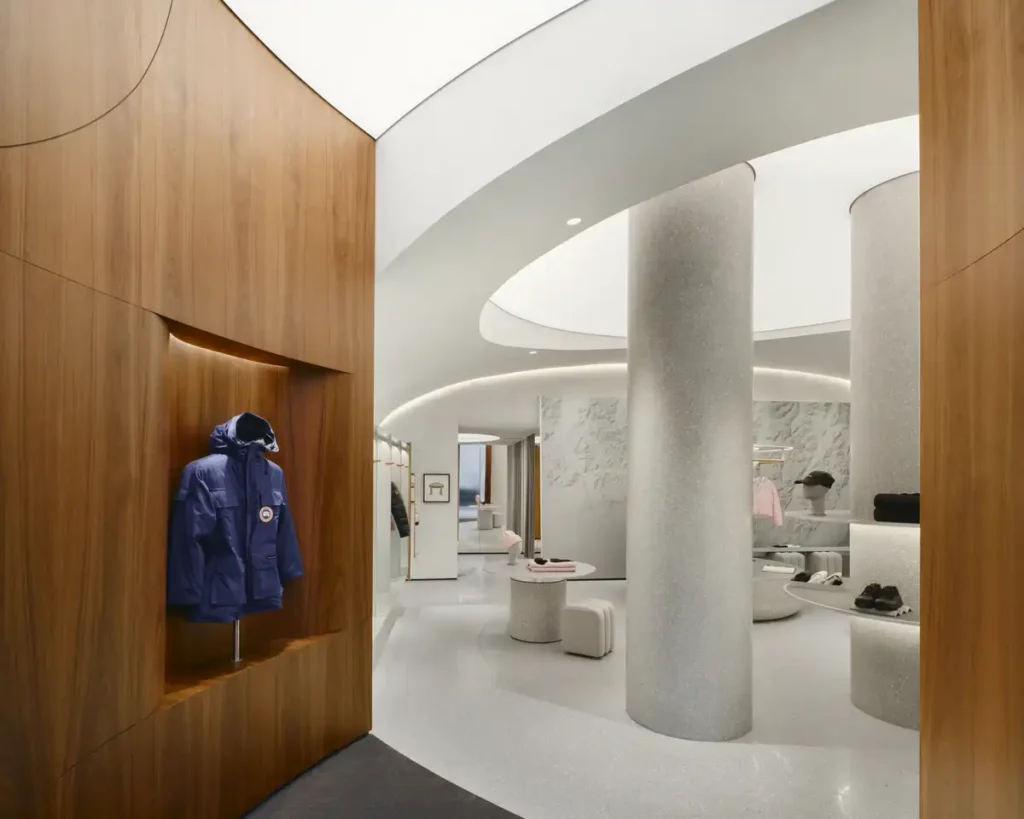
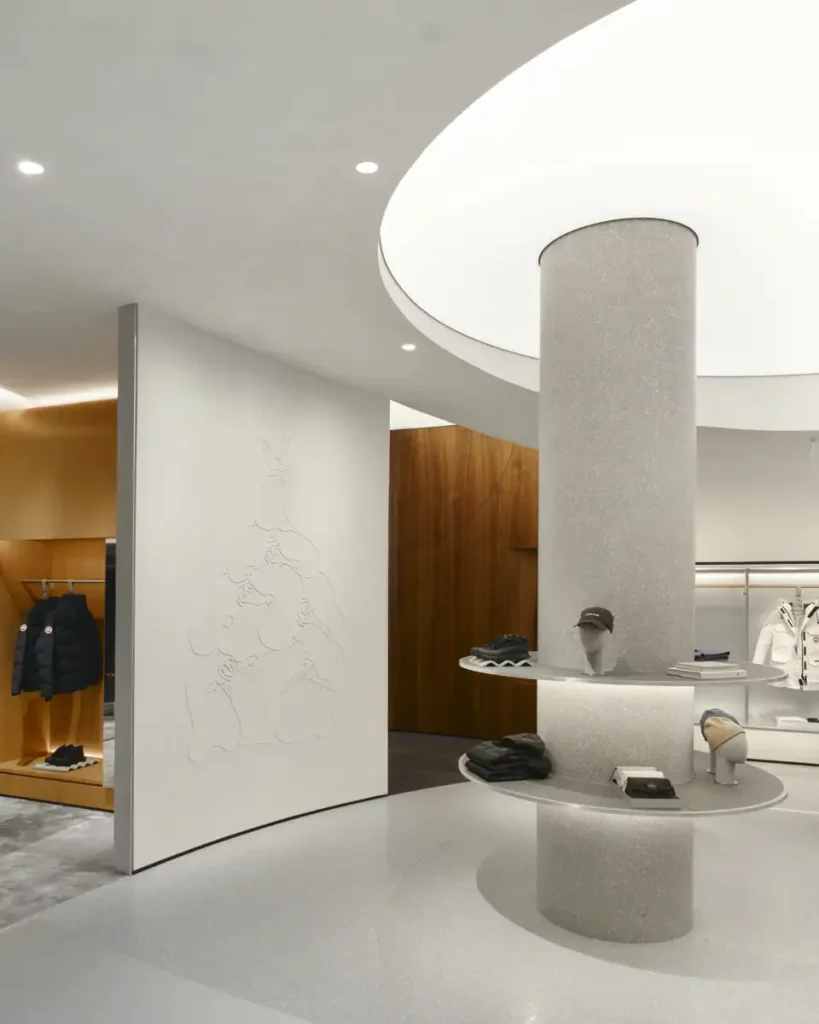
The architectural journey starts at the threshold. The building keeps its original facade. This respects the area’s historic architectural fabric. The visitor enters a warm, walnut clad foyer. This space provides instant calm away from the street’s bustle. The volume draws inspiration from 1950s Milanese elegance. It references the style of Villa Necchi Campiglio. This prepares the senses for the interior environment.
Materials Telling Stories: Between Durability and Craft
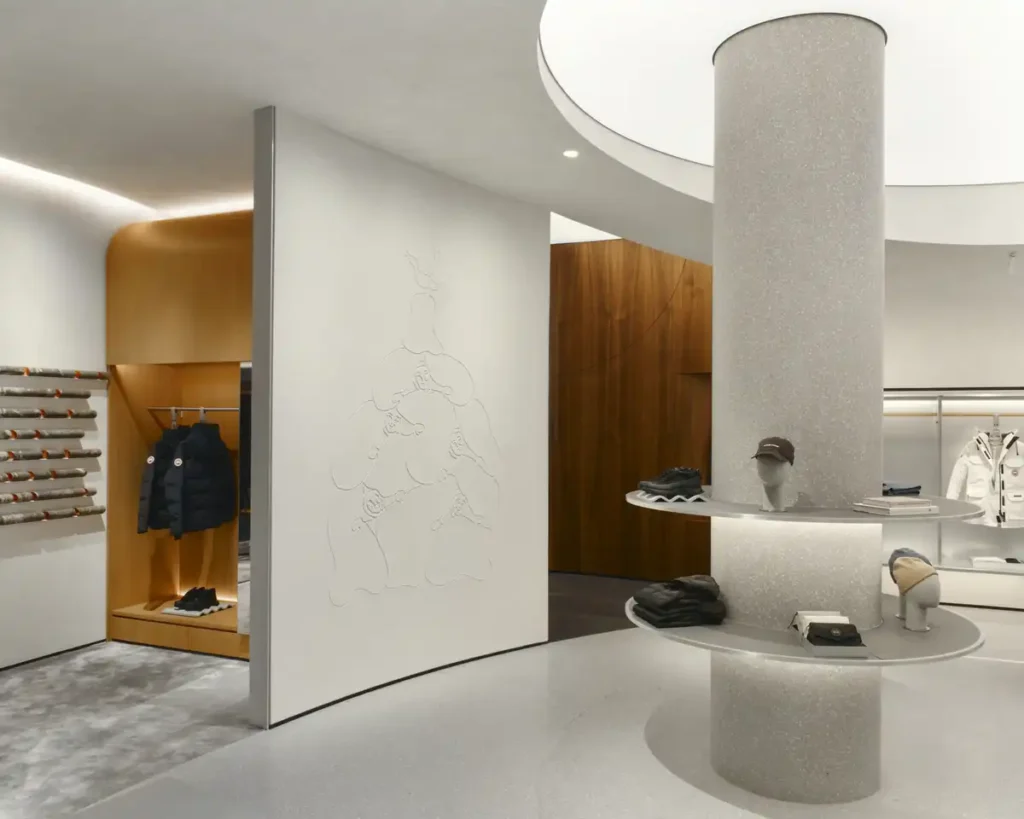
The Architectural Exploration Experience shows clearly in the chosen materials. Architects used tactile, sustainable elements. These reflect natural resilience and artisan skill. Ceppo di Gré terrazzo stone covers the floors and columns. This famous grey-blue Milanese stone celebrates Italian stonecraft. Technical specifications are available.
Key construction materials and techniques:
- Ceppo di Gré Terrazzo: Historic Italian material for floors and columns.
- Walnut Cladding: Covers the entrance for warmth and elegance.
- Anodized Aluminum: Architects use it in structures and displays. It is durable and recyclable.
- Retail Fixture System: A modular system. It ensures 100% reuse capability. Local workers fabricated it within 16 kilometers. This minimizes environmental impact and promotes sustainability.
- Legacy Wall: A printed metal panel. It uses both traditional and digital mapping techniques.
Movement in Space: From Passage to the Vault
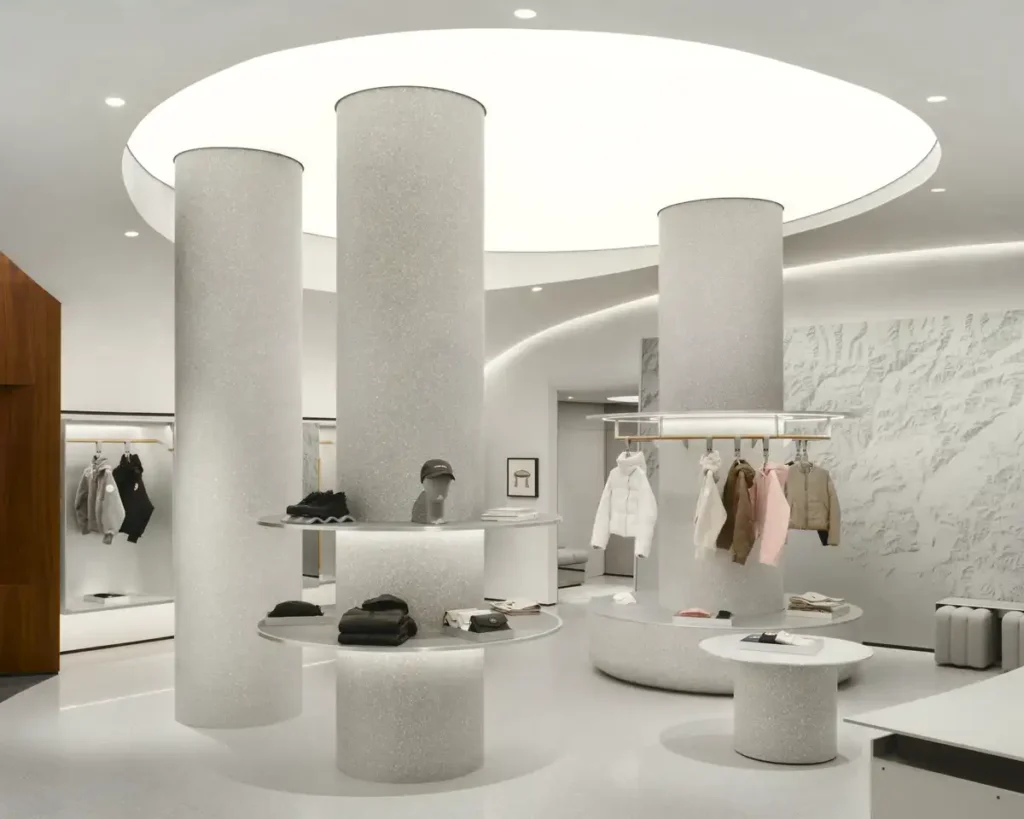
The visitor moves through controlled spaces. These alternate between open displays and intimate moments. A vintage parka model stands central on the ground floor. This artifact defines the material and lighting language. It enhances the Architectural Exploration Experience. More similar projects can be explored.
The bar corner draws inspiration from Milanese café culture. It features a curved aluminum counter and Charles Ghost stools. It acts as a station for direct interaction. Vaulted ceilings and shifting volumes guide the eye up. This creates a feeling of expansiveness and boundless possibility.
Lighting and the Geographic Narrative
Light plays a vital role in the atmosphere. The tunable lighting system adapts to the time of day. It mimics natural circadian rhythms. This shift in light deepens the feeling of shelter.
The Legacy Wall is a visual anchor. It is a printed metal installation. It draws inspiration from cartography. The wall tells the brand’s story as a geographic journey. It focuses specifically on the Italian Alps terrain. This links Canada’s nature with Italy’s highlands. The display system is flexible. Designers created it for longevity and easy global reuse.
The architects designed The Vault. This room features lining with wood and soundproofing fabric. It functions as a private walk-in closet. This allows for private product exploration. This focus on function and detail makes it an architectural manual. It shows how the global Architectural Exploration Experience is localized.
✦ ArchUp Editorial Insight
The Canada Goose store in Milan, designed by Snøhetta, presents a sober document translating performance-based institutional identity into a contextual architectural language. The design successfully avoids the typical promotional template, using walnut wood and Ceppo di Gré stone to embody old Milanese elegance. This visual blend creates a dialogue between global brand power and Italian craftsmanship. Although the spatial narrative ultimately serves a commercial objective, the firm’s approach using sustainable materials and a modular fixture system that ensured 100% reuse capability lends the project high documentary value. This model sets a future vision for flagship buildings.




ArchUp: Physical & Architectural Analysis of Canada Goose Store in Milan
This article examines the Canada Goose store in Milan (designed by Snøhetta) as a case study in culturally-grounded retail design. To enhance its archival value, we would like to present the following key technical and material data:
The architectural system is based on a structure that preserved the original historical façade, while introducing a fully-enclosed internal atrium clad in 5 cm thick Solid Walnut. The store area is 500 m², featuring floors and columns made from Italian “Chiampo di Grey” Terrazzo stone with anti-slip specifications (R10) and a hardness of 6-7 Mohs.
The material system is characterized by the use of 85% locally sourced materials, including a locally manufactured Modular Display System within a 16 km radius, achieving 100% disassembly and reuse potential. Construction materials include 3 mm thick Anodized Aluminum panels for the central display feature, alongside a Heritage Wall with digitally and hand-applied mapping techniques.
In terms of visual and functional performance, the store features a Vault Room with acoustic insulation (STC 50) and acoustic fabric and wood paneling, along with a fully adjustable LED lighting system (3000-5000 Kelvin) that mimics natural biological rhythms. The main aisle is designed with a width of 4 meters for optimal circulation flow, complemented by an 8-meter-long curved aluminum counter.
Related Link: Please refer to this article for a comparison of global brands’ interior design strategies:
Brand Identity in Interior Design: From Concept to Physical Implementation
https://archup.net/launch-of-dubai-retail-to-unify-commercial-centers-and-lifestyle-destinations-in-dubai/