Audeum Seoul sensory audio museum in 2026

Audeum Seoul is the world’s first museum dedicated exclusively to sound as an architectural and sensory medium. It presents a new architectural model centered on non-visual senses. It challenges the ocularcentric conventions of Western museology. The project sits in Seocho-gu against the Cheonggye Mountains. It integrates light, wind, fragrance, and tactile materiality into a cohesive sensory experience grounded in architectural design.

Exterior envelope of aluminum pipes
The facade uses about 20,000 vertical aluminum pipes. They overlap and vary in length. Their arrangement mimics urban randomness and natural patterns. The building spans 11,009 square meters across ten floors five above and five below ground. It creates shifting light and shadow effects that recall komorebi, or sunlight through trees. At street level, the pipes rise to expose a glass wall and a sunken entrance. This design isolates visitors from city noise and aligns with sustainability principles for sensory spaces.
Architecture mediates between body and object not just encloses space.

Wood drape and acoustic physics
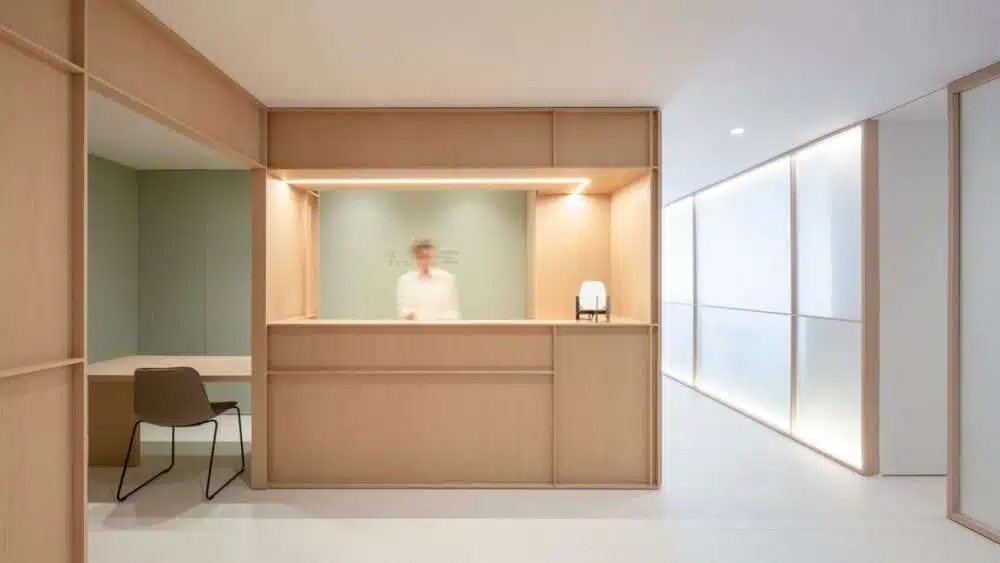
Designers finished interior rooms with Alaskan cypress using the wood drape technique. The material offers visual softness and acoustic absorption. A specialized engineering framework supports this system. The museum displays sound reproduction devices from the late 19th to mid-20th century. These include cylinder phonographs and wooden gramophones. It also holds an archive of roughly 120,000 vinyl records and rare broadcasts. Together, they trace the shift from mechanical to acoustic amplification. This shows how building materials can serve multisensory roles.
The project rethinks the function of buildings as experiential fields rather than static containers. It responds to its mountainous site without visual dominance. This approach treats sound as cultural heritage. Careful interior design and spatial sequencing make this possible. Audeum Seoul thus sets a benchmark in sensory architecture on the global architecture platform.
Audeum Seoul reframes auditory experience as central to architectural discourse. It dissolves vision’s primacy. Instead, it builds a typology where acoustics, materiality, and memory converge. In doing so, Audeum Seoul becomes more than a technology archive. It functions as a spatial instrument tuned for listening.
Architectural Snapshot :Sound is not background it is primary material.
The building transforms silence into spatial substance, redefining the museum as an acoustic field rather than an exhibition hall.

✦ ArchUp Editorial Insight
The emergence of an audio focused museum is the predictable outcome of intersecting systems rather than a singular cultural ambition. Long term saturation of image based media has shifted consumption habits toward experiential scarcity, where sound becomes a differentiator rather than content. Institutional frameworks supporting museums increasingly favor archival protection and controllable environments, privileging sensory isolation over urban engagement. Risk management and insurance logic further reinforce enclosure, buffering, and internalized experience. Technological maturity in acoustic modeling and material engineering makes non visual curation operationally viable at scale. Cultural anxiety around distraction, speed, and cognitive overload elevates listening as a controlled, premium condition. These pressures converge to produce architecture that suppresses visual dominance and treats sound as infrastructure. The building appears last as the spatial residue of policies, tools, and behaviors aligned toward managing attention rather than displaying objects.