Bay House: Architectural Fluidity Melds into the Landscape of North Devon


Nestled into an exceptional site on the hills of North Devon, Bay House stands as an architectural masterpiece that mirrors its natural surroundings. Designed by McLean Quinlan for an active family, this low-energy coastal home is more than just a shelter; it is a sensory experience that reveals itself gradually to the resident and visitor alike. From the front, the house appears as a modest single-level dwelling, but it unfolds downward, transforming into a series of tiered, interconnected spaces that embrace the site.
The Facade: A Dialogue Between Durability and Visual Integration
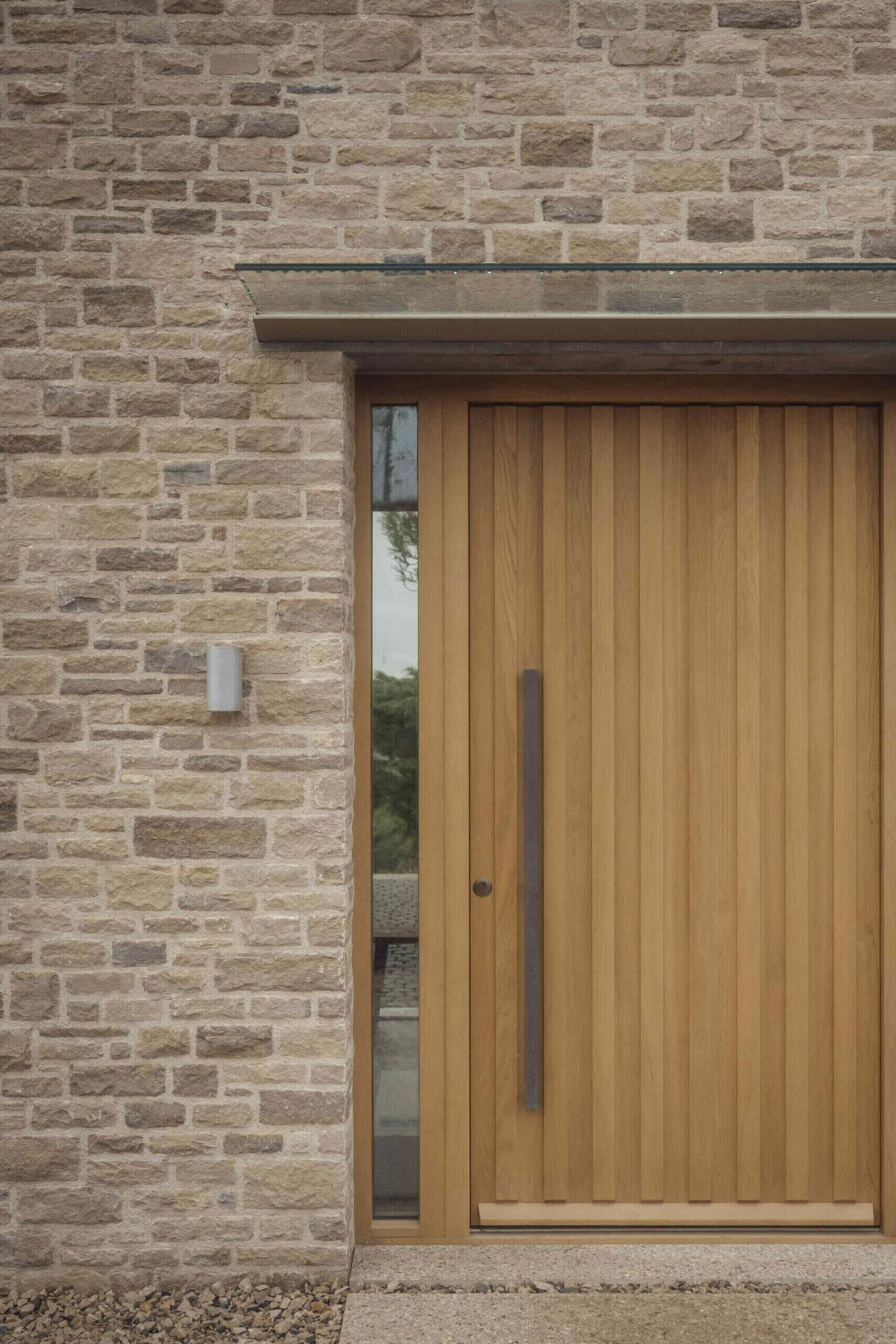
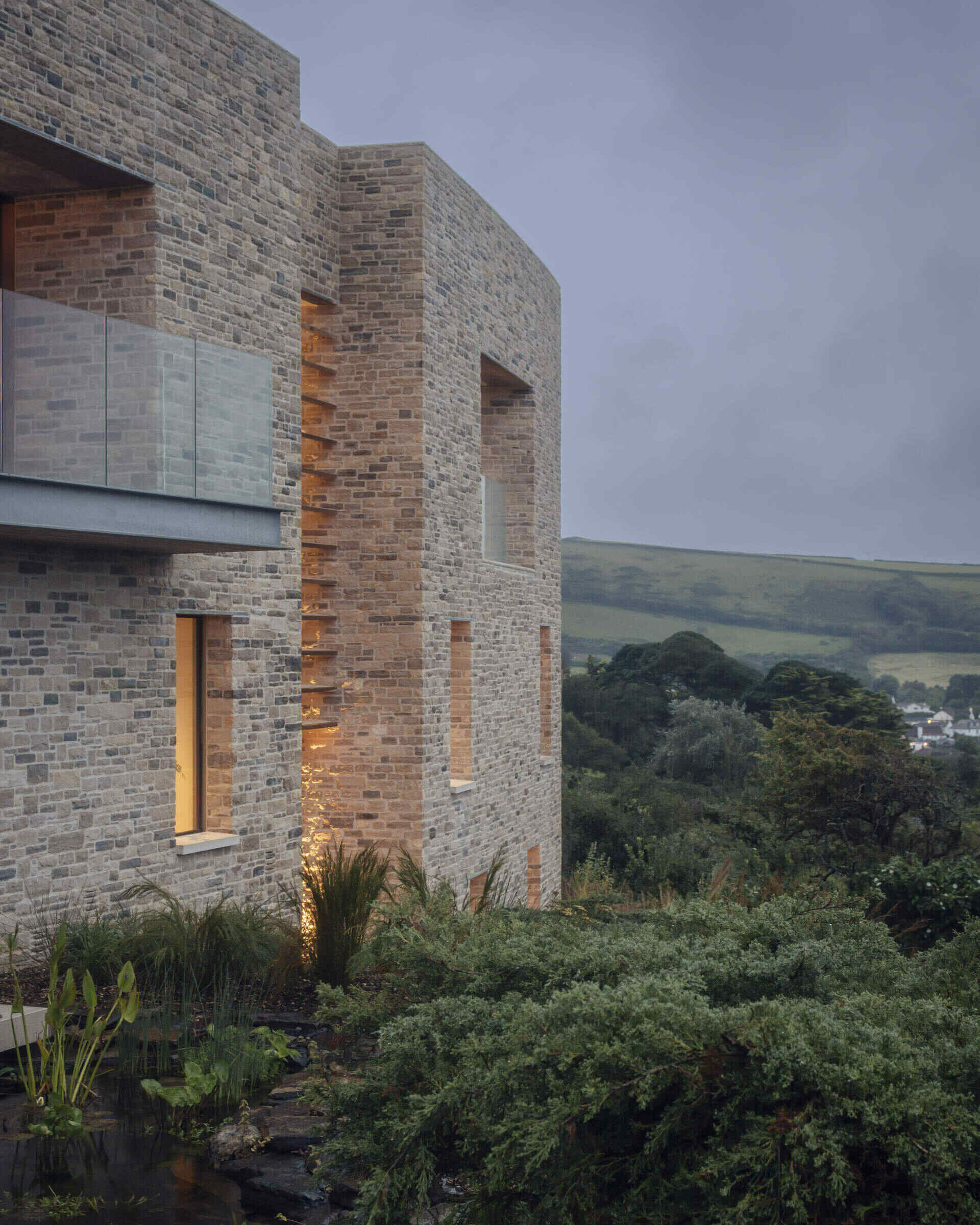
The building curves fluidly to reflect the bend of the surrounding road, harmonizing with the natural topography. Constructed from Pale Purbeck stone, chosen for its high durability and sandy tones that blend seamlessly with the nearby dunes, this intelligent facade conceals the rear terraces and extensive glazing. A green roof disguises solar panels, making the structure an organic part of the landscape.
The Interior: A Luminous Journey Between Floors
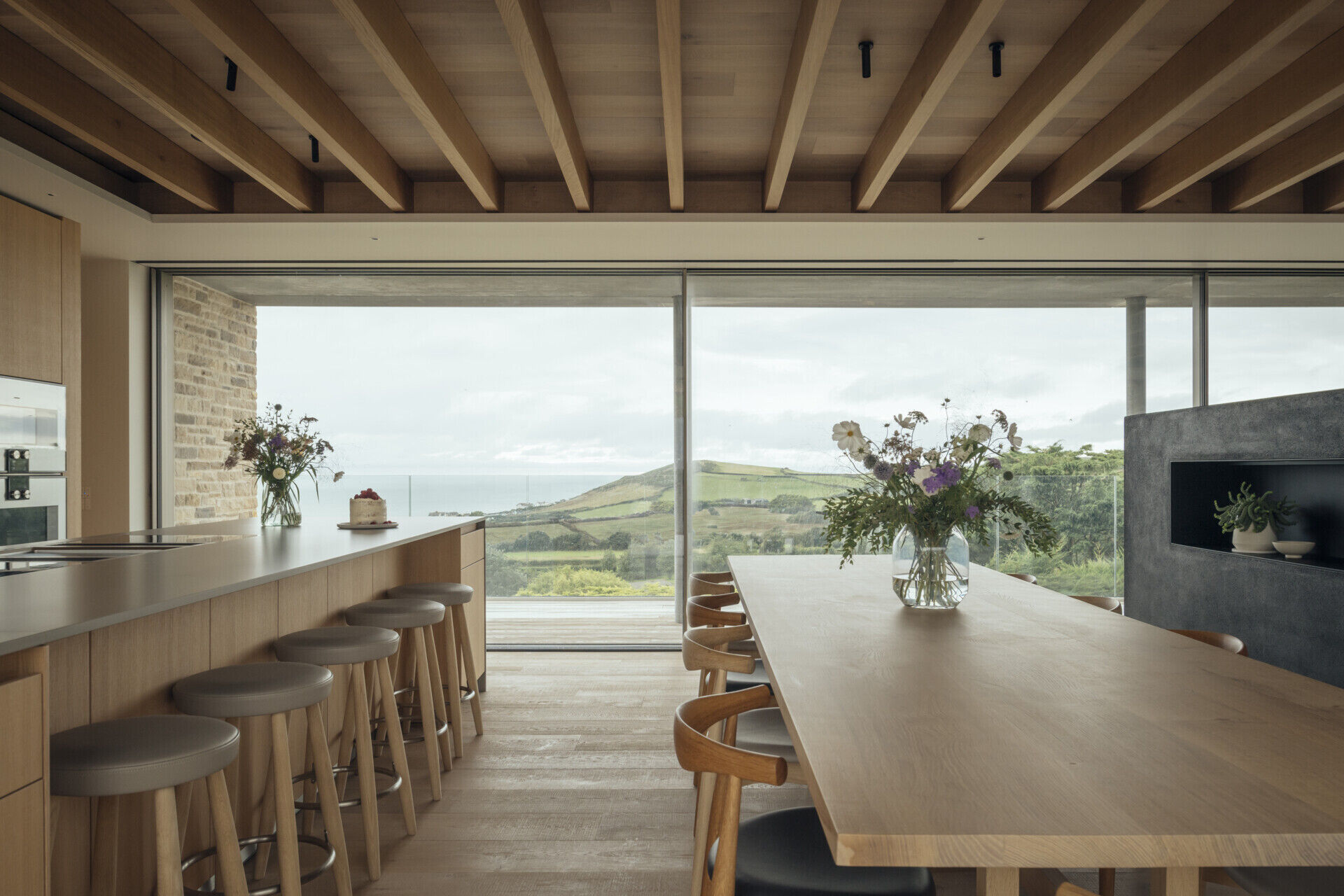
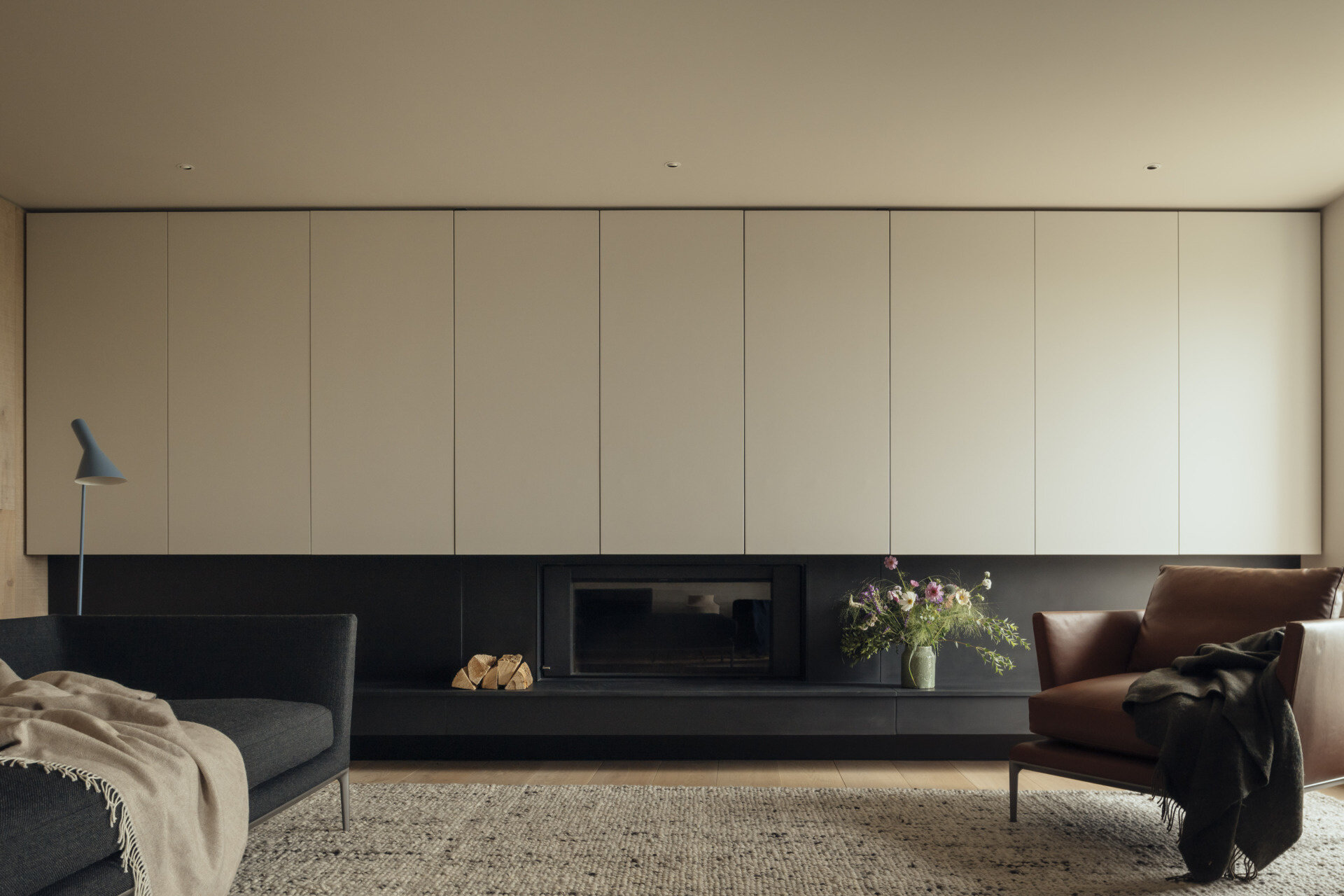
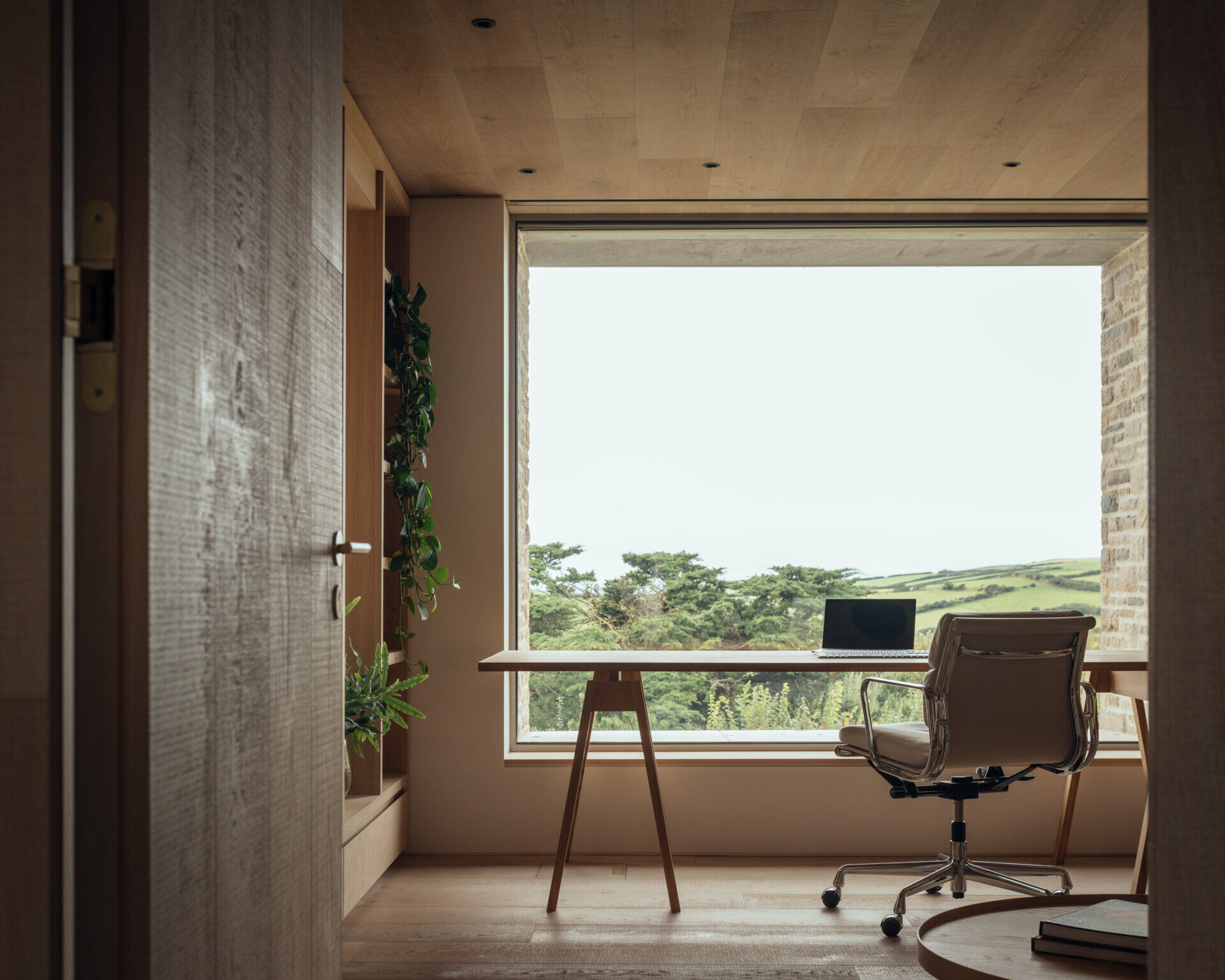
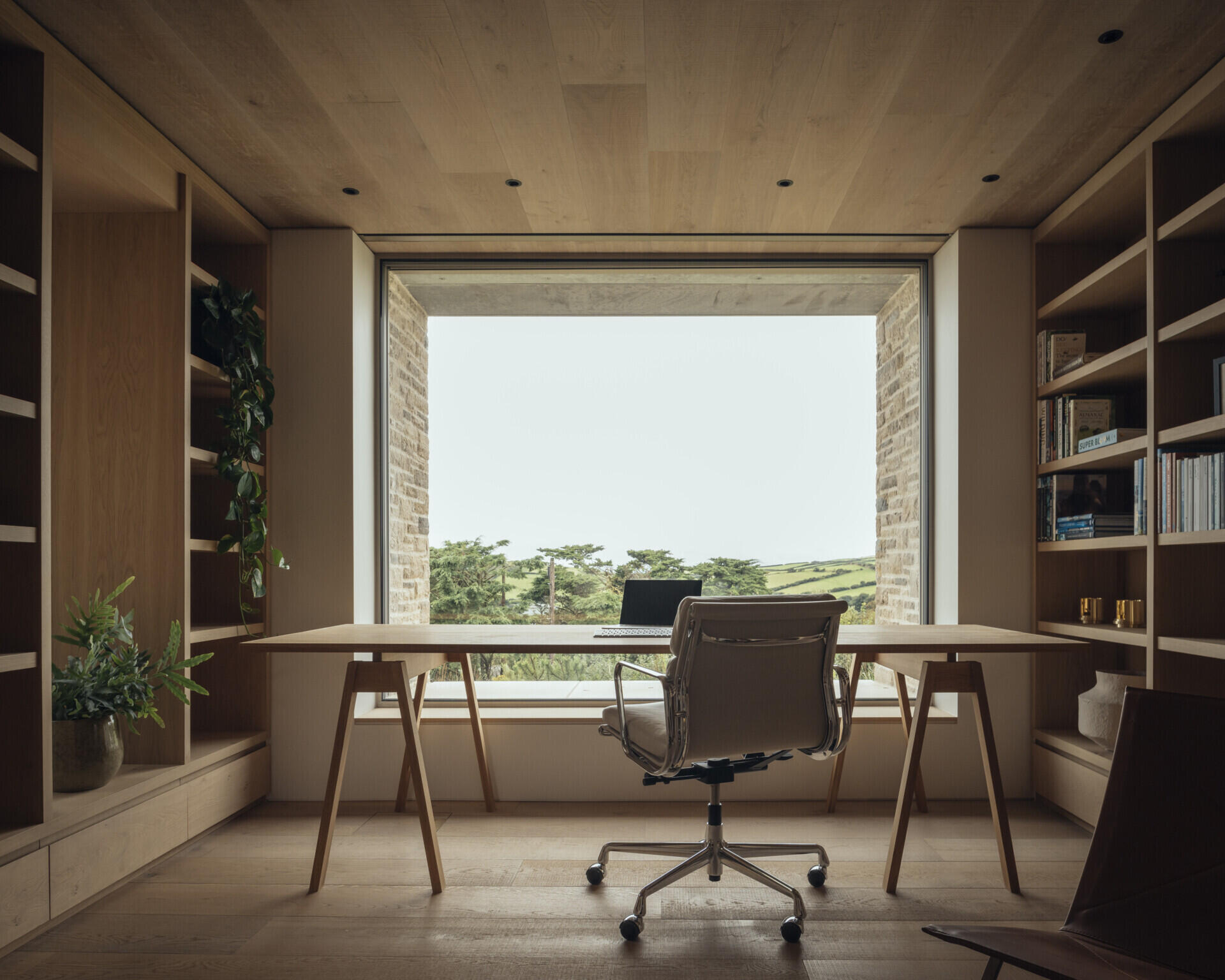
The journey begins in a spacious entrance hall that opens via a full-height glass wall onto a sheltered courtyard, where a pine tree acts as a natural element softening the geometric lines. The main living area offers panoramic views of the ocean and valley, flooded with sunlight through glass walls that connect the interior space to the outdoor terraces.
At the heart of the home, the kitchen stands out with its craft-driven design, combining raw and smooth oak with copper fixtures to create a balance between functional beauty and tactile warmth. The southern stair hall becomes a focal point, where the wooden screen on the facade filters daylight and guides it fluidly between the different levels.
Privacy and Functionality: A Design that Considers Lifestyle
The bedrooms are distributed to maximize privacy and capitalize on the views, with the main suite opening onto a private balcony. Functional spaces like the mudroom and garage are carefully isolated from the quiet living areas, allowing the family to pursue their outdoor activities without disturbing the interior’s tranquil atmosphere.
Sustainability: A Quiet Respect for the Environment
Bay House’s excellence extends beyond its beauty to its role as a model of sustainable architecture. It combines solar technology, high-performance insulation, and local, durable building materials, resulting in a low-energy home that respects the environment to which it belongs.
✦ Archup Editorial insight
The article presents Bay House as a residential project that adapts to the steep terrain of a North Devon hillside, using local stone and a tiered design to achieve visual integration and sustainability. From an architectural perspective, the design raises a question regarding the priority of form versus cost; the curved stone facade and layered structure demand high craftsmanship and complex execution, potentially limiting its applicability as a replicable model on a wider scale. Furthermore, the heavy reliance on south-facing glazing presents potential long-term challenges for solar heat gain control and energy efficiency. However, the project’s efficiency is evident in its handling of circulation between the different levels, where the distribution of spaces provides a gradual visual and spatial journey that seamlessly connects the public and private floors.
Brought to you by the ArchUp Editorial Team
Inspiration starts here. Dive deeper into Architecture, Interior Design, Research, Cities, Design, and cutting-edge Projectson ArchUp.