2027 Beam Camp Project Open Call

Organizer record: Beam Center · Directory record not yet reviewed
Competition Brief
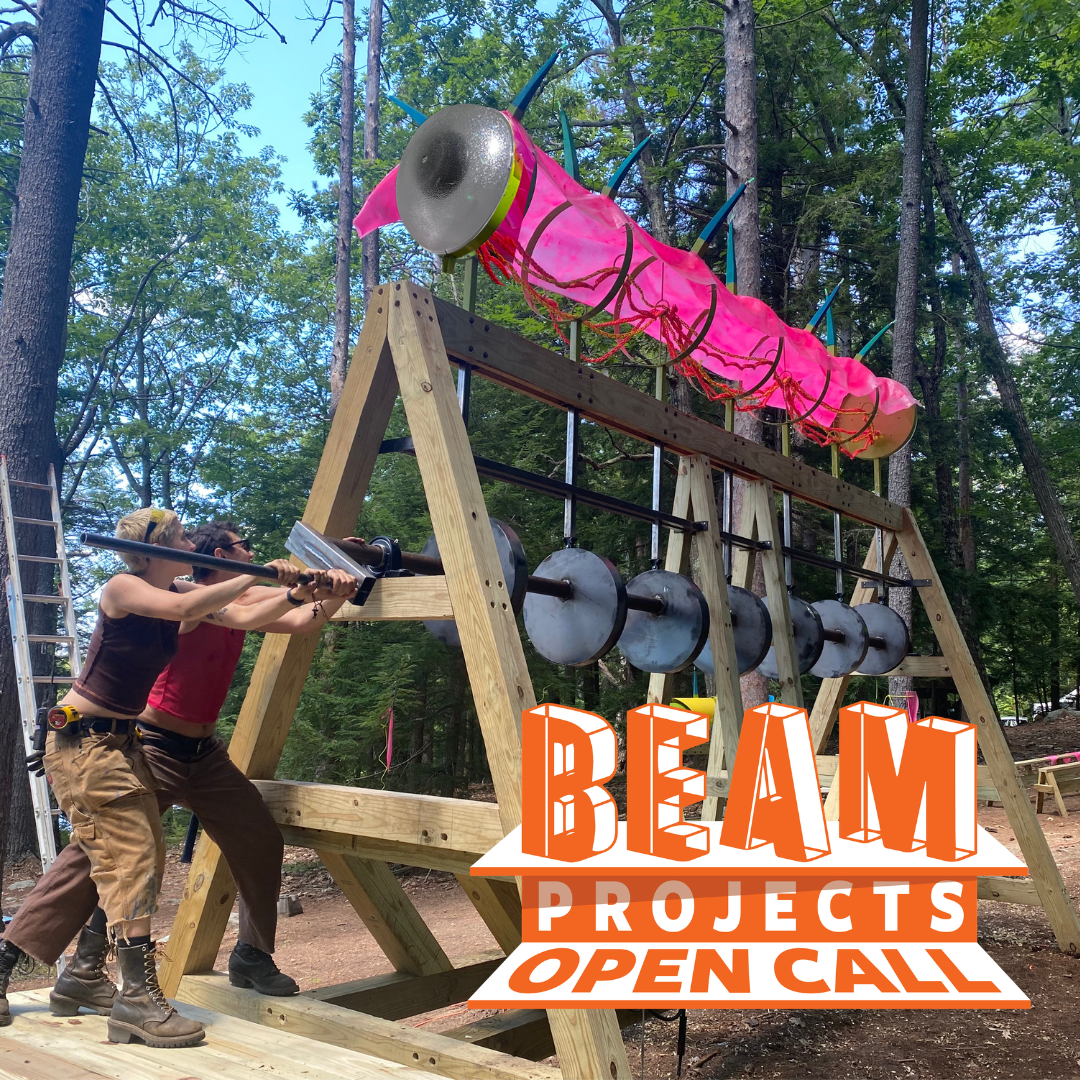
The 2027 Beam Camp Project Open Call invites proposals for a public artwork to be developed and built with young people in Strafford, New Hampshire, USA. Beam Center welcomes international proposals across creative disciplines and ages. The selected proposer receives $5,000; approximately $15,000 is allocated separately to fabrication. Applications close on 30 November 2026 at 23:59 EST.
Intent and Purpose
This is a collaborative design-and-making opportunity rather than a competition for a conventional building commission. The proposal needs to support hands-on participation: its construction process is part of its educational purpose. Beam’s programme brings young people into making, problem-solving and shared authorship, so a project’s value cannot be judged only from its final appearance.
Requirements and Selected Designer’s Role
The brief envisages roughly 100 campers and more than 20 staff working on the project for around 50 hours. It favours projects that respond to the rural setting, use varied fabrication processes and allow most components to be made onsite. The selected proposer is expected to take part in development meetings described as bi-weekly, starting six months before completion, and to supply drawings during development. Confirm the meeting frequency and drawing schedule with the organiser. Attendance at camp is invited, with reasonable travel expenses reimbursed subject to arrangements.
Submission Materials
Submit one PDF through the form on the official call page. Include the project title, detailed description, visuals and the names, emails, phone numbers and experience of all co-designers. Sketches, diagrams, renderings and video links may communicate the proposal. The form additionally requests a proposer name, email, links to previous work, a project title and a brief description. This is not an anonymous submission.
No fixed board dimensions or page limit are stated in the reviewed call. Check the upload field’s current limits before preparing the final file. The organiser asks applicants to use AI sparingly and to communicate the idea in their own voice.
Organiser and Delivery Record
Beam’s published history dates Beam Camp to 2004 and its first camp session to 2005, giving the programme more than two decades of activity. This should not be confused with Beam Center’s later establishment in New York. The organisation’s stated approach emphasises mentorship and collaborative making rather than a fee-funded cycle of design awards.
The 2025 project, Theater of Giants, was designed by Jon Shmulevitch and built with 145 young people according to Beam’s project record. That account documents timber framing, welding and performances created by campers. The earlier Nexus Canopy, designed by Fabian Jabro in 2005, became a flexible setting for activities and performances. These records provide concrete examples of realised work, although they do not constitute an independent audit of contractual delivery.
Selection Committee
Selection is assigned to a committee comprising Beam staff, young people, previous project designers and community members. Individual names and scoring weights are not published in the reviewed call. We therefore cannot assess each juror’s professional experience or claim that this is a named independent architectural jury.
Entry Fees, Award and Budget
| Item | Published position |
|---|---|
| Entry fee | No application fee stated in the official call or reviewed form |
| Selected proposer’s award | $5,000 |
| Fabrication budget | Approximately $15,000; separate from the designer’s award |
| Travel | Reasonable travel expenses reimbursed for an invited camp visit; confirm coverage beforehand |
The fabrication allocation is project spending, not additional prize money paid freely to the designer. Payment timing, detailed rights provisions and an itemised scope of designer services are not set out in the reviewed call; these should be clarified before accepting selection.
Key Dates
| Milestone | Date |
|---|---|
| Application deadline | 30 November 2026, 23:59 EST (UTC−5) |
| Equivalent UTC deadline | 1 December 2026, 04:59 UTC |
| Intended completion | Summer 2027 |
| Results announcement | Not stated in the reviewed call |
The title and completion field identify the 2027 season, but one paragraph still refers to July 2026. ArchUp follows the explicitly stated Summer 2027 completion field and flags the conflicting sentence for organiser clarification.
✦ ArchUp Competition Review
The strongest evidence in this call is the documented transition from proposal to collective construction. Theater of Giants shows how a spatial design can also structure an educational programme: the object is built, then activated through performance. This gives applicants something more useful than a generic promise of visibility when assessing whether their work fits the programme.
The design challenge is consequently operational as well as visual. A persuasive proposal should explain how different participants can contribute, how components can be produced and assembled, and how the work remains meaningful after construction. Those are ArchUp’s assessment priorities, not additional submission requirements invented on the organiser’s behalf.
The disclosed funding distinguishes a designer award from the resources required to build. However, the award cannot be evaluated fairly without a clear scope: months of development, revisions and coordination may represent a substantial commitment. Applicants should seek written agreement on responsibilities, payment milestones, fabrication support, travel coverage and credit before accepting the role.
Including young people and community members in selection is relevant to the programme’s purpose. It also makes disclosure of decision-making responsibilities valuable. Publishing committee names, evaluation priorities and the selection timetable would improve transparency. An unnamed panel should be described accurately, without treating the omission as proof of misconduct.
ArchUp regards this as a credible opportunity to investigate participatory construction, supported by a visible history of completed projects. The remaining questions concern the practical terms of participation and the clarity of the current announcement. These deserve answers even when the organiser’s broader mission is compelling.
Final Thoughts
This call is most relevant to designers who want to develop an idea through collaboration and physical making. Assess the proposed working relationship as carefully as the design theme, and clarify the outstanding terms before committing to the delivery stage.
Submission Deadline
The countdown targets 30 November 2026 at 23:59 EST, equivalent to 1 December 2026 at 04:59 UTC.
Prepared by ArchUp Radar under the competition transparency policy. The official call, application form, organisational history and project archive were checked on 29 September 2026. Review current organiser terms before submitting.