Bee Write Back: Minimalist Writing Device

Digital Writing in Distracting Environments
Writing on a laptop or smartphone appears convenient on the surface, yet in practice it is shaped by recurring factors such as notifications, multiple open tabs, and the constant flow of social media content. This overlap transforms the simple act of writing into an activity that demands sustained attention control, particularly for writers, journalists, and individuals who rely on regularly recording their thoughts.
The Emergence of Dedicated Writing Devices (WriterDecks)
Within this context, a shift has begun toward dedicated writing devices designed to minimize digital distractions. This category, known as writerdecks, has emerged as a direct response to the need for a more focused writing environment, one that operates independently from general-purpose computing functions that tend to reproduce the very problem of distraction.
Case Study: Bee Write Back
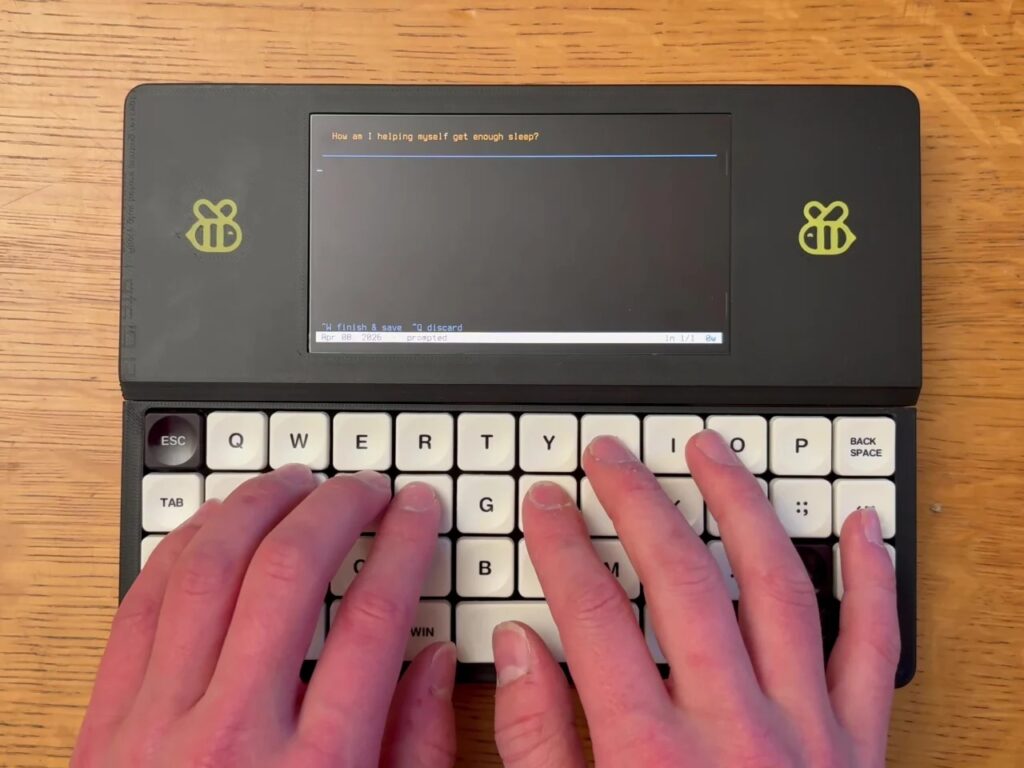
Within this space, the Bee Write Back device stands out as a practical application of this approach. The device was designed by a maker known as “shmimel,” originating from a personal motivation linked to sleep difficulties, where daily writing was used as a form of self-regulation. Faced with the challenge of maintaining consistency using a traditional notebook, the creator turned to developing a dedicated writing device from scratch to address this need more directly.
A Physical Configuration Combining 3D Printing and Function
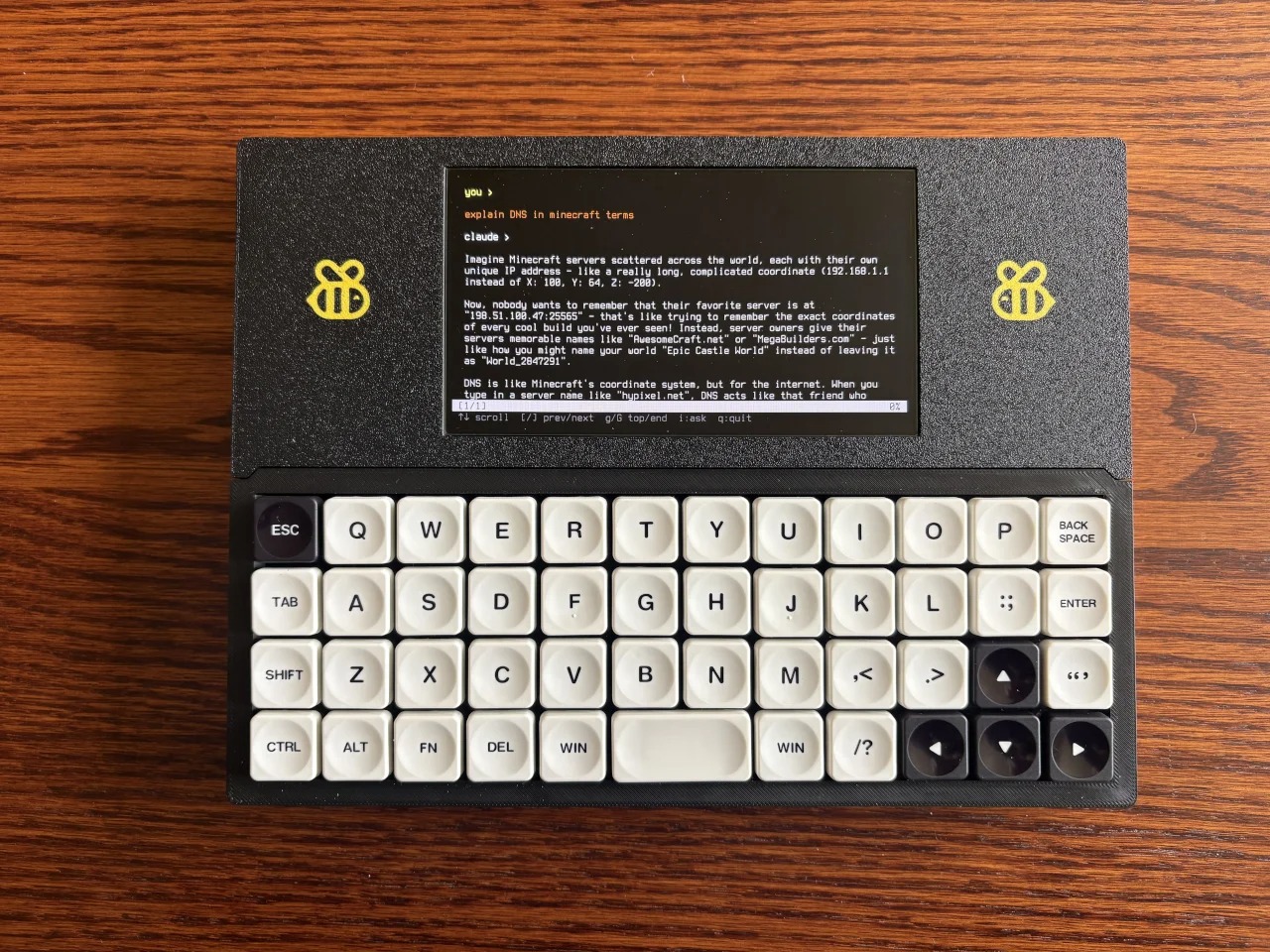
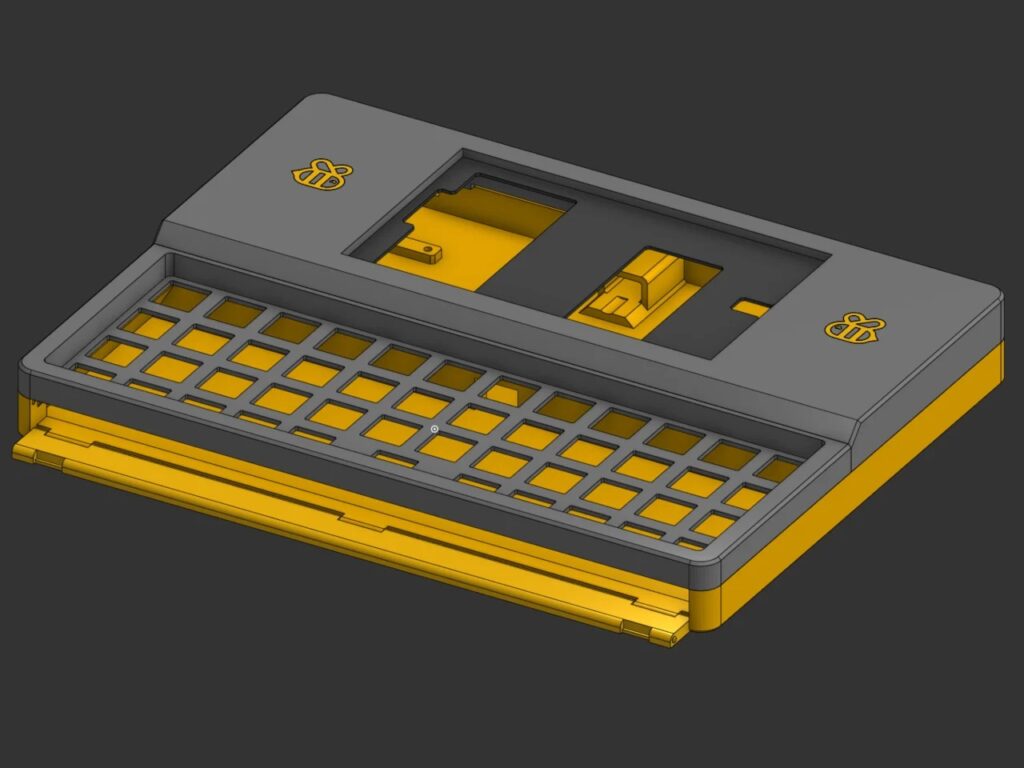
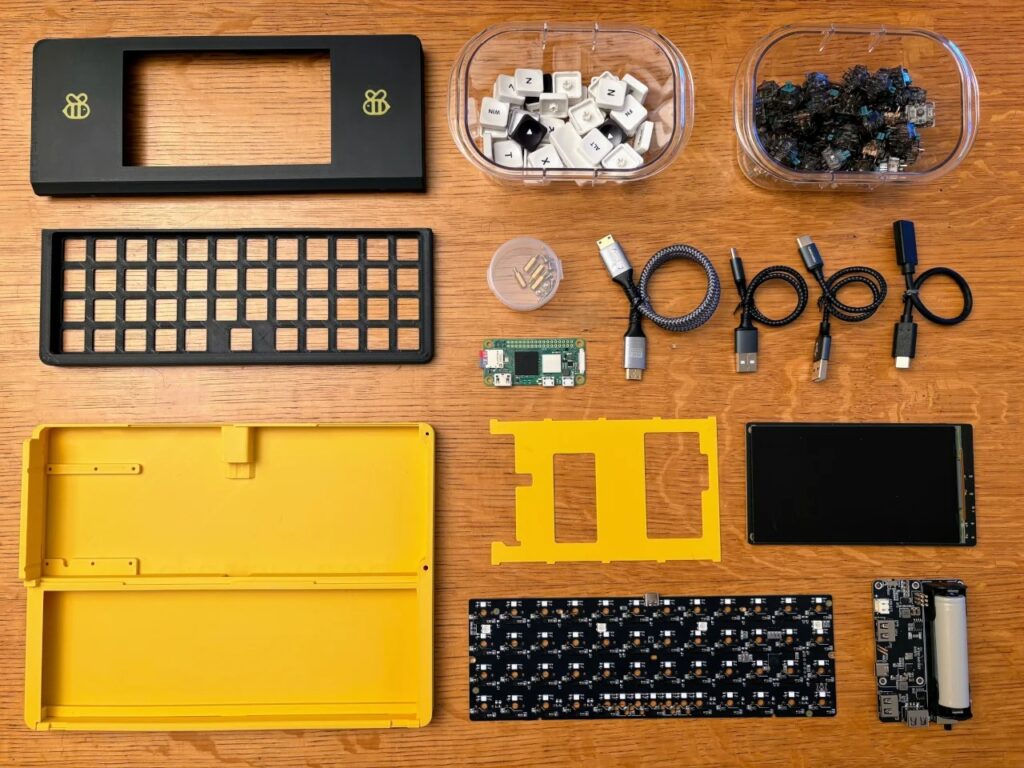
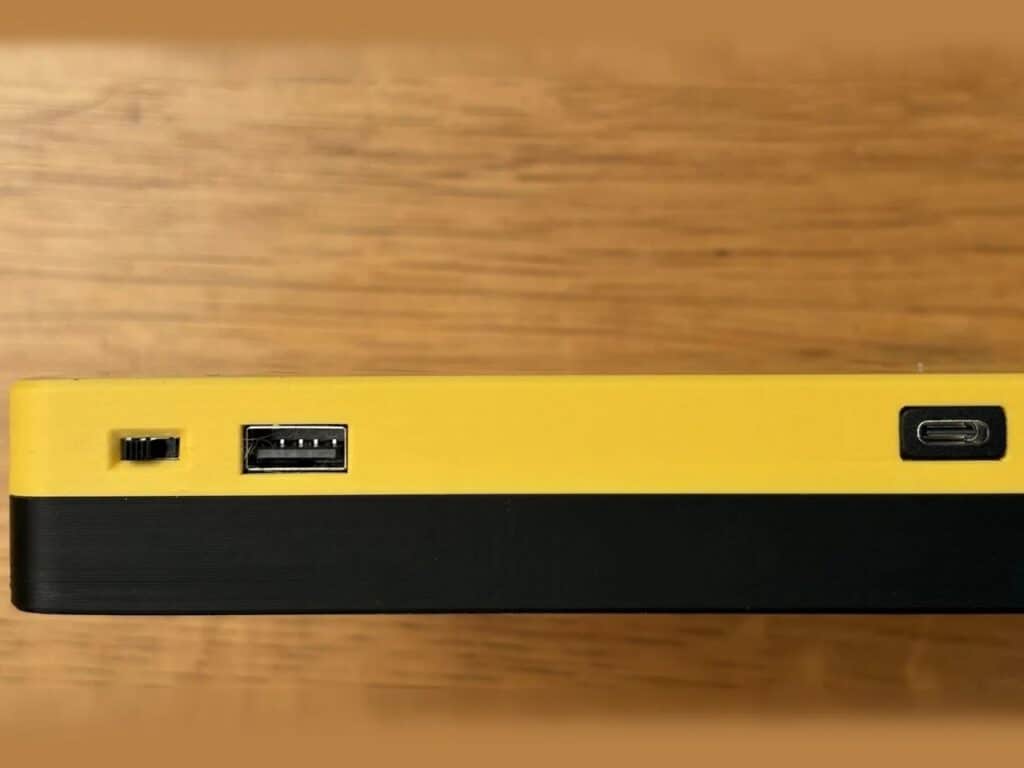
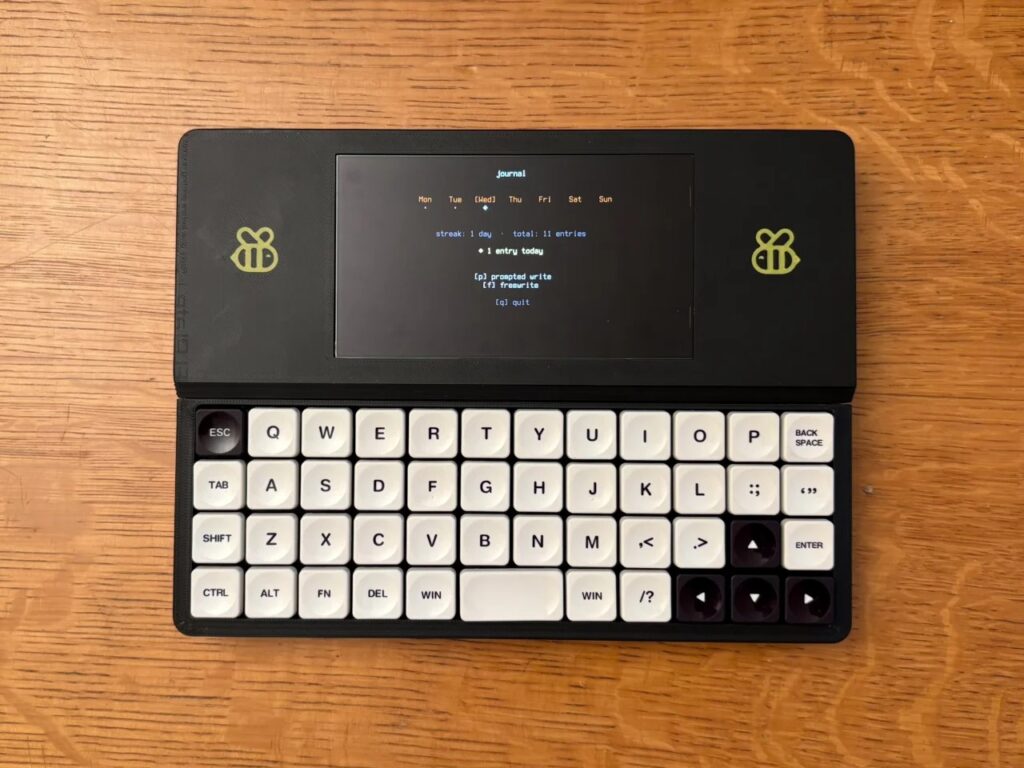
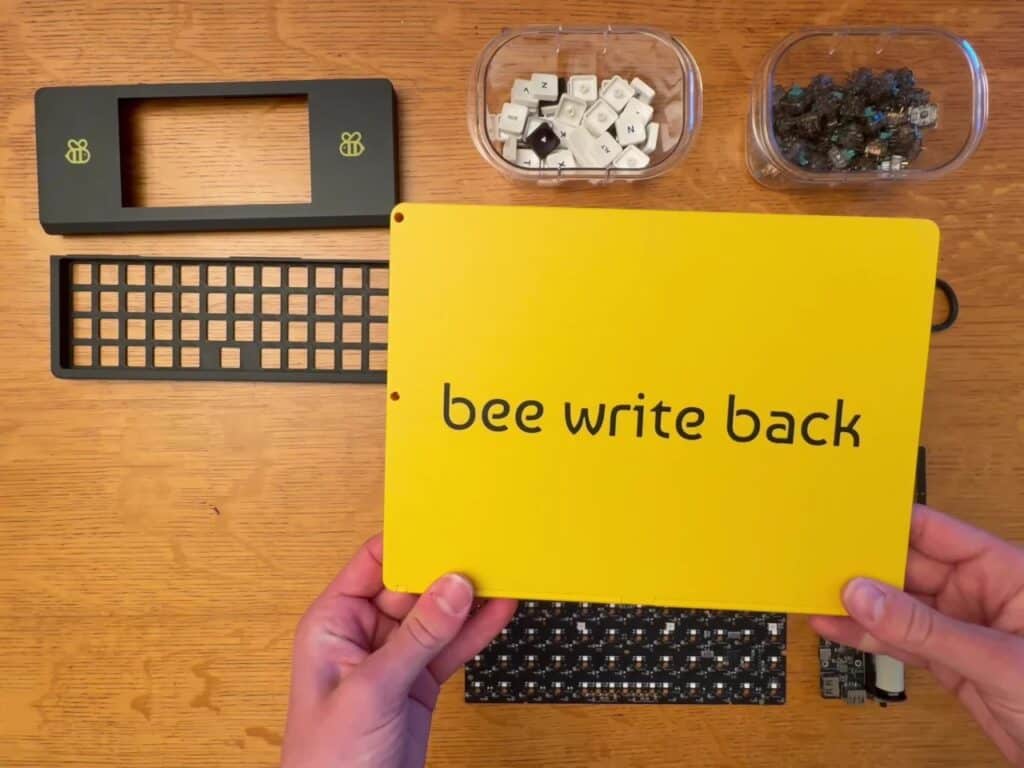
The device is built around a dual-tone 3D-printed enclosure. The base appears in a vivid yellow, housing the electronic components, while a matte black cover frames the display and carries decorative symbols tied to the design concept. This configuration gives the device a distinctly handcrafted character, reflecting a deliberate departure from the uniform industrial aesthetic of commercial products.
Input Interface and Tactile Interaction
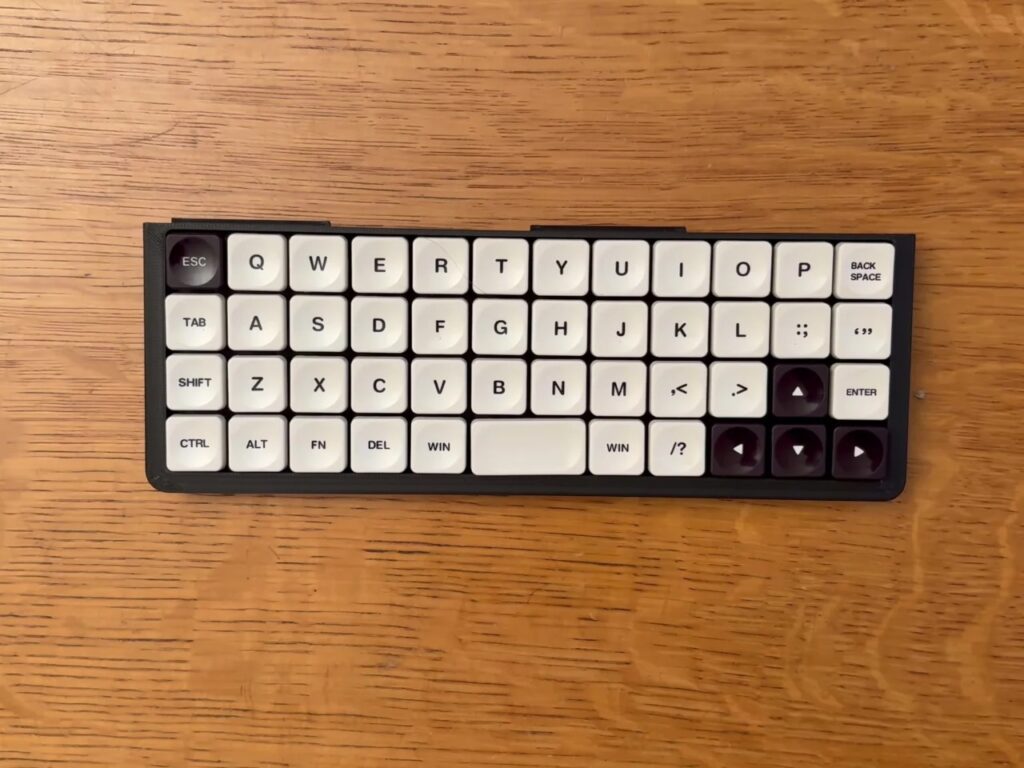
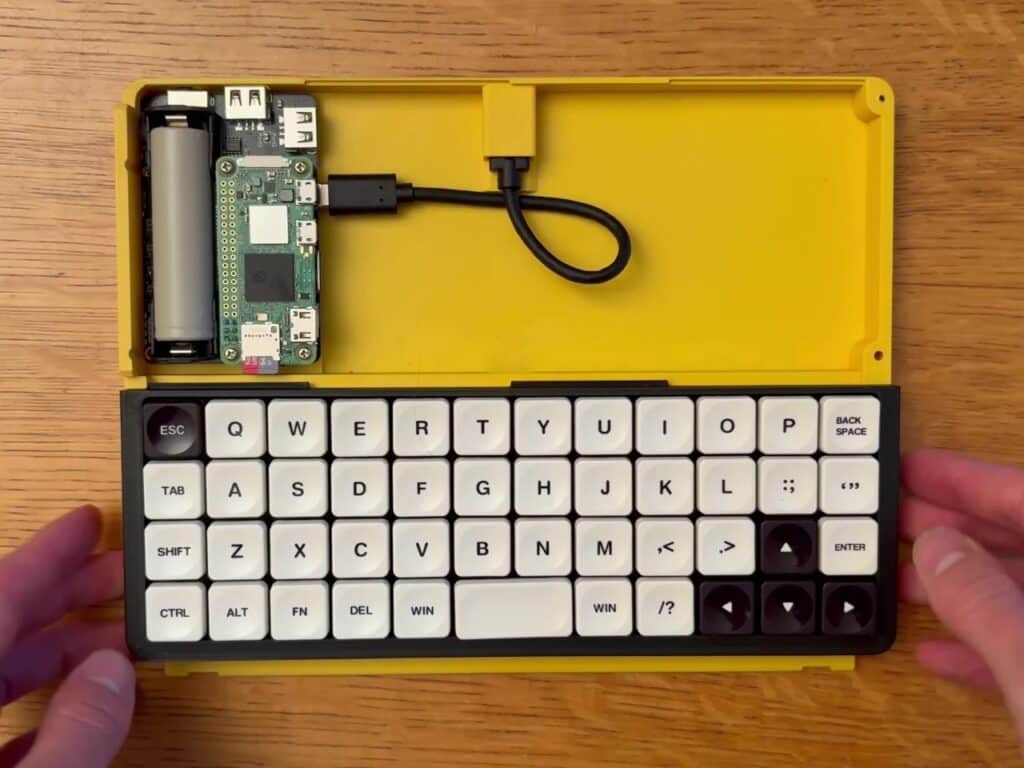
The writing experience relies on a YMDK Air40 mechanical keyboard with 47 keys and hot-swappable support. Compared to conventional laptop keyboards, the mechanical feedback of each keystroke produces a clearer and more deliberate writing experience. As a result, interaction with the keys shifts into a more focused cognitive pattern, reinforced by a consistent auditory rhythm during typing.
Display Architecture and Software Operation
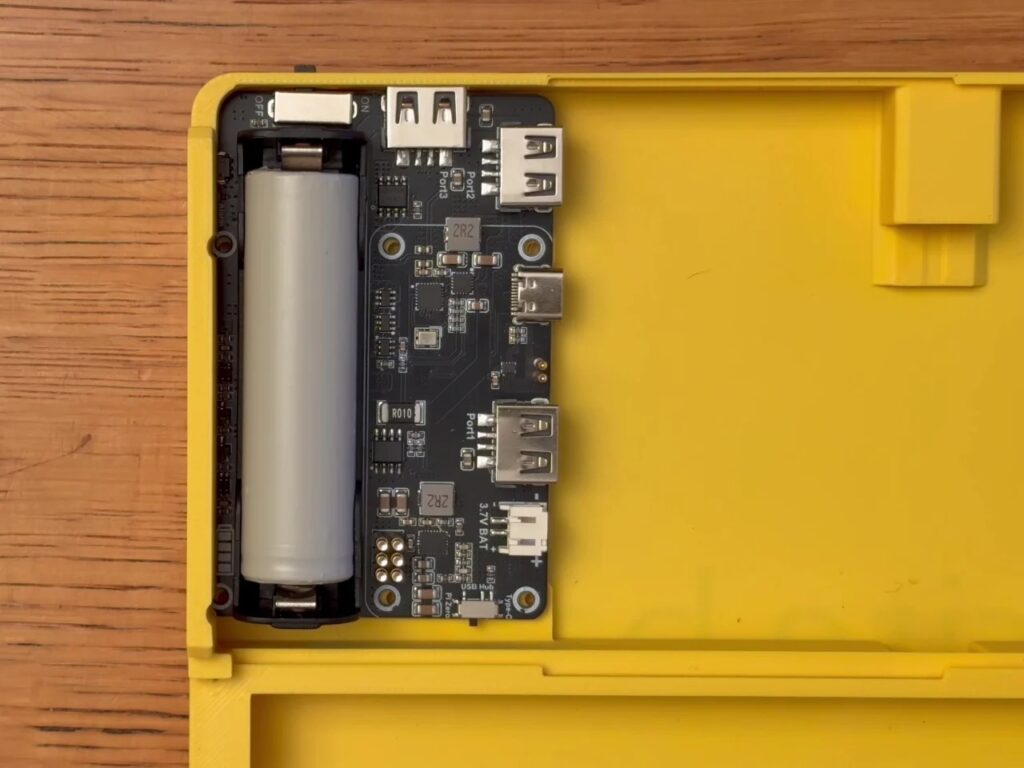
The device uses a 5.5-inch AMOLED display with a resolution of 1280×720, providing sufficient visual clarity for reading without relying on larger, more fatiguing screens. It is powered by a Raspberry Pi Zero 2 W platform, featuring a quad-core processor, 512 MB of RAM, and built-in Wi-Fi connectivity, along with a backup power module based on an 18650 battery. The system runs on Raspberry Pi OS Lite, a streamlined Linux distribution focused on lightweight operation without additional applications or notifications, creating a functionally isolated environment dedicated solely to writing.
Open-Source Model and Implementation Cost
The project has been released as an open-source model, with build files and a complete assembly guide available on GitHub. The core material cost is approximately $200, excluding 3D printing expenses, placing it within a price range comparable to some off-the-shelf writing devices. However, this model offers a higher degree of flexibility, allowing users to modify components, replace parts, or reconfigure the enclosure according to their specific needs.
Design Logic: Reducing Functions Instead of Expanding Them
The device is not built on the premise of adding new features as much as it is on reducing them. Rather than following the common trend of integrating as many functions as possible, the project adopts an inverse approach that focuses on a minimal set of operational elements.
Conceptual Reading of the Device
This direction results in a device that distills the experience down to the act of writing itself, minimizing any elements that may cause distraction. Accordingly, the project can be understood as a tool designed to redefine the user’s relationship with writing through a constrained and direct functional environment.
✦ ArchUp Editorial Insight
The Bee Write Back device emerges as a direct response to a productivity pressure shaped by the attention economy, where software platforms maximize engagement time at the expense of textual output efficiency, generating demand for tools that isolate the user from this continuous flow. The driving force here is not aesthetic but functional, tied to the redistribution of focus as a productive asset.
The device’s structure takes form under constraints of low cost and open-source supply chains, relying on standardized components that reduce procurement risks and accelerate assembly. The result is a physical configuration that operates as a compromise solution between the open-source economy and an individual need for attention management, where the reduction of functions becomes a mechanism of behavioral regulation.
This configuration reflects a broader pattern in which digital tools are transformed into constrained-use units, as a response to the excessive complexity imposed by contemporary digital work environments.