Nobu Hotel Warsaw — Medusa Group and Studio PCH


Nobu Hotel Warsaw: Restraint, Contrast, and the Demands of a Difficult Site
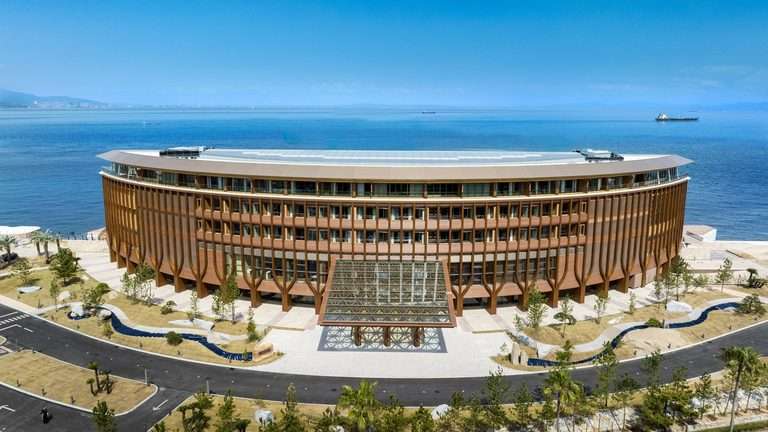
Five years after its opening at the intersection of Wilcza and Koszykowa streets in central Warsaw, Nobu Hotel Warsaw remains one of the more architecturally discussed hotel projects in Poland. Designed by Medusa Group in collaboration with California-based Studio PCH, the building sits on a challenging irregularly shaped plot formerly occupied by a petrol station, embedded within the historic urban fabric of the Śródmieście district. The project’s complexity lies not only in the stylistic ambition of combining Japanese minimalism with Art Deco references, but in the harder technical and urban problem of inserting a contemporary glazed volume into a dense, historically layered city block.
The Site Problem as Generator
The former petrol station plot is an awkward condition by definition: irregular in shape, bounded by streets on multiple sides, and adjacent to historic fabric that sets constraints on scale, setback, and material register. Medusa Group’s response, a glazed trapezoidal volume with staggered floors, is a direct architectural response to this constraint rather than a formal gesture applied from outside. The staggered section creates varied floor plates that address the irregular boundary conditions while generating differentiated perspectives and light conditions throughout the building’s height. This kind of section-driven formal decision is more architecturally honest than a uniform tower would have been on the same site.
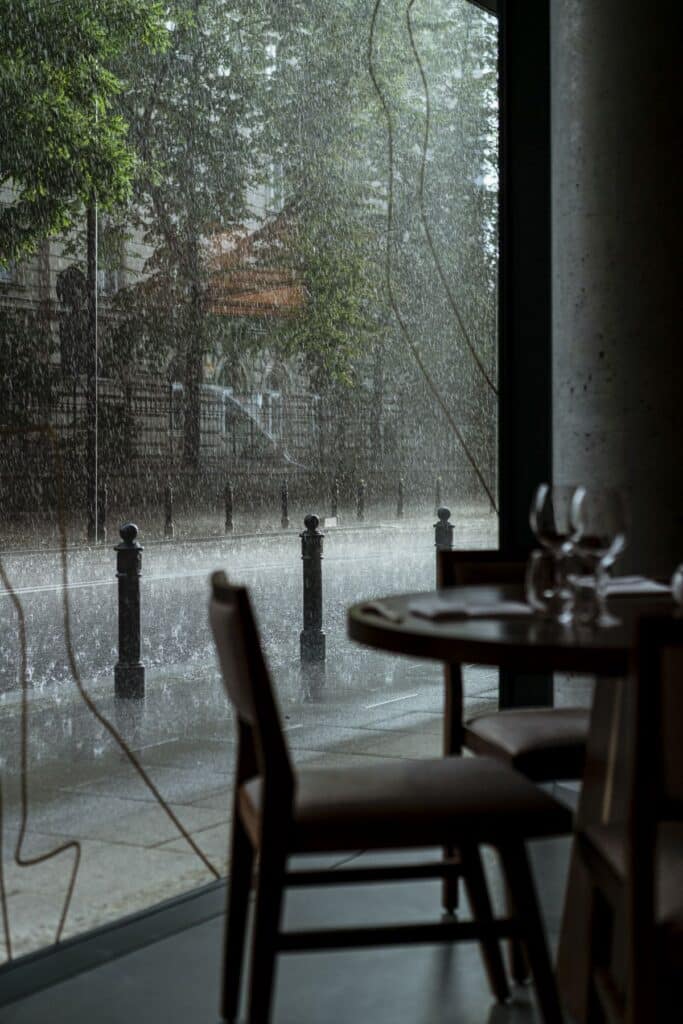
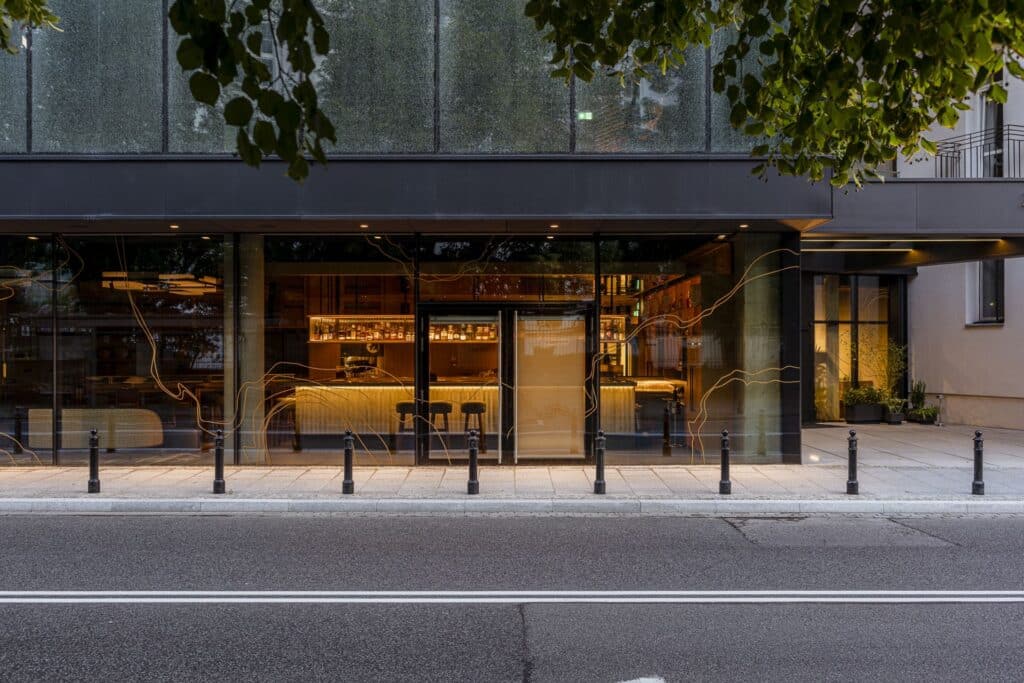
The curved glass corner is the building’s most publicly legible element. Bent glass at building corners has become a relatively common tool in contemporary commercial architecture, and its use here reinterprets an Art Deco formal language, the rounded corner as street presence, through a contemporary material. Whether this reads as a genuine synthesis or as a surface reference to a historical idiom depends significantly on how the curve resolves at street level, information that requires direct experience of the building rather than description alone.
The Façade as Filter
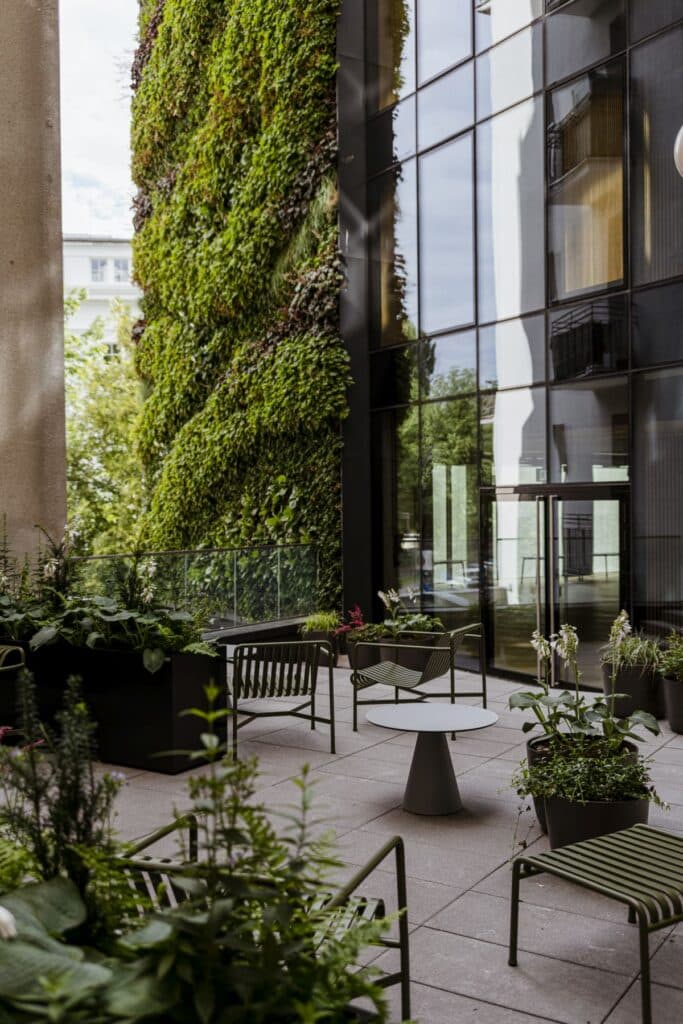
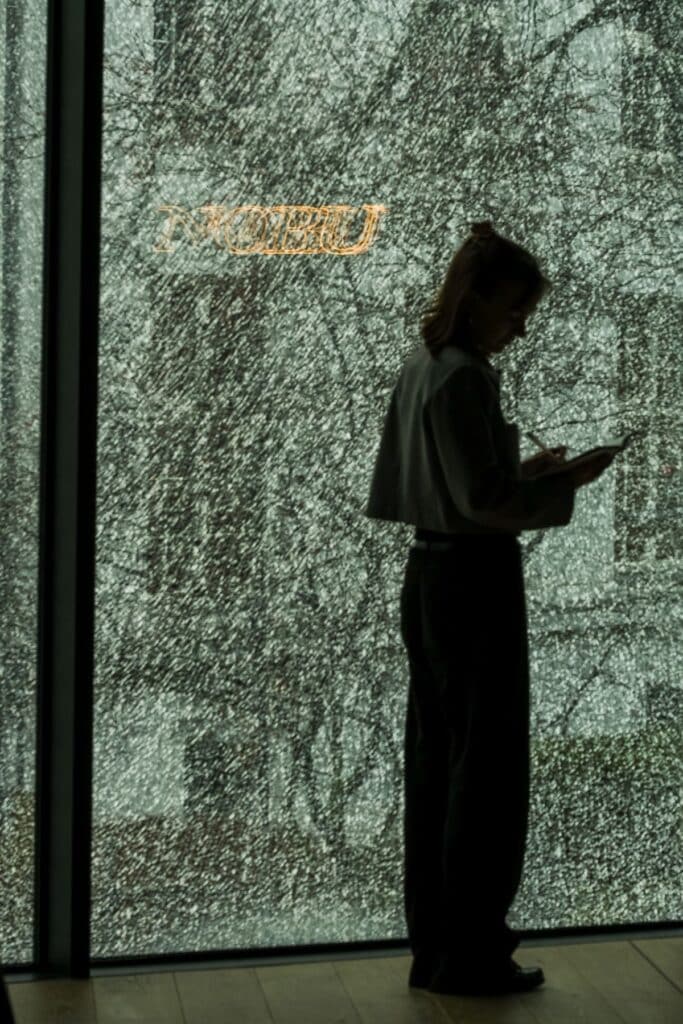
The crushed-glass façade membrane is the project’s most technically interesting element. Functioning as a semi-transparent skin, it manages the competing demands of privacy, light penetration, and outward view simultaneously. In a building positioned in close proximity to historic fabric and street activity, a façade that filters rather than simply reflects or transmits is a considered urban response. The integration of vertical greenery within this system adds a further layer of visual and environmental mediation between the hotel interior and the Warsaw streetscape.

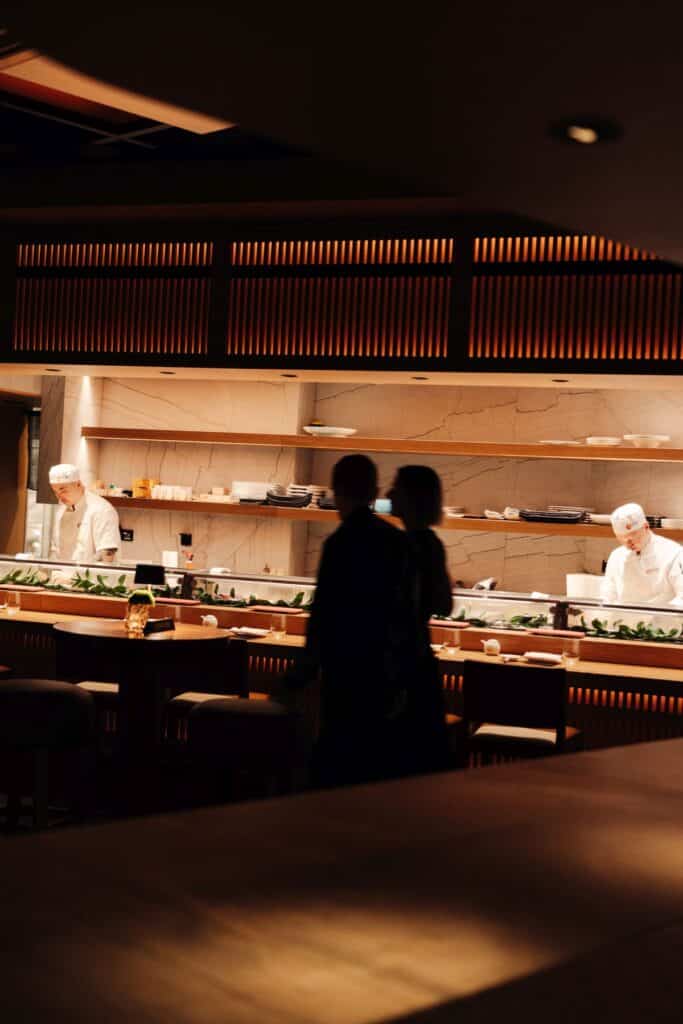
The relationship between the new glazed volume and the retained historic wing of the former Hotel Rialto is the project’s most structurally complex condition. Two buildings of different periods, different structural systems, and different material registers share a single site and a connected programme. The architects describe this contrast as creating a “layered spatial narrative” rather than a resolved unity, which is an honest characterisation. Whether that layering reads as intentional complexity or as unresolved adjacency is a question that the project’s published documentation cannot fully answer.
Interior Language: Material Contrast as Spatial Strategy
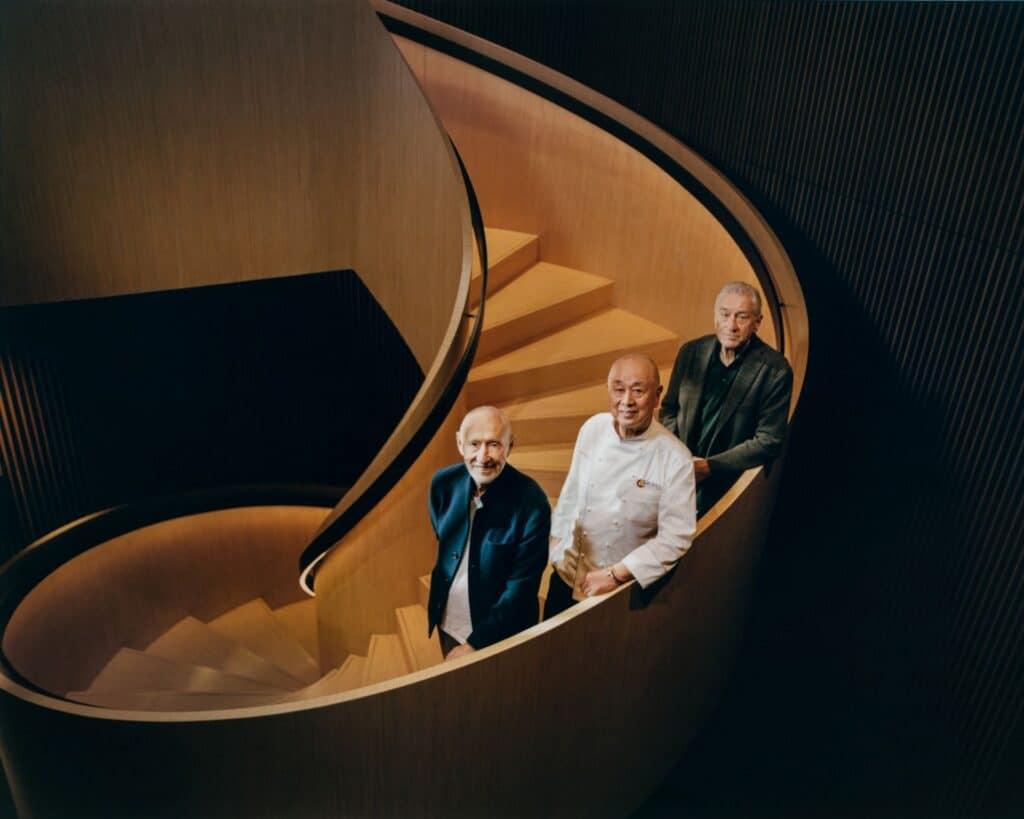
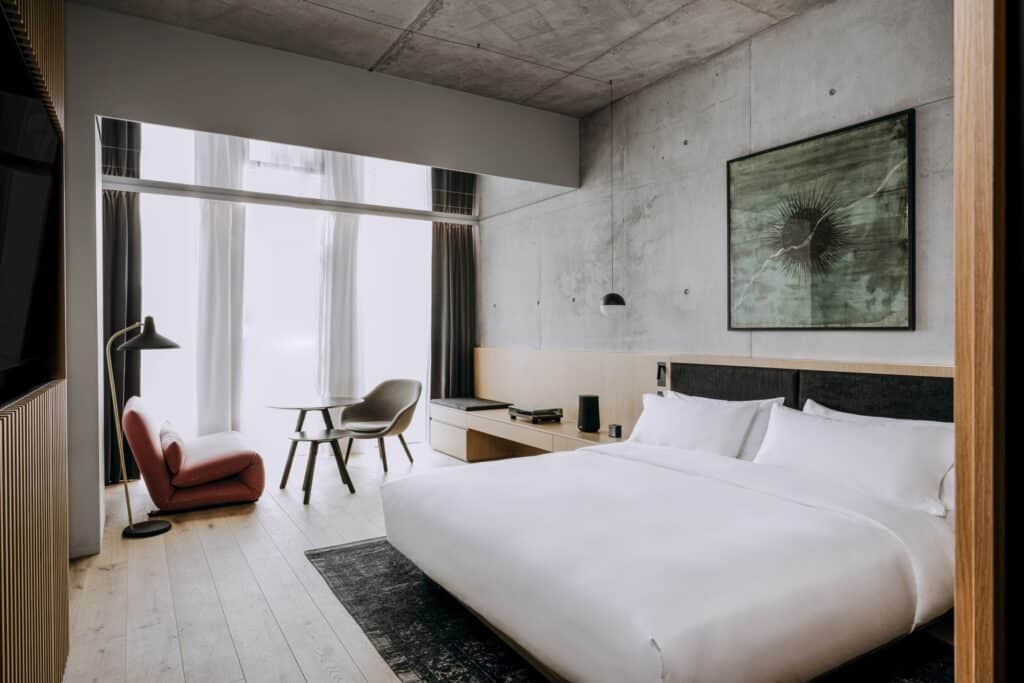
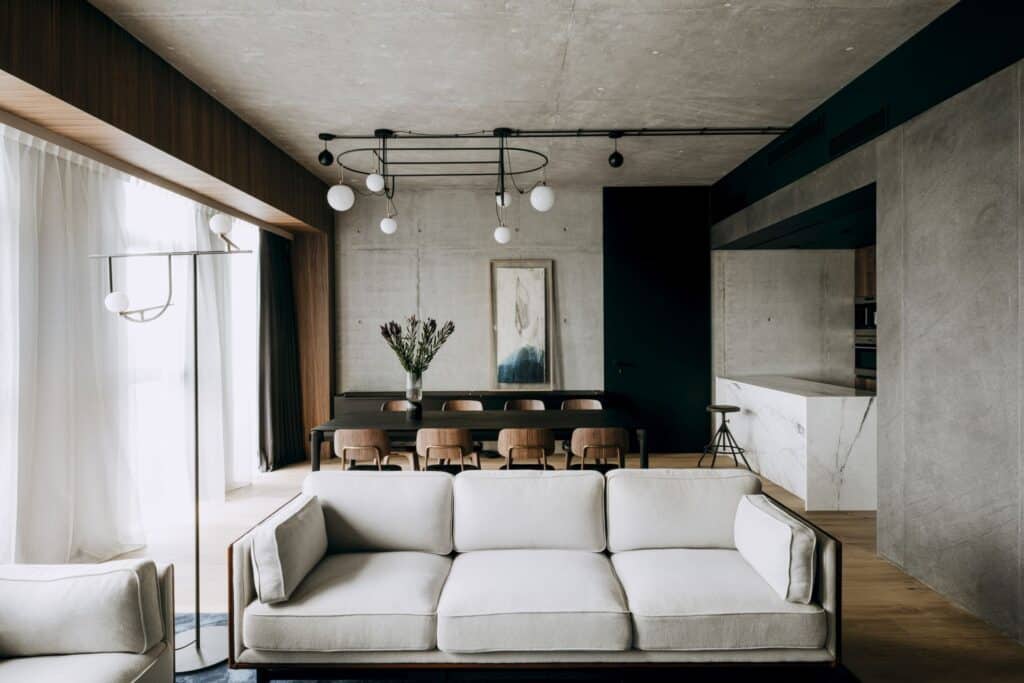
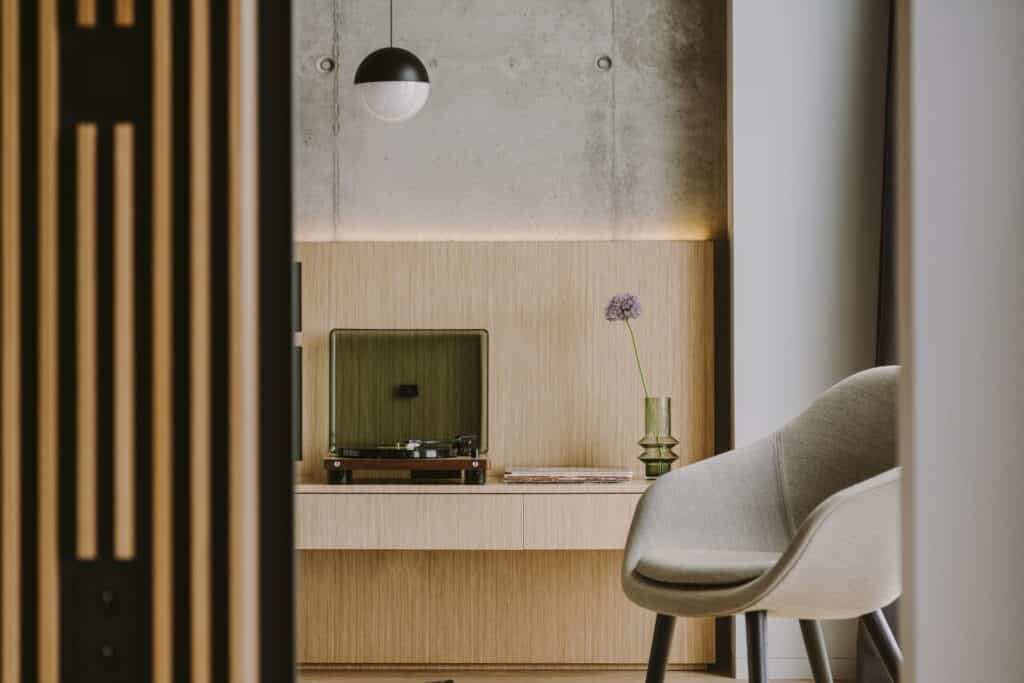
The 116-room interiors are described as working through a deliberate contrast of raw concrete, soft wood, and travertine alongside Art Deco-referenced elements including wood textures, black finishes, and patterned wallpaper. This is a material language that has become widely used in high-end hospitality design over the past decade, and its appearance here is competently handled without being particularly distinctive. The sculptural staircase in the main lobby is cited by the architects themselves as a key spatial element, which suggests that vertical circulation was conceived as an experiential centrepiece rather than a functional connector, a reasonable strategy in a building whose section creates meaningful changes of level.
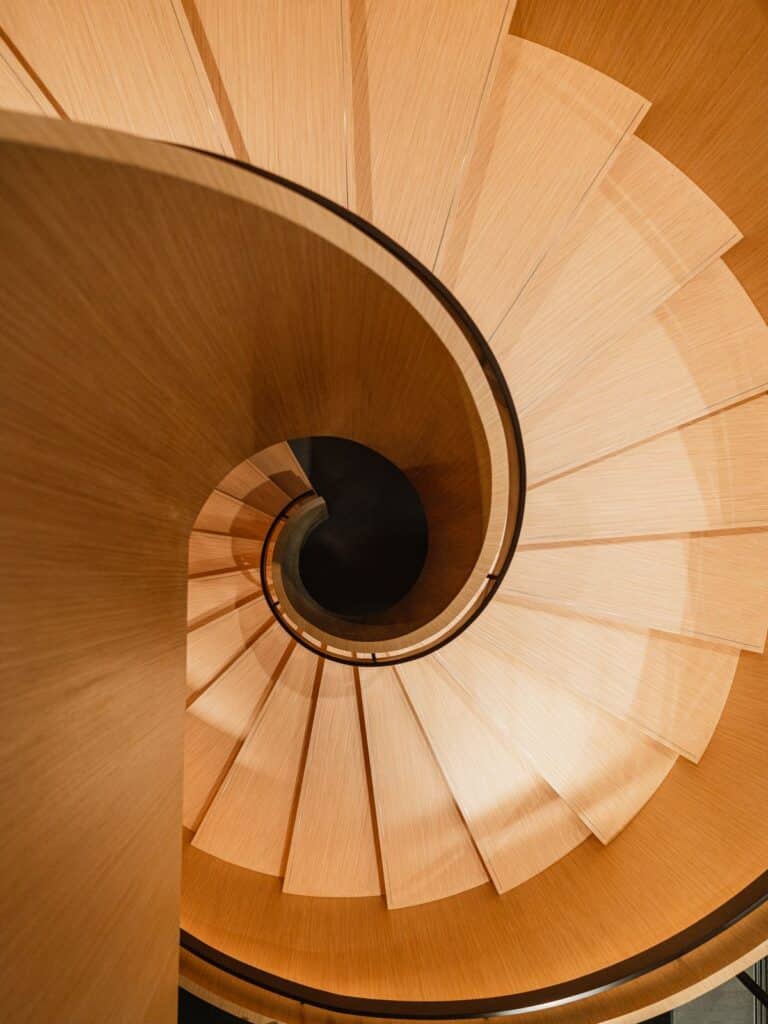
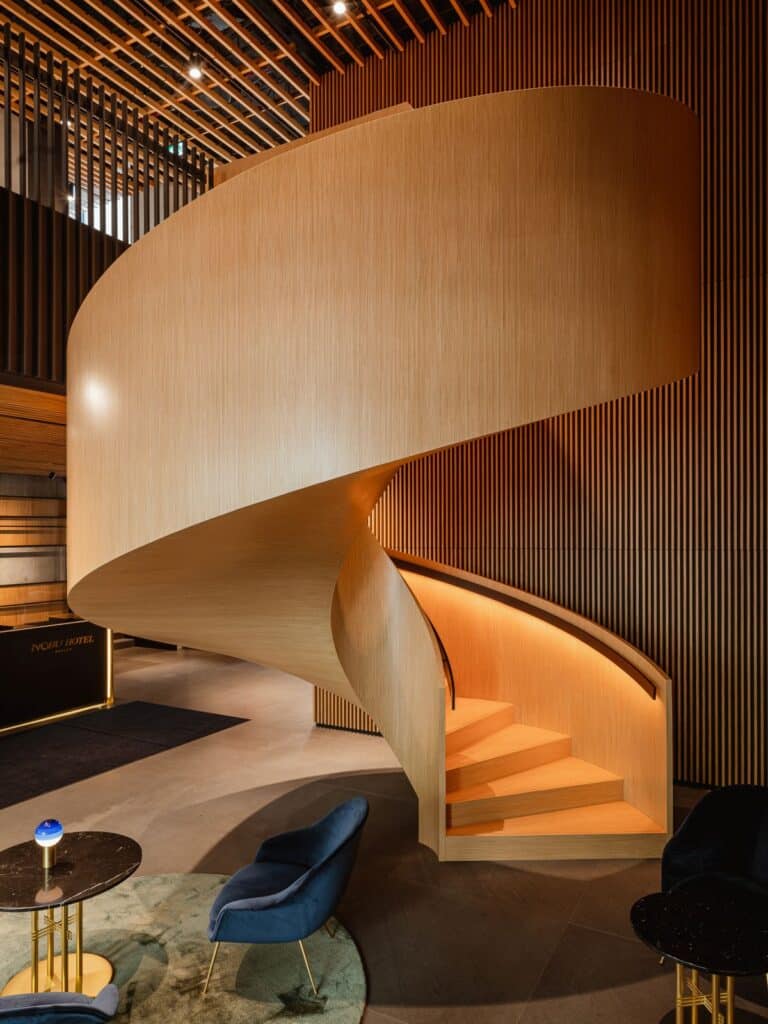
The underground Jassmine jazz club is the interior element that carries the most spatial specificity. A concealed, below-grade music venue within a hotel is a genuinely unusual programme decision that generates its own atmospheric logic, separate from the hotel’s surface language. Subterranean spaces in urban hotels are rare and difficult to execute well; their success depends on acoustic performance, spatial compression, and the management of entry sequences that transition guests convincingly from the hotel’s daytime register to something more nocturnal and concentrated.
The Omotenashi Frame and Its Limits
The conceptual framework of omotenashi, the Japanese philosophy of anticipatory hospitality, is invoked to describe the hotel’s spatial and experiential approach. As a guiding principle for a hospitality project, it is a legitimate and meaningful reference: omotenashi implies attention to the whole of a guest’s sensory and emotional experience, not only service transactions. However, it is also a concept that operates primarily at the level of programme and service culture rather than architectural form. The connection between omotenashi as a value and the specific formal decisions of the building, the trapezoidal volume, the curved glass corner, the material contrasts, is not made explicit in the project’s framing. The concept and the architecture exist in parallel rather than in productive dialogue.
✦ ArchUp Editorial Insight
Nobu Hotel Warsaw is a more architecturally substantive project than its brand association might suggest. The site conditions were genuinely difficult, and Medusa Group’s section-driven formal response to an irregular plot adjacent to historic fabric represents a disciplined urban approach rather than a signature gesture imposed on a compliant site. The crushed-glass façade membrane is technically interesting and contextually considered. The retained historic wing and its relationship to the new volume is the project’s unresolved condition, and the published framing of this as “layered contrast” rather than integration is honest about what the project achieves and what it does not attempt. The interior language, though competent, operates within a well-established hospitality design vocabulary without significantly extending it. The project’s most distinctive spatial contribution may be the Jassmine Club, whose programmatic specificity and subterranean position generate an atmospheric logic that the rest of the building does not quite match. Five years on, Nobu Hotel Warsaw reads as a serious piece of urban architecture that carries its brand context lightly enough to be judged on its own spatial terms.
Conclusion
Nobu Hotel Warsaw by Medusa Group and Studio PCH demonstrates that difficult urban sites can generate disciplined formal responses. The building’s technical and contextual intelligence in addressing a challenging irregular plot within historic Warsaw fabric is its strongest contribution. Its conceptual framing, which layers Japanese hospitality philosophy, Art Deco references, and contemporary glazing language, is ambitious in scope but not always resolved in execution.