
Binghatti City Rethinks the Relationship Between Brand Identity and Integrated Residential Living

Luxury Brands Expanding in the Contemporary Residential Scene
The entry of luxury brands from the automotive sector into real estate is no longer an exceptional phenomenon. In recent years, this trend has emerged through limited vertical residential projects, where the brand identity is used as a tool to differentiate the real estate product in global markets such as Miami and Dubai. As the experience repeated, these initiatives evolved into a recurring model reflecting the intersection of industrial design and high-cost urban development.
From Signature Tower to Integrated Residential District
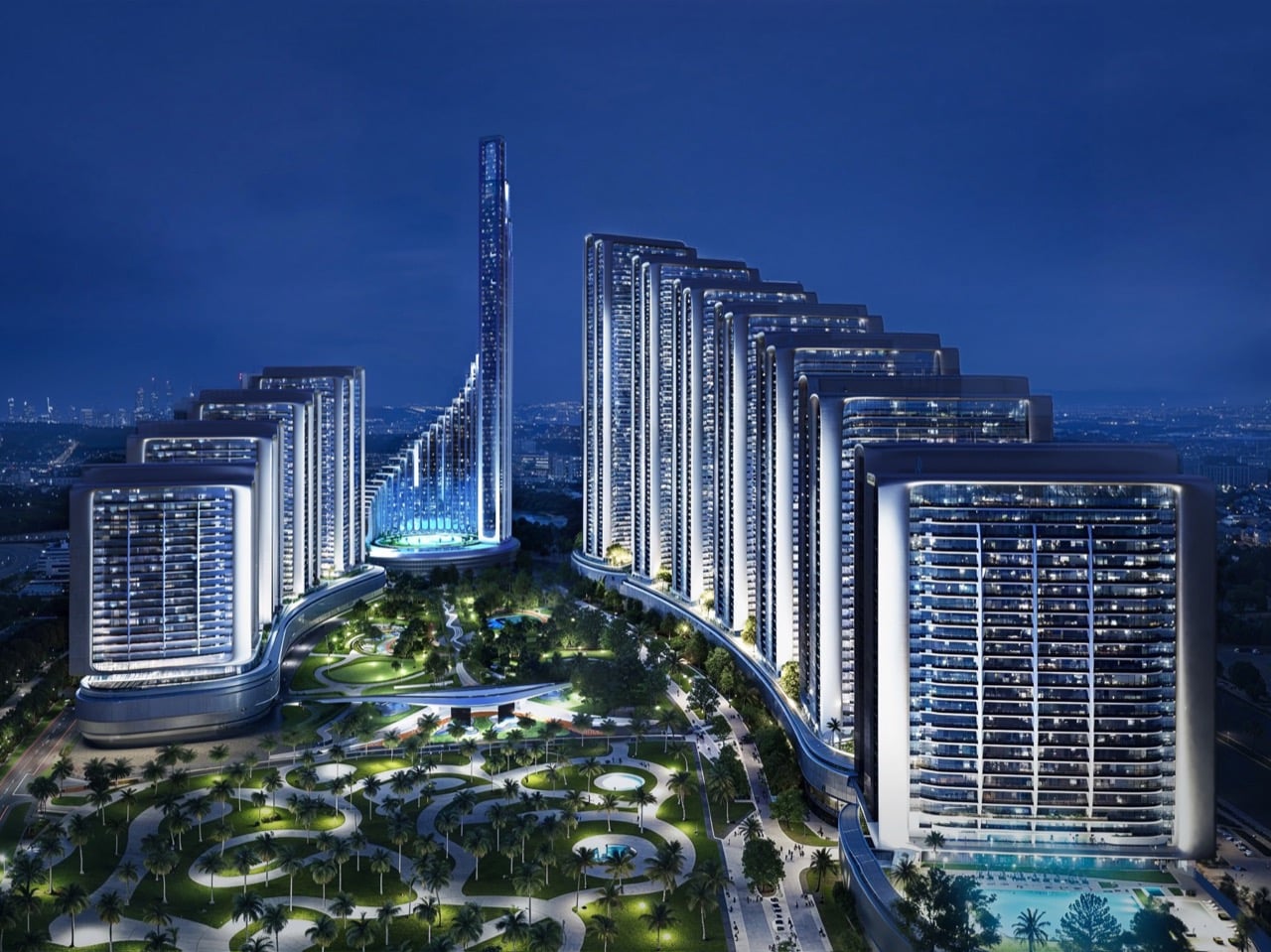
Unlike the early stages that focused on a single tower with a clear visual identity, this model has notably evolved with the emergence of projects spanning a broader urban scale. In some cases, the brand is no longer present in a standalone building but throughout an entire residential fabric comprising multiple towers and shared spaces, indicating the shift of the Branded Living concept from a symbolic element to an organizational framework for urban planning.
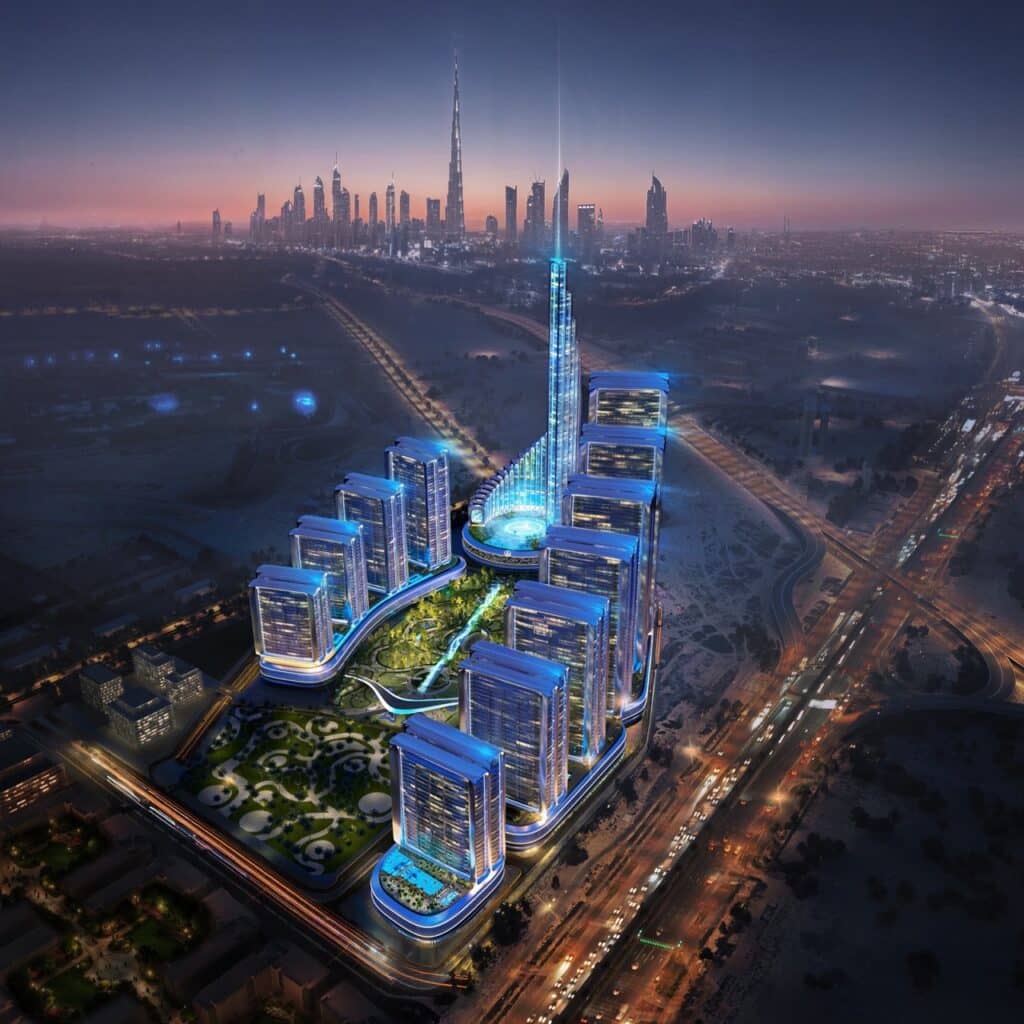
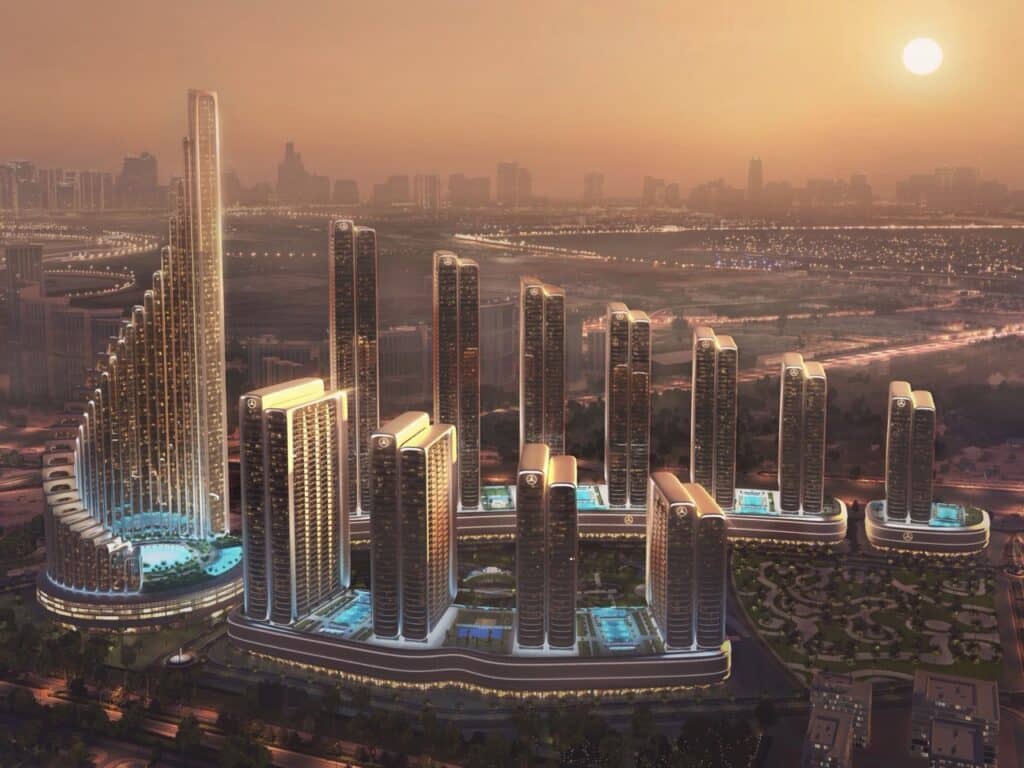
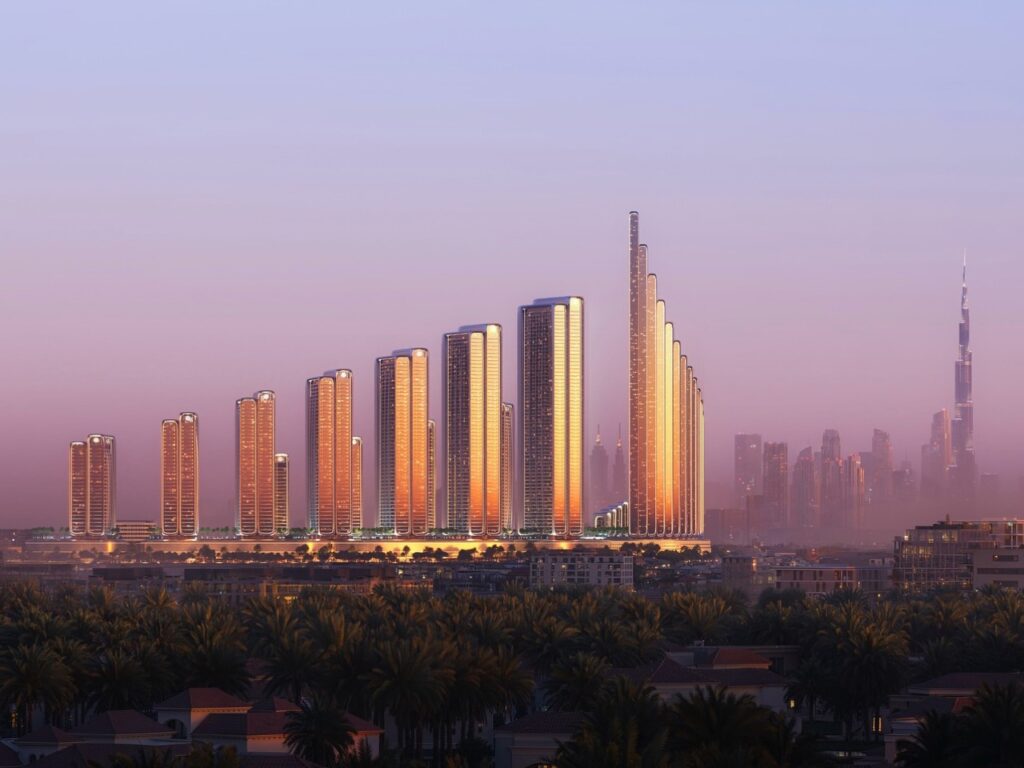
A contemporary example of this transformation is a large-scale residential project in Dubai, covering nearly 10 million square feet, featuring 12 residential towers with approximately 13,000 units, arranged in a hierarchical height distribution that creates a stepped skyline within the urban area.
Architectural Massing and Design Identity
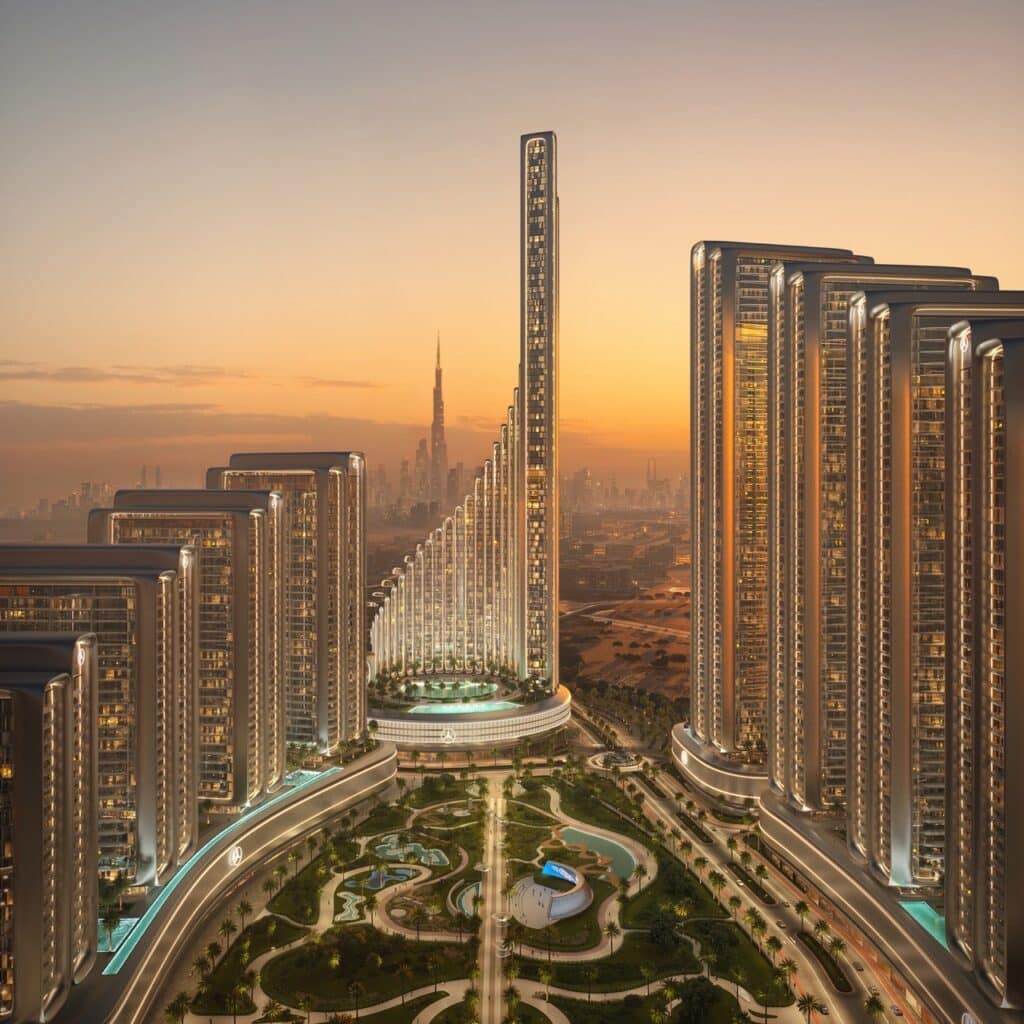
The urban composition in this type of project centers around a prominent tower surrounded by lower masses, enhancing the visual presence of the core without detaching from the surrounding context. This gradient serves not only an aesthetic purpose but also reflects an attempt to balance vertical density with urban openness.
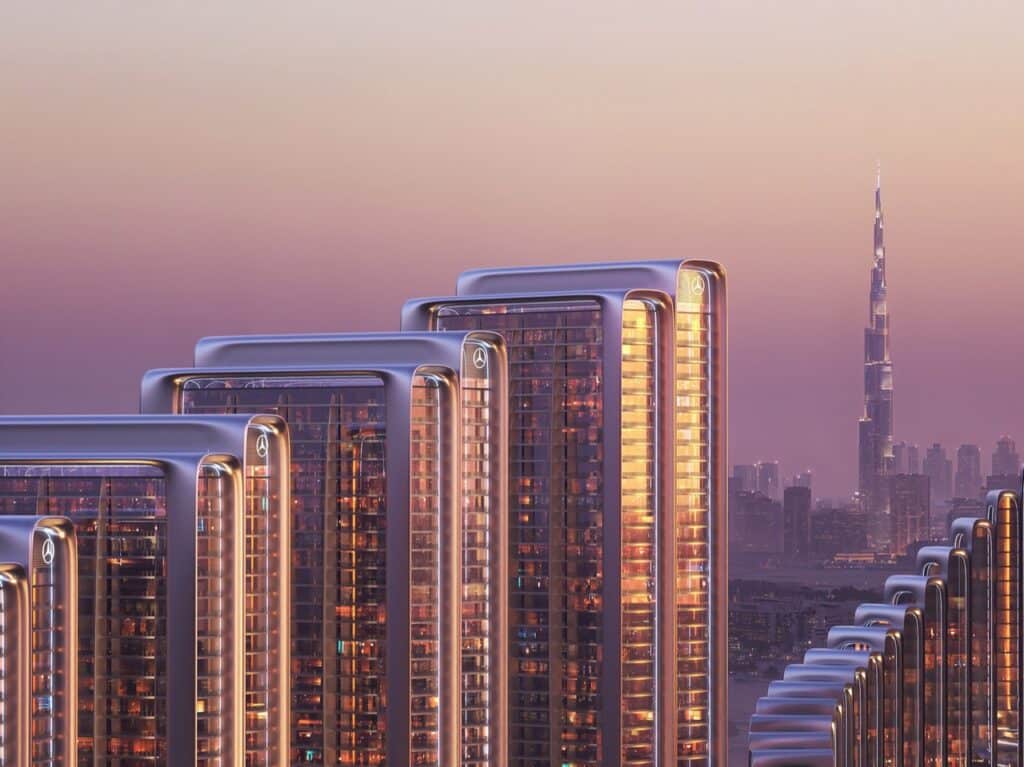
At the level of detailing, the design language draws inspiration from the world of luxury industry, visible in horizontal lines, metallic surfaces, and glossy touches, with names or symbols linked to industrial design history incorporated as part of the overall narrative of the project.
Apartments as a Translated Identity
Inside, the identity translates into a design philosophy based on calculated simplicity, limited color palettes, and high-quality materials. The aim is not ostentation but creating a residential environment that reflects a sense of visual discipline and serene luxury, where the apartment becomes an extension of the overall project concept rather than an independent entity.
A Semi-Independent Lifestyle
These projects do not merely provide residential units but are planned as integrated living environments that include commercial spaces, cultural zones, gardens, sports facilities, and internal transportation networks. This configuration reduces reliance on the immediate surroundings and enhances the concept of a “walkable neighborhood” within a relatively closed investment framework.
Unit prices in this type of development vary significantly, from smaller units aimed at investment to high-end luxury apartments, with execution schedules typically spanning several years from the launch date, reflecting the scale and complexity of these urban projects.
Pricing as an Indicator of the Target Audience
The pricing structure in Branded Residential Living projects reveals much about the demographic assumed to reside in this type of residential environment. Here, price is not only a financial value but also a social filtering tool that determines who belongs to this model and who remains outside it.
Studio units, starting at $435,600, may seem relatively accessible within a market like Dubai, until it becomes clear that this represents the minimum for the smallest available units. As the scale increases, the pricing trend becomes more evident:
- One-bedroom: up to $2.6 million
- Two-bedroom: up to $3 million
- Three-bedroom: starting from $5 million
A Narrow Market with Calculated Demand
Although the general messaging of these projects suggests openness to a broad range of buyers, the pricing levels practically indicate a very limited audience. Even the “affluent” segment within this spectrum requires a high disposable income that makes the luxury lifestyle an ordinary, rather than exceptional, choice.
This raises both an urban and economic question: can the local market absorb thousands of units targeted at such a highly exclusive segment? Filling a large number of units within a single project, almost entirely aimed at the same social class, raises questions about the sustainability of demand, even in cities accustomed to competing at the highest levels of luxury and real estate offerings.
Design Philosophy: Sensual Purity
The Sensual Purity philosophy is presented in the context of signature residential projects as a conceptual framework for design. At first glance, it often appears closer to marketing language derived from the brand’s internal definitions. However, the presence of this philosophy becomes tangible when examining material choices, colors, and the treatment of interior details.
Black and silver form the core color palette of the spaces, a predictable choice within this type of project, evoking the aesthetic of contemporary industrial design as a visual reference. The introduction of wood and leather, on the other hand, appears as an attempt to break the coldness of metallic surfaces and infuse a warmer character, balancing the display-oriented nature with the sense of actual habitation, ensuring the space does not turn into a perpetual showroom.
Signature Identity in the Details
Naming towers or architectural components after prototype models or design concepts linked to the industrial world adds an additional layer of symbolic immersion. This approach can be interpreted in two ways: for some, it represents a cohesive and immersive experience, while others perceive it as an overly futuristic conception, or even a semi-dystopian scenario, depending on how receptive one is to the presence of corporate identity within everyday residential spaces.
Amenities and Lifestyle
The list of amenities in Branded Residential Living projects appears familiar to the point of raising questions: a dense mix of entertainment lounges, expansive public spaces, sports clubs, swimming pools, fitness facilities, and open gardens. This accumulation is not solely aimed at impressing residents but reflects the concept of a self-sufficient residential environment, where, theoretically at least, daily life can be conducted without leaving the project boundaries.
This model mimics the logic of a “miniature city,” yet at the same time, it raises a question about the actual necessity of such an abundance of amenities, and whether their presence stems from genuine lifestyle requirements or from the need to maintain the luxury image associated with the brand.
Living Within a Signature Identity
A deeper question arises regarding identity: what does it mean for an entire residential community to be founded on the reference of a single brand? Over time, does the resident begin to define themselves through this symbolic affiliation?
At first glance, this idea may seem exaggerated, yet similar patterns clearly appear in contemporary consumer culture, where certain products become tools of self-definition, whether through personal technology, fashion, or lifestyle choices. In this context, architecture becomes more than just a framework for living; it serves as a new medium for representing individual identity within a broader consumer system.
Developer Track Record and Concept Credibility
In Branded Residential Living projects, the success of the concept is not tied to the brand alone but to the developer’s ability to translate the commercial identity into a tangible, executable urban product. A developer with a proven history of working on projects featuring various luxury brands lends credibility to this type of development compared to less experienced attempts, indicating a practical understanding of how to transform visual and industrial language into a concrete architectural space.
Timing and Market Capacity
A timeline spanning three and a half years may seem ambitious, yet it aligns with the known pace of rapid construction in Dubai. However, the real challenge is not the speed of execution but the market’s capacity to absorb a large number of branded residential units within a single area. Concentrating such a volume of supply in one location puts the project to the test of sustained, real demand, not just initial interest or launch momentum.
Limits of Brand Expansion Strategy
The performance of this project will serve as a key indicator of the feasibility of a brand expansion strategy on a full urban scale. The question is not merely whether there is an audience that admires the brand but to what extent this admiration intersects with the desire to live in an integrated residential environment defined entirely by a single identity. At this point, the risk lies not in project failure but in overestimating the scale of this intersection.
✦ ArchUp Editorial Insight
From an architectural perspective, the Binghatti City project presents several positive aspects worth noting. These include the stepped spatial organization of the towers, which creates a coherent and graduated skyline, as well as the use of a unified design philosophy such as Sensual Purity to establish a clear architectural identity. The attempt to integrate cultural facilities, commercial spaces, gardens, and sports activities within the development also represents a consolidated approach to an integrated urban lifestyle, one that may serve as a useful case study for exploring how residential, commercial, and recreational uses can be combined within a single environment.
However, a closer examination reveals a number of architectural and residential concerns. First, the sheer scale of the project and its 13,000 residential units raise questions about long-term economic and social sustainability, particularly given the project’s reliance on a single brand identity, which may result in a highly exclusive and socially homogeneous living environment. Second, the heavy dependence on an automotive brand’s identity in virtually every architectural detail could reduce the project’s flexibility in adapting to future market shifts or evolving resident preferences. Third, while the project offers a comprehensive amenity system, both interior and exterior spaces may face challenges in striking a genuine balance between residential density and everyday comfort for occupants.
Overall, Binghatti City can be viewed as a valuable reference for studying the integration of brand identity with residential design and holistic urban living. The greater architectural lesson lies in how such projects address challenges related to density, social diversity, and design adaptability, rather than focusing solely on the luxury identity of the brand itself. For additional insights, see Building Materials and Research on similar developments.





🟥 Editorial Notice:
In its current form, this article conflicts with ArchUp’s encyclopedic editorial direction. The clear emphasis on a specific company name, particularly in the title and narrative, gives the content a promotional tone that does not align with our standards. ArchUp does not publish articles centered on brands or developers, but rather examines architectural and urban phenomena through a critical and analytical lens.
Please revise the article to focus on Branded Residential Living as a broader urban phenomenon, mentioning any company only as a secondary case study, without positioning it as the main subject