Can you develop your earphones? Korvaa is the response

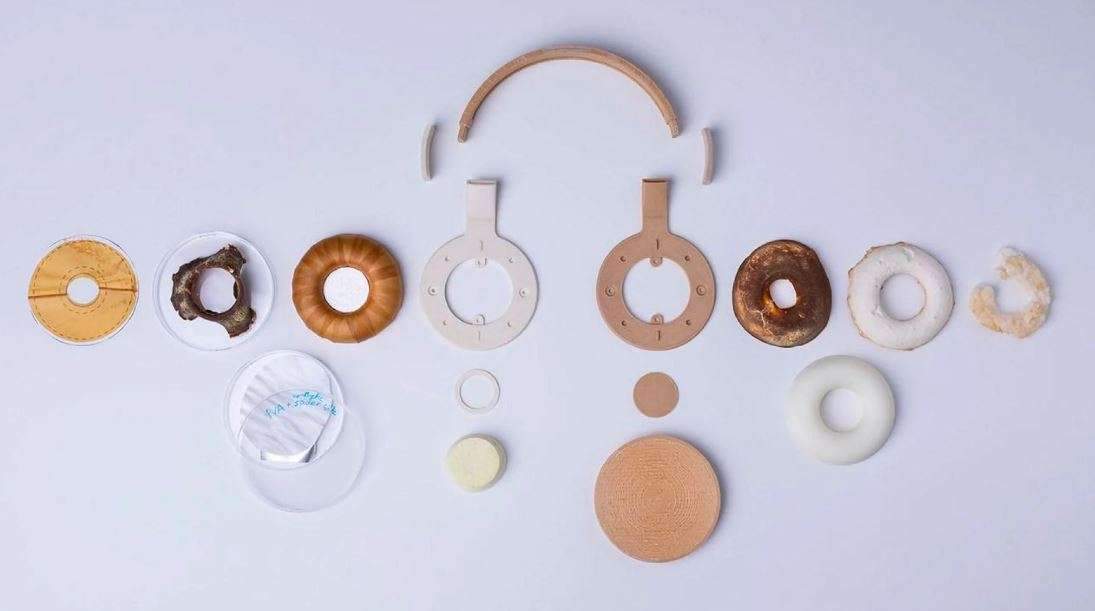
Finnish plan studio Aivan, as a team with synbio researchers from VTT Specialized Exploration Focus of Finland and Aalto College, has conceptualized Korvaa, the world’s most memorable earphone made from microbially developed materials.
The scourge of plastic gets more sure as its endowment of strength is resulting in irreversible harm to the climate.
Accordingly, various government associations, research establishments, and private associations are supporting engineered science and economic materials. In fact, the engineered science industry is encountering speeding up development, expected to hit 19% each year (CAGR).
As earphones are an item including a blend of various materials going from unbending, froth-like, adaptable, and permeable ones; it addresses an ideal chance to understand a full-range utilization of the new organically created materials on a 3-layered surface.
As a result, this economical headset investigates 6 unique bio-designed materials in its development. Dumping customary plastic, Korvaa’s casing includes an oil-free 3D printed biodegradable polylactic corrosive got from lactic corrosive.
Moreover, the delicate ear paddings are from Trichoderma Ressei, a growth as “nature’s most grounded bubble-producer” by the Aivan group. The growth produces hydrophobin, which is a protein that upholds parasitic cells develop high up. Also, it blends in with plant cellulose to acquire a delicate construction. Moreover, the internal Korvaa network follows way back to a cobweb: it is comprised of biosynthetic bug silk by made microorganisms and afterward, handled with an electro-turning strategy to transform it into a sturdy and adaptable yarn.
Furthermore, the material emulating cowhide used to cover the froth-like material has its starting point from parasitic mycelium (Phanerochaete chrysosporium). Therefore, we utilized different materials in Korvaa and microbially delivered cellulose, which is additionally a quicker choice than plant-based cellulose. Additionally, it includes a synthesis of mycelium and bacterial cellulose.
In addition, the name Korvaa holds a two-sided connotation; “ear” in life structure settings and all the more ordinarily “to substitute, redress or supplant”. In other words, the name is without a doubt suits the inventive venture targeting subbing harmful plastics.