Chelsea FC-Branded Towers in Dubai: Football and Urban Luxury

A New Kind of Urban Branding
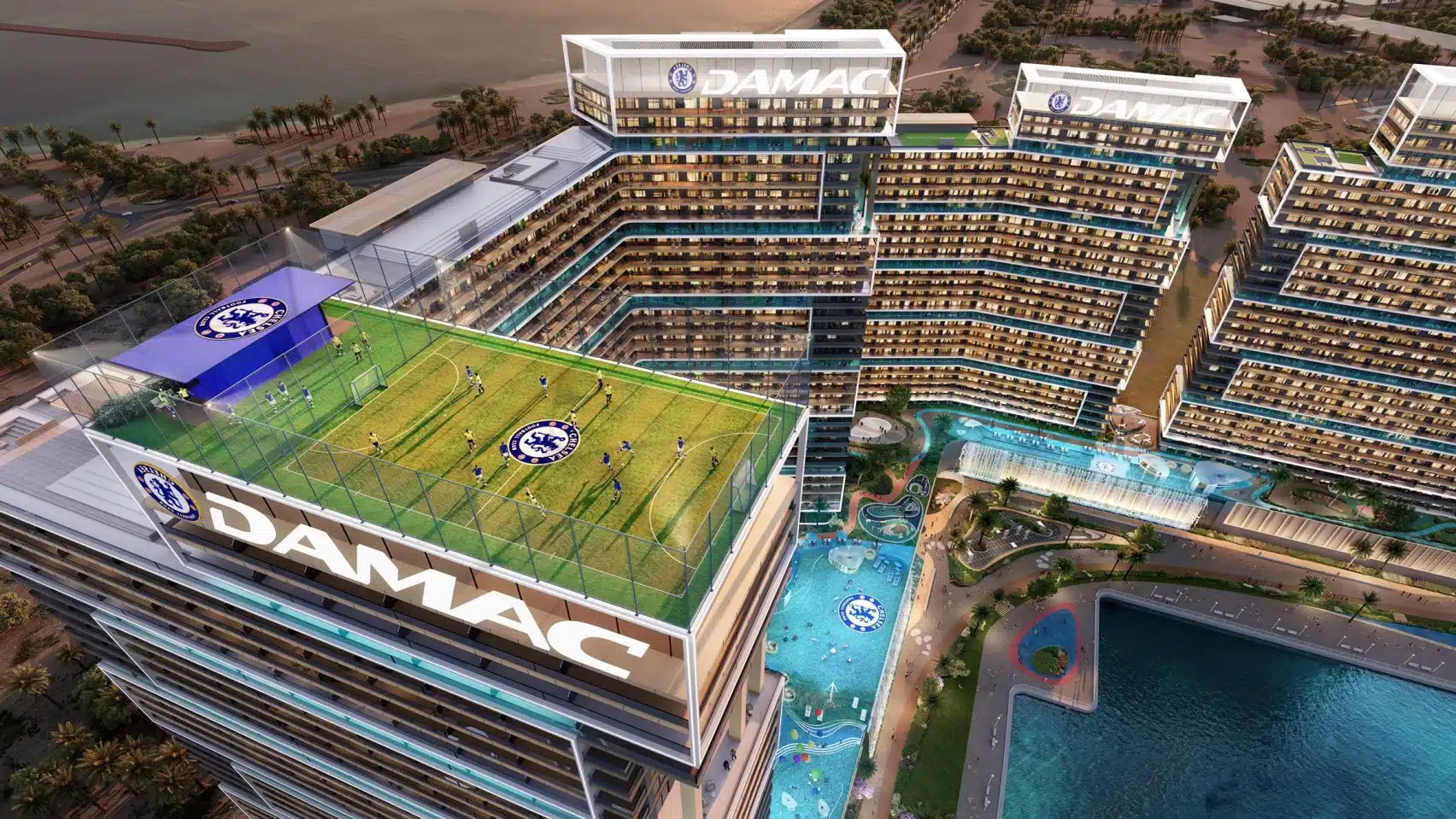
The announcement of Chelsea Football Club entry into real estate—via a set of four residential skyscrapers in Dubai Maritime City—marks yet another instance of lifestyle branding infiltrating architecture. Developed in partnership with DAMAC, the project claims to be the world’s first football-themed branded residence, consisting of 1,400 luxury units and capped with a rooftop football pitch overlooking the Arabian Gulf.
What does this collision of sport, capital, and urban development offer the city? And how should architects and urban designers interpret this hybrid typology that merges housing, spectacle, and merchandise?
Follow all bold ideas, trends, and updates from the world of architectural content on ArchUp.
Design as Spectacle, Not Necessity
The towers—rising 130 metres—are marketed as the “ultimate branded living experience.” That phrase alone reveals the project’s focus: not solving urban or architectural problems, but delivering a curated fan lifestyle. With Chelsea-themed pools, a Chelsea Sports Bar, and even a statue of the club’s lion mascot, the architecture becomes a container for brand loyalty, not innovation.
From a design standpoint, this turns the building into a vertical piece of memorabilia. Public spaces like the rooftop football pitch could offer communal value—but more likely, they will function as exclusive spectacles for marketing more than meaningful interaction.

Aesthetic Language vs. Cultural Context
The renders emphasize Chelsea FC’s iconic royal blue, applied across entrances, lighting schemes, and shared amenities. But this branding-first approach neglects architectural context. These towers do not respond to Dubai’s coastal environment, urban rhythm, or cultural landscape. They are rootless monuments to global fandom, transplanting a London football identity into a Gulf skyline.
Rather than reflecting local identity or architectural experimentation, the project defaults to a safe, globalised, corporate aesthetic—polished, themed, but conceptually shallow.
More on ArchUp:
Branded Urbanism and the Global City
Dubai has become a global stage for branded real estate: Porsche, Armani, Versace, and now Chelsea. These branded towers aren’t just housing—they’re a form of collectible urbanism. But who are these buildings really for? Fans? Investors? Or marketing departments?
This approach reflects a wider trend in urban luxury: living as lifestyle subscription. Architecture becomes packaging for curated experiences—cryotherapy rooms, aerial yoga, cinema lounges—each element selected to craft a premium narrative more than a meaningful place to live.
Critical Takeaway
The Chelsea FC towers are less about architecture and more about identity packaging. For fans, they offer a chance to live inside a brand. For Dubai, they contribute to its image as a city of global luxury. But for architecture, they represent a cautionary tale: when design is guided by logo more than locality, buildings risk becoming props in the theater of consumer culture.

Photos: DAMAC