CIE Global Student Challenge 2027

CIE Global Student Challenge 2027 invites students to communicate an idea about light through AI-assisted visual storytelling. It has a direct architectural route through daylight, alongside themes covering perception, ecosystems, well-being and culture. The call is announced now; its submission portal opens on 5 January 2027.
Entry essentials
| Organizer | International Commission on Illumination (CIE), Standing Panel on Education |
|---|---|
| Submission deadline | 15 March 2027, 22:59 UTC; may close earlier at 300 complete entries |
| Prizes | One Gold, up to five Silver and eight Bronze awards; recognition and certificates. No confirmed cash amount. |
| Entry fee | USD 0 |
| Eligibility | Currently enrolled undergraduate, master’s and doctoral students worldwide; individual or up to six students |
| Results | Winners notified 20 April 2027 |
What to prepare
Submit a 1–3-minute MP4 video at 1080p with English narration and/or subtitles, plus an English PDF, DOCX or PPTX document of no more than 6,000 words. The stated combined size limit is 300 MB. Explain the chosen theme, process and AI use; retain prompts and evidence. One entry is permitted per individual or team. Postdoctoral researchers are excluded.
Judging and unresolved terms
The criteria include relevance, originality, communication, responsible AI use and scientific or technical soundness where applicable. Juror names are not supplied in the reviewed announcement. Participants retain authorship, but the exact Creative Commons licence and full conditions are deferred to the submission portal. Travel to Nanjing is not necessary to retain an award.
ArchUp assessment
The architectural opportunity is to explain a lighting decision over time. A film could examine how daylight changes the use of a room or how night lighting affects an outdoor setting. These are editorial possibilities, not extra brief requirements. A convincing submission would identify the question first and use the video to make its consequences legible.
The technical criterion matters because generated imagery can make an implausible lighting effect look persuasive. We recommend separating measured or simulated findings from illustrative sequences. An attractive frame does not establish illuminance, glare performance or a health benefit. Any such claim needs evidence appropriate to it.
The 300-entry limit is a practical constraint: the countdown shows the published latest deadline, not guaranteed availability until that moment. Prepare before the portal opens, then check the final licence before uploading. The headline description of a short statement should also be read alongside the more detailed document requirement in the PDF.
Our assessment is favourable for students developing a focused investigation in daylight or lighting communication. Free entry lowers the financial barrier, but the benefit currently offered is educational exposure and recognition. It should not be presented as funded research or a confirmed cash-prize programme.
Editorial review: 25 November 2026. Sources: CIE · Announcement PDF · CIE 2027
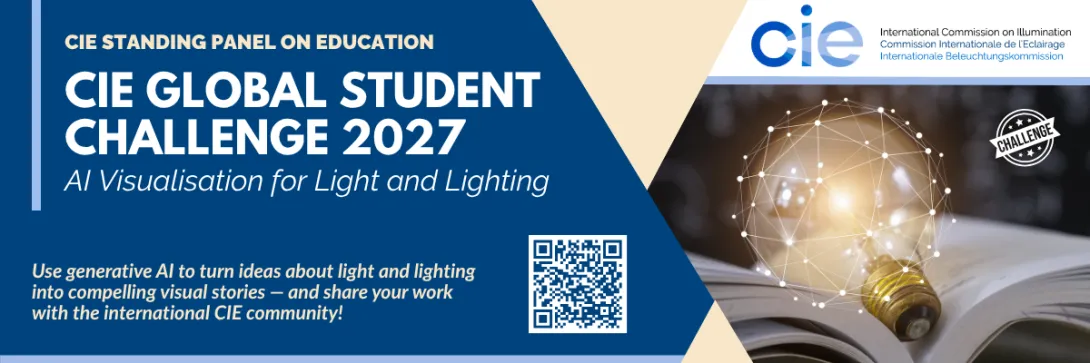
Featured image: official CIE promotional banner.
Submission deadline
15 March 2027, 22:59 UTC. Capacity may be reached earlier; the portal opens on 5 January 2027.