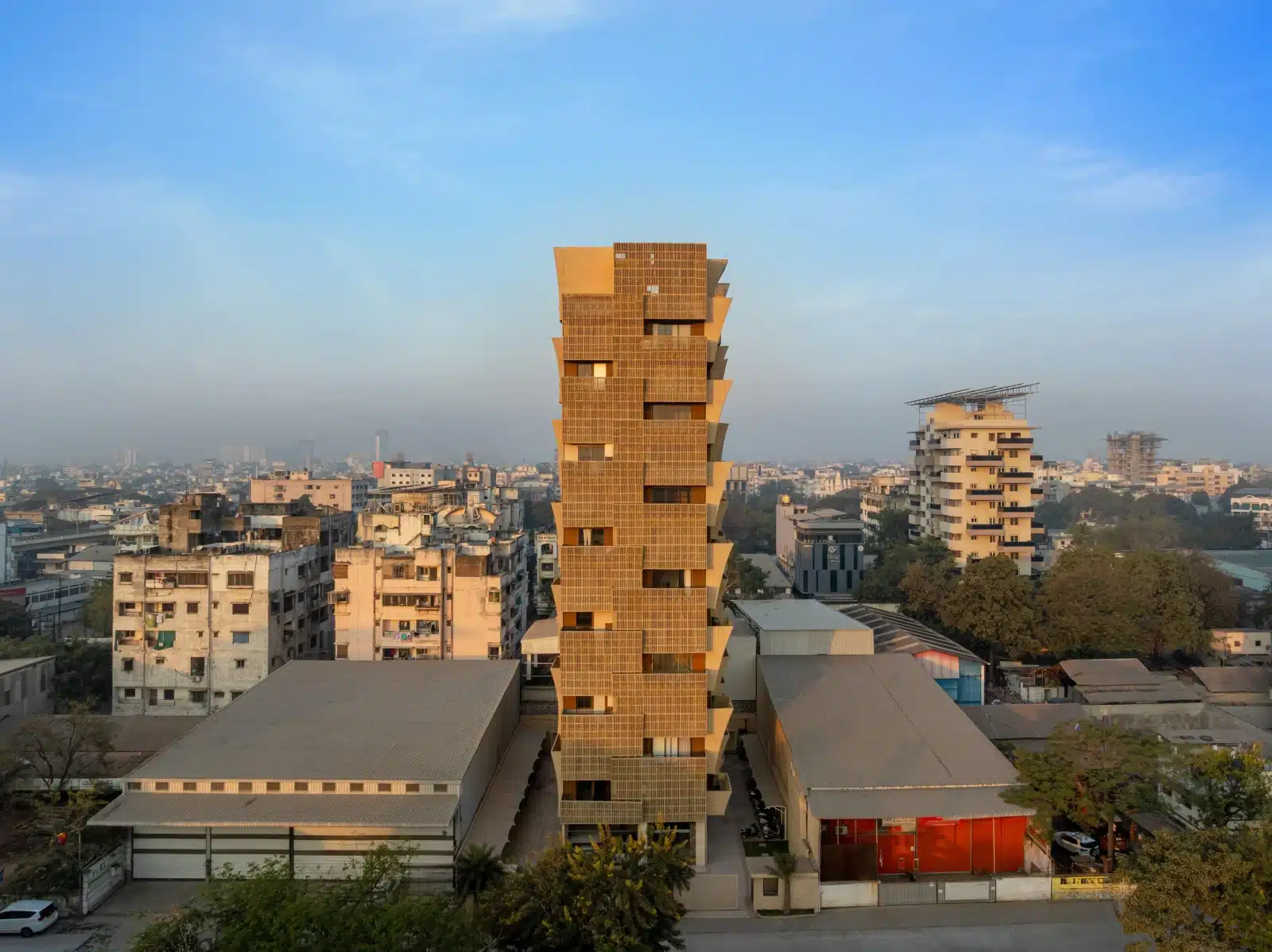
Cielo Tower Rises in Nagpur with Climate-Responsive Pixelated Facade

New 12-Storey Residential Tower Redefines Sustainable High-Rise Living in Central India
A striking 12-storey residential tower has completed construction in Nagpur, Maharashtra. The project introduces a distinctive pixelated facade system designed to combat the region’s extreme temperatures. Completed in January 2026, this 38,750-square-foot structure occupies a compact 900-square-meter site.
Vertical Strategy Maximizes Airflow
The slim vertical form emerged from site constraints. Consequently, designers eliminated shared internal corridors entirely. Each floor contains a single four-bedroom apartment with 360-degree exterior exposure. This configuration enables natural cross-ventilation throughout every unit.
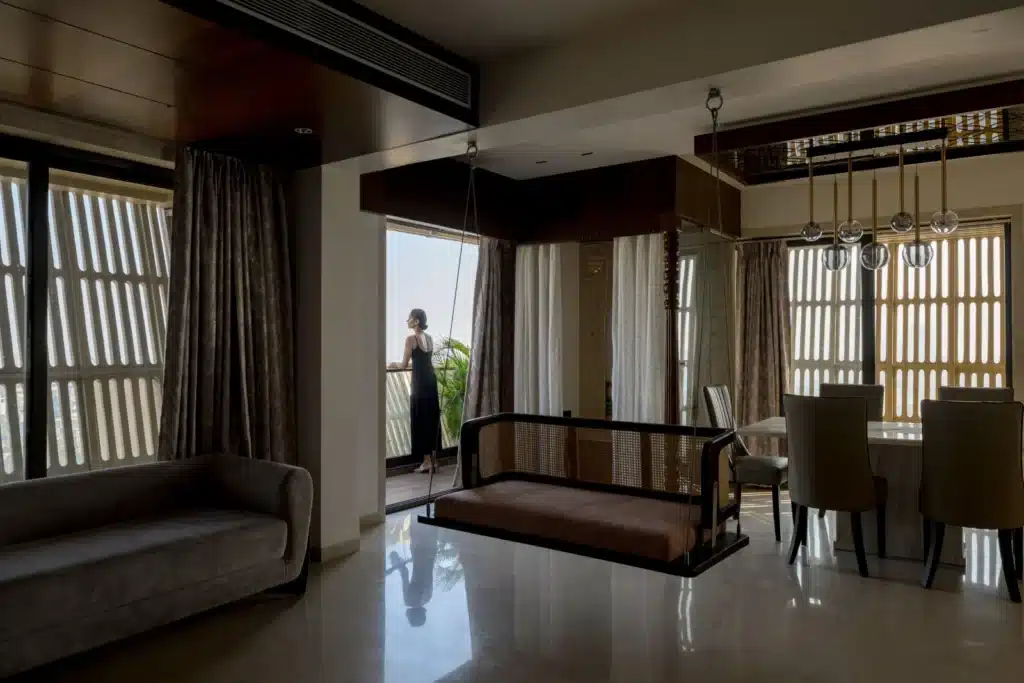
The spatial layout positions three bedrooms at three corners. Meanwhile, the kitchen occupies the fourth corner. This arrangement gives each primary room two external views. Additionally, cool breezes enter from multiple directions, reducing mechanical cooling needs.
Dual-Balcony System Creates Thermal Buffer
Every main room opens into two separate balcony spaces. One remains completely open while the other features screening. This dual arrangement creates a thermal buffer against direct solar radiation. Therefore, air cools before reaching interior glass surfaces.
The semi-enclosed zones function as outdoor rooms during summer months. Moreover, they provide residents with semi-private green pockets for relaxation.
Innovative Curved Foam Concrete Modules
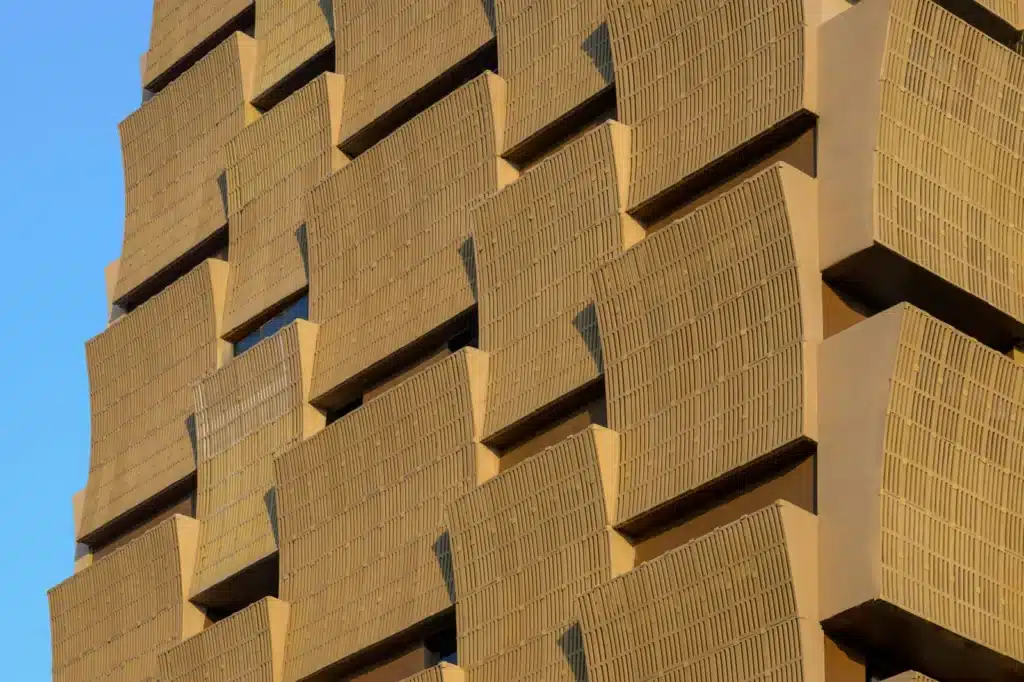
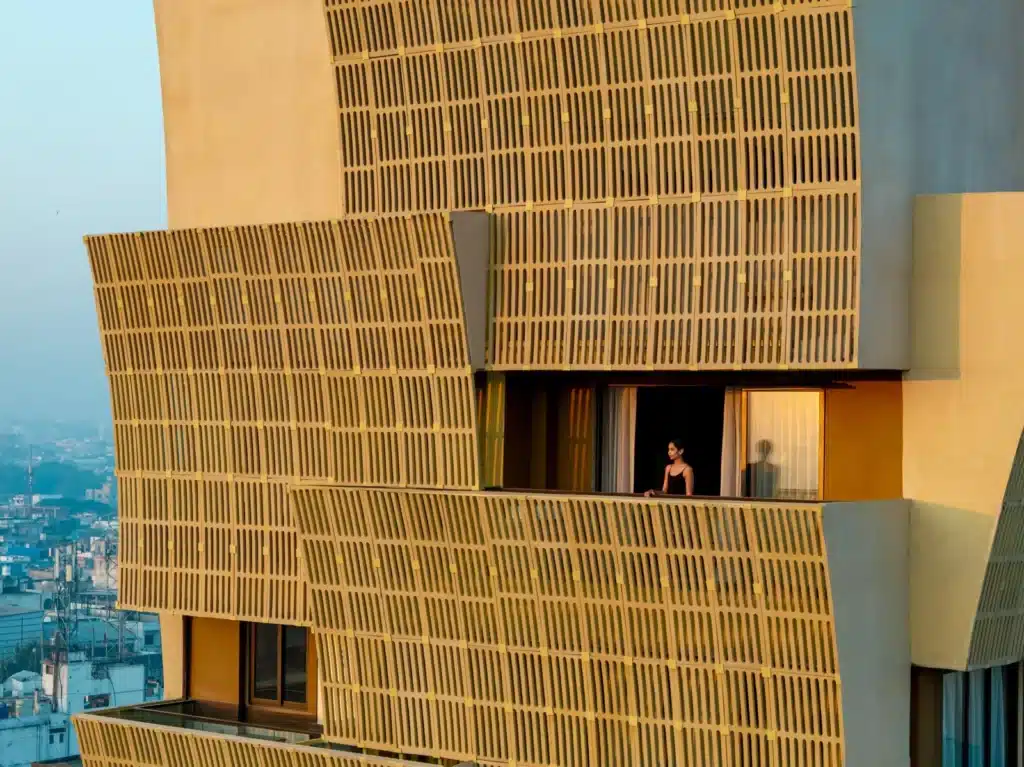
The sculptural envelope features sectionally curved screens alternating horizontally and vertically. These bespoke curved foam concrete modules offer significant insulation properties. The lightweight components contain 80% recycled materials with minimal carbon footprint.
Each module curves outward at upper levels to form balcony floors and balustrades. This interlocking system creates dynamic facade depth throughout the day. Furthermore, the screens reinterpret traditional Indian jali patterns for light control and airflow.
Renewable Energy Integration
A rooftop solar array generates power for common-area needs. This active strategy complements the passive cooling approach. The combination reduces grid dependence significantly.
The cantilevered balconies required precise engineering to balance durability with spatial efficiency. The overall design aims to minimize lifecycle carbon footprint.
Looking Forward
This Nagpur project demonstrates how compact urban sites can accommodate climate-conscious residential architecture. The integration of traditional ventilation principles with contemporary construction technology offers a replicable model.
How might similar passive cooling strategies transform high-rise development in other hot climate regions?
A Quick Architectural Snapshot
This 12-storey residential tower in Nagpur, Maharashtra covers 3,600 square meters of built-up area on a 900-square-meter site. The facade features curved foam concrete modules containing 80% recycled materials. Completed in January 2026, the structure houses twelve single-floor apartments with dual-balcony systems and rooftop solar panels.
✦ ArchUp Editorial Insight
A compact 900-square-meter urban site in a fast-growing Indian city produces a single-unit-per-floor tower. This is not a design preference. It is a financing equation meeting a land scarcity condition meeting a climate problem that municipal infrastructure cannot solve.
The elimination of shared corridors follows a predictable pattern: when developers face rising per-square-meter costs on constrained plots, internal circulation becomes the first spatial sacrifice. The dual-balcony system and jali reinterpretation appear wherever mechanical cooling costs threaten operating budgets in hot-climate markets. The 80% recycled-material facade modules emerge precisely when carbon reporting pressures meet budget ceilings that prohibit conventional curtain wall systems.
The repeated outcome across similar towers in Indian cities is identical: vertical isolation packaged as luxury exclusivity. The pattern will continue as long as urban land policy rewards single-lot density over neighborhood-scale planning.