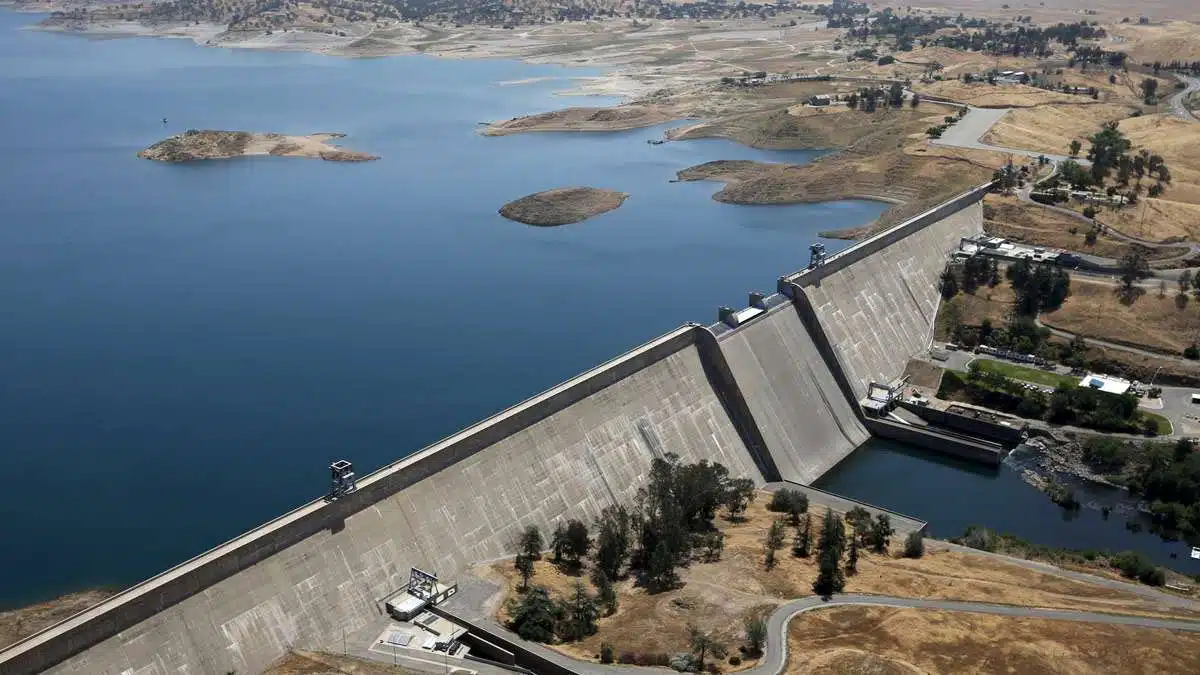
Creation of a mortar from construction waste that absorbs moisture

Creation of a mortar from construction waste that absorbs moisture,
Cities are filled with waste materials and the need to reuse existing resources has become essential in combating the increase in waste production.
More than a third of the total waste generated in the European Union comes from construction and demolition,
and contains various materials such as glass, concrete, bricks and ceramics.
But how can this huge amount of construction waste be managed?
According to the Spanish law on waste and contaminated soil,
Waste concrete and ceramics that do not have much processing can be reused in construction.
By combining waste recycled materials and technology,
Architectural design can create innovative solutions that contribute to reducing environmental impact.
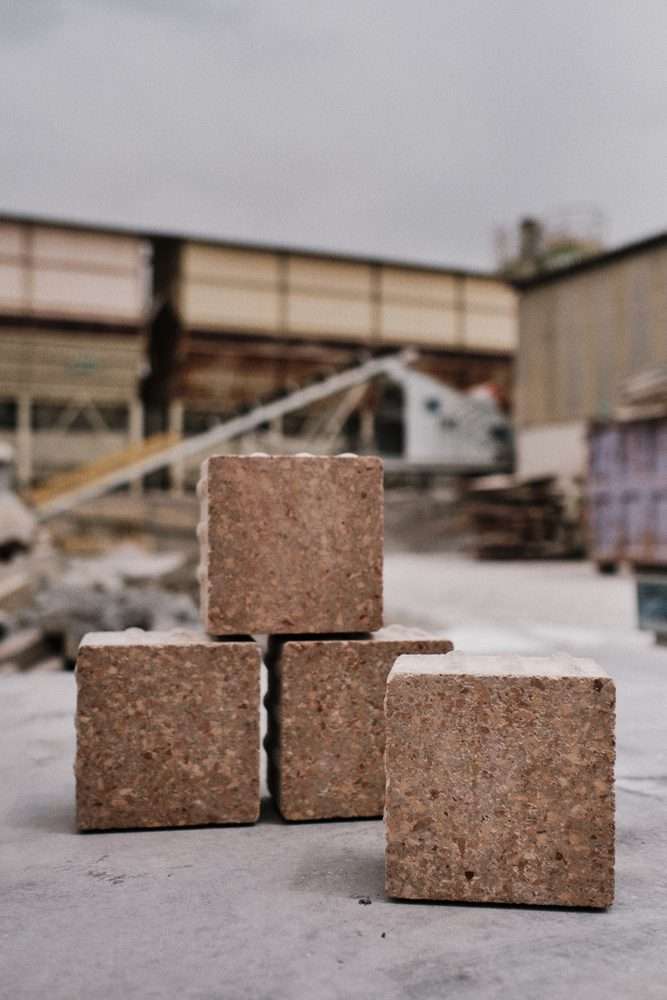
Among the new strategies proposed by the Balearic Islands for the production of renewable materials,
Loop Disseny stands out as an architectural project developed by the Balearic Islands Institute for Business Innovation.
Enhancing the implementation of the circular design economy as a strategic component,
it focuses on reusing existing materials and turning them into resources to create new products.
In this way, the Loop adds value to local materials and solid waste generated by industry or the city itself,
without creating additional waste.
By implementing four key principles – recycling, reuse, transformation and proximity –
The project aims to create sustainable materials-based strategies towards a circular economy,
where design is integrated into its early development.

In this process of redefining and creating products that blend in with the surrounding environment,
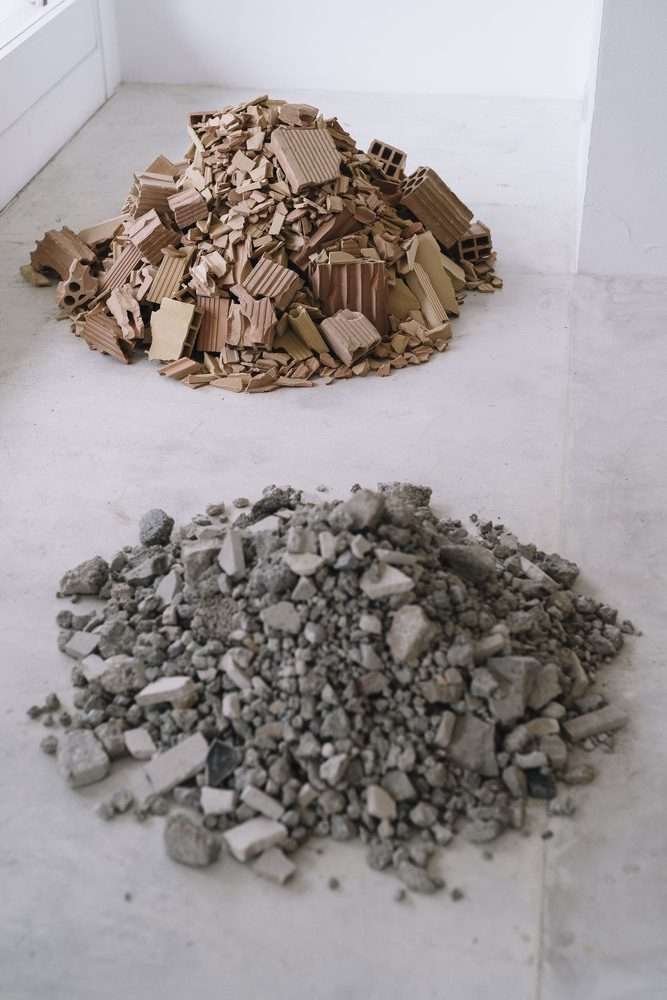
Loop took on the challenge of developing a new material based on a mixture of pre-existing ceramics from “Ladrillerias Mallorquinas”: hydrated mortars.
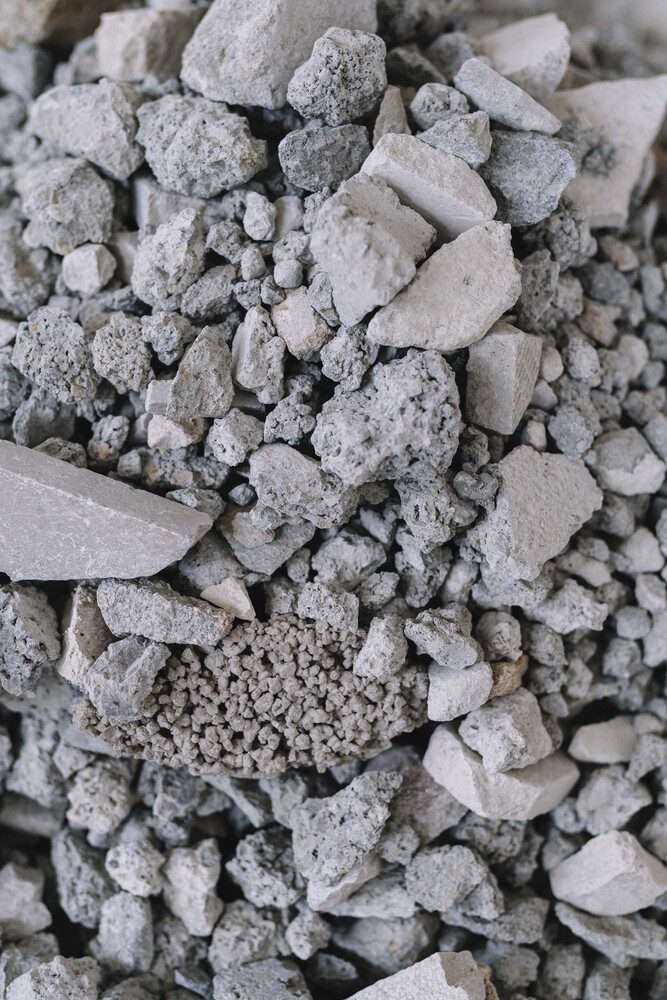
The process combines ceramic waste and recycled stone using a natural,
low-impact cement that produces a hygroscopic material capable of attracting and trapping water from the environment.
Sustainability: Incorporating reused local materials
The first steps of the project aimed to understand the position of the island on environmental issues.
According to Pau de Vilchez Moragues (UIB),
the exponential increase in fossil fuel consumption is closely related to how we understand economics and manufacturing processes.
This means, among other things, rethinking our production system.
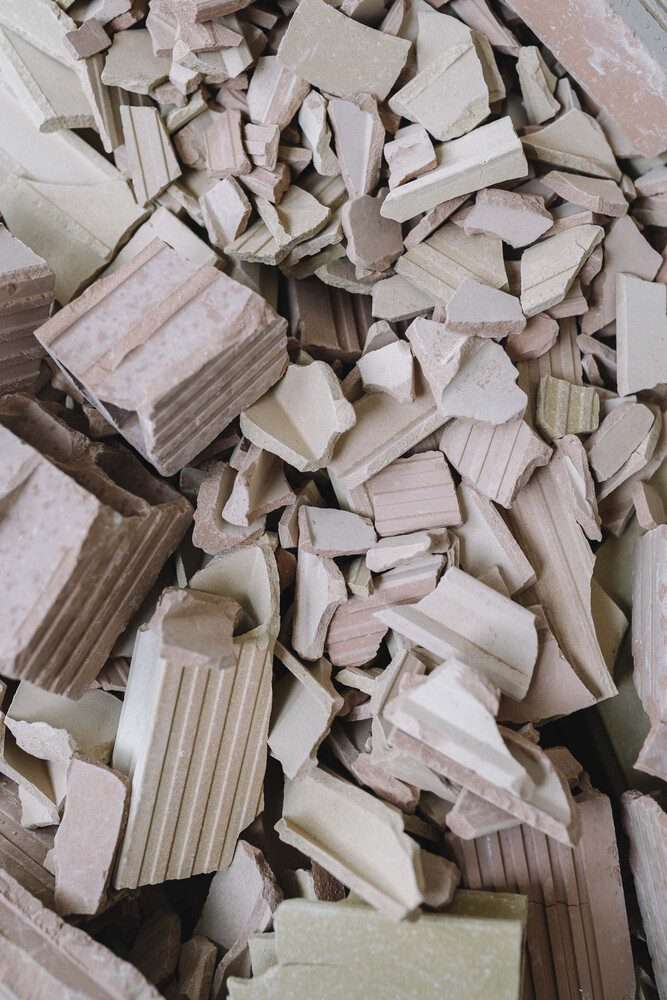
With this in mind, the Loop gives a second life to waste created from the 250,000 tons per year of material produced by “Ladrillerias Mallorquinas”.
With the aim of achieving a circular economy – extending product life – and respecting the concept of “0 km materials”,
all materials used are sourced locally in Mallorca.
While encouraging the use of local products,
0km’s architecture approach incorporates sustainable solutions
that reduce the need for transportation and are linked to the island’s identity.
And because the new mortar is composed of a high percentage of masonry materials with an almost zero carbon footprint,
Combined with other ceramic products reused without further processing,
the material’s overall carbon footprint has a low environmental impact.
Manufacturing Process: Fostering Multidisciplinary Solutions
Before choosing ceramics as the main material, a multidisciplinary process –
Integrating architects, designers, researchers and businesses – by analyzing industry waste production,
characterizing its diverse products and capabilities.
The project chose a product that follows the identity of the island: “Boveda Mallorquina”.
After separating the selected product from the rest of the waste,
a new life was given to the product, which had a spontaneous and warm aesthetic,
and was adaptable to different styles.
In order to achieve the goal of the final product,
the process studied the relationship between ceramics and stone materials as compatible aggregates.
and natural cement as a low-impact binder.
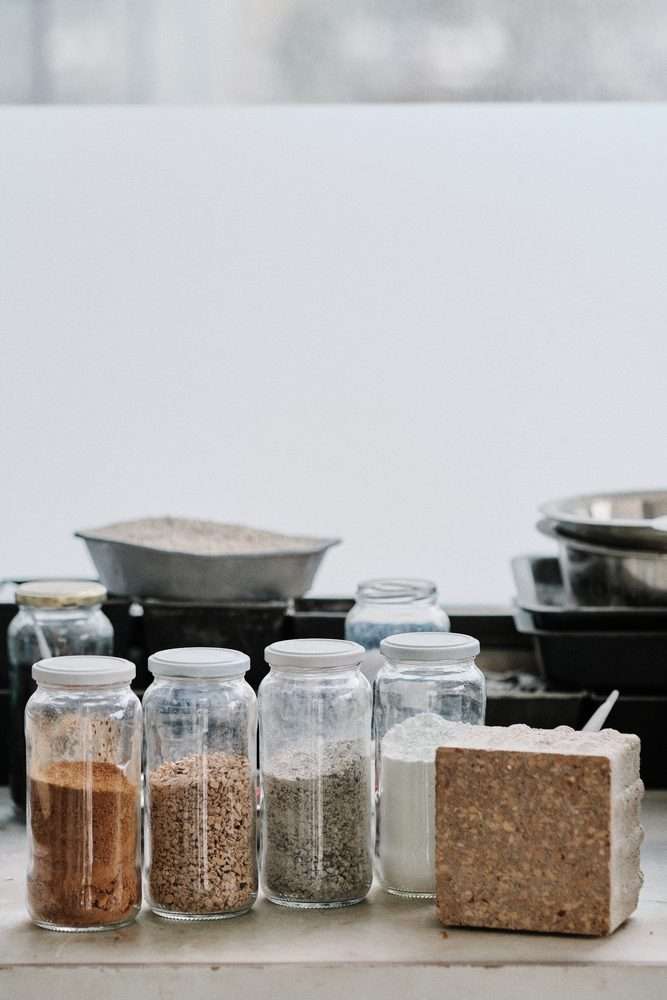
Material composition: ceramic and white cement
Hydrated mortar consists of 85% recycled crushed ceramic with recycled stone and 15% stabilized white cement as a low impact binder.
Due to its hygroscopic state, the obtained product acts as a water filter and regulates the humidity of the environment.
The result: one material, endless possibilities
The process produced an aggregate with high hygroscopic properties,
with adaptable resistance to different types of uses such as masonry, construction and renovations.
Since the use of ceramics limits the structural performance of paving stones for heavy traffic and loads,
The project decided to focus on paving pedestrian networks, bicycle lanes,
non-motorized roads and green spaces as an alternative to asphalt in cities.
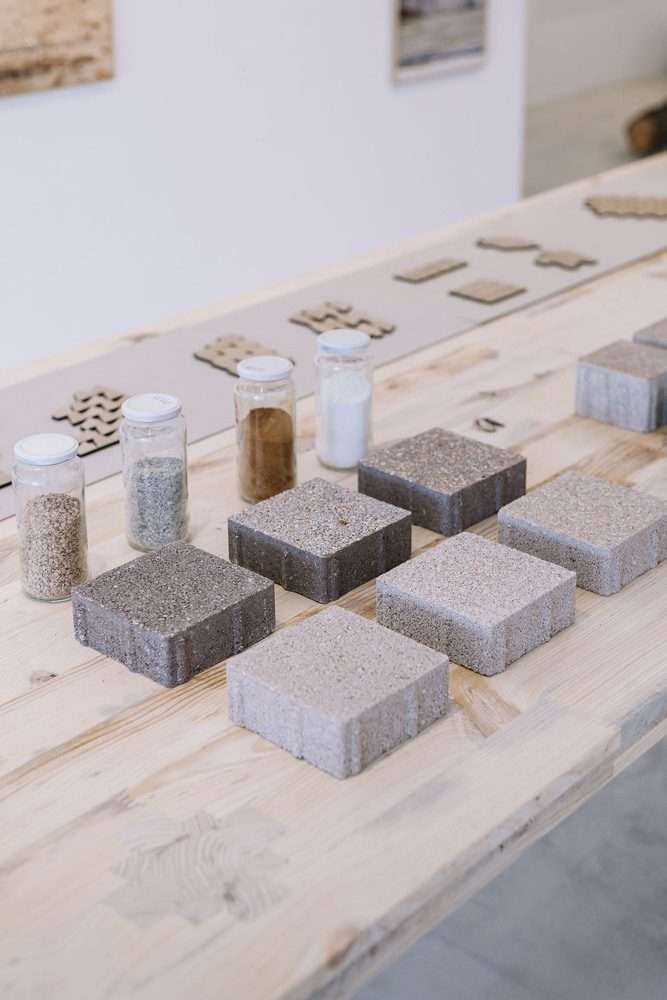
According to Loop, its hygroscopic and draining properties allow water to seep naturally into the ground,
or capture and keep in the lower layers for later reuse or control of drainage,
creating a relationship with the natural environment.
The design process established three units within which each future project could arrange an infinite number of possibilities.
Depending on the style of the project, architects and designers can play with abstract and structured patterns,
all of which come from just three physical units.
Team members and collaboration
As an initiative of the Institute for Business Innovation of the Balearic Islands (IDI), the Loop Project,
by creating hygroscopic mortars as part of its new generation of products that encourage the use of innovative and sustainable material solutions.
Research on the use of domestic waste materials of inorganic origin is a collaboration with the Architectural and Building Engineering Construction Research Group (UIB/FUEIB).
Industrial research and development has also been done in collaboration with “Pavimentos Lloseta”,
While the raw materials were obtained from “Ladrilerias Mallorquinas” and “Pavimentos Lloseta”.
For more architectural news