Indiana’s Oldest Theater Gets $15M Expansion After 155 Years of Reinvention

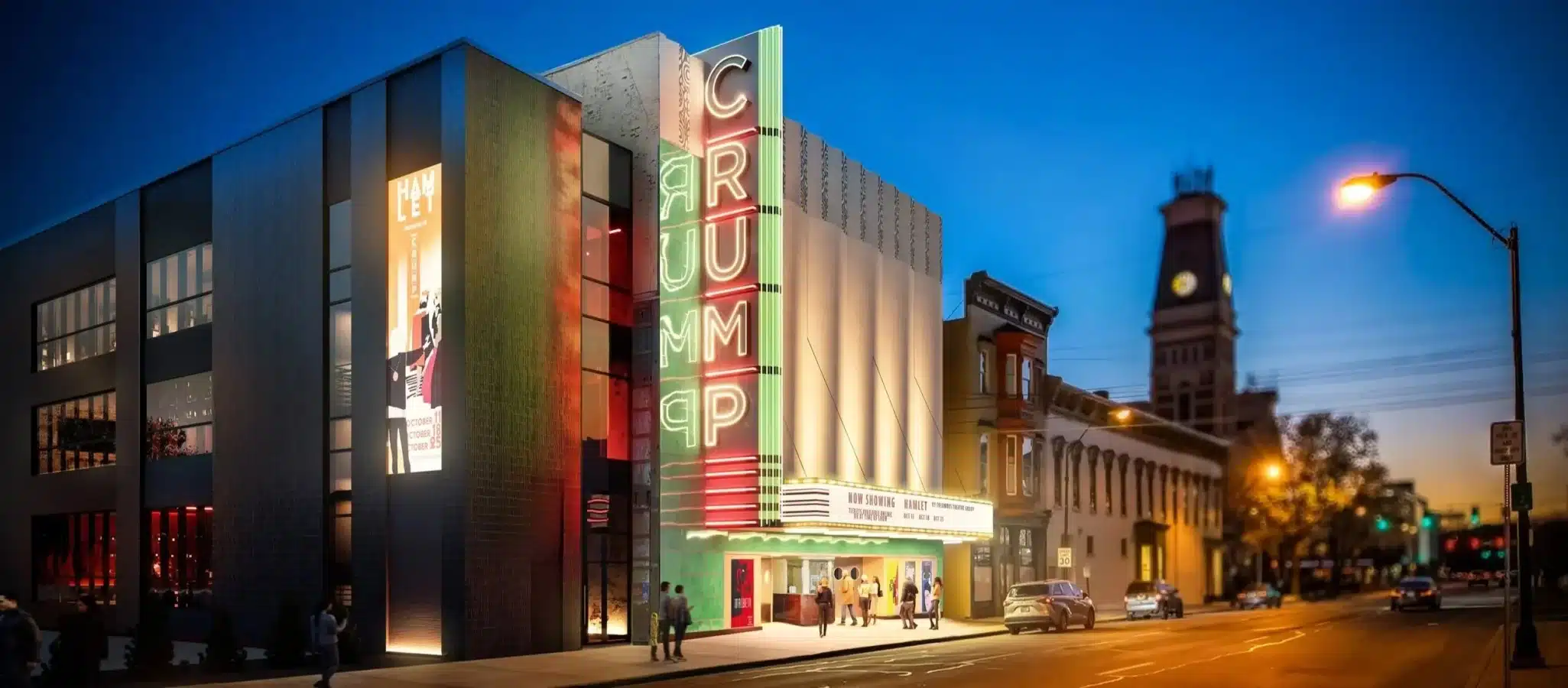
Indiana’s oldest operating theater will undergo a major expansion and restoration. The Crump Theatre in Columbus has released schematic designs for an eastern wing addition. Construction could begin by late fall 2026, targeting $15 million for the project.
Historic Building Reveals Layered Past Through New Design
The expansion adds a new wing east of the existing building on 3rd Street. However, the project does more than add space. The design exposes 155 years of architectural history embedded within the structure. The theater began as Keith’s Arcade in 1871, a two-story commercial block with three arched openings.
Moreover, the building transformed into an opera house in 1889 with nearly 2,000 seats. By 1920, movie projectors replaced the stage. The iconic art deco facade appeared in 1941, featuring jade green vitrolite panels and a 45-foot blade sign. Each transformation buried the previous version but left the original 1871 walls intact.
Eastern Wing Balances Old and New Materials
The new design steps back behind the 1941 facade to avoid competing with the historic blade sign. Inside, the eastern lobby corridor runs between exposed original brick from 1871 and new glazed brick walls. Building materials from different centuries face each other across the same space. Uplighting illuminates the historic brick from below while cove-lit ceiling curves guide visitors forward.
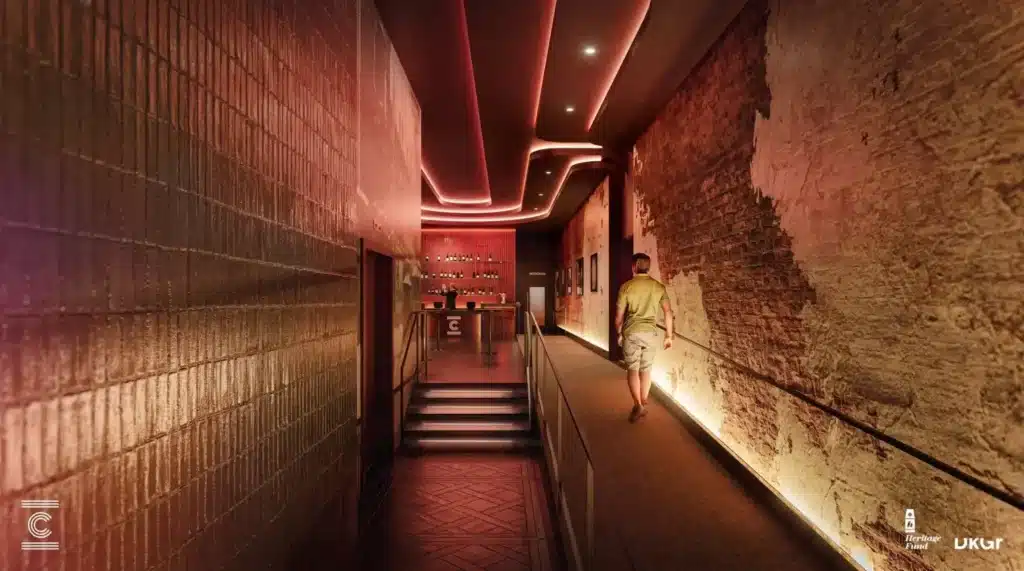
The main hall will accommodate 750 to 800 seats with a restored balcony and contemporary accessibility features. Therefore, the expansion targets both preservation and modern functionality. The capital campaign includes $3 million for an operating endowment beyond construction costs.
Theater Survived Decades of Decline Before Reopening
The Crump nearly disappeared multiple times. Fire damaged neighboring buildings in 1978, but the theater survived. Suburban multiplexes killed the business by the 1980s. The doors locked in the late 1980s and demolition bids went out in 1987. Nevertheless, preservation efforts kept the structure standing through volunteer work and minimal budgets.
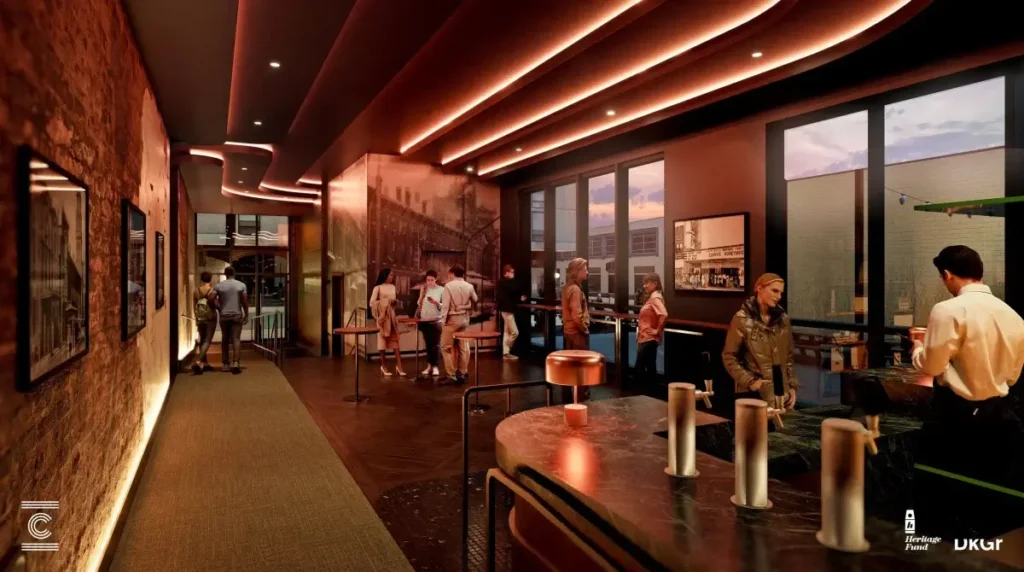
Volunteers cleaned out the mothballed theater starting in 2019. The doors reopened by 2023 after installations from Exhibit Columbus transformed the space. Landmark Columbus director Richard McCoy noted that preservation here adapts the past for future use rather than freezing it. Meanwhile, the new architecture makes that adaptation visible by exposing historical layers alongside contemporary interior design elements.
A Quick Architectural Snapshot
The Crump expansion demonstrates how adaptive reuse can honor historic buildings while serving modern cities. The project makes 155 years of transformation legible through deliberate material choices. Visitors will walk between centuries as the architecture reveals rather than conceals its accumulated history.
✦ ArchUp Editorial Insight
The Crump expansion emerges from a specific economic equation. Small cities cannot compete with metropolitan performing arts centers for touring productions. However, they can offer something larger venues cannot: historical authenticity combined with community ownership. The decision to expose the 1871 brick wall alongside new construction signals this strategy clearly.
The 30-year delay between preservation promises and actual drawings reveals funding realities. Heritage theater projects require patient capital and operational endowments rather than construction budgets alone. The $3 million endowment target alongside $15 million in building costs reflects hard lessons from failed theater revivals nationwide.
Moreover, the stepped-back design acknowledges that historic facades carry more economic value than new ones in heritage tourism markets. The architecture serves as legible investment rather than artistic statement.
This project is the logical outcome of heritage tourism economics, failed multiplex competition, and three decades of volunteer labor creating sufficient community buy-in for capital campaigns.