Curved Geometries Shape Wonderland Elementary School by JFAK: A Sustainable & Engaging Learning Space

John Friedman Alice Kimm Architects (JFAK) has reimagined early childhood education with their innovative design for Wonderland Elementary School in Los Angeles. The project introduces a sculptural, environmentally responsive addition featuring two new classrooms, support spaces, and dynamic outdoor learning areas. Designed for an existing hillside public school, the structure blends curved geometries, natural light optimization, and sustainable principles to create an inspiring space for young learners.
This article explores the architectural highlights, sustainability features, and educational benefits of JFAK’s design, demonstrating how thoughtful architecture can enhance learning experiences.
A Harmonious Blend of Form and Function
1. A Sculptural Yet Restrained Exterior
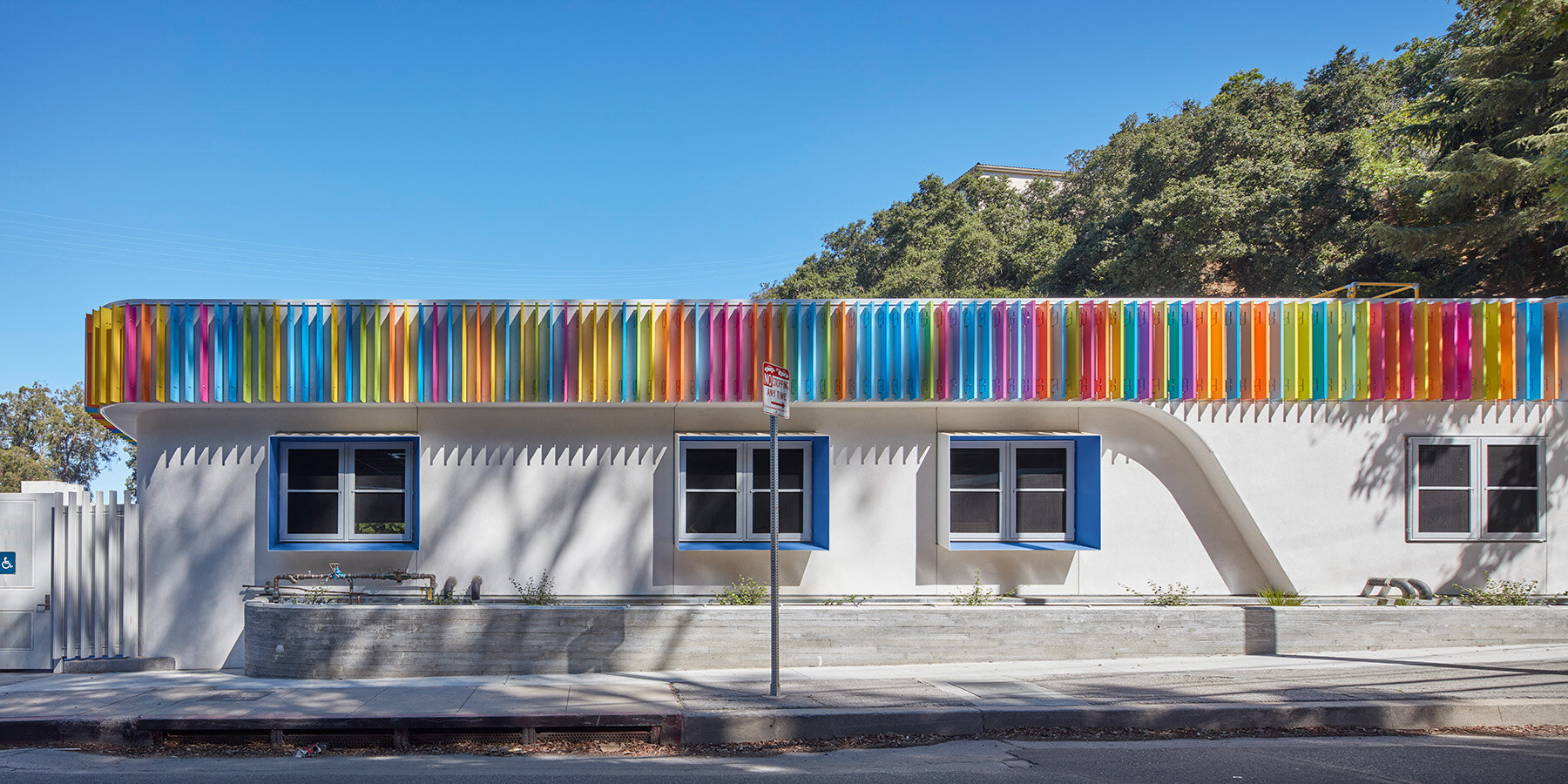
The new kindergarten addition presents a minimalist façade to the surrounding residential neighborhood, ensuring visual harmony. However, the building’s exterior comes alive with:
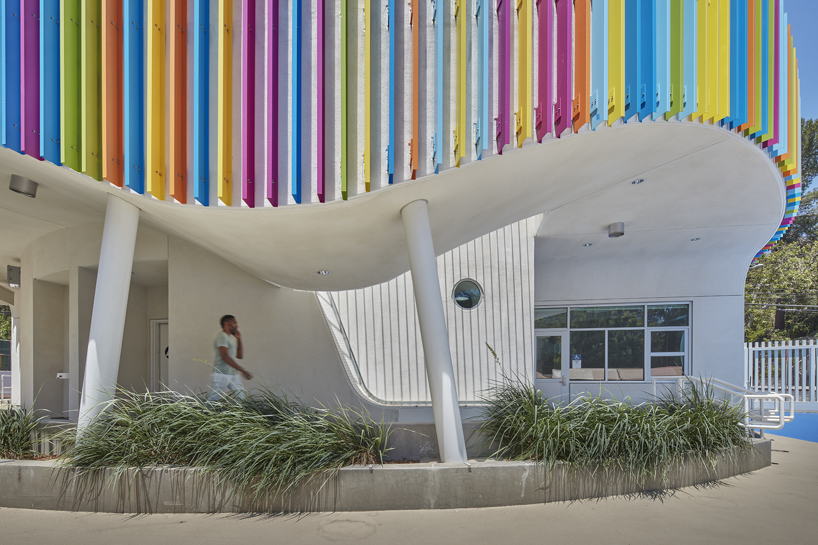
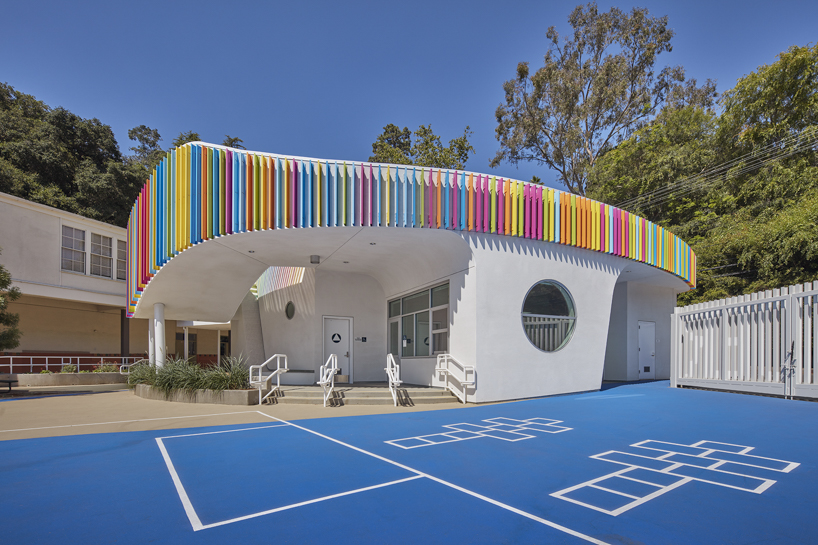
- Colored louvers that provide sun shading while adding playful visual interest.
- A curved, dynamic form facing the school campus, creating spatial excitement for children.
- A large roof overhang that extends outward, forming a semi-sheltered outdoor zone for gatherings and learning activities.
This dual approach—restrained from the outside, vibrant on the inside—ensures the building fits its context while fostering creativity within.
2. Curved Geometries Enhancing Spatial Learning
Research shows that varied spatial environments stimulate cognitive development in young children. JFAK’s design embraces this concept through:
- Undulating walls and rounded corners, which soften the space and encourage movement.
- Multi-level seating areas beneath the extended roof, scaled for small learners.
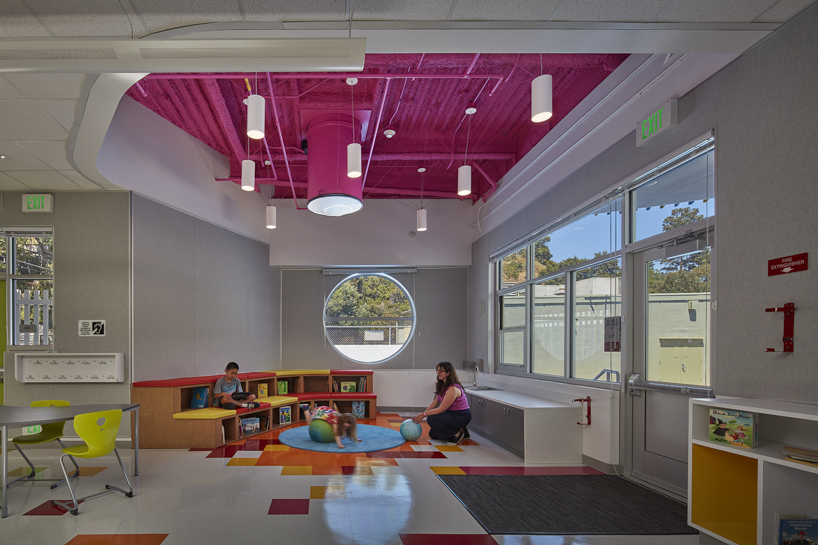
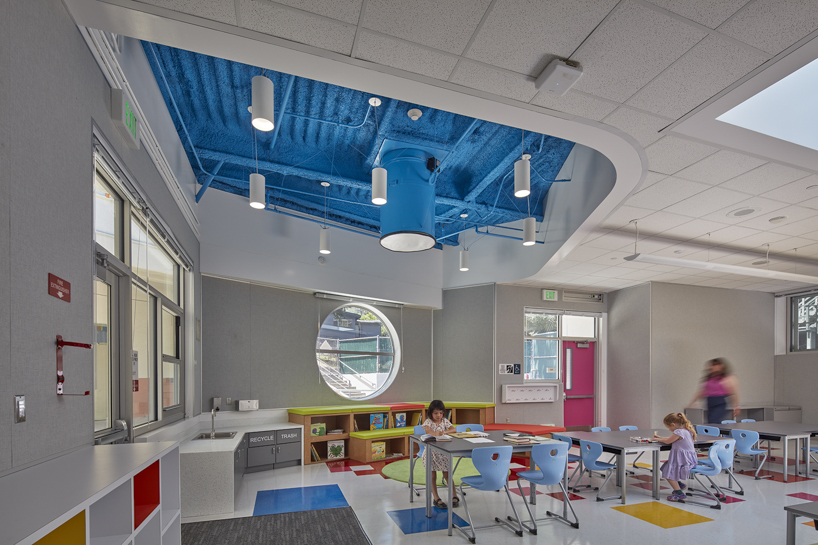
- Integrated reading nooks and custom storage units, making the space both functional and inviting.
These elements create a “wonderland” effect, where every corner offers a new discovery.
Sustainability & High-Performance Design
3. Meeting CHPS Verification Standards
The project adheres to the Collaborative for High Performance Schools (CHPS) criteria, ensuring energy efficiency and healthy indoor environments. Key features include:
- Optimal classroom orientation for maximum natural daylight.
- Controlled views toward the campus, neighborhood, and nearby wooded areas, connecting students with nature.
- Exposed mechanical and structural systems, turning building infrastructure into a learning tool.
4. Natural Light Strategies for Energy Efficiency
To minimize artificial lighting, JFAK incorporated:
- Large skylights and solar tubes, flooding interiors with daylight.
- A central roof aperture with colored polycarbonate fins, casting ever-changing colored light patterns.
- Partial ceiling openings, allowing glimpses of the building’s inner workings.
These strategies not only reduce energy consumption but also create a visually stimulating environment that evolves throughout the day.
Outdoor Learning & Community Engagement
5. Blurring the Line Between Indoors and Outdoors
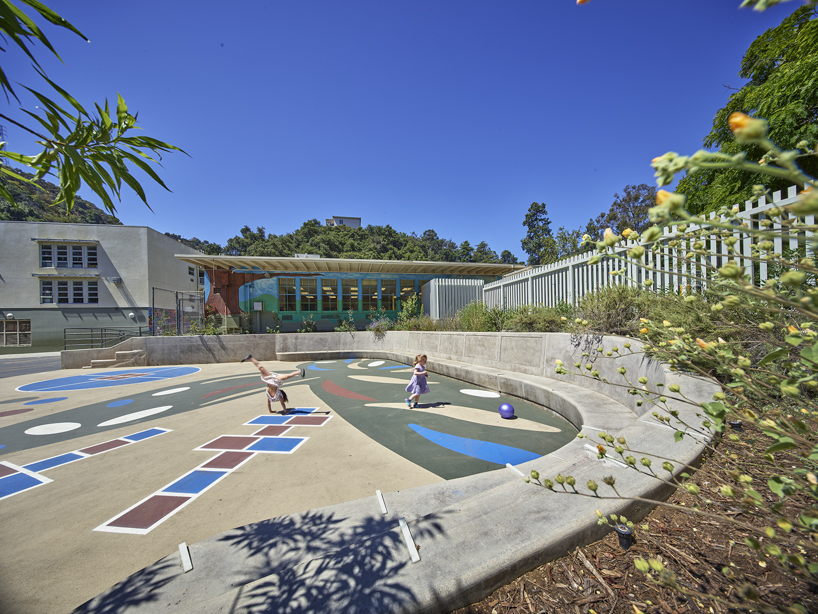
Recognizing the importance of outdoor play in early education, the design includes:
- A semi-covered outdoor zone for all-weather activities.
- Shaded gathering spaces under the roof overhang.
- Landscaped areas that encourage exploration and interaction with nature.
6. A Space That Grows With Its Users
The flexibility of the design ensures that the school can adapt to different teaching methods, including:
- Group learning circles in open areas.
- Quiet, focused zones for reading and individual work.
- Interactive outdoor classrooms for hands-on learning.
Conclusion: Where Architecture Meets Education
JFAK’s Wonderland Elementary School addition is more than just a building—it’s a carefully crafted environment that nurtures curiosity, sustainability, and community. By blending curved geometries, natural light, and eco-conscious design, the project sets a new standard for early childhood learning spaces.
For architects, educators, and parents alike, this project serves as a case study in how thoughtful design can shape the future of education.
Catch up on the latest projects, trends, and bold ideas in the world of “architectural” content on ArchUp.