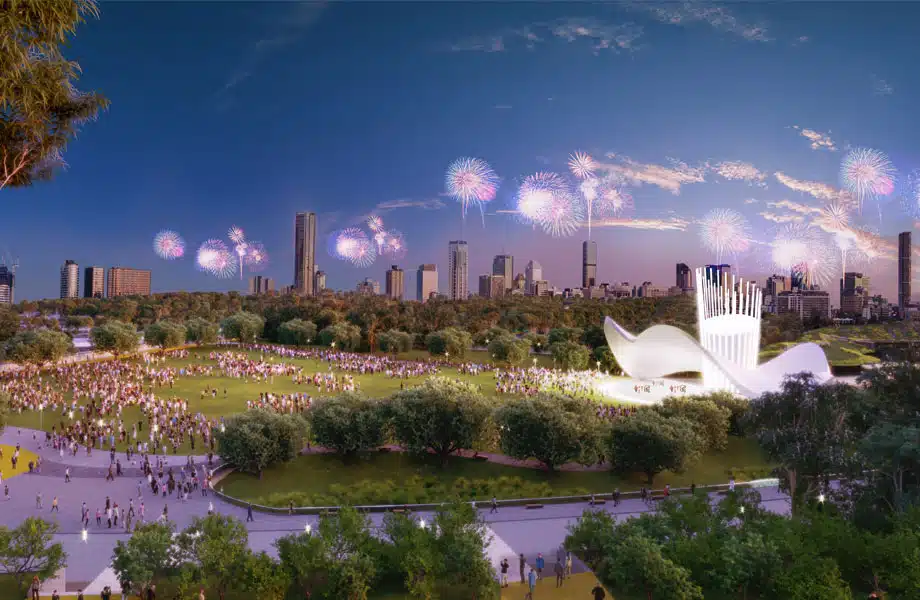
Dana Bay Waterfront Development in Saudi Arabia

The Dana Bay development waterfront in Saudi Arabia occupies 2.8 million square meters of coastal land in the Eastern Province. This large scale mixed use project aligns with national tourism goals under Vision 2030, integrating residential units, leisure facilities, and hospitality zones into a single masterplan. It functions as a strategic spatial intervention in domestic tourism planning, reflecting broader efforts to reshape leisure infrastructure and reinforce policy-driven urban expansion along the Kingdom’s coastline.

Design Concept
The masterplan follows a linear layout along the shoreline. It separates private residential clusters from commercial and entertainment zones. Beachfront villas and family chalets prioritize sea views. Dana Walk functions as the main pedestrian promenade with shops and cafes. Gender segregated amenities, such as the women only Loopagoon water park, reflect localized social norms. This approach mirrors trends seen in other cities where leisure infrastructure adapts to cultural frameworks.

Materials & Construction
Public details on material specifications remain limited. However, the scale suggests extensive use of reinforced concrete and marine-grade steel. These choices align with typical regional practices for coastal construction. The marina and shoreline structures likely rely on durable building materials to resist salinity and humidity. Structural resilience will depend more on engineering than architectural innovation. Future upgrades may reveal more about material strategies.

Sustainability
No official data confirms integration of renewable energy, water recycling, or biodiversity protection. The low density sprawl raises concerns about land efficiency in a water stressed region. The project lacks certification under known sustainability frameworks like LEED. Environmental performance will hinge on operational policies rather than foundational design. Past large-scale leisure developments often face similar gaps, as documented in the archive.

Urban Impact
Dana Bay sits on privately controlled coastline with limited public access. It does not connect directly to regional transit or adjacent urban zones. This model favors consumption based tourism over civic integration. Similar precedents appear in global cities where enclaves operate independently from municipal fabric. Employment opportunities may arise, but long-term urban cohesion remains unclear. Project updates may appear in future news coverage.
Will Dana Bay become a shared coastal asset or remain a curated circuit for domestic tourism?
Architectural Snapshot: Dana Bay is a 2.8 million square meter privately developed mixed use waterfront project in Saudi Arabia’s Eastern Province, featuring segregated leisure zones, a marina, and low density residential clusters oriented toward experiential tourism.
✦ ArchUp Editorial Insight
The Dana Bay waterfront development in Saudi Arabia frames tourism as urban policy, wrapping mixed use leisure within Vision 2030 rhetoric. Its 2.8 million square meter footprint prioritizes controlled access over public integration, embedding gender segregated zones like Loopagoon as spatial norms rather than contested choices. Architecturally, it avoids risk relying on familiar typologies of villas, promenades, and marinas while marketing experience as innovation. Yet its scale and coastal claim demand scrutiny: is this placemaking or privatized shoreline consumption? One credit: it forces a conversation about who owns the coast. Whether Dana Bay will be remembered as a milestone or a mirage depends less on design and more on who gets to walk its beaches.