

- This event has passed.
Berlin Design Week 2026
May 4 @ 8:00 am - 5:00 pm
Overview
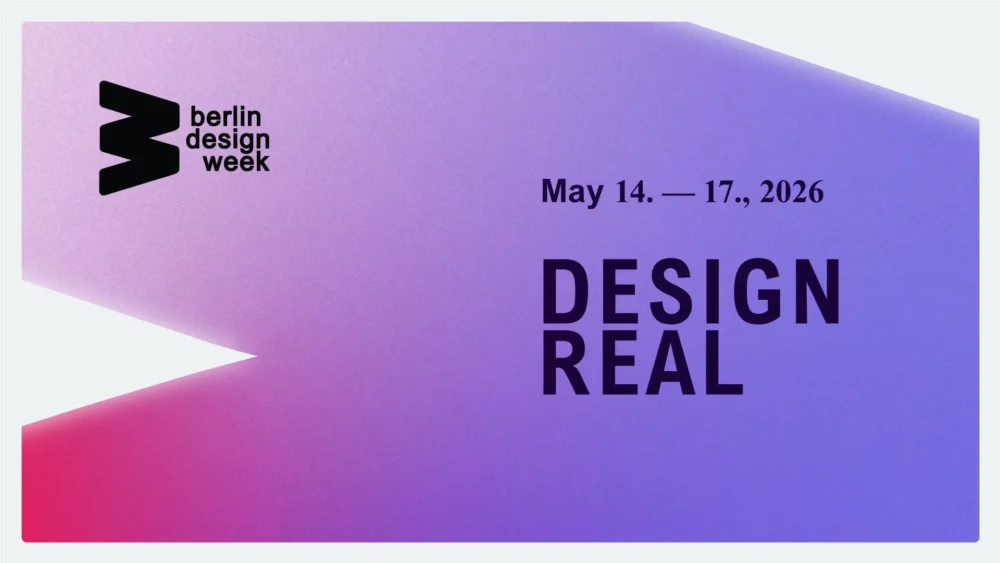
Berlin Design Week is an annual citywide design festival held every spring in Berlin, Germany. The 2026 edition runs from May 28 to 31, organised by state of DESIGN GmbH, and belongs to the fields of product design, interior design, architecture, communication design, material research, spatial design, and design education. It is one of the most geographically distributed design weeks in Europe, spanning over 30 satellite locations across the city alongside a central hub.
Focus
The 2026 edition is themed DESIGN REAL, framing design as a force that is simultaneously aesthetically sophisticated and solution-oriented. The theme positions design as a discipline that must address real-world problems rather than operate purely as a cultural or commercial display. The festival draws a distinction between design that looks good and design that does something, and structures its programming around that tension.
For those tracking how design weeks are evolving beyond trade fair formats into platforms for critical discourse, ArchUp’s coverage of Milan Design Week 2025 and its curatorial shifts offers a useful comparative frame on how European design festivals are renegotiating their purpose.
Program
The festival opens on May 28 with Berlin Design Night, a citywide evening where studios, galleries, agencies, and showrooms across Berlin open their doors simultaneously to the public. This includes open studios at BARTMANN, GOLEM Baukeramik, PIROL Studios, and FABIAN FREYTAG STUDIO, alongside curated neighbourhood tours through Kreuzberg South and Friedrichshain covering lighting design, sustainable materials, and typography.
The Berlin Format on May 29 is a high-level conference at which brand strategy, design research, keynote talks, and panel discussions converge. The keynote speaker is Tom Dixon. The conference includes a session titled From Strong Design to a Strong Design Brand with Philipp Mühlebach of Design Bridge and Partners and David Wendt. Day and combination tickets are available for The Berlin Format separately from general festival access.
On May 30 and 31, the Design Pool at PLATTE.BERLIN functions as a curated fair combining market, exhibition, and meeting place, presenting small-series furniture, interior products, and fashion directly to a professional and public audience. This runs alongside the Main Hub at M60 Macherei in Kreuzberg, which serves as the festival’s primary gathering point.
Architecture-specific programming includes Architecture Icons: Jasper Architects, a talk by Martin Jasper on May 28 examining practice beyond context. The exhibition Design in Wartime presents nineteen projects by Ukrainian and Austrian students addressing spatial and social challenges under wartime conditions, organised in collaboration with the Austrian Cultural Forum Berlin, TU Wien, and Polytechnikum Lwiw. The exhibition 2051 (Everything Turned Out Rather Well) by Whitecliffe University imagines design futures in a world that has navigated ecological and social collapse. For those following how design and architecture engage with conflict and climate, ArchUp’s analysis of sustainable urban design and its social dimensions provides a relevant frame for the political and ecological threads running through the 2026 programme.
“DESIGN REAL stands for design in all its power: aesthetically sophisticated and solution-oriented. Design that is not only beautiful, but solves real problems and brings about real change.”
Other notable events include UDK x ERCO: Hands-On Light, an exhibition of 15 lighting prototypes developed by UDK Berlin’s Product Design Master Programme in collaboration with ERCO; Piccolo Mondo at the Budapester Salon, exploring the theme of surfaces through works by architects and designers; and Urban Signals by Neuendorf Arterior, a furniture collection examining how visual codes in urban environments shape human behaviour. Those tracking how lighting design is evolving as a spatial discipline will find a direct reference in ArchUp’s coverage of lighting in interior design and its role in shaping space.
Audience
The festival is open to the general public, with specific events, conferences, and ticketed sessions aimed at design professionals, architects, brand strategists, researchers, students, and international design industry players. The festival explicitly targets both the European design industry and the next generation of designers.
Event Details
| Dates | May 28 – 31, 2026 |
| Main Hub | M60 Macherei, Kreuzberg, Berlin, Germany |
| Event Type | Citywide Design Festival, Conference, Fair, Exhibitions, Open Studios, Tours |
| Satellite Locations | 30+ locations across Berlin |
| Access | Most events are free and open to the public. The Berlin Format conference requires a separate ticket. |
| Fees | Berlin Design Night (May 28): Free, open to the public across all locations Design Pool (May 30 – 31): Free entry Satellite exhibitions and showrooms: Free entry at most venues The Berlin Format (May 29): Day tickets and combination tickets available — check berlindesignweek.com for current pricing Individual ticketed events (workshops, curated tours): pricing varies per event, listed at berlindesignweek.com/en |
✦ ArchUp Editorial Insight
The DESIGN REAL theme positions Berlin Design Week against a version of design that is either decorative or speculative without consequence. This is a useful provocation in a festival landscape that has grown comfortable with staging future scenarios and material experiments without connecting them to how things are actually made and used. The festival’s distributed format, with 30-plus satellite locations across the city, remains its most distinctive structural feature: it turns Berlin itself into the exhibition, which democratises access in ways that convention-centre formats cannot. The architecture and spatial design content in 2026 is more varied than in previous years, with the Design in Wartime exhibition introducing a geopolitical dimension that most design festivals avoid. Placing Ukrainian and Austrian student work addressing wartime spatial conditions within a Berlin design context is a programmatic choice with real stakes, not a decorative nod to current events. The Berlin Format’s keynote by Tom Dixon is a safer choice: Dixon is a reliable draw but represents an established industrial design culture rather than the edges of the DESIGN REAL argument. Whether the festival’s commercial infrastructure, including the Design Pool market and brand-sponsored showrooms, actively supports the DESIGN REAL premise or simply co-exists with it is the tension that Berlin Design Week has not yet resolved.
Closing Note
Berlin Design Week is one of the more programmatically honest design festivals in Europe. Its distributed format and mixed audience make it accessible without being populist, and its 2026 theme gives it a critical edge that the programme only partially delivers on. Its relevance to architects and spatial designers is growing, though it remains primarily a product and communication design event at its commercial core.
Related Events

Event Data Review Notice: Event information is collected and edited by ArchUp’s human Events Desk. Since 10 September 2026, Archive Data Agent, an AI-assisted verification account operating under the ArchUp Events Desk, has provided a secondary review layer to identify and correct routine human data-entry inconsistencies, including dates, schedules, locations, and currency conversions. Final editorial responsibility remains with ArchUp.