University of Limerick Student Centre: Space and Wellbeing

location and general concept
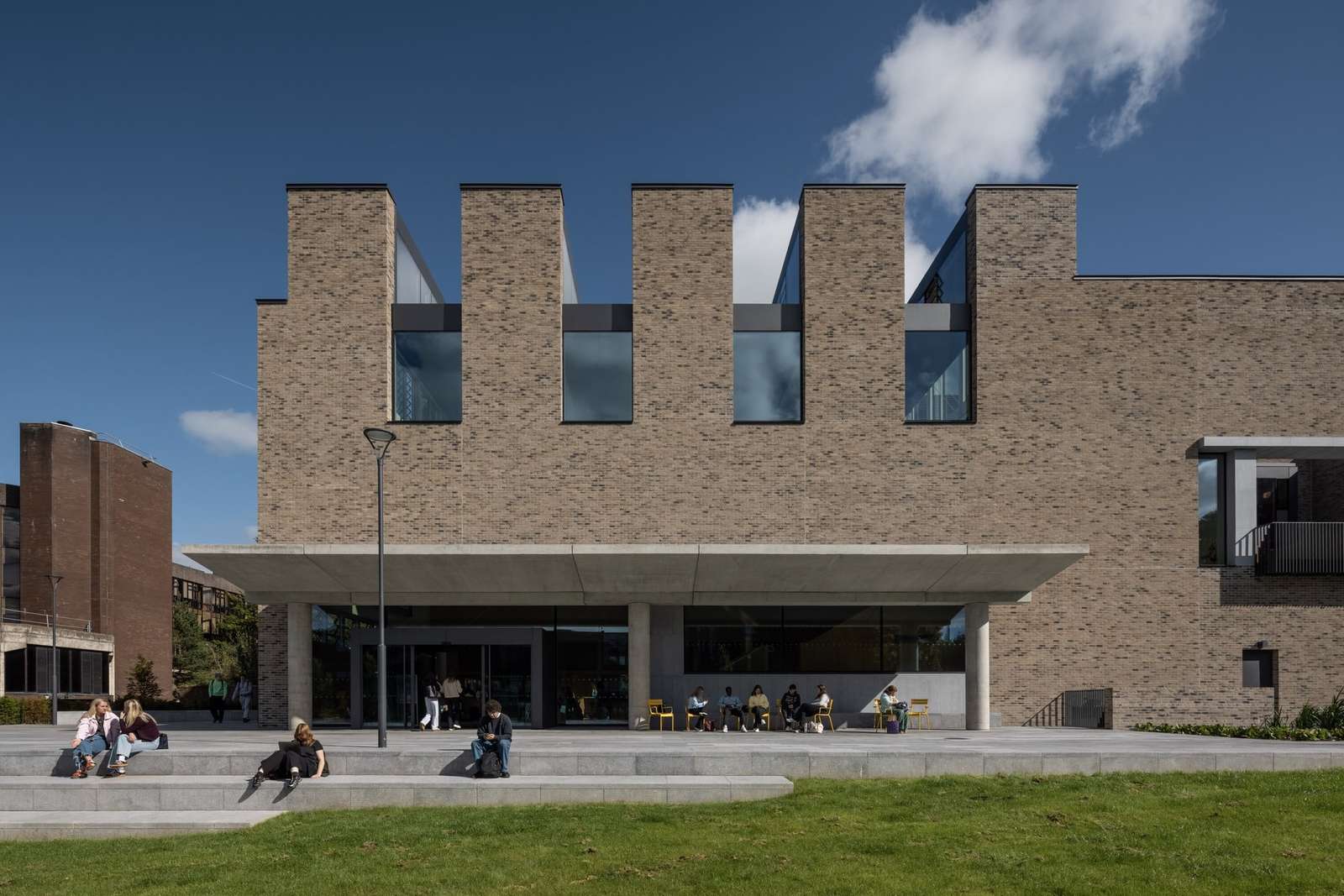
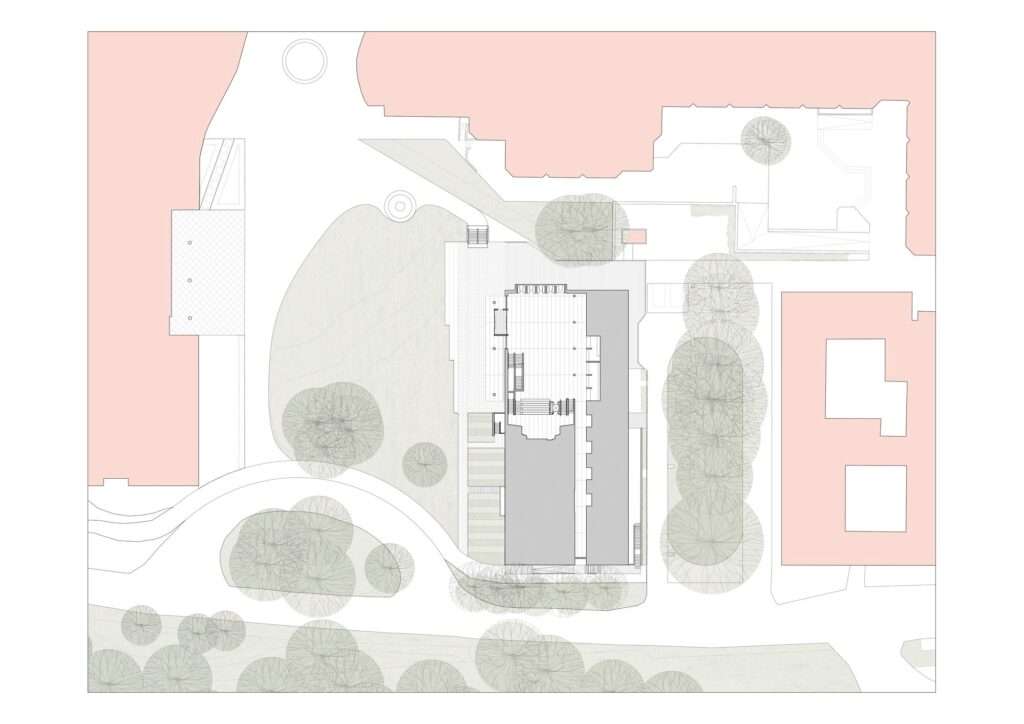
The new Student Centre for the Architecture of the University of Limerick is located at the campus gateway, in a site considered a primary entry point. The project responds to a vision aimed at strengthening the role of this place as a hub of university life, by providing social spaces that support gathering and the exchange of information between students and alumni. The project idea was first proposed in 2015 following consultations and a student referendum that approved funding for the Buildings development.
space and functional organization
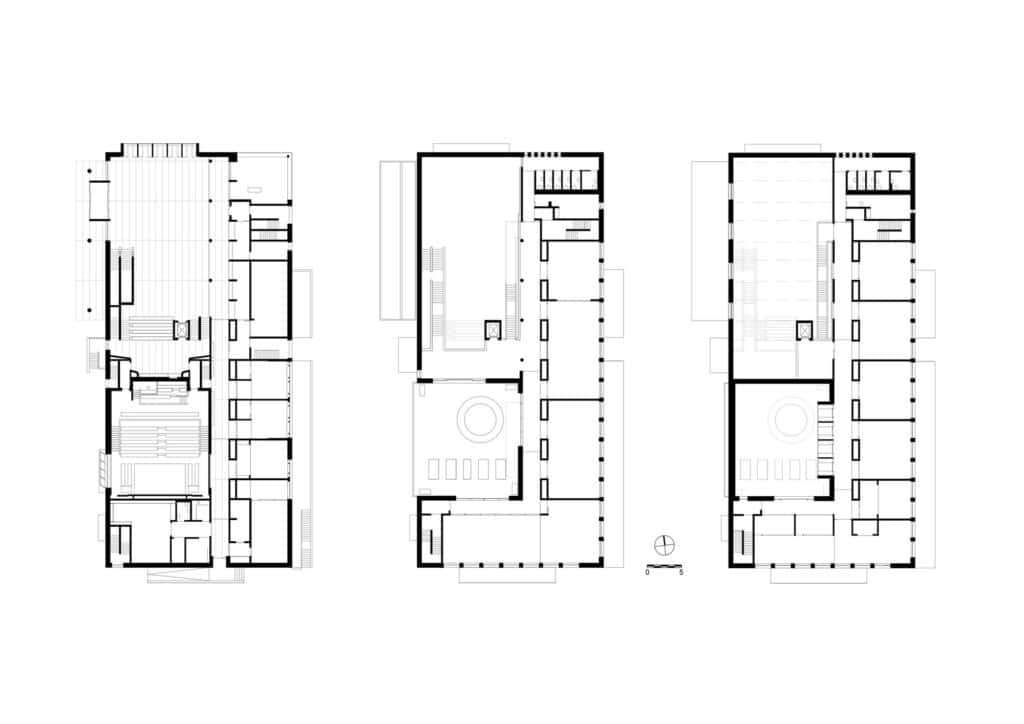
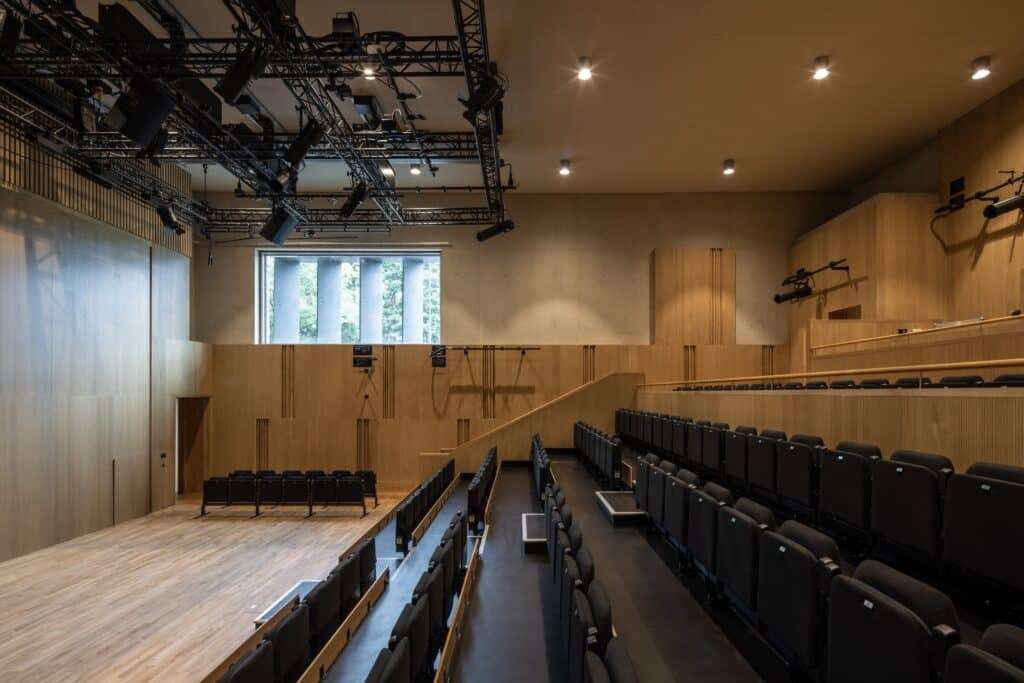
The building includes a set of large public spaces such as the foyer, the theatre, the courtyard garden, and multi-purpose meeting rooms. These spaces are concentrated on the western side of the building, while smaller meeting rooms and workspaces are distributed along the eastern and southern façades. This organization aims to achieve a functional balance between public and private activities within the building, integrating principles of Interior Design.
movement and future flexibility
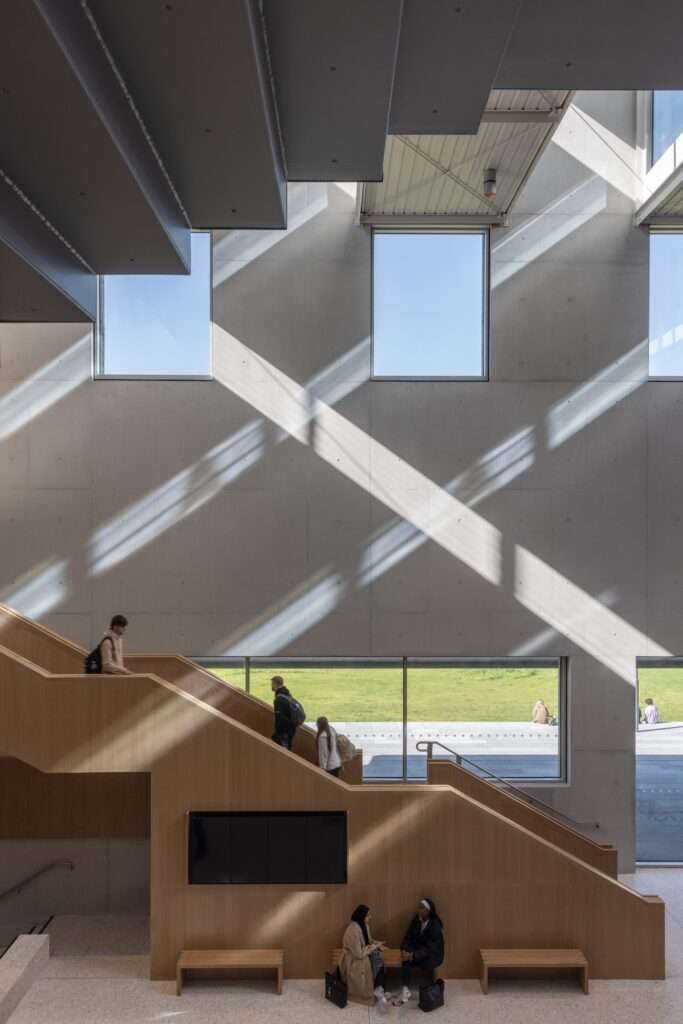
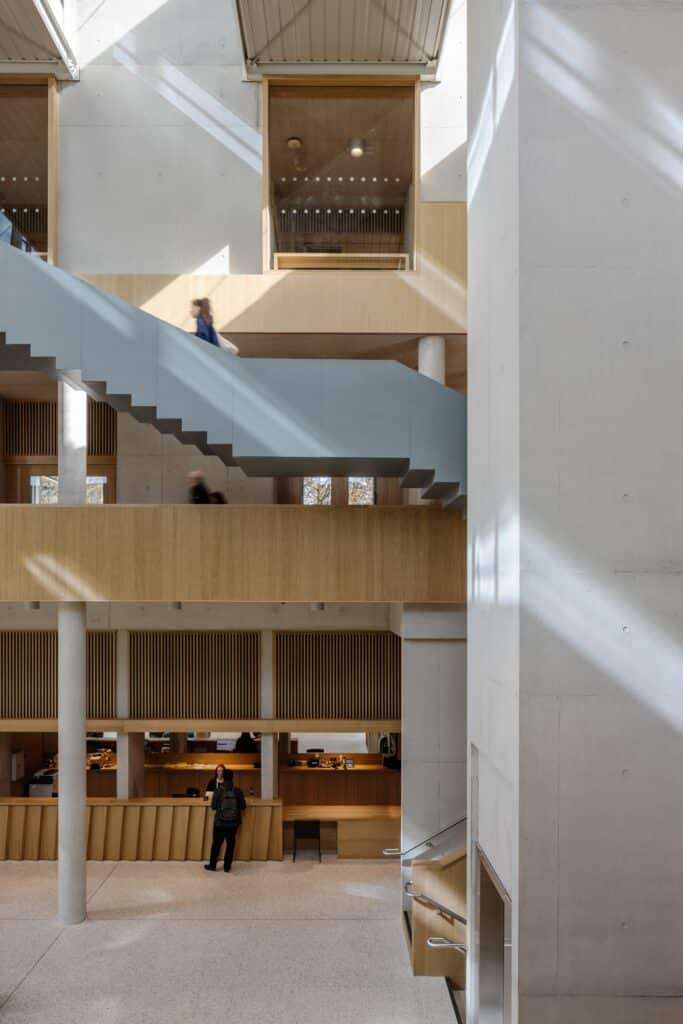
Circulation routes play a key role in shaping the user experience inside the building, as they are designed to encourage interaction, pauses, and spontaneous encounters. The staircases are also designed as informal social nodes that support communication. In addition, the distribution and spaciousness of the areas allow flexibility of use, enabling functions to be adapted in the future according to changing needs, a common theme in Research.
| Field | Details |
|---|---|
| Architects | Carr Cotter & Naessens |
| Area | 3500 m² |
| Year | 2025 |
| Photographs | Ste Muray |
| Category | Educational Architecture, University |
| Design Team | Cotter & Naessens |
| Country | Ireland |
mass and spatial formation
The rectangular mass of the building is understood as a solid volume that is carved out to sculpt the internal spaces, resulting in a variety of rooms and areas ranging from enclosed spaces to open-to-sky environments such as gardens. The sectional reading of the structure can also be interpreted as a distribution of major voids, including the foyer, the performance hall, and the rooftop garden equipped with skylights that allow the entry of light and air. In addition, smaller rooms dedicated to work, student activities, and meeting spaces are distributed throughout, with larger voids concentrated on the western side and smaller ones on the eastern side, showcasing innovative Construction techniques.
structural system and internal treatments
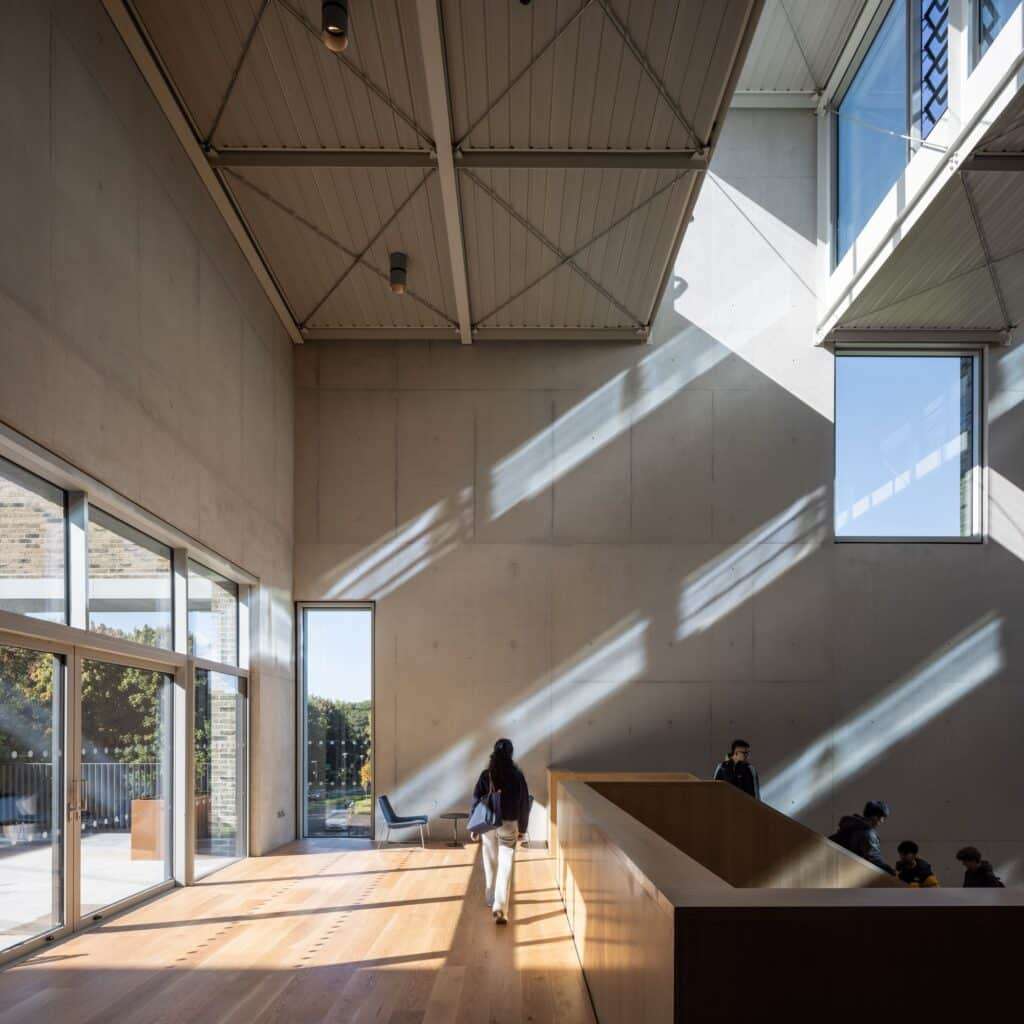
The structure consists of a reinforced concrete shell, exposed in certain areas or clad internally with oak wood to enhance acoustic performance. The structural system is further supported by a series of steel trusses that form the skylight openings, fitted with automated glass louvers that enable natural ventilation and smoke extraction when required. Detailed Material Datasheets were likely used for these components.
external envelope and contextual relation
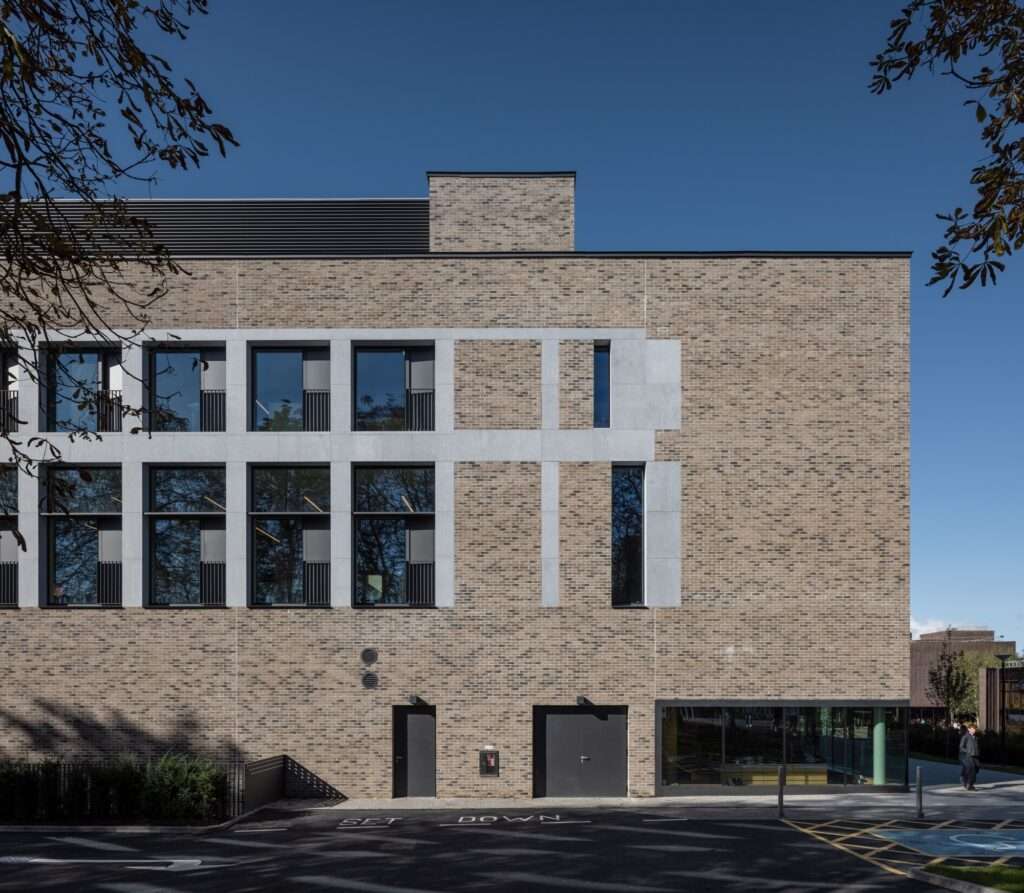
The external envelope is composed of solid brick that aligns with the overall material character of the campus buildings. Limestone elements have been integrated into the brick compositions to define and emphasize openings, creating a direct relationship between the façade treatment and the building’s structural configuration. This approach to Design ensures harmony with its surroundings.
visual experience and spatial organization
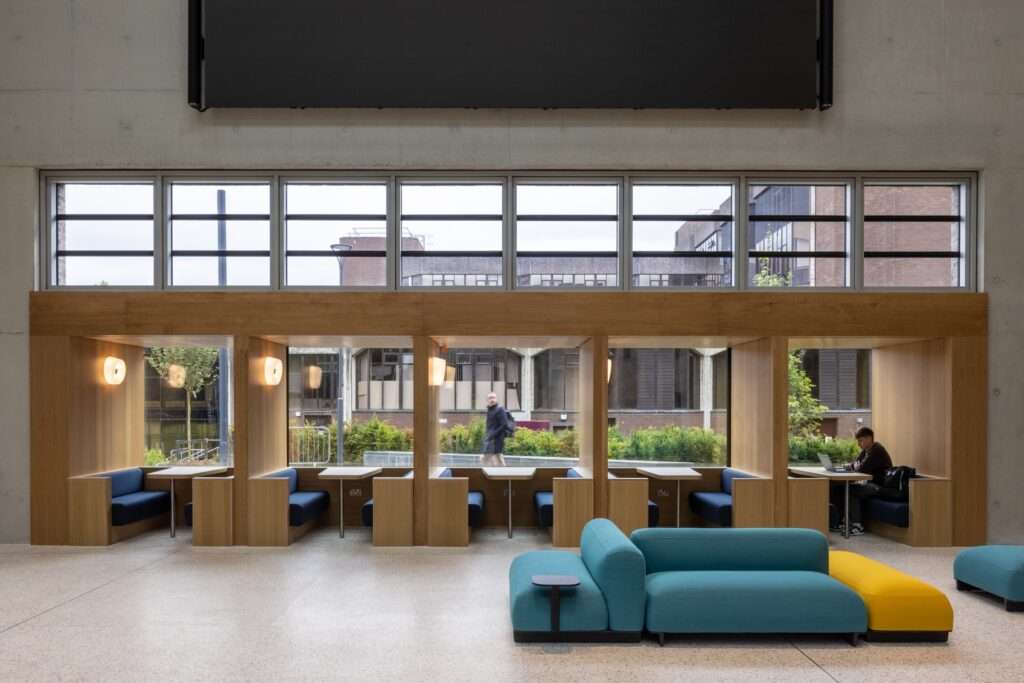
The interior experience of the building is defined by a simple material palette that contributes to a calm visual environment. Light, sound, and spatial qualities are gradually modulated, with the building becoming progressively quieter as users move toward the upper floors or deeper within the volume. Within this framework, small intimate spaces such as booths and seating rooms are juxtaposed with the large and more active main foyer, creating a clear gradient of activity levels. Similar innovative student spaces are often featured in Projects.
social and health considerations
The functional programme is guided by the concept of wellbeing-supportive buildings, with particular attention to providing environments suitable for neurodiverse students. This is achieved through the integration of quiet spaces, access to natural light and green areas, as well as the use of natural materials such as low-VOC wood. This approach aims to reduce sensory stimuli and enhance overall indoor environmental quality, a topic frequently discussed in Discussion forums.
sustainability and performance efficiency
The sustainability strategy is based on two main pillars: improving passive performance through material selection, massing control, and thermal envelope efficiency, alongside the integration of operational systems and technologies to manage energy consumption. The mechanical system relies on air-to-water heat pumps to provide heating and hot water, while photovoltaic panels on the roof generate up to 18 kW of electricity. The building achieved a BER rating of A3, with a primary energy consumption of 111.5 kWh/m²/year. Updates on such high-performance structures can be found in Top News.
✦ ArchUp Editorial Insight
The Student Centre at the University of Limerick operates as the product of translating a funding decision, derived from a 2015 student referendum, into an architectural asset within an institutional procurement framework. Its internal spatial distribution reflects a logic of institutional risk management through the separation of high-density gathering zones from smaller workspaces, achieving a gradient of operational intensity rather than an intent to shape an aesthetic experience. Circulation routes and staircases are transformed into behavioral regulatory structures aimed at increasing dwell time and informal interaction without raising operational costs. The envelope and structural system are tied to requirements for reducing life-cycle costs and complying with energy performance standards BER A3, where operational efficiency becomes a funding prerequisite rather than an environmental objective. Considerations of neurodiversity also emerge as a redistribution of sensory loads, reflecting institutional commitments to wellbeing policies. Ultimately, the building is embodied as a spatial compromise between budget constraints, the distribution of responsibilities, and usage expectations within a single university asset. For similar case studies, you can browse the Archive.