
Shoji House: Rethinking Compact Mobile Living

Philosophy of Use in Small Spaces
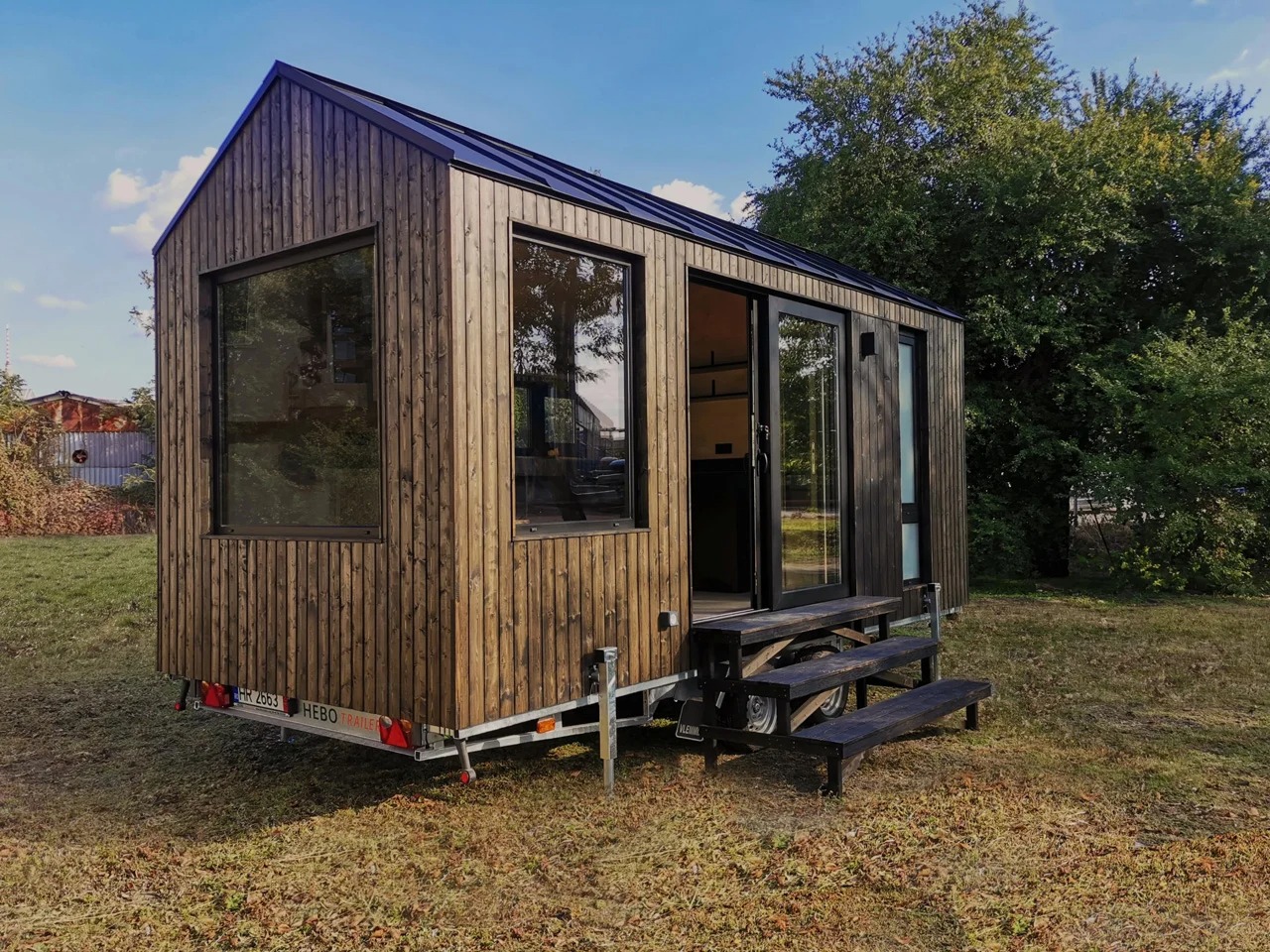
The Architecture of the Shoji home reflects a concept that goes beyond architectural form to propose a way of using space. The core idea revolves around reducing activities to only what is necessary, so that the void serves multiple functions such as rest, work, and communication. In this way, Design becomes a tool for organizing daily life rather than merely a container for it.
Spatial Composition and Physical Constraints
The project was completed in November 2022 in Brittany, France, with a limited area of approximately 12 square meters and a length of 5.5 meters. This size imposes clear constraints on the interior layout, pushing toward compact and flexible solutions. The installation of the unit on a dual-axle trailer also adds a dimension of mobility without altering the essence of the architectural composition.
Aesthetic References in the Design
The project’s name is linked to influences drawn from Japanese Architecture, particularly in terms of simplicity and the use of natural materials. These references appear in the clean lines and the deliberate treatment of space, where elements are reduced to a minimum. As a result, a balance emerges between mass and void, enhancing the sense of calm within a limited space.

Exterior Composition and Contextual Integration
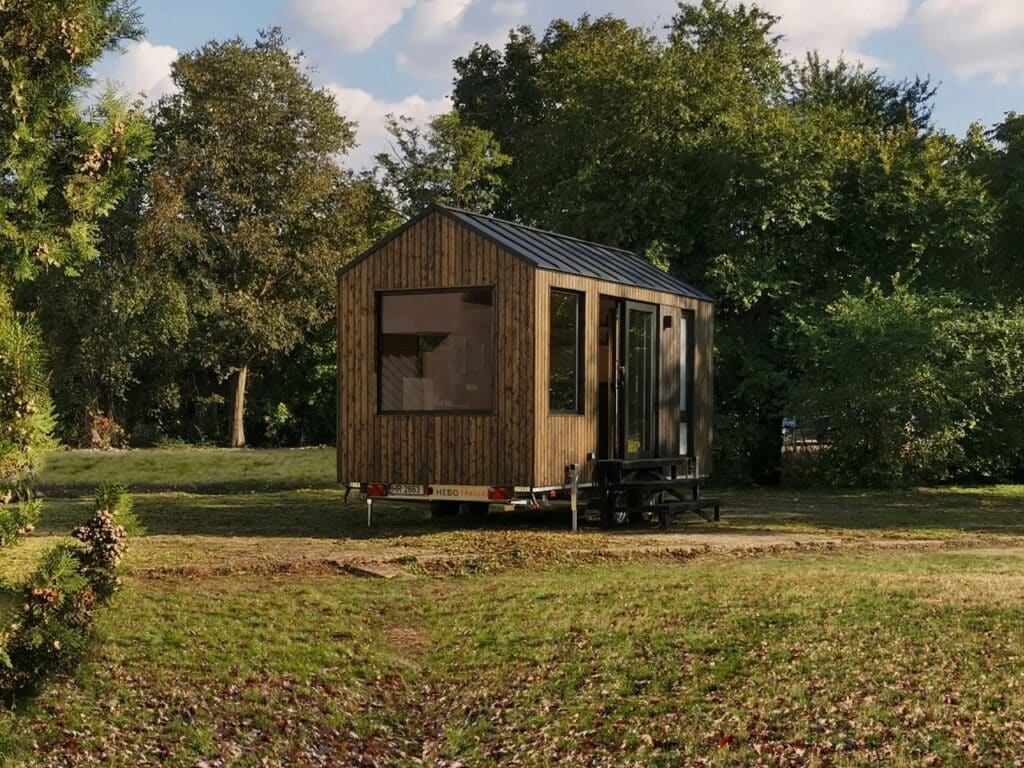
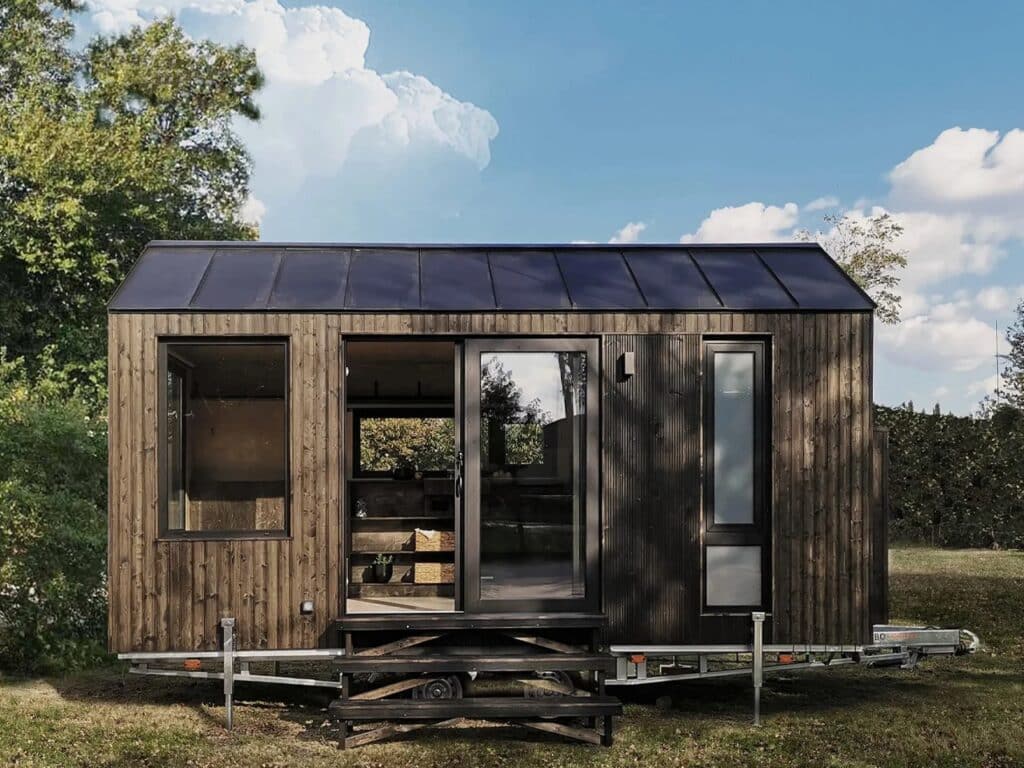
The Shoji home relies on vertical wooden cladding across its façades, combined with a lightweight metal canopy. Wide windows and sliding glass doors are embedded within the volume, reducing the visual separation between interior and exterior and strengthening a direct relationship with the surrounding environment. As a result, the Buildings appears visually adaptable to different contexts such as forests or rural landscapes, without relying on complex formal gestures.
Interior Organization and Efficiency of Use
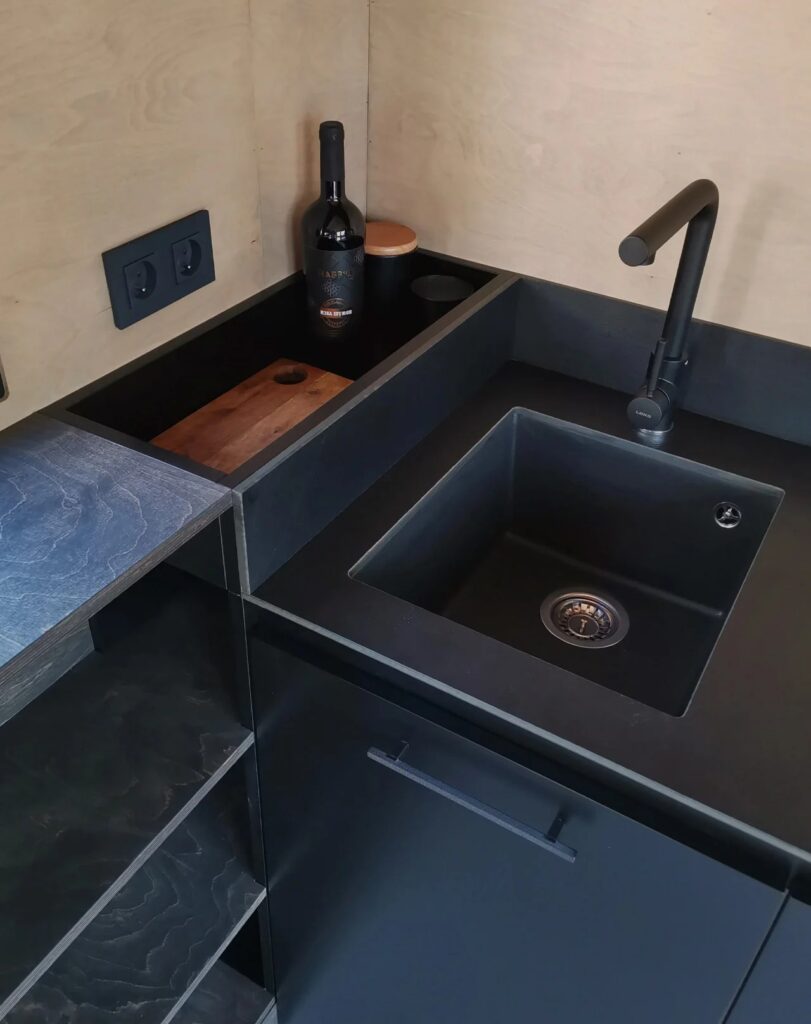
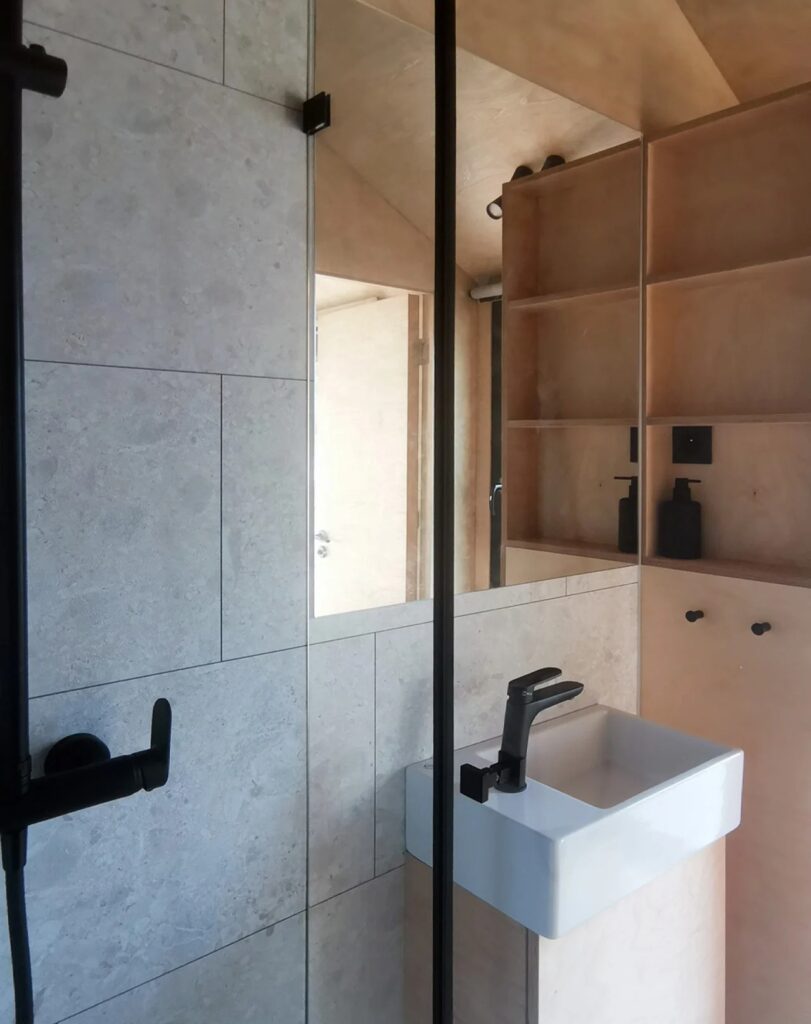
Inside, birch plywood panels cover all surfaces, creating a unified sense of space. The Interior Design integrates furniture into the spatial structure itself, where functional elements shift between different uses rather than occupying separate volumes. For instance, a U-shaped sofa can transform into a queen-sized bed, while essential functions such as the kitchen, workspace, washing machine, and shower are embedded within a compact layout. Additionally, the insulation system and underfloor heating allow the unit to be used year-round, extending beyond the idea of seasonal habitation.

Interior Organization Elements and Spatial Rhythm
A full-length black floating shelf runs along the wall, a feature that could have introduced visual heaviness within a constrained space. Instead, it helps regulate the overall balance and reinforces a sense of interior calm. This type of intervention gives the space a gallery-like character, where visual noise is reduced to a minimum. As a result, all elements appear carefully positioned under precise considerations, without excess. For more on spatial innovation, explore Pintercture.
The Concept of Fullness Within a Limited Space
The home’s owner describes this approach through the phrase “the most spacious not spacious space,” a statement that reflects a deliberate contradiction between physical size and spatial perception. In this context, the design is not based on removing elements, but on reorganizing them so that all functions remain present within a cohesive configuration. Consequently, a sense of sufficiency is achieved within a small footprint without sacrificing essential functionality. Similar ideas are discussed in Research on micro-living.
Evolution of the Model and Continuity of the Concept
Later, the Shoji 2 version emerged as an extension of the original model with improvements in performance and a lighter structural composition. Nevertheless, the original model remains a key reference in studying the relationship between limited space and efficiency of use. This evolution confirms that the design is not only about reducing area, but about rethinking how space is used and how its actual limits are perceived. You can follow related Top News on compact housing innovations.


✦ ArchUp Editorial Insight
The Shoji home represents a 12-square-meter mobile dwelling unit as a direct outcome of financing models associated with compact housing and flexible land-use policies in Brittany. In this context, the classification of transportable units allows certain exemptions from full-scale Construction permitting requirements. The driving force behind this model lies in the intersection of demand for micro-housing linked to tourism, mobile work patterns, and strategies aimed at reducing capital expenditure on housing.
Regulatory friction emerges in the requirements for road-compliant vehicle standards, thermal insulation codes for year-round use, and safety regulations that place pressure on integrating plumbing and electrical systems within a highly constrained volume. As a result, a functional configuration is produced that combines sleeping, cooking, washing, and working within reconfigurable units. For case studies on similar Projects, see the archive.
In this sense, the architecture becomes a regulatory settlement between permitting systems, mobility constraints, and occupancy efficiency, rather than an autonomous formal expression detached from the institutional framework that generated it. More on this can be found in Discussion forums and Architects Lobby resources.

★ ArchUp Technical Analysis
Technical and Documentary Analysis of the Shoji House – Brittany, France:
This article presents an architectural analysis of the Shoji House as a case study in reinterpreting the use of small, multi-functional spaces within a mobile unit. To enhance its archival value, we would like to present the following key technical and design data.
The project was completed in November 2022 in Brittany, France, with an interior area of approximately 12 square meters and a length of 5.5 meters, with the unit mounted on a twin-axle trailer. The exterior design features vertical wooden cladding integrated with a lightweight metal shed roof, with large windows and sliding glass doors that minimize the visual separation between inside and outside.
Birch plywood panels cover all interior surfaces, with a floating black shelf extending along the wall. The interior design incorporates furniture integrated into the structure of the space, where a U-shaped sofa converts into a queen-sized bed, including a kitchen, workspace, washing machine, and shower within a compact layout. The project relies on an insulation system and underfloor heating for year-round use.
A later Shoji 2 version appears as an extension of the first model with improved features and greater lightness in composition.
Related Insight: Please refer to this article to understand the context of modern architectural preservation:
Multi-Functional Mobile Homes: Design Strategies for Small Spaces.






✅ Official ArchUp Technical Review completed for this article.