Fort Fisher’s New Visitor Center: Bridging History, Architecture, and Resilience

While perhaps less famous than other Civil War sites, Fort Fisher Earthworks in Kure Beach, North Carolina, witnessed one of the conflict’s most pivotal battles. Protecting this fort the last lifeline for General Robert E. Lee’s army in Virginia was critical. Its fall in January 1865 after a massive Federal assault sealed the Confederacy’s fate. Today, the Fort Fisher State Historic Site, managed by the North Carolina Department of Natural and Cultural Resources, draws nearly a million visitors annually, including waves of schoolchildren. Yet its aging 1960s-era visitor center had long outlived its purpose.

A Vision for Renewal
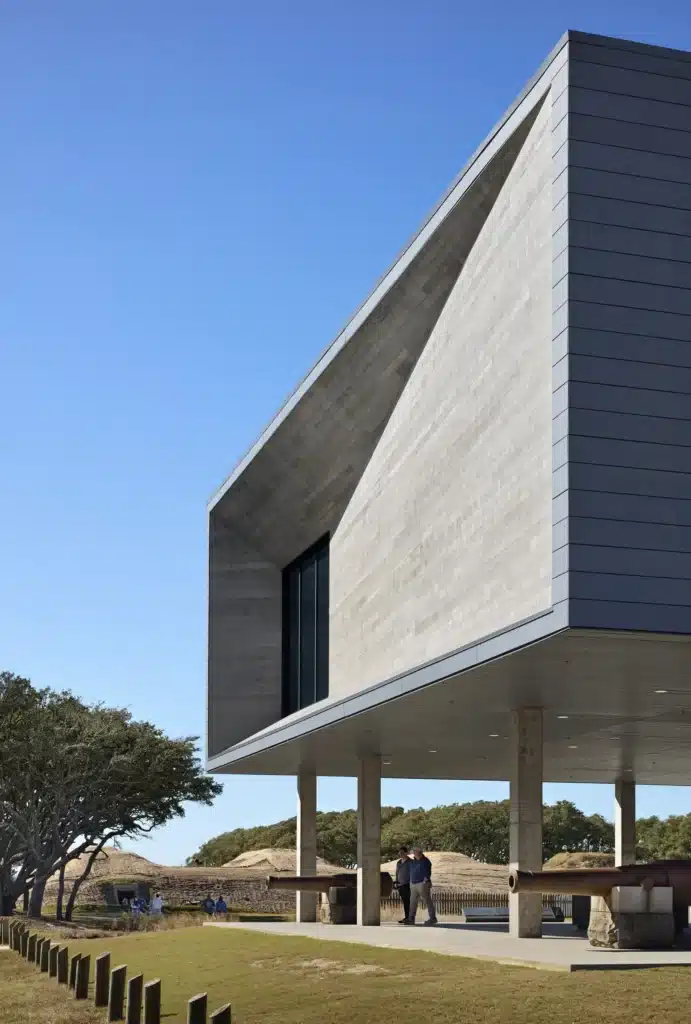
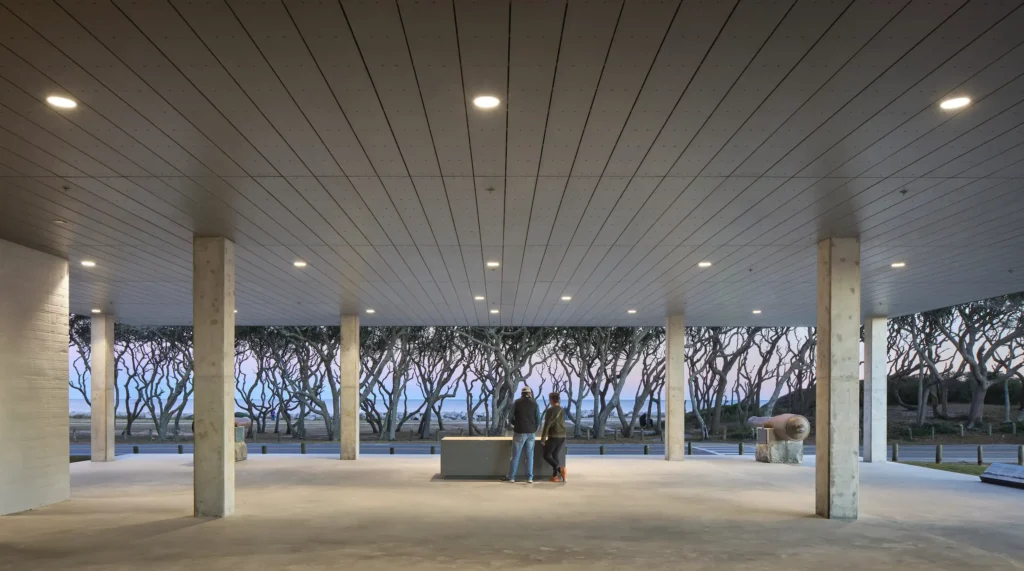
The new 22,000-square-foot visitor center, designed by Virginia Beach-based Clark Nexsen, replaces the dim, outdated structure with a modern, resilient, and immersive experience. “The old building was dark and disconnected from the fort’s remains,” explains Dennis Stallings, Clark Nexsen’s project director. The redesign prioritizes visibility, accessibility, and storytelling, lifting the building on pilings to frame views of the surviving earthworks while creating a covered gathering space beneath.
Design That Honors the Past
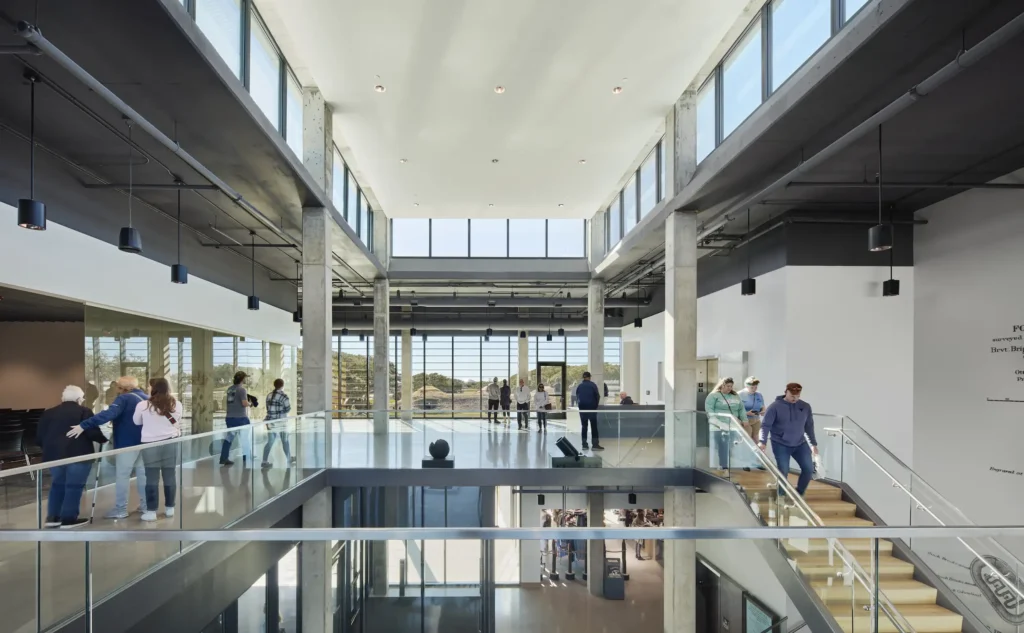
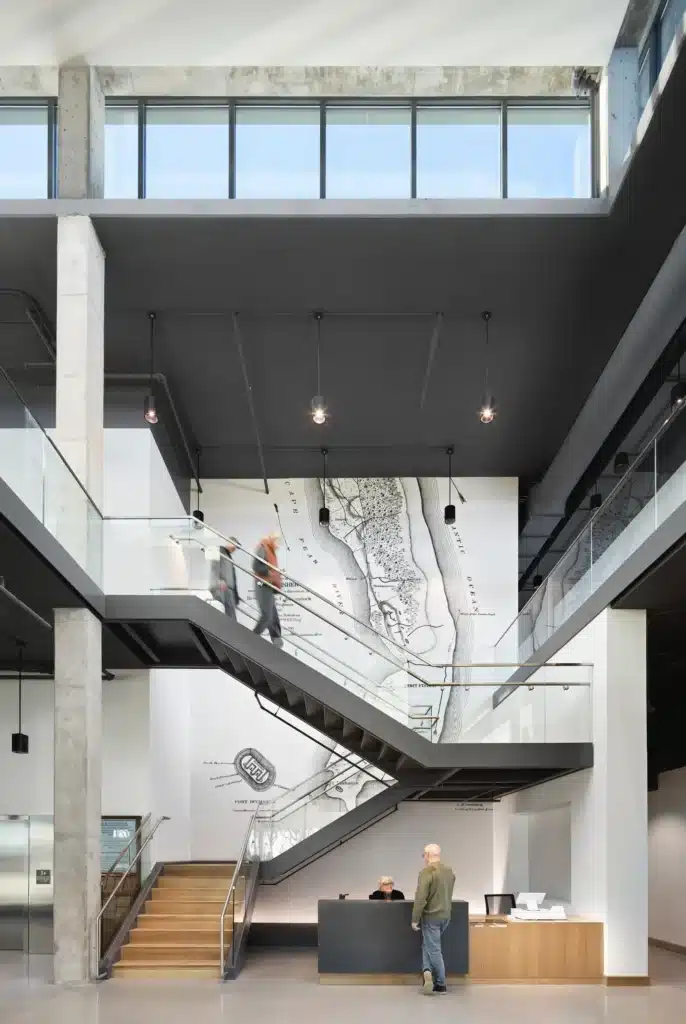
The sleek, elevated structure clad in dark gray fiber cement panels and warm, weathered wood accents stands apart from typical coastal architecture. A south-facing glass curtain wall floods the interior with daylight, welcoming visitors into a lobby lit by a clerestory above an open staircase. The exhibit galleries, arranged around a central orientation area, expand the narrative beyond the 1865 battle. “Archaeological evidence shows Indigenous inhabitants here 9,000 years ago,” Stallings notes. The exhibits now honor these layers of history, including the enslaved laborers who built the original fort.
Resilience Against Time and Tides
With much of Fort Fisher lost to coastal erosion, durability was paramount. The design team selected acetylated wood for its resistance to mold, insects, and rot, while a rainscreen system enhances energy efficiency. Elevated two feet above the 100-year floodplain, the center survived its first test a tropical storm with ease, even as parking lots flooded.
A Legacy Reimagined
Beyond aesthetics, the center reconnects visitors to the landscape both physically and emotionally. Strategic sightlines, abundant natural light, and curated exhibits ensure the site’s full historical and ecological legacy resonates. As Rob Harkey, project manager, emphasizes, “This isn’t just a building; it’s a gateway to understanding sacrifice and survival.”
✦ ArchUp Editorial Insight
Fort Fisher’s new visitor center masterfully bridges historical preservation and contemporary design, offering a tactile connection to a layered past. While the architecture excels in resilience and storytelling, the narrative could delve deeper into the Confederacy’s complex legacy addressing how such sites reconcile remembrance with modern values. That said, the project’s sensitivity to ecological challenges and Indigenous histories sets a benchmark for historic sites, proving that preservation need not fossilize the past but can instead invite dynamic, inclusive dialogue.
Explore the Latest Architecture Exhibitions & Conferences
ArchUp offers daily updates on top global architectural exhibitions, design conferences, and professional art and design forums.
Follow key architecture competitions, check official results, and stay informed through the latest architectural newsworldwide.
ArchUp is your encyclopedic hub for discovering events and design-driven