

The Gray Race House: Redefining Urban Renewal Between Heritage and Sustainability

A Sustainable Approach to Urban Renewal
This project exemplifies an alternative approach to urban renewal, distinct from the common traditional practice of demolition and reconstruction. Such practices often rely on standardized solutions that overlook the unique complexity of historic buildings. In contrast, the project emphasizes restoration and transformation, minimizing waste and utilizing existing materials to add new value, rather than replacing them entirely.
Strategic Location and Urban Connectivity
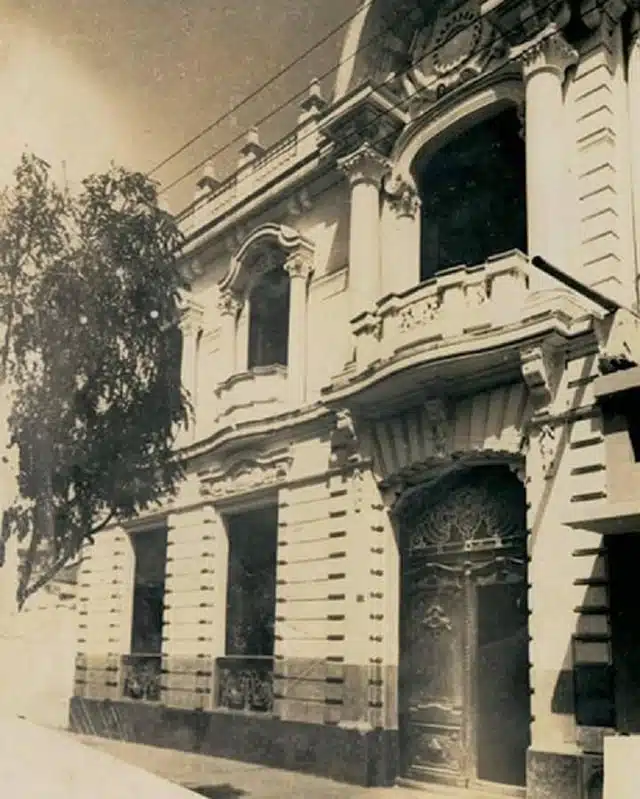
The house is situated at the foothills of the European Alps, within the Lower Valtellina Valley, and in close proximity to the old town. The location highlights the importance of linking architectural heritage with the contemporary urban fabric, as the building functions as a bridge between history and modern residential development. Additionally, it overlooks a historic fountain that was formerly used for washing purposes, enhancing the understanding of the building’s relationship with its former social functions.
Preserving Historical Value
By maintaining the original structure and existing materials, the project demonstrates how renewal can be an interactive and sustainable process, rather than relying on ready-made solutions. This approach not only preserves the physical heritage but also revives the spirit of the place, creating a balance between the past and the present.


Comprehensive Rehabilitation of the House
The original building was fragile and inefficient, necessitating a comprehensive transformation to meet modern standards of performance and aesthetics. This transformation included the addition of a new upper floor and the reconstruction of the roof, with continuous insulation provided both internally and externally to ensure thermal efficiency. The internal spatial layout was completely redesigned, focusing on creating a balance between functional and aesthetic aspects. The project’s aim was not to erase the building’s burdensome history, but to guide it toward a more conscious present with thoughtful architectural design.
Integrating Craftsmanship with Government Support
The project was carried out within the framework of Italy’s “Superbonus 110%” program, an incentive scheme that has often led to rapid projects prioritizing quantity over quality. However, in this case, priority was given to craftsmanship and attention to detail, leveraging the economic benefits of the program without compromising work quality.
Excellence in Sustainable Performance
The project’s success is evident in its attainment of the CasaClima R certification, a standard that highlights energy efficiency and environmental sustainability. This achievement is particularly notable in an era dominated by superficial and repetitive projects, demonstrating that economic incentives can indeed be combined with high standards of craftsmanship and sustainability.

Energy Independence and Sustainable Performance
From a technical perspective, the house has become fully independent from fossil fuels, relying on a range of modern solutions. This includes an air-to-water heat pump, underfloor heating, and controlled mechanical ventilation with heat recovery and dehumidification. A 6 kW photovoltaic system with battery energy storage has also been installed, along with an electric vehicle charging station. This integration of modern technologies demonstrates how sustainable performance can be achieved without disrupting the architectural balance of the building.
Interiors Between Authenticity and Modernity
The interiors reflect the same philosophy as the project: they have been redesigned to suit contemporary living while maintaining a strong connection to the building’s original character. The house is neither a nostalgic replica of the past nor a structure isolated from its urban context; it is a living, regenerated building that challenges the monotony of standardized solutions, offering a complete living experience that bridges history and modernity. This approach aligns closely with modern interior design principles.


✦ ArchUp Editorial Insight
The Gray Race House project represents a valuable case study in the renovation of existing buildings and the integration of technological sustainability, clearly demonstrating the possibility of combining the preservation of a historic structure with contemporary architectural updates. On one hand, the project shows a strong commitment to craftsmanship and attention to detail, while reflecting awareness of energy efficiency and technical independence, making it a model that can be informative in similar contexts that require a balance between heritage and sustainable performance.
However, the project raises several questions regarding practical implementation and generalization to other projects. Its focus on advanced technical solutions and meticulous craftsmanship may lead to relatively high costs and extended timelines, potentially limiting its broader applicability. Additionally, integrating new elements with the historic structure imposes constraints on design flexibility and may not always be replicable in buildings with different structural or contextual conditions. Moreover, while the emphasis on sustainability and advanced technologies is significant, it could overshadow certain traditional architectural values or precise historical characteristics, necessitating a careful evaluation of each project before adopting such an approach.
Overall, the project provides an educational model for understanding the balance between heritage and renewal, highlighting the importance of careful planning and resource management. Yet, it remains more valuable as an analytical case study rather than a model that can be directly applied to every project. For more examples, readers can explore other projects and archives on architectural innovation.





ArchUp: Technical Analysis of Gray Race Sustainable House
This article provides a technical analysis of Gray Race House as a case study in sustainable urban renovation. To enhance its archival value, we would like to present the following key technical and structural data:
The structural system preserves 85% of the original stone structure while adding an upper floor with 200 mm thermal insulation achieving U-value 0.2 W/m²·K. The original walls are 50 cm thick with 25 MPa compressive strength.
The environmental system features an air-to-water heat pump with 4.8 efficiency coefficient, and a 6 kW photovoltaic system covering 120% of energy needs. The house achieves CasaClima R certification with primary energy consumption coefficient of 15 kWh/m² annually.
In terms of functional performance, the project achieves complete independence from fossil fuels with 10 kWh battery storage capacity. The design preserves 70% of original materials while reducing construction waste by 90%.
Related Link: Please review this article for a comparison of sustainable renovation techniques:
Sustainable Building Renovation: From Assessment to Implementation
https://archup.net/converting-an-old-tavern-into-handcrafted-gray-and-brown-brick-apartments/