
Handle Table: Making Room for Small Objects Within the Table

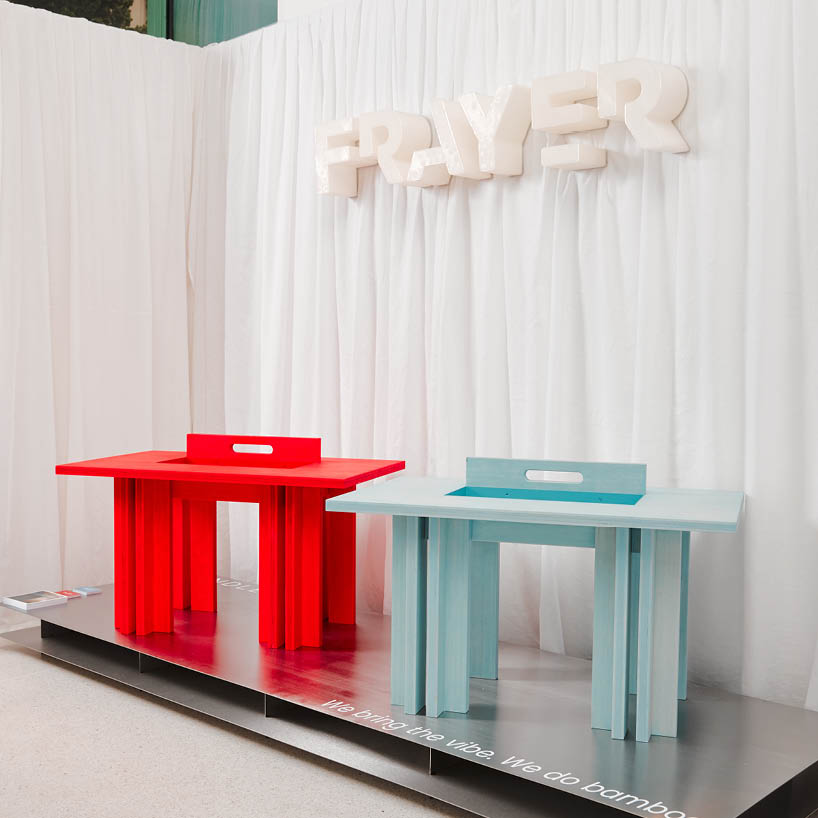
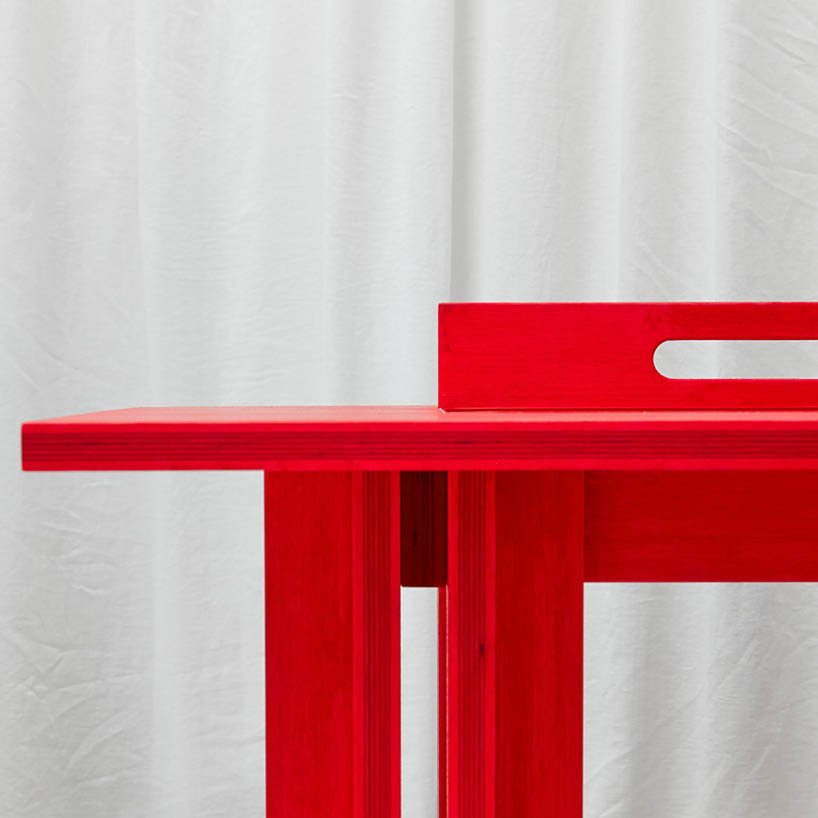
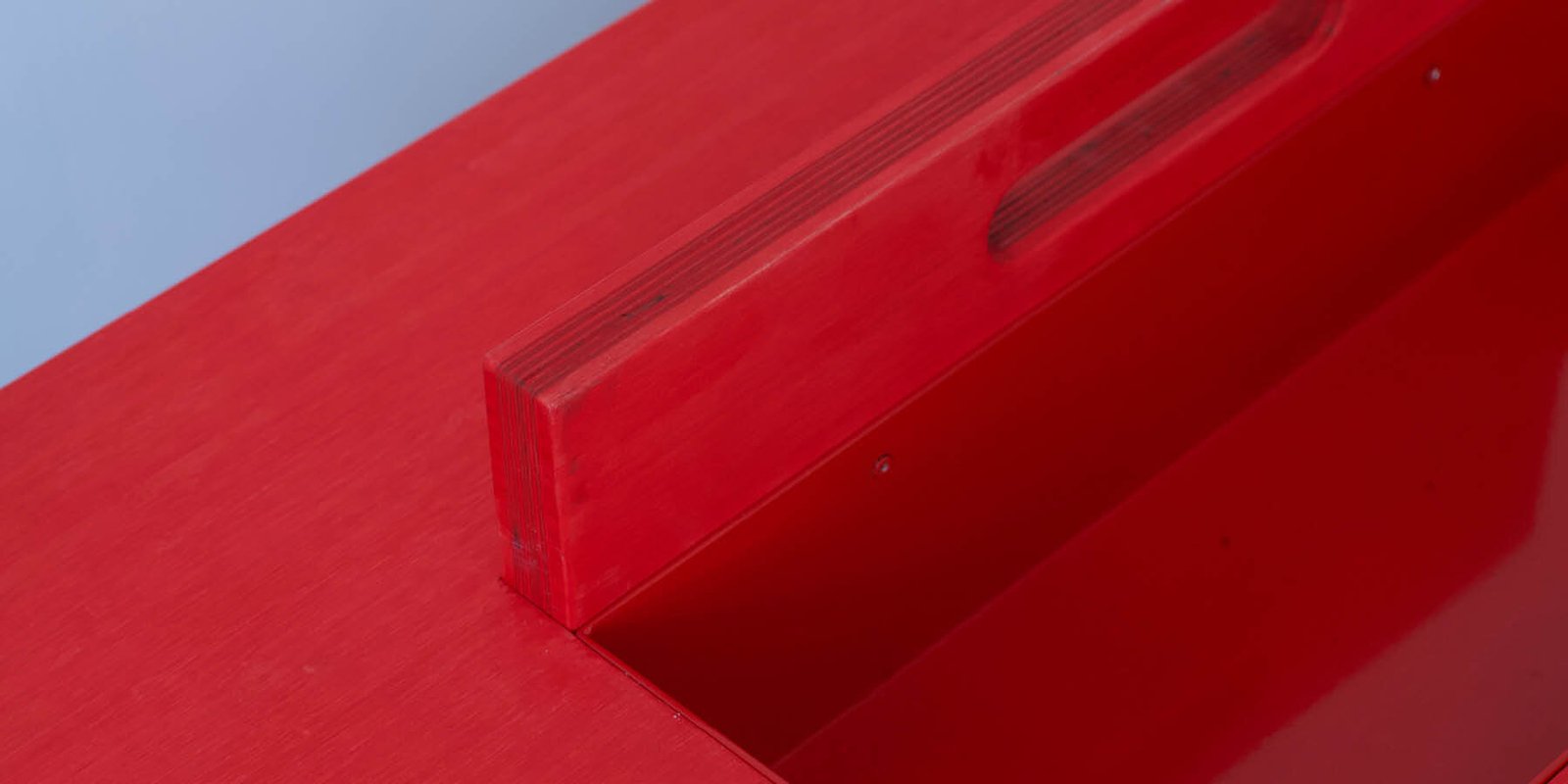
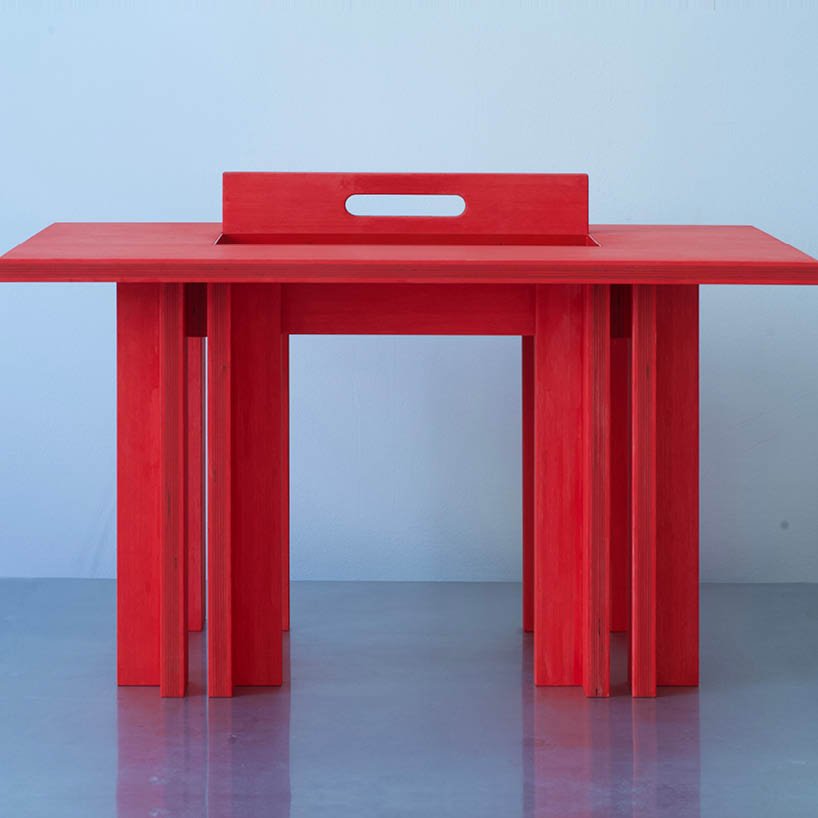
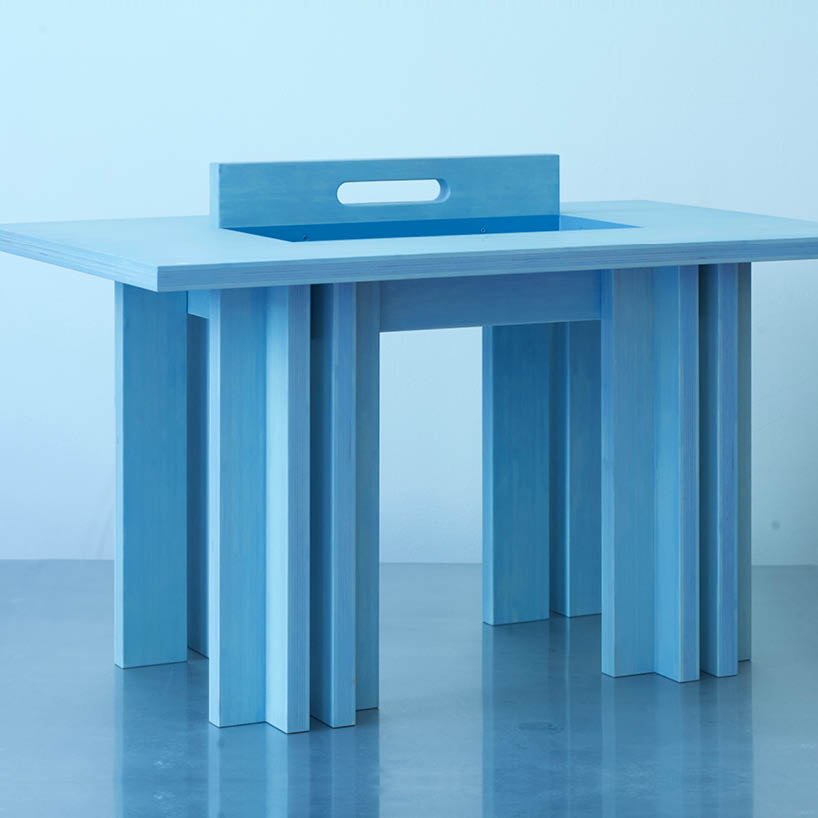
Handle Table brings a storage recess into the centre of a bamboo table. Rather than attaching a separate box or tray, the design makes a place for small objects within the geometry of the furniture itself. Its most visible detail is an upright element with an elongated opening above the tabletop.

A place for objects, not another object
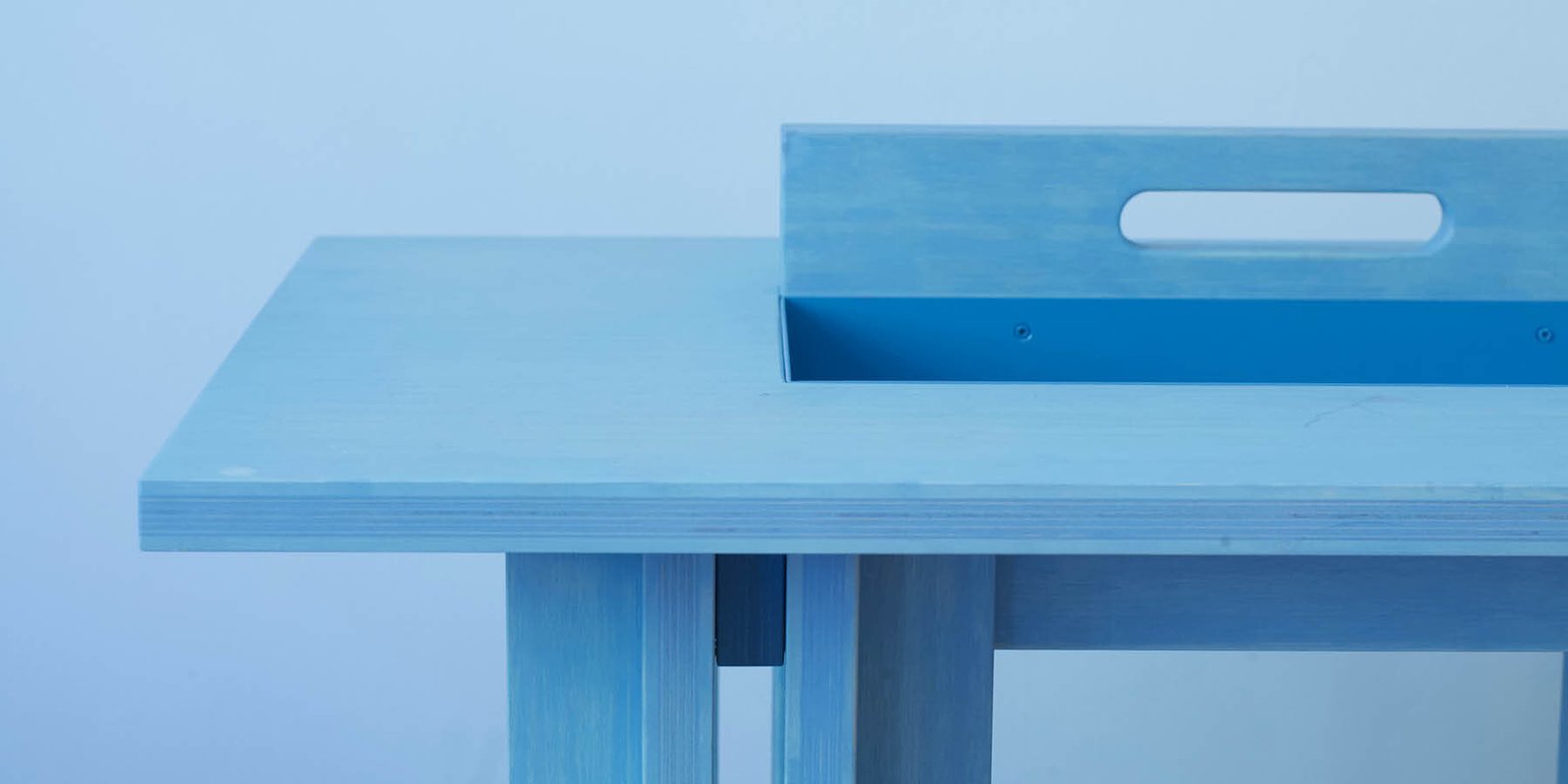
The photographs show a recessed zone alongside the raised element. The top remains usable around it, but no longer reads as one uninterrupted plane. This arrangement offers a concrete alternative to leaving small items scattered across a living-room surface. It should not be confused with evidence about capacity or ease of lifting: neither is established by the photographs.

Colour without hiding the material
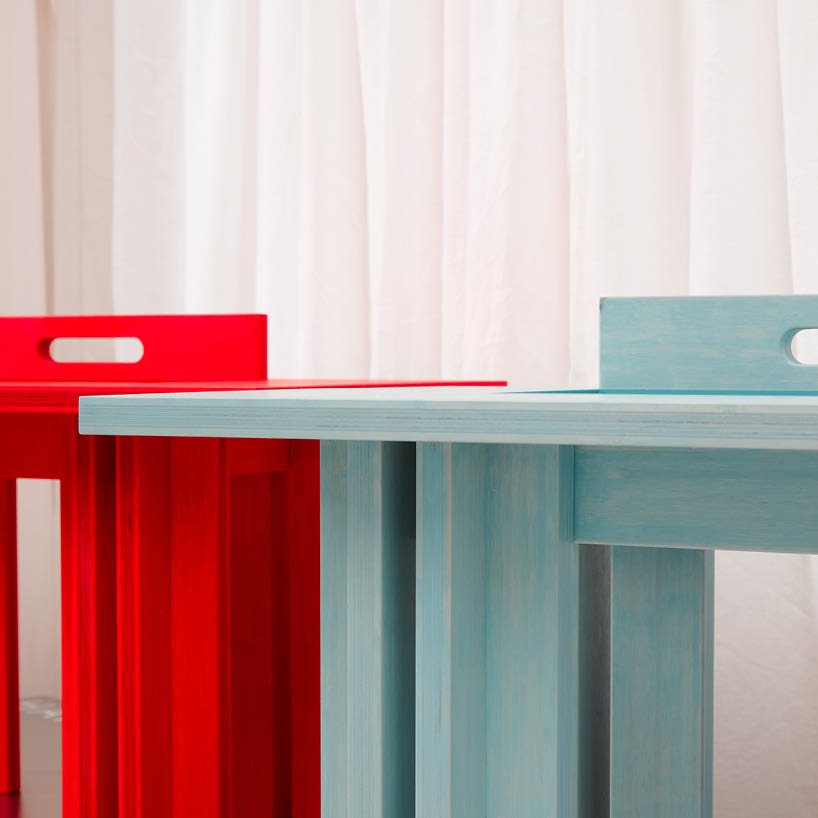
The bamboo is treated with an oil-based stain. In the blue version, visible grain and layered edges retain a material presence beneath the colour. The red version makes the same construction more emphatic. These are different readings of one geometry, rather than different storage systems.

What the room asks of a table
A furniture detail gains meaning through the routine around it. A recess may help reserve the surrounding surface for a cup or book; it may also become a place where items are forgotten. The relevant comparison is therefore with the user’s existing habits, not an idealized photograph of a permanently empty room.
Project gallery and details

✦ ArchUp Editorial Insight
Handle Table addresses a familiar domestic need: keeping small objects near a seating area without allowing them to occupy the entire tabletop. Its decision is to place storage inside the table’s own outline and give that zone a visible grip-like marker. ArchUp reads this as an attempt to reduce the number of separate objects needed for organization, not simply to remove visual detail. The recess can make a place for things that would otherwise drift across the surface, while the raised element establishes a clear visual centre. The trade-off is equally important: a continuous tabletop is interrupted, and the compartment must remain easy to reach and clean if it is to be useful every day. A stain that leaves the material visible also makes edge quality part of the design experience. Durability, repairability and resistance to spills would require product specifications or testing; they cannot be inferred from the finish alone. The useful design question is therefore not whether the table looks minimal, but whether its particular division of surface and storage matches the objects and habits of the room around it.
Credits: Handle Table, designed by Marek Kounovský / MK Designers in collaboration with Frayer. Images © MK Designers.


