Shifting Center: A Metal Grid That Changes With Its Visitors

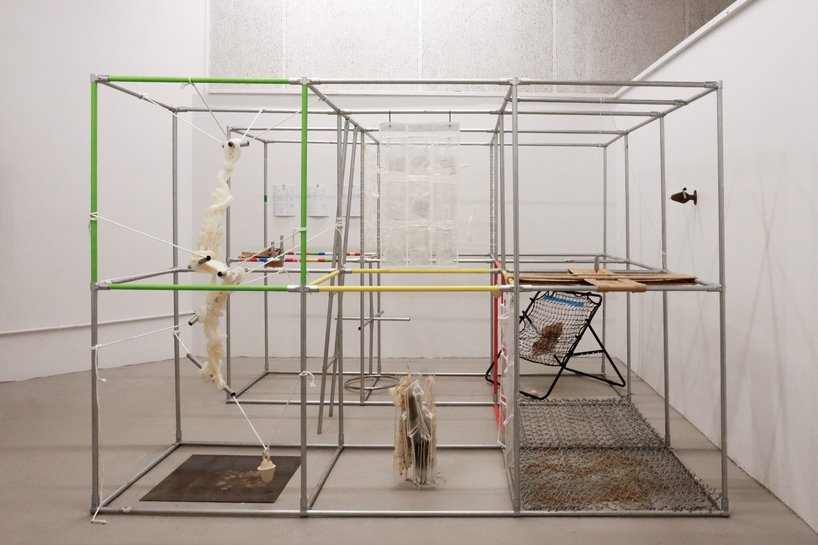
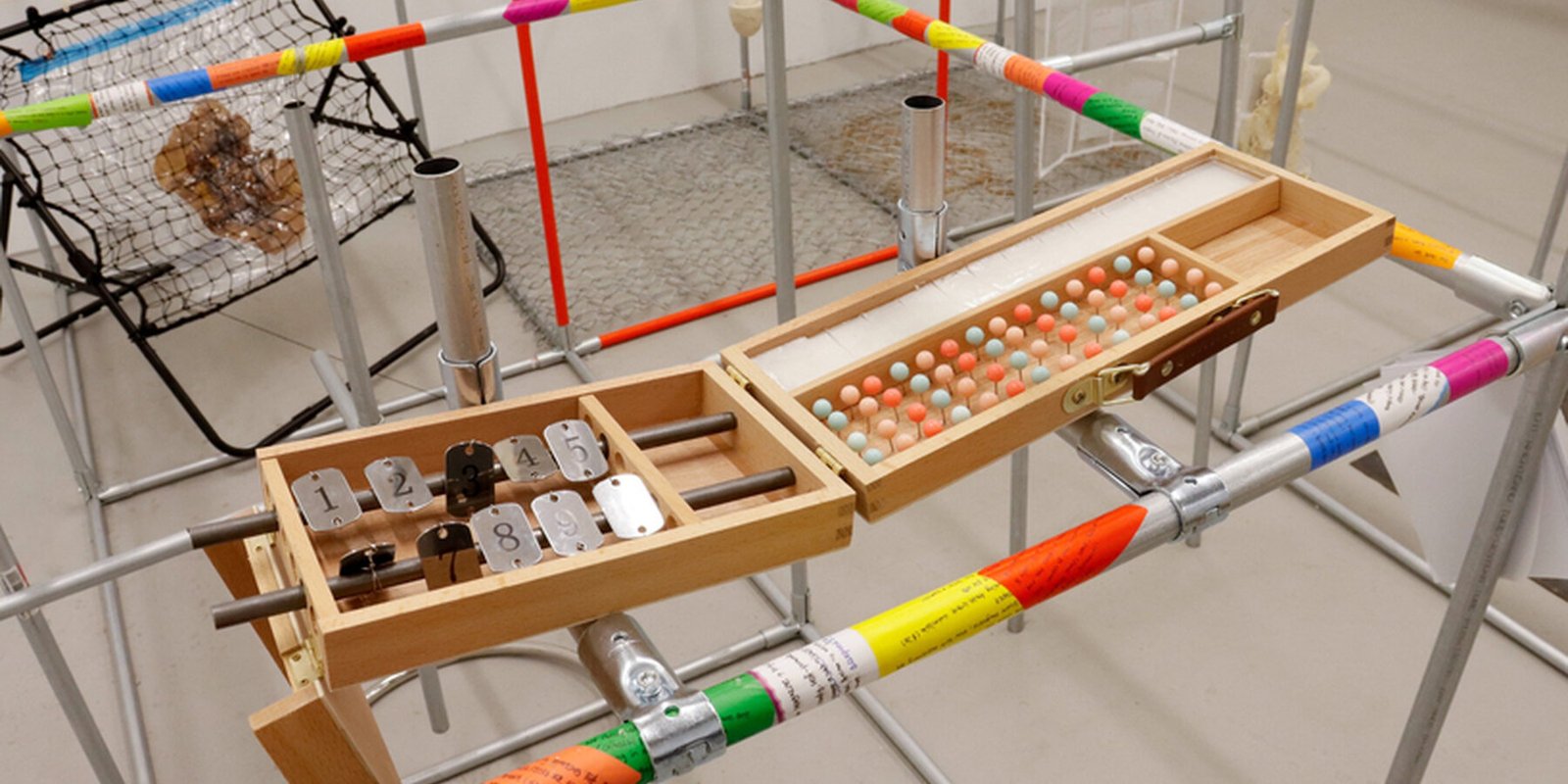
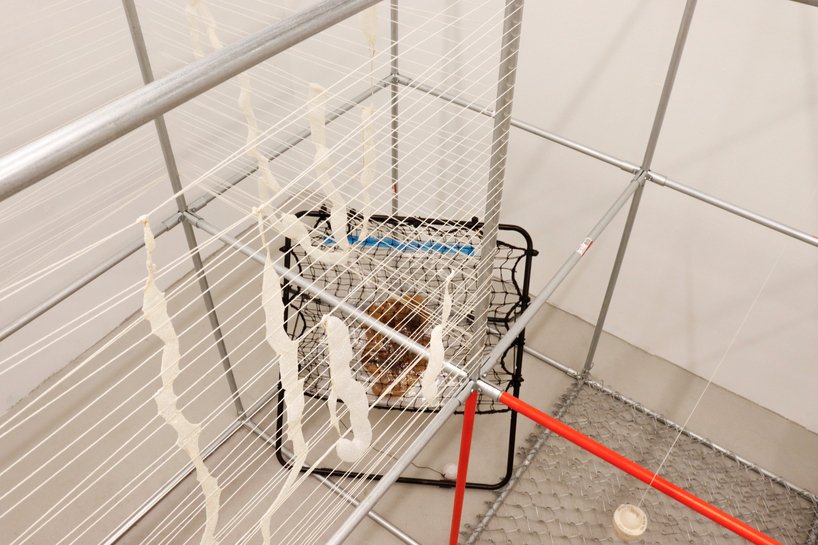
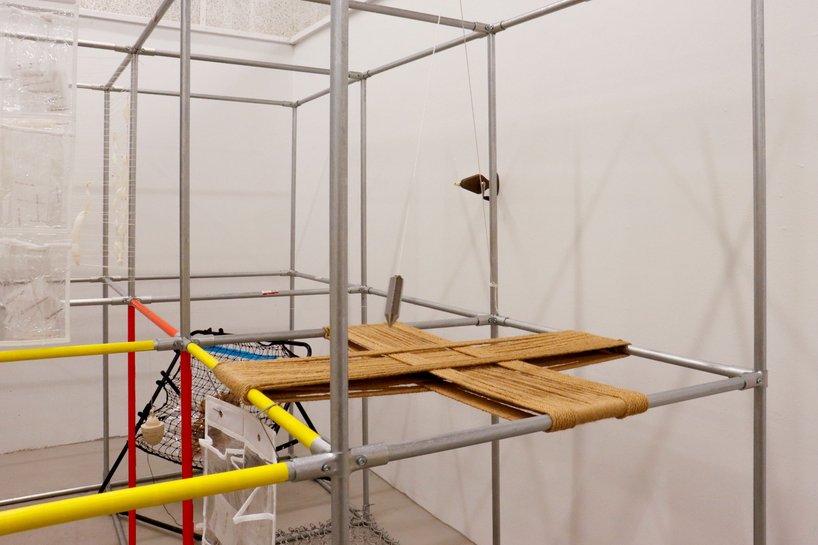
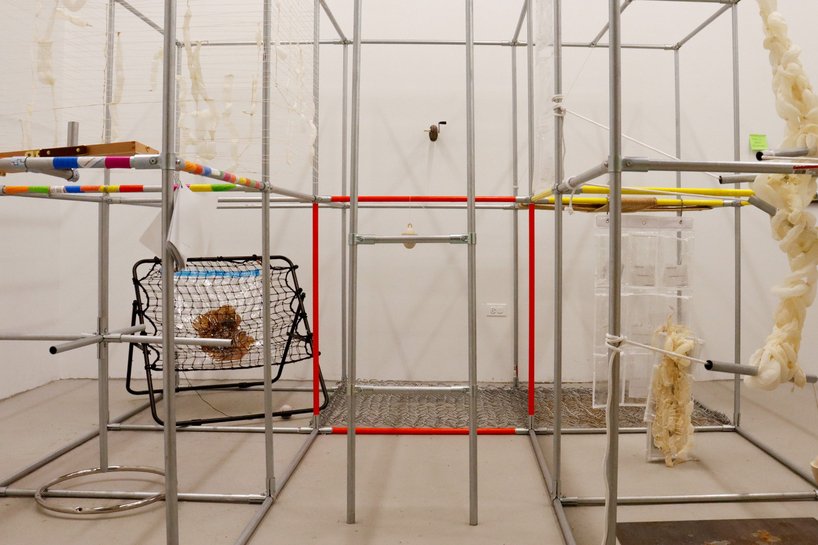
Shifting Center is a participatory installation begun in 2026. A modular frame of metal pipes establishes a room-sized outline without enclosing a conventional room. Inside it, suspended objects, transparent pockets and small activities turn a familiar grid into a changing route.
A room defined by actions
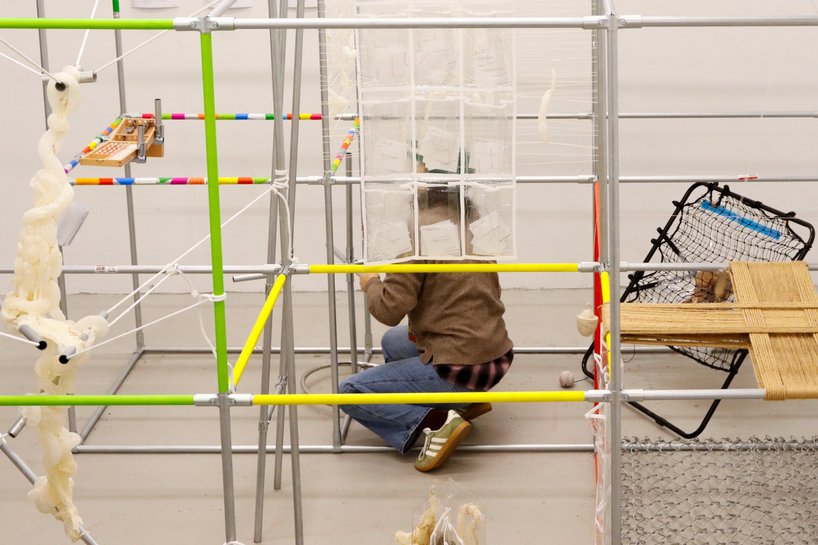
The work brings counting, checking and balancing into physical space. Visitors can move through the frame rather than remain outside it. The photographs show how the same structure accommodates standing and crouching: its divisions are encountered at the scale of shoulders, hands and knees, not only as a pattern seen from across the gallery.

Stable frame, changing contents
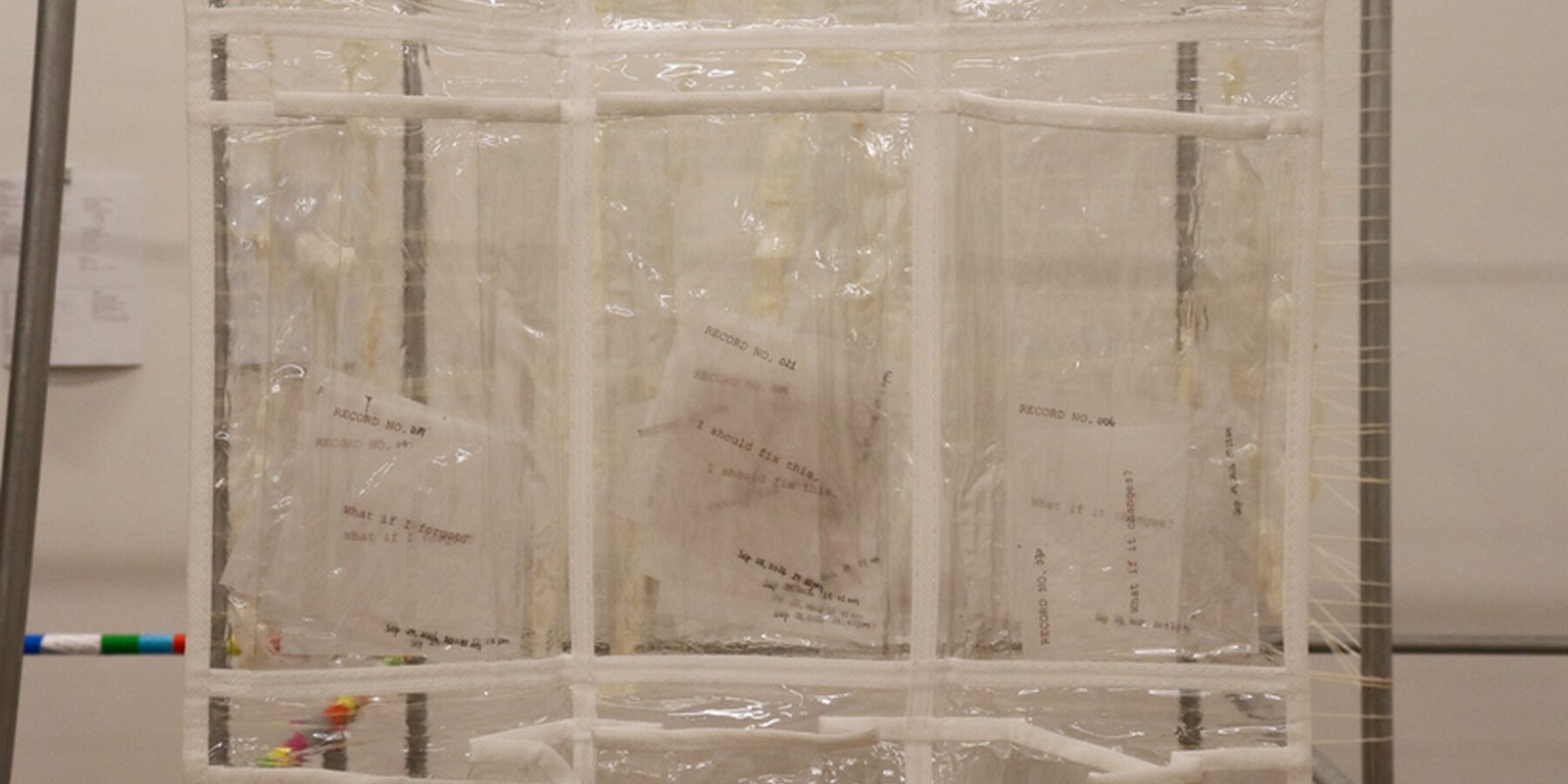
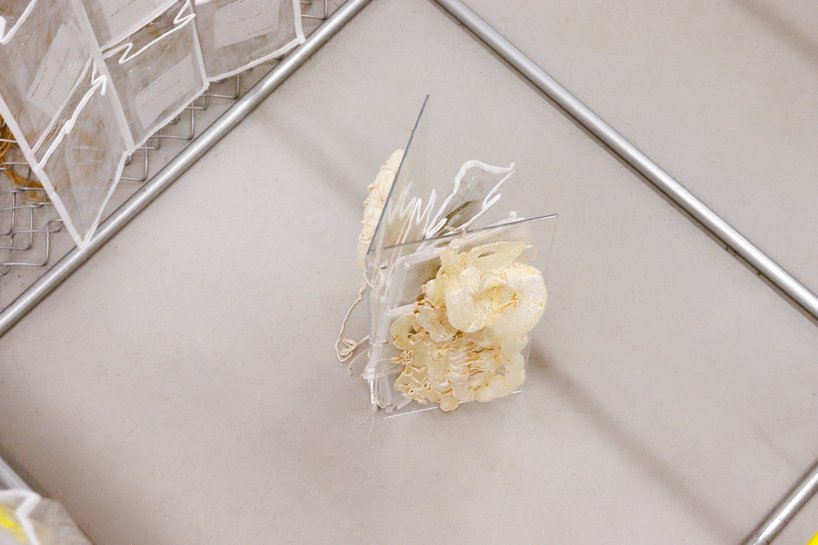
The artist combines metal with woven hog casing, suspended objects and written records held in transparent pockets. These materials have different kinds of stability. A straight rail establishes a reference, while a membrane can change as it dries. This contrast makes the maintenance of order part of the work rather than an invisible task outside it.
Beyond an object to look at
The clear gaps between the pipes allow participants to remain visible to others. This is not the privacy of a closed room: actions within one part of the frame can be observed from another. The resulting spatial question concerns how a person shares a system with someone whose timing and decisions are different.
Project gallery and details
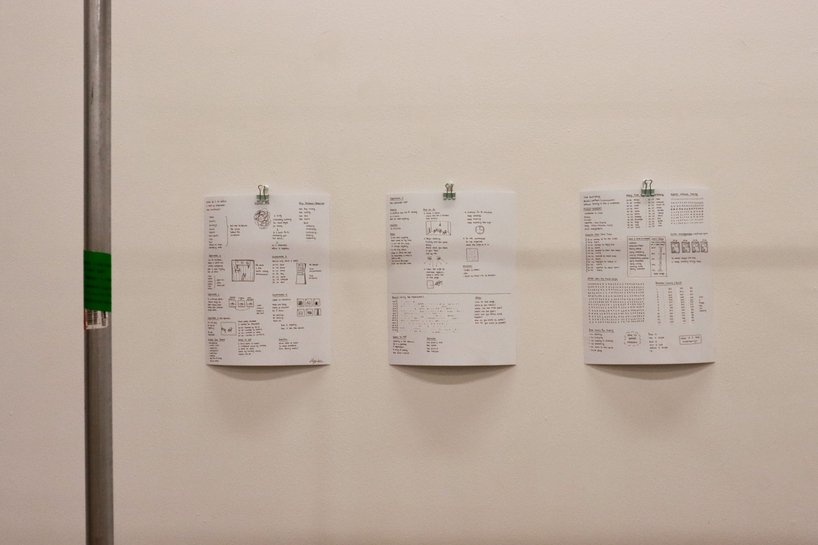
✦ ArchUp Editorial Insight
The installation begins with a documented tension between the wish to establish order and the fact that materials and visitors do not behave predictably. Its response is to make that tension spatial: a repeatable metal grid holds elements that can move, stretch or be rearranged. ArchUp sees the important distinction in the gap between visual regularity and physical freedom. From outside, the frame appears easy to understand; from within, a suspended pocket or horizontal rail can change the next movement. This offers a useful lesson for exhibition design, where a clear overall layout does not necessarily produce an equally clear bodily route. Participation also brings operational responsibilities. Instructions, supervision and access need to suit different abilities, and fragile components need a plan for inspection and replacement. These requirements cannot be assessed from documentation alone. Nor should the work be treated as evidence of a therapeutic effect. Its spatial value lies in making adjustment visible: the visitor encounters rules as things to negotiate with the body, rather than messages to read from a safe distance.
Credits: Work and images: Won Ji Lim (ONEG). Shifting Center, 2026–ongoing.