

Hapt-Aids: A Revolution in Self-Powered Wearable Devices

Introduction: In a world dominated by batteries and chargers, the innovation of “Hapt-Aids” emerges as a pioneering model that challenges this status quo. This device, the result of research collaboration between Carnegie Mellon University and the University of California, not only offers new functionalities but also reimagines the relationship between technology and energy through the concept of “energy harvesting,” heralding a new era of sustainable wearables.
The Gap It Aims to Fill: Beyond Smartwatches
As smartwatches and fitness bands become increasingly complex, a pressing need arises for simple, reliable devices. Current devices, despite their advanced capabilities, suffer from fundamental limitations: constant need for charging, reliance on limited-life batteries, increasing technical complexity, and high costs that place them out of reach for a large segment of users. This is precisely the gap Hapt-Aids aims to fill, offering a radically different design philosophy based on simplicity and sustainability.

The Revolutionary Design: The “Energy as a Measure” Philosophy
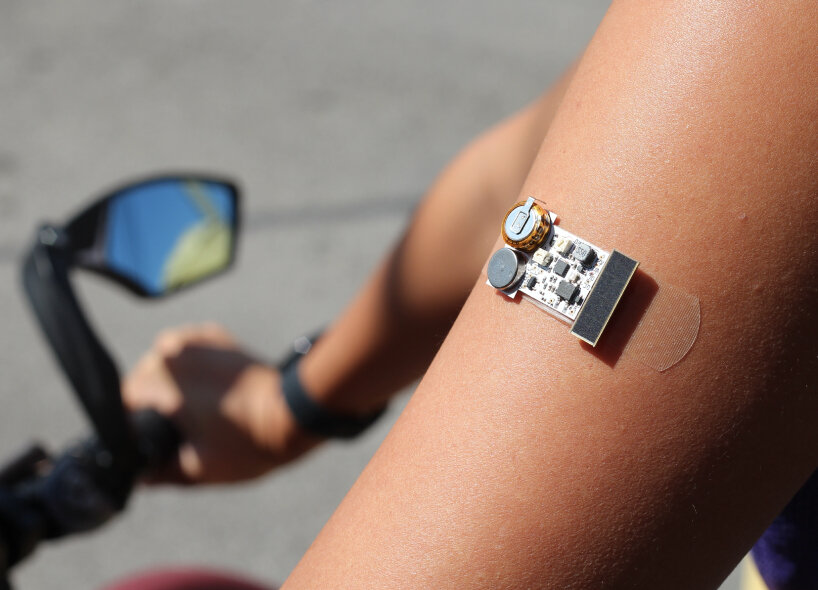
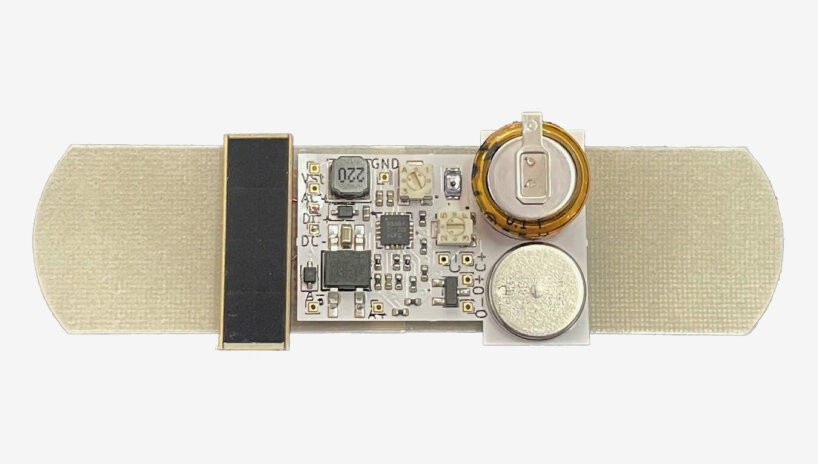
At the heart of this innovation lies a unique design philosophy based on the principle of “energy as a direct measure of activity.” The device operates through three integrated core components:
- The Energy Harvesting Unit: It relies on two main types of energy collectors: solar cells to convert sunlight into electrical energy, and piezoelectric films that convert the body’s mechanical movement into electrical energy.
- The Smart Storage System: The generated energy is stored in a small, highly efficient capacitor, which acts as an energy reservoir until it reaches the required threshold for operation.
- The Vibration Alert Mechanism: When the capacitor reaches a pre-defined storage capacity, the stored energy is immediately discharged into a small vibration motor, delivering a tangible alert to the user.
The Competitive Edge: Advanced Simplicity
What distinguishes Hapt-Aids is not the technologies it adds, but what it omits. By completely doing away with the following components, the device achieves remarkable superiority:
· No Microprocessors, reducing energy consumption and complexity.
· No Digital Sensors, which increase cost and complexity.
· No Rechargeable Batteries, which burden the user and the environment.
· No Wireless Communication Modules, which drain power.
Practical Applications: From Theory to Field
During the development phase, the research team created four specialized prototypes, each designed for a specific use context:
- Sun Exposure Monitoring: Provides a practical solution for people who need to monitor their sun exposure time to prevent skin damage.
- Physical Activity Tracking: Represents a simple alternative to advanced devices for tracking basic daily activity.
- Therapeutic Applications: Can be used as an assistive tool in treatment programs that require activity regularity.
Customization Feature: The device incorporates a simple mechanical dial that allows users to adjust the energy threshold that triggers the vibration alert, enabling them to personalize goals according to their individual needs.
Results and Testing: From Lab to Reality
A series of laboratory tests and user studies confirmed several key points:
· Energy Efficiency: The system’s ability to collect and store sufficient energy for effective operation.
· Vibration Noticeability: The effectiveness of the vibration signals in attracting user attention.
· Durability and Reliability: Stable performance under various usage conditions.
Future Vision and Development Horizon
Researchers view this innovation not as a final product, but as an open technological platform for development. The future vision includes the potential to develop specialized applications in areas such as:
· Healthcare: Sustainable medical monitoring devices.
· Fitness: Low-cost activity tracking solutions.
· Occupational Safety: Monitoring workers in outdoor environments.
✦ Archup Editorial insight
The article discusses the development of a wearable device that relies on energy harvesting as an alternative to traditional digital devices. The design is based on the principle of simple analog circuits that measure activity through the amount of energy collected; however, this principle raises questions about measurement accuracy compared to digital sensors, as linking activity level solely to energy quantity overlooks other influencing factors. Furthermore, reliance on a fixed energy threshold for alerts may not accommodate individual differences in movement rates and energy harvesting efficiency. On a different note, the prototype presents a practical framework for the sustainability of wearable devices by reducing dependence on batteries and frequent charging.
Brought to you by the ArchUp Editorial Team
Inspiration starts here. Dive deeper into Architecture, Interior Design, Research, Cities, Design, and cutting-edge Projectson ArchUp.


