The Erhardt Museum: An Architectural Dialogue Between Earth and Wood in the German Countryside

In the tranquil heart of the village of Plüschow, overlooking the Baltic Sea where the historic Schloss Plüschow castle stands as a testament to the past, the Erhardt Museum rises not merely as a building, but as a contemporary architectural statement. Designed by architect Francis Kéré, this landmark represents his first museum and first cultural project in Germany, dedicated to preserving the legacy of photographer Alfred Erhardt and the works of the “New Objectivity” movement. Here, the role extends beyond displaying art to creating a rooted dialogue between architecture and nature, and between heritage and the present, through a language of material honesty and spatial restraint.
Context and Integration: A Contemporary Building Amidst History
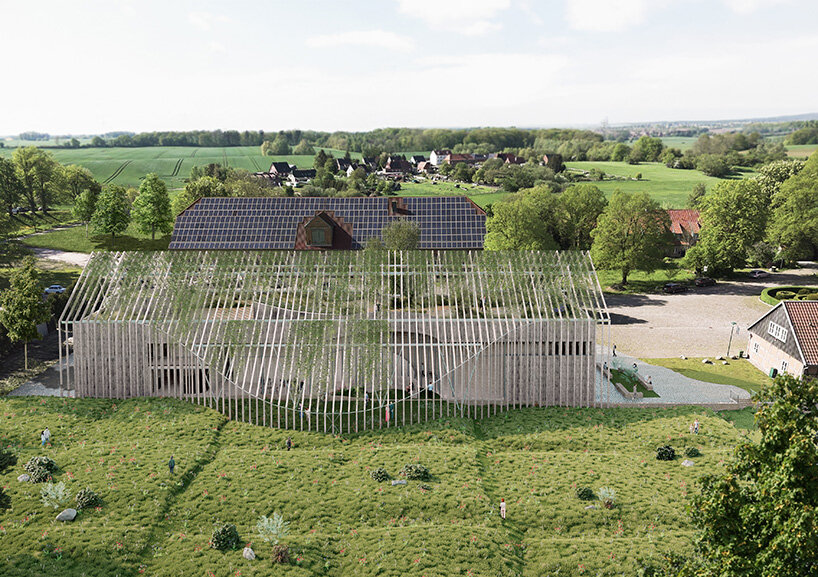
The new 1,400-square-meter museum does not isolate itself from its surroundings but carefully weaves itself into the urban fabric of Plüschow. Adjacent to the historic castle, now a residence for artists and galleries, the museum adds a new architectural layer to the village. Instead of shouting with the voice of modernity, the building chooses to whisper, interacting with the surrounding landscape and encouraging visitors to contemplate this quiet communication between the old architecture of the castle and the contemporary mass of the museum, as if they are telling the same story in two different dialects.
Material and Structure: A Philosophy of Sustainable Construction
At the heart of the museum’s experience are its building materials as a primary language. The design relies mainly on local and sustainable materials—wood, clay, and rammed earth—reviving regional crafts and reducing environmental impact.
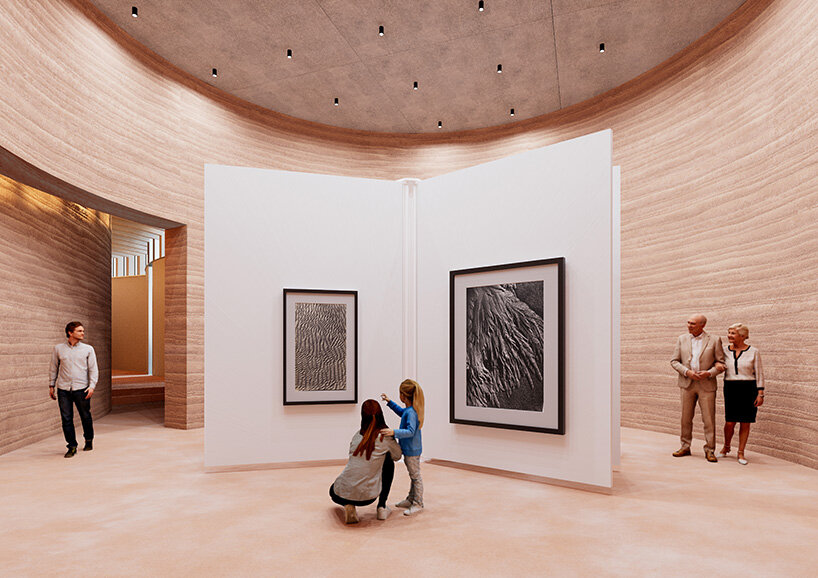
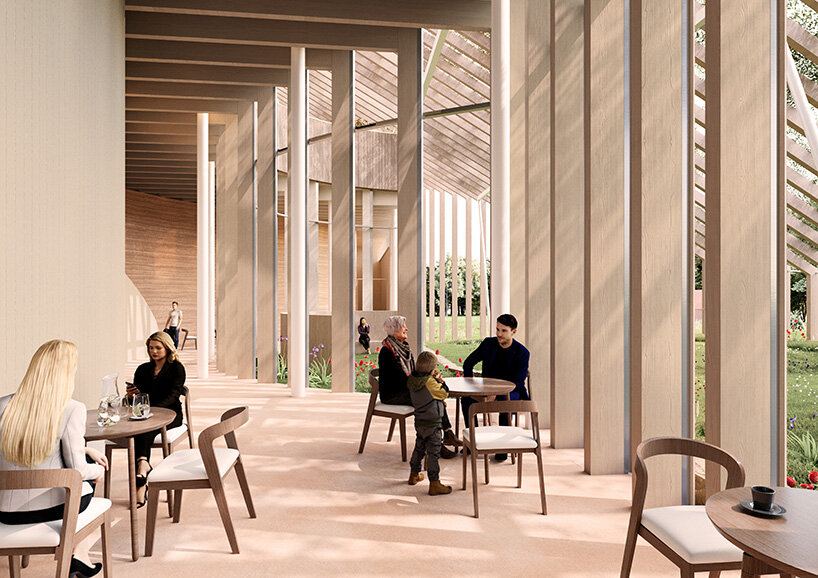
· The Earthen Spine: The identity of the interior space is defined by a long, central wall made of rammed earth. This wall, with its coarse texture, not only divides the space and organizes the rhythm of the exhibition halls but also functions as a natural climate regulator. The thermal mass of the wall allows it to absorb and release heat and humidity, effectively contributing to stabilizing the climatic conditions inside the exhibition halls, which is crucial for preserving sensitive art collections.
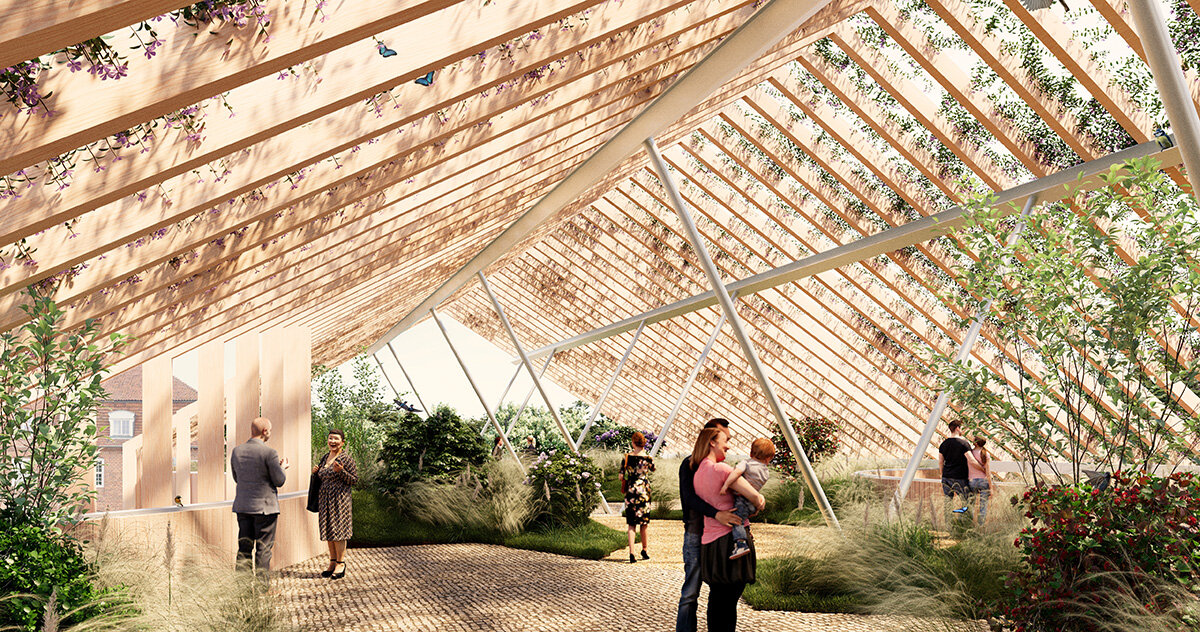
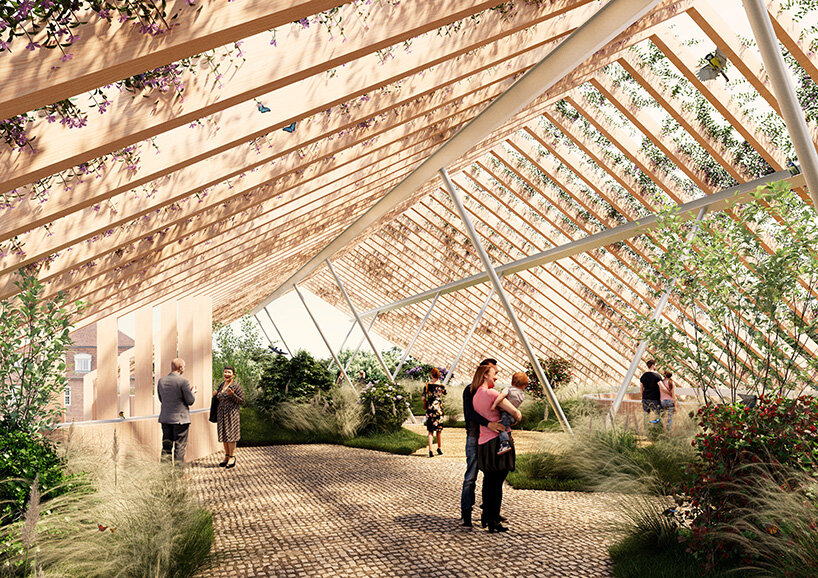
· The Demountable Wooden Framework: Above this earthen foundation, a lightweight wooden structure spans the entire width of the building. This framework was developed in collaboration with engineers from Hong Kong using Austrian timber, embodying a blend of traditional craftsmanship precision and modern engineering. Most importantly, the structure is designed for disassembly and future reuse, making it a practical model for a circular economy in architecture, where adaptability and extending the life of materials are prioritized over demolition and waste production.
Architecture and Nature: A Roof Garden and a Living Skin
· The Roof Garden: The roof forms a platform for a green roof garden, which not only provides an additional green space but also acts as a visual and ecological mediator connecting the building to the surrounding fields and sky. This garden does more than decorate; it contributes to insulating the building and enhancing local biodiversity.
· Natural Water Management: At ground level, the outdoor gardens are designed with subtle topographical variations. The function of this intelligent design is to naturally channel rainwater to specific collection areas. In this way, the museum reduces its reliance on external water networks and supports the surrounding vegetation, which in turn helps moderate the building’s local microclimate. Here, the boundary between architecture and landscape dissolves, forming a single, integrated ecological entity.
✦ Archup Editorial Insight
The Erhardt Museum adopts an experimental approach by integrating passive ecological systems within a museum context, primarily relying on a single rammed earth wall as its core thermal mass. This choice raises questions about the system’s sole efficacy in maintaining precise climatic stability inside the exhibition halls, particularly given the humid fluctuations of the Baltic Sea climate, potentially placing additional operational burdens on supplementary HVAC systems and presenting long-term challenges for ensuring optimal protection of sensitive art collections. Furthermore, the overall form, while derived from local gabled roofs, manifests as a somewhat self-contained mass that limits opportunities for a more dynamic visual connection between the interior and exterior beyond conventional windows. However, a fundamental positive lies in the design principle of the main wooden structure’s capacity for disassembly and reuse, which sets a practical precedent for reducing future waste and tangibly extends the lifecycle of the building’s materials.
Brought to you by the ArchUp Editorial Team
Inspiration starts here. Dive deeper into Architecture, Interior Design, Research, Cities, Design, and cutting-edge Projectson ArchUp.