House 17-JB: Forest and Topography Integration in Architecture

Architectural Concept Context
In most cases, an architect is given a defined site to be developed within a construction project. However, in the case of Luiz Volpato, a different type of site was presented: a natural forest, with a clear directive not to damage it. Within this context, House 17-JB emerged, completed in 2022 within the Jardins do Batel condominium in Curitiba, southern Brazil. The project arose from a personal brief by a client of Italian descent with a strong interest in architecture, where the goal was not simply to acquire a plot of land, but to select the “right site” according to specific criteria.
Site Selection and Its Considerations
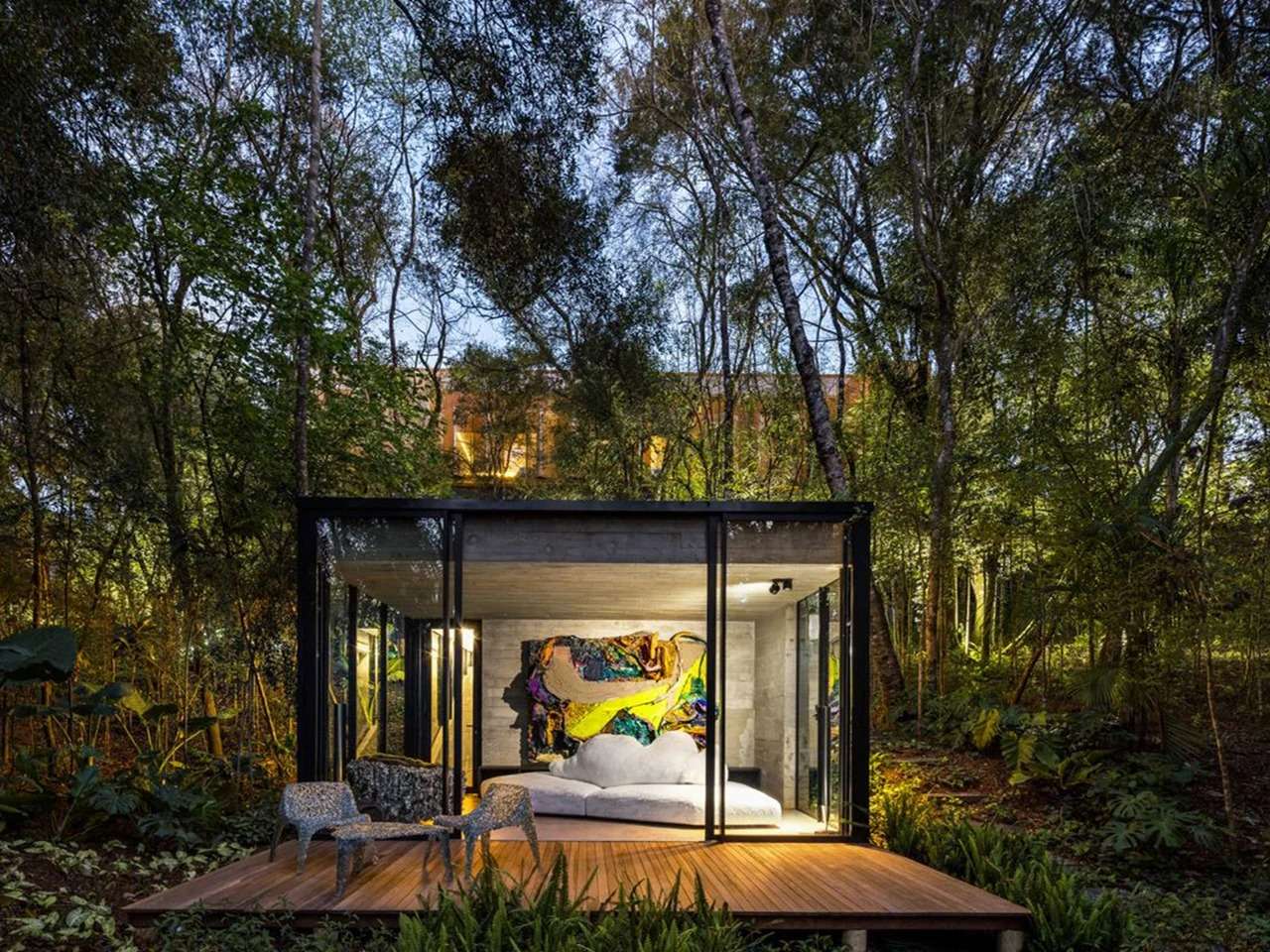
Through collaboration between the client and the architectural office, a plot was selected that features a protected natural forest alongside steep topography. These characteristics were not treated as conventional design constraints, but rather formed the fundamental framework from which the project was developed. In this way, the site itself became an active driver of the architectural concept instead of merely serving as a background to the design process.
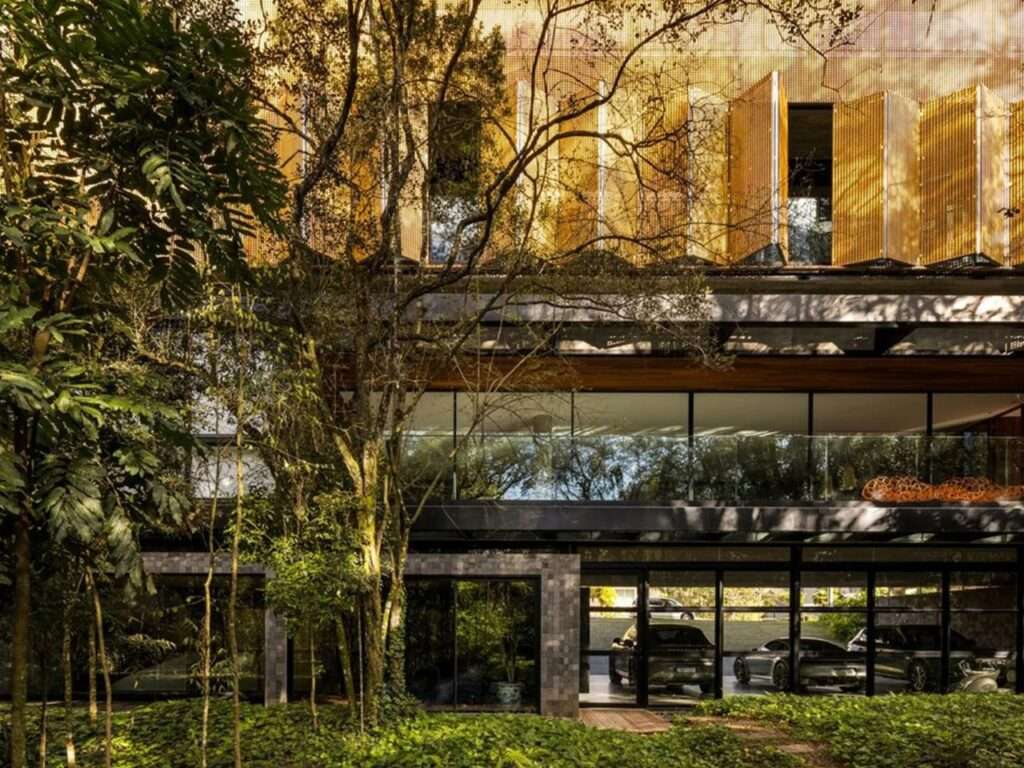
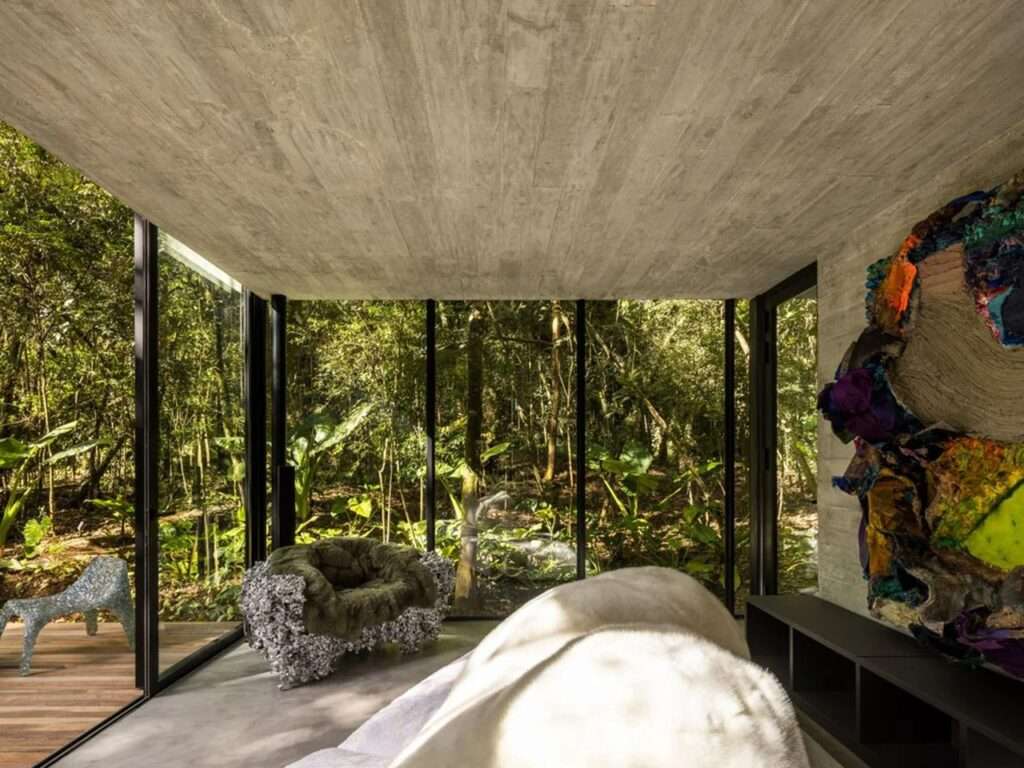
Volumetric Composition and Site Response
With site coverage limited to 30% of a 2,300-square-meter plot, and the building mass positioned toward the front of the site, the design solution shifted toward a vertical rather than horizontal approach. Accordingly, a composition of four interlocking volumes was adopted; two elevated above ground and two partially embedded below grade. This arrangement was a direct response to the steep topography and dense vegetation cover, resulting in an architectural mass integrated into its natural context. The outcome is a 1,113-square-meter residence that appears restrained in its presence despite its scale, as if it were part of the hillside itself rather than an inserted object.
Architectural Language and Material Treatment
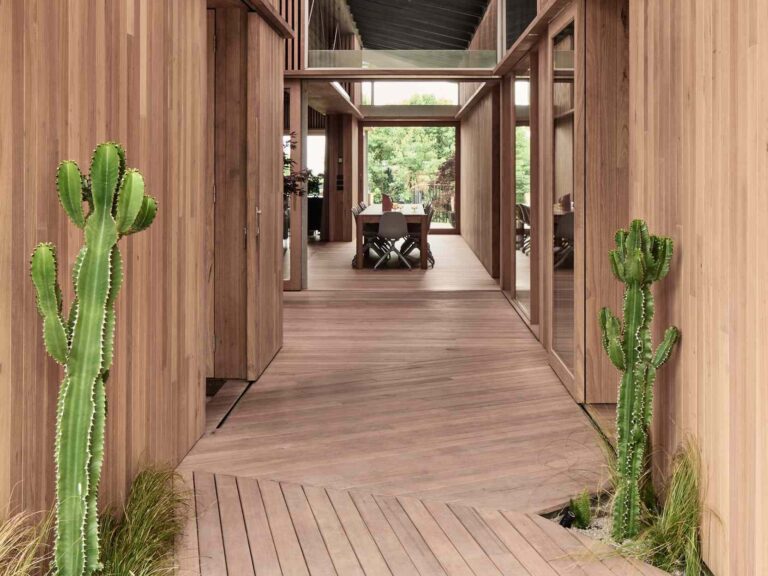
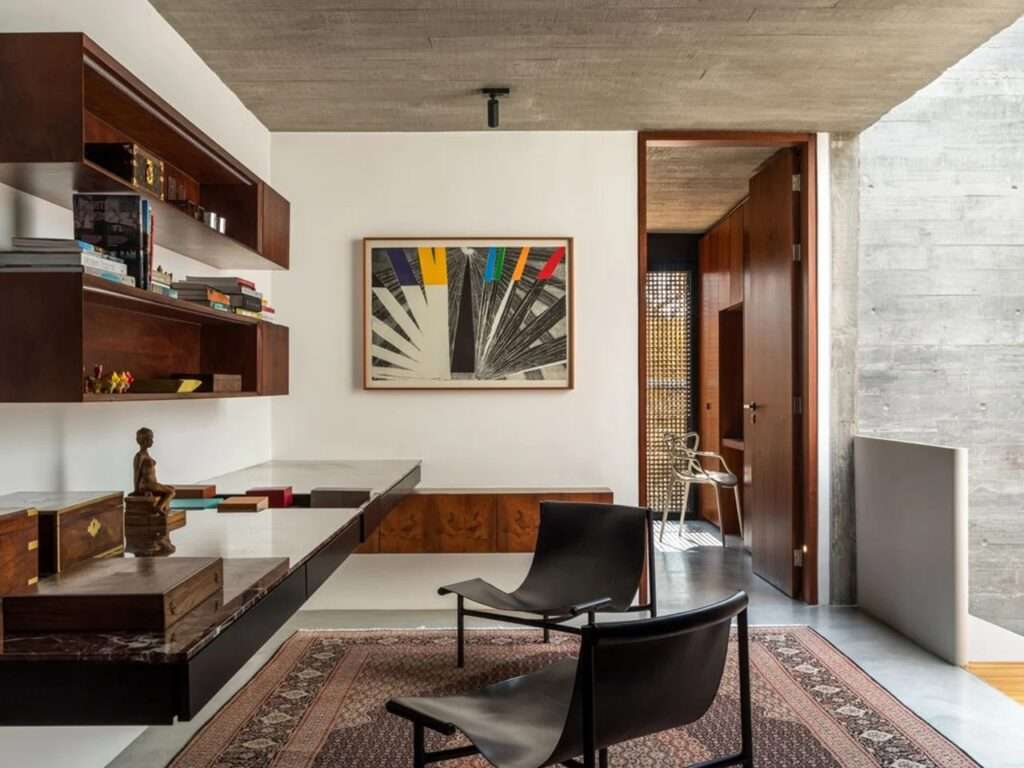
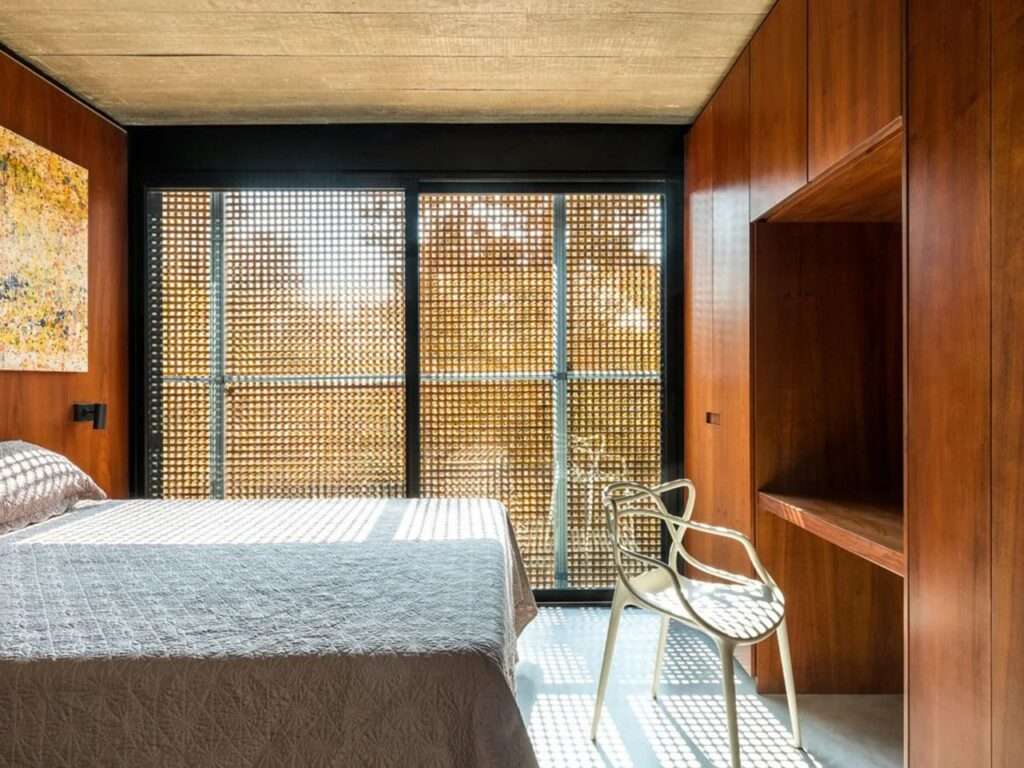
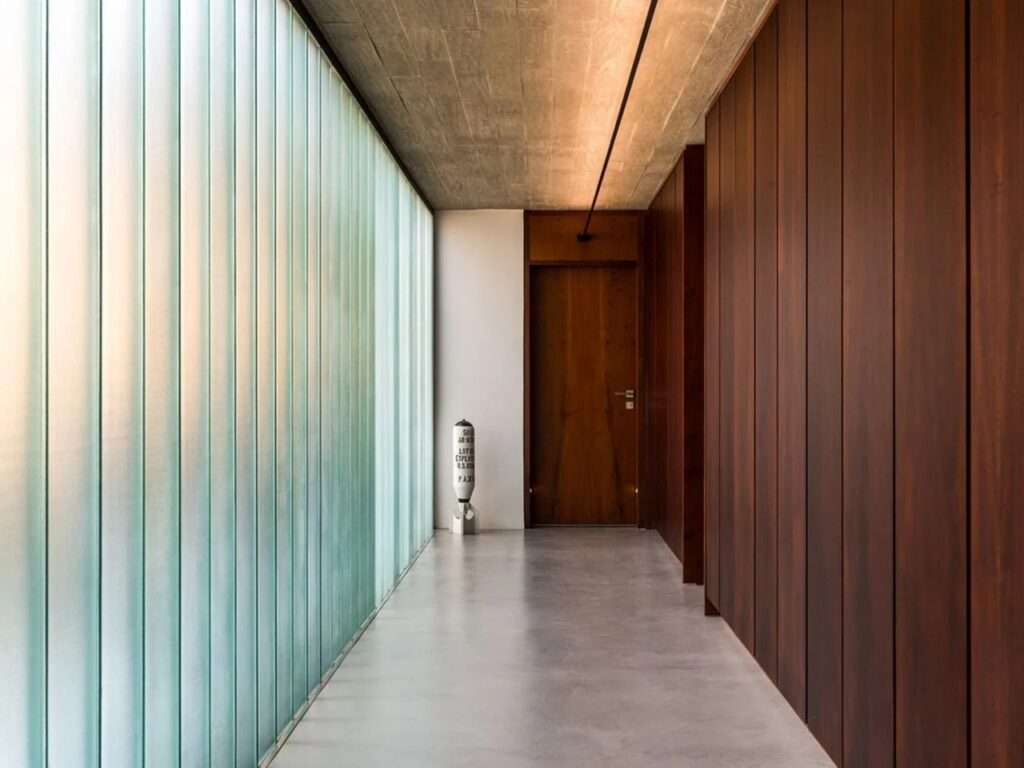
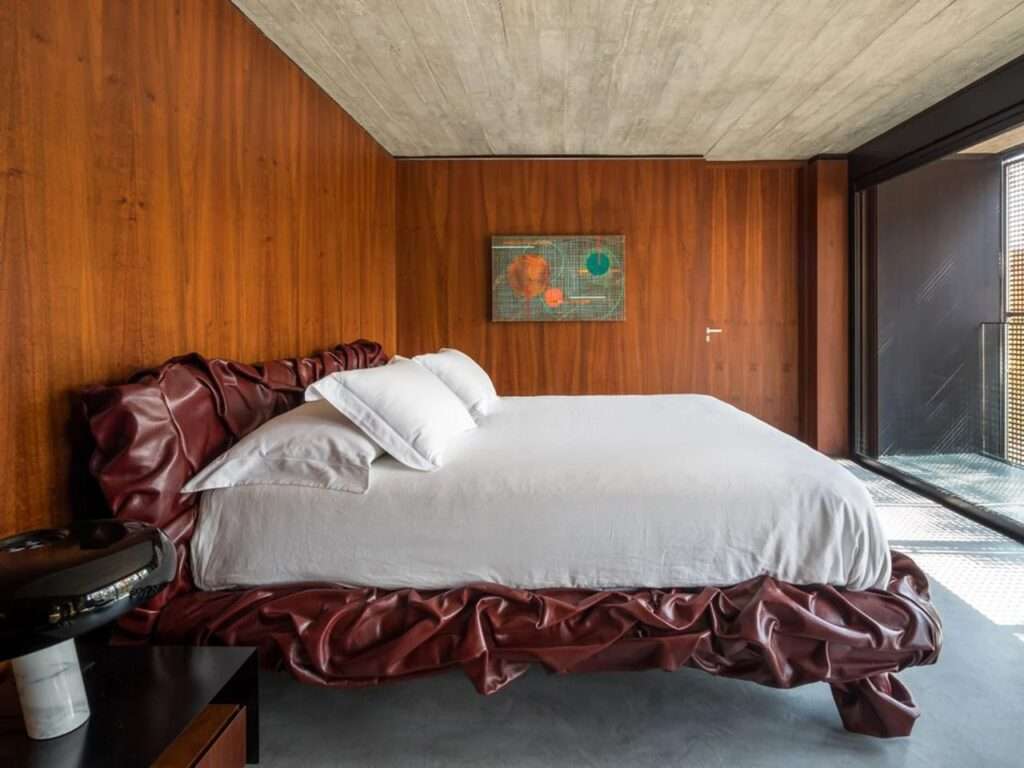
The project sits at the intersection of modernism and brutalism, relying on structural clarity, direct construction logic, and an honest expression of materials. Its material identity is composed of a combination of moss-green upholstery tones, warm timber elements, and stone surfaces. This interplay of materials helps reduce the separation between interior and exterior, reinforcing spatial continuity. As a result, the interior spaces are perceived as calm and balanced environments, defined by material harmony rather than formal or decorative excess.
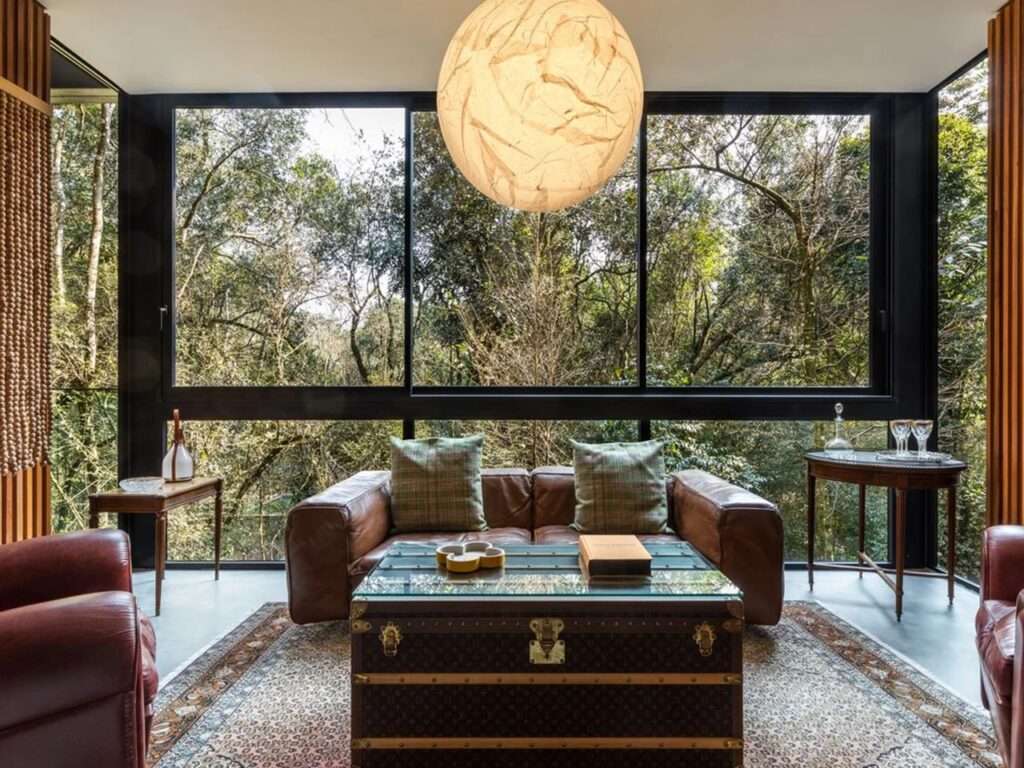
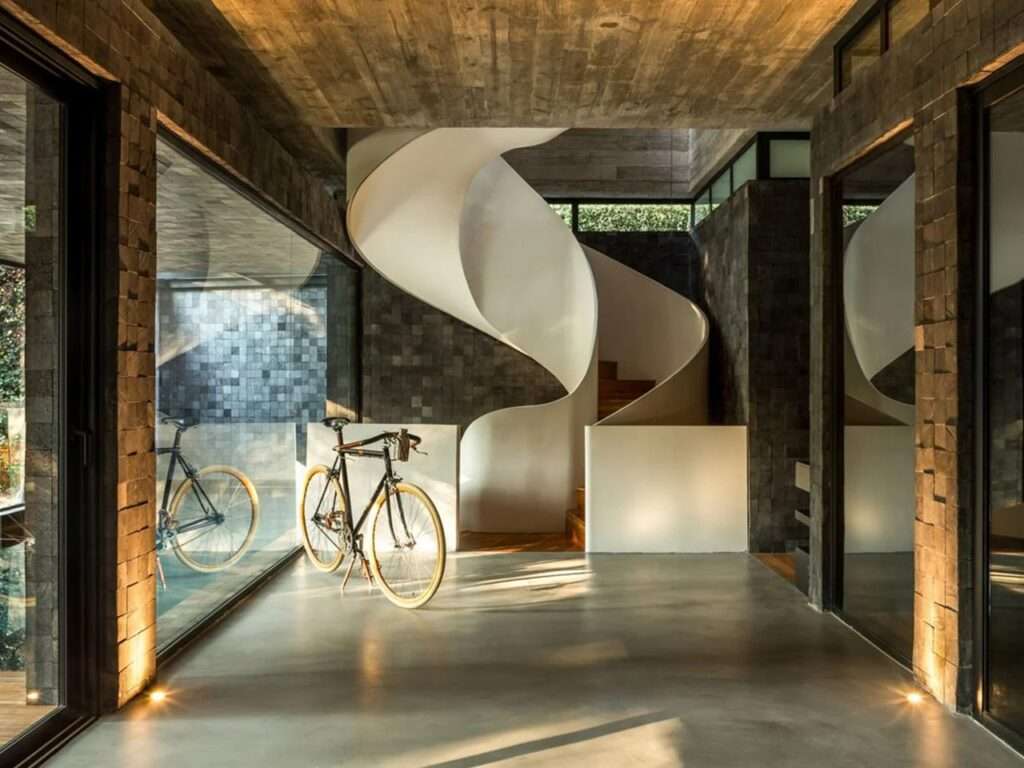
Spatial Experience in the Upper Floors
On the upper levels, the program is organized into private suites and a family living area within a more intimate volume. These spaces are connected to balconies precisely positioned at the level of the tree canopy, establishing a direct relationship with the surrounding vegetation. This spatial positioning transforms the user’s perception of the house, where interaction with the trees becomes part of the daily experience rather than merely an external visual element, something that cannot be fully represented through conventional floor plans.
Relationship Between the Project and the Natural Context
Following completion, the project was featured in an architectural publication in Edra Magazine (Issue 5) as a contextual case study. The project, designed by Luiz Volpato in collaboration with Pablo Quintella, reflects an approach based on reading the site rather than imposing a predefined form upon it. In this sense, the project does not appear as an independent object detached from its environment, but rather as a direct response to it, where the forest and topography act as primary references in shaping the architectural idea.
✦ ArchUp Editorial Insight
House 17-JB operates as a spatial solution derived from regulatory conditions within the Jardins do Batel condominium in Curitiba, where a maximum site coverage of 30% is imposed alongside the requirement to preserve forest cover and steep terrain as governing design parameters. The primary catalyst emerges from a high-value real estate market that uses scarcity as a mechanism for differentiation, transforming environmental constraints into asset value. Friction arises from requirements related to slope stabilization, environmental setbacks, and the financial implications of vertical construction compared to horizontal expansion. The resulting configuration is a four-tier volumetric system that separates the program into elevated and semi-buried masses, achieving a balance between spatial efficiency and reduced land intervention. The internal organization is linked to the tree canopy level, where the relationship with nature is redefined as a functional distribution system rather than a purely autonomous design decision. In this way, the role of the architect is partially repositioned in favor of regulatory logic, financial frameworks, and urban risk management.